
The rapid evolution and battlefield deployment of Unmanned Aerial Vehicle (UAV) swarms represent a paradigm shift in modern warfare. Characterized by their low cost, high numbers, distributed coordination, and emergent intelligent behaviors, these swarms pose a severe and asymmetric threat to critical assets, air defenses, and military operations. The attacks on Saudi Aramco facilities, the Pskov airfield, and numerous other incidents underscore the urgent need for effective countermeasures. While significant research focuses on individual sensing or kinetic kill mechanisms, the overarching command and control (C2) architecture that orchestrates these disparate elements into a cohesive anti-UAV system is paramount. This article, from my perspective as a researcher in this field, analyzes the core challenges in anti-UAV swarm warfare and proposes a comprehensive, interdependent C2 strategy. I will detail a layered system design, explore integrated technical countermeasures, and establish a quantifiable framework for assessing anti-UAV swarm effectiveness, utilizing numerous tables and formulas for clarity.
The Swarm Challenge and the Imperative for Integrated C2
UAV swarms leverage strengths in numbers, autonomy, and cost to overwhelm traditional defense systems designed for fewer, higher-value targets. Their operational advantages are well-documented: saturation attacks, distributed sensing, and collaborative targeting. However, to design effective anti-UAV strategies, we must first dissect their inherent vulnerabilities, which fall into technical and tactical domains.
Technical Vulnerabilities: The “low-cost” imperative constrains individual platform capabilities. These limitations are summarized below:
- Limited Platform Performance: Small size restricts payload, endurance, and maximum speed/altitude.
- Constrained Sensor/Computer Payloads: Onboard processing, sensing acuity, and communication bandwidth are minimal.
- Fragile System Architecture: Distributed control, while robust against single-point failure, often relies on vulnerable communication links and can suffer from slower group decision-making in complex scenarios.
Tactical Vulnerabilities: These stem from the physical and operational constraints of the platforms:
- Poor Kinematic Performance: Most swarm UAVs cannot match the acceleration, turn rates, or speed of manned fighters or high-end missiles.
- Minimal Self-Protection: They lack defensive countermeasures or armor.
- Short Operational Range: They require launch from carriers (air, ground, sea), creating a lucrative target for pre-emptive strikes.
- High Communication Dependency: Cooperative behaviors necessitate continuous data exchange, creating an electromagnetic signature and a potential failure point.
Current anti-UAV efforts often fail because they address these vulnerabilities in a piecemeal, non-systemic fashion. Deploying a high-power radar or a laser weapon in isolation is insufficient. The core challenge is twofold: 1) The lack of a unified C2 system that fuses data from diverse sensors, rapidly makes targeting decisions, and dynamically allocates kinetic and non-kinetic effects across a layered defense. 2) An unfavorable cost-exchange ratio, where using a $1 million missile to destroy a $10,000 UAV is unsustainable against swarms of hundreds. Therefore, the solution must be an intelligent, networked C2 system that optimizes the entire anti-UAV kill chain, ensuring the right effector is used against the right threat at the right time and place.
A Dual-Layer, Interdependent C2 Architecture for Swarm Defense
To meet the dynamic, high-tempo threat of UAV swarms, I propose a Dual-Layer Interdependent C2 Architecture. This structure moves beyond linear, sequential processes to a more agile, feedback-driven model that compresses the OODA (Observe, Orient, Decide, Act) loop. The two layers are the Combat Mission Planning Layer and the Action Coordination & Control Layer. Their “interdependence” is key: it denotes a continuous, bidirectional flow of information and authority, enabling adaptation based on real-time battlefield feedback.
The architecture can be visualized as a continuous cycle of planning and execution with tight coupling:
- Combat Mission Planning Layer (The “Brain”): This strategic layer operates at the theater or sector level. It ingests fused situational awareness from all sensors, understands enemy swarm intent, and generates high-level courses of action (COAs). It performs resource allocation, determines engagement policies, and defines rules of engagement for different threat zones.
- Action Coordination & Control Layer (The “Nervous System”): This tactical layer executes the plans. It directly controls sensors and effectors, manages real-time fire control, coordinates individual engagements, and—critically—collects battle damage assessment (BDA) and other performance data.
- Interdependent Feedback Loop: BDA and performance data from the Action Layer flow back to the Planning Layer. This feedback allows the planning layer to validate its models, adapt its strategies (e.g., switch from electronic attack to kinetic kill if jamming is ineffective), and re-allocate resources dynamically. This creates a self-optimizing anti-UAV system.
The mathematical representation of this interdependence in a decision cycle can be modeled. Let the state of the defensive system at time \( t \) be \( S_t \), the planning function be \( P(\cdot) \), and the control/execution function be \( C(\cdot) \). The feedback from execution is \( F_t \). The state evolution is then:
$$ S_{t+1} = C( P(S_t, F_t), S_t ) $$
And the feedback is generated from the previous execution:
$$ F_t = \Phi(S_{t-1}, C( P(S_{t-1}, F_{t-1}), S_{t-1} )) $$
Where \( \Phi \) is the assessment function. This closed-loop ensures \( S_t \) evolves to optimally counter the swarm threat \( \Upsilon_t \).
Combat Mission Planning Layer: From Awareness to Actionable Plans
This layer transforms raw battlefield data into coordinated anti-UAV campaigns. Its core components are the Decision Support System and the Human-Machine Interface.
Decision Support & Course of Action Development
The DSS uses AI and operational research to aid human operators. It performs three critical functions:
- Situation Analysis & Intent Inference: Beyond tracking, it predicts swarm objectives (e.g., reconnaissance, saturation attack on Point A, suppression of Point B) using pattern recognition, game theory, and probabilistic reasoning. It identifies the swarm’s center of mass, formation, and likely axis of advance.
- COA Generation & Optimization: Based on the assessed intent and available resources, the DSS generates multiple potential anti-UAV plans. This involves solving a complex, dynamic optimization problem. A simplified model for resource-to-target assignment in a given time window \( \Delta T \) can be formulated as:
Let \( R = \{r_1, r_2, …, r_m\} \) be the set of available effectors (e.g., jammers, lasers, missiles).
Let \( T = \{\tau_1, \tau_2, …, \tau_n\} \) be the set of identified swarm sub-clusters or high-value targets within the swarm.
Let \( E_{ij} \) be the estimated probability of effector \( r_i \) neutralizing target \( \tau_j \).
Let \( C_{ij} \) be the cost of engaging \( \tau_j \) with \( r_i \).
The objective is to find an assignment matrix \( X = [x_{ij}] \), where \( x_{ij} \in \{0,1\} \), that:
$$ \text{Maximize } Z = \sum_{i=1}^{m} \sum_{j=1}^{n} E_{ij} \cdot x_{ij} $$
$$ \text{Subject to: } \sum_{j=1}^{n} x_{ij} \leq 1 \quad \forall i \quad \text{(One effector, one target at a time)} $$
$$ \sum_{i=1}^{m} x_{ij} \geq 1 \quad \forall j \quad \text{(Each target must be engaged)} $$
$$ \sum_{i=1}^{m} \sum_{j=1}^{n} C_{ij} \cdot x_{ij} \leq B \quad \text{(Total cost less than budget B)} $$
This is a variant of the generalized assignment problem, solved in near real-time. - Plan Simulation & Wargaming: The top COAs are virtually wargamed against projected swarm behaviors to estimate effectiveness and uncover vulnerabilities before commitment.
Layered Defense & Countermeasure Taxonomy
The Planning Layer organizes defenses geographically and functionally. The overarching principle is a multi-layered, hybrid defense that attrits the swarm progressively, using cost-appropriate means at each range. The following table categorizes the anti-UAV toolkit and maps it to the swarm’s engagement phases.
| Engagement Phase / Range | Swarm Characteristic | Primary Countermeasure Types | Exemplary Technologies |
|---|---|---|---|
| Remote (>300 km) | Swarm carrier platform (e.g., transport aircraft, launch vehicles) is vulnerable. | Stand-Off Destruction | Long-range SAMs, fighter-interceptors, stand-off missiles. |
| Mid-Range (200-300 km) | Swarm is deployed but not fully coordinated; communication links are active. | Soft-Kill / Electronic Warfare | Broad-spectrum jamming (GPS, datalink), spoofing, cyber-takeover attempts. |
| Intermediate (10-200 km) | Swarm is in transit, possibly in formation; density is still relatively high. | Area Denial & Hard-Kill | High-Power Microwaves (HPM), high-energy lasers, missile with shotgun-type warheads, friendly counter-swarms. |
| Close-In (<10 km) / Terminal | Individual UAVs breaking off for final attack; point defense. | Point Defense & Directed Energy | Close-In Weapon Systems (CIWS), high-repetition rate lasers, electromagnetic guns, net guns. |
A more granular breakdown of countermeasure mechanisms against specific swarm vulnerabilities is essential for the DSS’s knowledge base.
| Target Vulnerability | Countermeasure Class | Mechanism of Action | Example |
|---|---|---|---|
| Communication Dependence | Electronic Attack | Disrupts command & control (C2) links, induces data loss, causes swarm disintegration. | Directional jammers, protocol-aware jamming. |
| Navigation Dependence (GPS/INS) | Spoofing / Navigation Warfare | Injects false GPS signals, leading UAVs off course or into controlled areas. | GPS simulators, meaconing systems. |
| Limited Sensor Payload | Deception & Concealment | Reduces detection likelihood through camouflage, nets, smoke, or decoys. | Thermal camouflage nets, radar corner reflectors. |
| Limited Onboard Processing | Cyber-Physical Attacks | Exploits software vulnerabilities to hijack control or inject malicious commands. | Malware payloads delivered via compromised datalinks. |
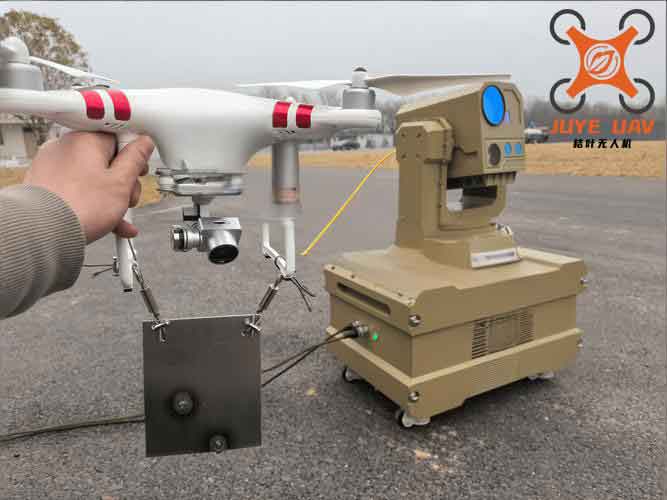
| Physical Structure (small, light) | Kinetic & Directed Energy | Causes physical destruction via impact, blast, thermal ablation, or circuit frying. | Laser weapons, HPM, fragmentation missiles, kinetic projectiles. |
Human-Machine Interface (HMI) Design
The HMI is the conduit between the Planning Layer’s analytical power and the human commander’s judgment. Its design must prioritize clarity, speed, and decision-centric information presentation. A potential layout includes:
- Situational Display (Primary): Shows the integrated air picture. Swarms are rendered as aggregate objects (ellipses, clouds) with metadata: centroid location, estimated size, formation, predicted intent (e.g., “RECON”), and threat level. Individual high-priority UAVs within the swarm may be highlighted.
- Planning & Resource Display: Shows the status of all friendly anti-UAV assets (ready, engaging, reloading), the currently active COA, and the results of the resource allocation algorithm. The commander can approve, modify, or halt engagements here.
- Alerts & Recommendations Pane: Presents the DSS’s key inferences and urgent recommendations (e.g., “Swarm Alpha likely splitting. Recommend prioritizing HPM engagement on subgroup Beta”).
Control is facilitated through touch, voice commands, and tactile controls, allowing the operator to quickly designate targets, approve weapon releases, or shift defensive priorities.
Action Coordination & Control Layer: Execution and Adaptive Feedback
This layer translates plans into precise actions and generates the critical data needed for adaptation. Its key function is real-time control of the “kill web”—the network of sensors and shooters.
Dynamic Tasking and Real-Time Control
The Action Layer receives the approved engagement plan from the Planning Layer. Its internal logic must handle:
- Weapon-Target Pairing in Real-Time: While the Planning Layer provides the strategy, the Action Layer performs the final, micro-second pairing as threats move. This uses faster, less complex algorithms than the planning-stage optimization.
- Deconfliction: Ensuring kinetic and non-kinetic effects do not interfere with each other or endanger friendly forces (e.g., not firing a missile through the beam of a laser).
- Weapon Control & Firing Sequences: Directly sending engagement commands to the effector systems.
The Core of Adaptation: Performance & Effectiveness Assessment
The most critical function of the Action Layer is to measure what happens after an engagement. This Battle Damage Assessment (BDA) and more holistic Effectiveness Assessment (EA) form the feedback \( F_t \) in our interdependent model. A robust, multi-tiered evaluation framework is needed.
I propose a three-tiered Effectiveness Assessment Indicator System, evaluated per engagement or per defensive phase. The indicators should be a mix of objective measures (e.g., number of UAVs killed) and system state measures (e.g., resource expenditure).
| Tier 1: Objective | Tier 2: Criteria | Tier 3: Metrics (Indicators) |
|---|---|---|
| Mission Success | Plan Completion | Percentage of planned engagements executed; Time to complete assigned engagements. |
| Target Attrition | Number of UAVs destroyed/neutralized; Percentage of swarm neutralized; Reduction in swarm density. | |
| Threat Neutralization | Successful deflection of swarm from protected asset; Prevention of target acquisition by swarm. | |
| Area Denial | Duration for which airspace was denied to the swarm. | |
| Defensive Cost | Resource Expenditure | Number of interceptors/missiles fired; Directed Energy “shot” count; Jamming system on-time. |
| Financial Cost | Total monetary cost of expended effectors. | |
| System Degradation | Percentage of effectors depleted; Remaining magazine depth. | |
| Enemy Degradation | Sustained Attack Capability | Remaining swarm size post-engagement; Estimated remaining swarm endurance/range. |
| Cohesion & Function | Observed breakup of swarm formation; Loss of observed coordinated behaviors. | |
| Defensive Sustainability | Continuous Defense Capability | Time to replenish/reload critical effectors; Availability of backup systems. |
| System Resilience | Ability to maintain C2 and sensing after an attack on the anti-UAV network itself. |
To synthesize these diverse metrics into a single quantitative assessment for feedback, a multi-criteria decision analysis (MCDA) method like TOPSIS (Technique for Order Preference by Similarity to Ideal Solution) is highly suitable. The process is as follows:
- Construct Decision Matrix: For a given engagement, populate the Tier 3 metrics as columns. Each row represents a different defensive option or a time-slice assessment. Let matrix \( D = [d_{ij}]_{m \times n} \) where \( m \) is assessment periods and \( n \) is metrics.
- Normalize the Matrix: Convert all metrics to a dimensionless scale. For benefit criteria (higher is better, e.g., attrition rate):
$$ r_{ij} = \frac{d_{ij}}{\sqrt{\sum_{i=1}^{m} d_{ij}^2}} $$
For cost criteria (lower is better, e.g., financial cost), first take the inverse: \( d_{ij}’ = 1/d_{ij} \), then normalize. - Determine Weighted Normalized Matrix: Assign weights \( w_j \) to each metric \( j \), where \( \sum_{j=1}^{n} w_j = 1 \). The weight can be determined by a combined subjective (e.g., Analytic Hierarchy Process – AHP with expert input) and objective (e.g., CRITIC method based on data contrast) approach. Let the combined weight be \( w_j^c \).
$$ v_{ij} = w_j^c \cdot r_{ij} $$ - Identify Ideal Solutions:
$$ V^+ = \{ ( \max_i v_{ij} | j \in J_{benefit}), ( \min_i v_{ij} | j \in J_{cost}) \} = \{v_1^+, v_2^+, …, v_n^+\} $$
$$ V^- = \{ ( \min_i v_{ij} | j \in J_{benefit}), ( \max_i v_{ij} | j \in J_{cost}) \} = \{v_1^-, v_2^-, …, v_n^-\} $$ - Calculate Separation Measures:
$$ S_i^+ = \sqrt{ \sum_{j=1}^{n} (v_{ij} – v_j^+)^2 }, \quad S_i^- = \sqrt{ \sum_{j=1}^{n} (v_{ij} – v_j^-)^2 } $$ - Calculate Relative Closeness to Ideal Solution:
$$ C_i = \frac{S_i^-}{S_i^+ + S_i^-}, \quad 0 \leq C_i \leq 1 $$
A \( C_i \) value closer to 1 indicates a more effective anti-UAV engagement outcome. This \( C_i \) score, along with the raw metric data, is packaged as feedback \( F_t \) and sent to the Planning Layer. If \( C_i \) falls below a pre-defined threshold for a particular COA, the Planning Layer is triggered to re-evaluate and potentially switch strategies (e.g., from jamming to kinetic kill if the swarm is resilient to electronic attack).
Conclusion and Future Directions
Countering the UAV swarm threat is not merely a contest of individual technologies but a systemic challenge of command, control, and integration. The proposed Dual-Layer Interdependent C2 Architecture provides a framework for building a coherent, adaptive, and efficient anti-UAV swarm defense system. By tightly coupling strategic planning with tactical execution through a rigorous, quantitative feedback loop, this system aims to outpace the swarm’s own OODA loop.
Future research must focus on several key areas to realize this vision. First, advancing AI for predictive swarm behavior modeling is crucial to improve the Planning Layer’s intent inference. Second, developing ultra-fast, network-centric communication protocols is needed to support the real-time data exchange required by the interdependent layers. Third, creating standardized interfaces and data models for plug-and-play integration of diverse anti-UAV effectors (kinetic, electronic, cyber, directed energy) is essential for building a flexible “kill web.” Finally, the effectiveness assessment models must be refined through extensive simulation and live exercises, incorporating learning algorithms that can automatically adjust engagement rules and weightings (\( w_j^c \)) based on historical performance data. The path to effective anti-UAV swarm defense lies in intelligent integration, and it is a path we must navigate with urgency and precision.