
As an observer and researcher in the field of aerial defense, I have witnessed the rapid proliferation of unmanned aerial vehicles (UAVs) and the escalating threats they pose in both military and civilian domains. The accessibility and adaptability of UAVs, including their conversion for malicious purposes, have made anti-UAV technology a critical focus for nations worldwide. In this article, I will delve into the conventional methods, global advancements, and future trajectories of anti-UAV systems, emphasizing the need for robust countermeasures against these “low, slow, small” targets. The evolution of anti-UAV capabilities is not just a technical challenge but a strategic imperative to safeguard airspace security.
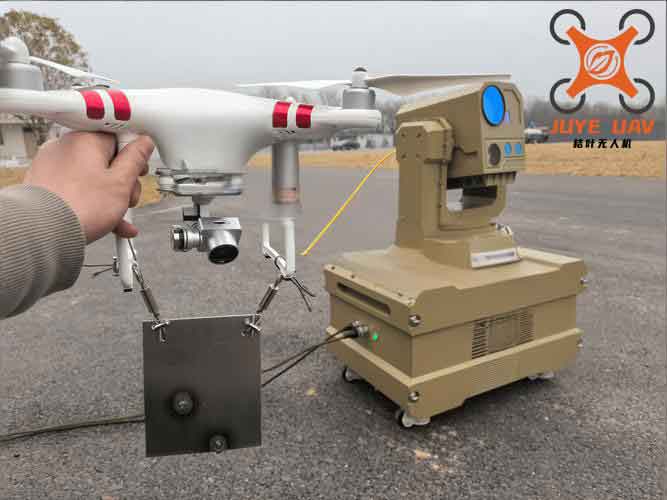
The urgency of anti-UAV technology stems from incidents like drone swarms attacking oil facilities or military bases, highlighting their use in terrorism and conflicts. From my analysis, anti-UAV efforts can be broadly categorized into detection and countermeasure technologies. Detection involves leveraging sensors to identify UAVs based on physical properties such as optical, thermal, acoustic, or magnetic signatures. Countermeasures, on the other hand, include soft-kill methods like jamming and spoofing, and hard-kill approaches such as lasers or missiles. Each technique has its strengths and weaknesses, which I will explore in detail. The complexity of modern UAVs, including autonomous swarms, demands innovative anti-UAV solutions that integrate multiple technologies for effective defense.
In the realm of anti-UAV detection, various sensors are employed, each with unique advantages and limitations. I have summarized these in the table below to provide a clear comparison. Radar remains a cornerstone in anti-UAV systems due to its long-range and all-weather capabilities, but it struggles with target identification. Radio frequency (RF) sensors are cost-effective but fail against silent UAVs. Optical and thermal imaging offer visual confirmation but are weather-dependent, while acoustic sensors are passive yet prone to false alarms in noisy environments. The maximum detection range varies significantly, influencing the choice of technology for specific anti-UAV applications.
| Technology | Principle | Advantages | Disadvantages | Maximum Range |
|---|---|---|---|---|
| Radar | Uses Doppler effects to measure velocity and filters to distinguish UAVs from other objects. | Long range, high accuracy, minimal weather impact, day-night operation, mature technology. | Poor identification, active emission compromises stealth. | 10 km |
| RF Sensing | Receives and analyzes wireless signals to determine UAV characteristics. | Low cost, easy implementation. | Ineffective against UAVs in electromagnetic silence. | Several hundred meters |
| Passive Optical Imaging | Utilizes UV, visible, or near-infrared imaging for visual analysis. | Low cost, flexible field of view. | Highly affected by clutter and weather, poor night performance. | Several hundred meters |
| Passive Thermal Imaging | Employs infrared imaging at different wavelengths for heat-based detection. | Low clutter impact, good night performance. | Weak thermal signatures for micro-UAVs, requires complementary wide-area search. | Nearly 1 km |
| Acoustic Sensing | Captures sound signals and compares them to UAV acoustic databases. | Low cost, high safety. | Uncertain detection range, poor identification, high false alarms in complex environments, wind-sensitive. | Several hundred meters |
When it comes to anti-UAV countermeasures, I classify them into soft-kill and hard-kill methods. Soft-kill techniques, such as jamming or spoofing, disrupt UAV communications or navigation, forcing them to land or return. Hard-kill methods, including lasers or missiles, physically destroy the target. The table below contrasts these approaches, noting their efficacy against UAV swarms and associated drawbacks. For instance, jamming is effective against simple UAVs but may cause collateral damage, while lasers offer precision but at high cost. The choice of anti-UAV countermeasure depends on the scenario, balancing effectiveness, cost, and risk.
| Technology | Principle | Advantages | Disadvantages | Swarm Countermeasure Capability |
|---|---|---|---|---|
| Jamming and Disruption | Uses high-power interference signals to disrupt control links, sensors, or GPS. | Highly effective against low-complexity UAVs. | Ineffective against advanced UAVs, risks collateral and electromagnetic damage. | Good |
| Spoofing and Deception | Employs optical, thermal, acoustic, or electronic deception to mask assets or mislead UAVs. | Effective against manually controlled or command-receiving UAVs. | Complex technology, low efficacy against high-autonomy UAVs. | Poor |
| Laser/Microwave Weapons | Applies concentrated energy to damage or destroy UAV components. | High precision, low collateral damage. | Performance affected by target shape, material, distance; high cost. | Moderate |
| Artillery and Anti-Aircraft Missiles | Traditional防空 methods using projectiles or missiles. | Mature technology. | Expensive, high risk of secondary damage. | Poor |
| Net Capture | Deploys nets from ground or air to entangle and capture UAVs. | Low cost, simple implementation. | Low hit rate. | Poor |
To mathematically model anti-UAV detection, I often refer to the radar range equation, which estimates the maximum detection distance for radar-based systems. The equation is given by:
$$P_r = \frac{P_t G_t G_r \lambda^2 \sigma}{(4\pi)^3 R^4 L}$$
where \(P_r\) is the received power, \(P_t\) is the transmitted power, \(G_t\) and \(G_r\) are the antenna gains, \(\lambda\) is the wavelength, \(\sigma\) is the radar cross-section (RCS) of the UAV, \(R\) is the range, and \(L\) represents system losses. For anti-UAV applications, micro-UAVs have small RCS values (e.g., \(\sigma \approx 0.01 \, \text{m}^2\)), making detection challenging. This equation underscores why multi-sensor fusion is crucial in anti-UAV systems to enhance detection probability.
In terms of anti-UAV countermeasures, the jamming-to-signal ratio (J/S) is a key metric for evaluating soft-kill effectiveness. It can be expressed as:
$$\frac{J}{S} = \frac{P_j G_j R^2 \sigma_j}{P_t G_t G_r \lambda^2 \sigma_t}$$
where \(P_j\) is the jammer power, \(G_j\) is the jammer antenna gain, \(\sigma_j\) is the jammer’s effective area, and \(\sigma_t\) is the target UAV’s RCS. A higher J/S ratio indicates better jamming performance, which is vital for disrupting UAV communications in anti-UAV operations. However, this must be balanced with ethical and legal considerations to avoid interfering with legitimate signals.
Globally, the development of anti-UAV technology has accelerated, with leading nations investing heavily in research and deployment. From my perspective, the United States has been a pioneer, establishing early strategies and conducting regular anti-UAV exercises. Systems like the ICAᖃUS by Lockheed Martin integrate sensors and cyber tools for detection and interception, while Boeing’s Compact Laser Weapon System (CLWS) demonstrates hard-kill capabilities. The U.S. Army’s Mobile Expeditionary High-Energy Laser (MEHEL) and Raytheon’s “Coyote” drone combined with advanced radar exemplify innovative anti-UAV approaches. These efforts highlight a trend toward integrated, multi-domain anti-UAV solutions.
In Europe, I have observed collaborative advancements such as the Anti-UAV Defence System (AUDS), which detects, tracks, and neutralizes UAVs. The UK’s “Falcon Shield” by Selex ES and Israel’s “Drone Dome” by Rafael Advanced Defence Systems showcase electronic warfare and laser-based anti-UAV technologies. Israel, in particular, has developed systems like “DroneGuard” that use adaptive 3D radar and electro-optical sensors for comprehensive anti-UAV defense. These European initiatives emphasize soft-kill and hard-kill integration, addressing diverse UAV threats.
Russia has focused on robust anti-UAV systems, such as the “Willow” portable air-defense missile and the PY12M7 mobile command vehicle. The “Predator” anti-UAV drone reflects a “drone-vs-drone” strategy, using nets or explosives to counter UAVs. China has also made strides, with the “Low Altitude Guardian” laser system and the ADS2000 anti-UAV system that employs jamming and spoofing. The AUDS “Spider Web” by China Electronics Technology Group Corporation integrates radar, electro-optics, and electronic interference for automated anti-UAV operations. These developments indicate a global race to dominate anti-UAV technology, with each region adapting to specific threat landscapes.
Looking ahead, I foresee several key trends in anti-UAV technology. First, multi-mode composite detection will become standard, combining radar, RF, optical, thermal, and acoustic sensors to overcome individual limitations. For example, a fusion algorithm might weight inputs from different sensors based on environmental conditions, improving overall anti-UAV detection accuracy. Mathematically, this can be represented as a weighted sum:
$$D_{\text{composite}} = \sum_{i=1}^{n} w_i S_i$$
where \(D_{\text{composite}}\) is the composite detection output, \(w_i\) are weights adjusted in real-time, and \(S_i\) are sensor inputs (e.g., radar signal strength, optical confidence score). This approach enhances reliability in complex urban environments where single-sensor anti-UAV systems often fail.
Second, unattended detection powered by artificial intelligence (AI) will enable large-scale anti-UAV deployment. Current systems require human intervention for target identification, leading to high false alarm rates. I believe that AI algorithms, such as deep learning neural networks, can automate UAV recognition from sensor data. For instance, a convolutional neural network (CNN) trained on UAV image datasets can achieve high accuracy, reducing the need for manual oversight. The training process minimizes a loss function:
$$L(\theta) = -\frac{1}{N} \sum_{j=1}^{N} \left[ y_j \log(\hat{y}_j) + (1 – y_j) \log(1 – \hat{y}_j) \right]$$
where \(L(\theta)\) is the binary cross-entropy loss, \(y_j\) is the true label (UAV or non-UAV), \(\hat{y}_j\) is the predicted probability, and \(\theta\) represents network parameters. As AI matures, unattended anti-UAV systems will become more feasible, enabling 24/7 monitoring of critical infrastructures.
Third, directed-energy weapons (DEWs), such as lasers and high-power microwaves (HPM), will play a pivotal role in anti-UAV defense. Lasers offer speed-of-light engagement with minimal collateral damage, but their effectiveness depends on beam quality and atmospheric conditions. The laser power required to disable a UAV can be estimated using the damage threshold equation:
$$P_{\text{req}} = \frac{E_{\text{th}}}{\tau \eta}$$
where \(P_{\text{req}}\) is the required laser power, \(E_{\text{th}}\) is the energy threshold for UAV component damage (e.g., for sensors or structures), \(\tau\) is the exposure time, and \(\eta\) is the atmospheric transmission efficiency. For anti-UAV applications, advancements in solid-state lasers and beam control will make DEWs more portable and cost-effective. Similarly, HPM weapons can emit wide-area pulses to disrupt UAV electronics, offering a scalable solution for swarm threats. The trend toward miniaturized energy storage, such as advanced batteries or capacitors, will drive the proliferation of DEW-based anti-UAV systems.
Fourth, the concept of “unmanned vs. unmanned” combat will emerge, where autonomous anti-UAV platforms engage threat UAVs without human intervention. I envision intelligent drones equipped with sensors and countermeasures that can patrol airspace, detect intrusions, and neutralize threats using nets, lasers, or kinetic impact. This requires robust AI for decision-making, governed by rules like:
$$a^* = \arg\max_a \mathbb{E}[R(s,a)]$$
where \(a^*\) is the optimal action (e.g., intercept, jam), \(R\) is the reward function based on mission goals (e.g., minimize threat, conserve energy), and \(s\) is the state (e.g., UAV position, speed). Such autonomous anti-UAV systems could operate in swarms themselves, creating a dynamic battlefield where AI-driven strategies prevail.
Fifth, soft-and-hard-kill integration will be essential for versatile anti-UAV defense. Soft-kill methods can degrade UAV capabilities, making them easier targets for hard-kill measures. For example, jamming a UAV’s GPS may force it into a predictable flight path, allowing precise laser targeting. This combined approach optimizes resource use and minimizes collateral damage. In mathematical terms, the overall anti-UAV effectiveness \(E\) can be modeled as:
$$E = \alpha E_{\text{soft}} + \beta E_{\text{hard}}$$
where \(E_{\text{soft}}\) and \(E_{\text{hard}}\) are the effectiveness scores of soft-kill and hard-kill components, and \(\alpha\) and \(\beta\) are weighting factors adjusted based on threat level and environment. Future anti-UAV systems will dynamically switch between modes, offering a tailored response to diverse UAV threats.
In conclusion, as UAV technology evolves toward greater miniaturization and autonomy, anti-UAV systems must adapt accordingly. From my perspective, the future of anti-UAV defense lies in multi-sensor fusion, AI-driven automation, directed-energy weapons, autonomous counter-drones, and integrated soft-hard kill strategies. The “矛与盾” (spear vs. shield) competition between UAVs and anti-UAV technologies will continue to spur innovation. Key challenges include reducing costs, minimizing false alarms, and addressing ethical concerns like signal interference. By investing in these trends, nations can enhance their airspace security and mitigate the growing threats posed by rogue UAVs. The journey toward effective anti-UAV capabilities is ongoing, and I am confident that interdisciplinary advances will shape a safer sky for all.