
The proliferation and technological advancement of unmanned aerial vehicles (UAVs) have fundamentally altered the modern battlespace. Airports, command posts, military bases, and other high-value strategic points now face a persistent and evolving threat from these systems. The emergence of low, slow, and small (LSS) UAVs, in particular, presents a unique challenge to traditional air defense architectures, often rendering them economically and tactically inefficient. In this context, integrated missile and artillery systems, epitomized by systems like the Russian Pantsir, have gained prominence as a viable solution for terminal point defense. This analysis delves into the new threats posed by UAVs, contrasts existing counter-UAV (C-UAV) technologies, examines the development and operational lessons of the Pantsir system, and synthesizes these insights into recommendations for the future of strategic point anti-drone defense.
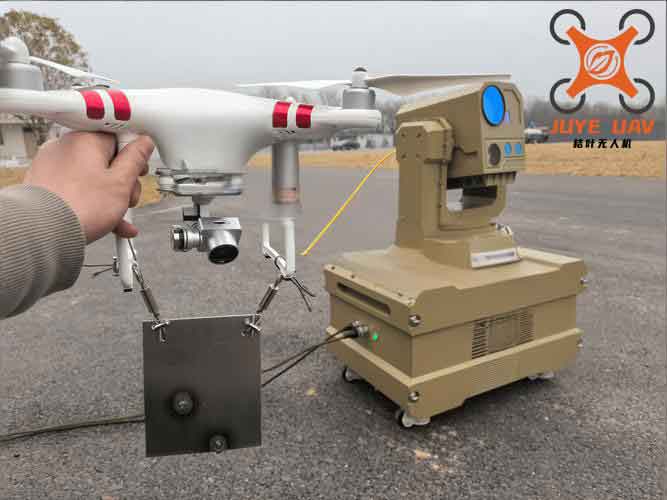
The UAV Threat Paradigm to Point Defense
UAVs have transitioned from niche military assets to ubiquitous tools, accessible to both state and non-state actors. Their ability to provide real-time reconnaissance, precision targeting, and even kinetic strike capabilities at a relatively low cost introduces a high degree of tactical asymmetry. For strategic point defense, which demands near-absolute denial of unauthorized ingress, this poses several critical challenges, especially from LSS platforms.
Traditional radar-based air defense systems, designed to counter manned aircraft, helicopters, and cruise missiles, often struggle against LSS UAVs due to:
- Low Detectability: UAVs frequently utilize composites and compact designs, resulting in a very small radar cross-section (RCS), often below 0.1 m². This, combined with low infrared and acoustic signatures, makes long-range detection and continuous tracking extremely difficult.
- Short Reaction Time: The “track-identify-engage-assess” loop of conventional systems is often too slow for fast, low-altitude threats that can pop up from behind terrain.
- Swarm Saturation: Coordinated attacks by drone swarms can overwhelm defense systems designed for engaging a limited number of high-value targets, depleting costly interceptor missiles prematurely.
- Economic Imbalance: The low cost of commercial or improvised UAVs creates a severe cost-exchange ratio problem. Defending with expensive surface-to-air missiles (SAMs) against a swarm of cheap drones is economically unsustainable.
We can categorize the UAV threat to better understand the required countermeasures, as shown in Table 1.
| Class | Typical Weight | Operating Altitude | Representative Types | Primary Threat Mode | Suggested Anti-Drone Countermeasure Focus |
|---|---|---|---|---|---|
| 1 & 2 | < 25 kg | < 1,000 m | Consumer drones, small surveillance UAVs | Harassment, surveillance, swarm attacks | Radio frequency (RF) jamming, spoofing, directed energy, nets, high-rate kinetic kill. |
| 3 | 25 – 600 kg | < 5,500 m | Tactical MALE UAVs (e.g., Hermes 450, TB2) | Tactical ISR, precision strike | Integrated air defense (missiles, guns), high-power RF/DE, electronic attack. |
| 4 & 5 | > 600 kg | > 5,500 m | HALE UAVs, strategic ISR platforms | Strategic ISR, deep strike | Traditional medium/long-range SAM systems. |
Landscape of Counter-UAV Technologies
The anti-drone mission requires a layered approach. Current C-UAV technologies can be broadly classified into three categories, each with distinct mechanisms and trade-offs, summarized in Table 2.
| Category | Mechanism | Key Advantages | Key Limitations | Suitability for Point Defense |
|---|---|---|---|---|
| Detection & Control | Cyber-takeover, spoofing of command & control (C2) links. | Non-kinetic, allows for capture/intel gathering. | Technically complex, range-limited, ineffective against pre-programmed autonomous drones. | Medium (for non-autonomous threats in controlled RF environments). |
| Direct Kinetics | Missiles & Artillery (e.g., Pantsir). | High probability of kill (Pk), long range, proven technology. | High cost-per-engagement, risk of collateral damage. | High (especially for Class 3+ threats and terminal swarm defense). |
| Directed Energy (Laser, HPM). | Speed-of-light engagement, low cost-per-shot, deep magazines. | Atmospheric attenuation, limited effective range (especially vs. lasers), high power requirements. | High (for last-ditch, close-in defense against swarms). | |
| Counter-UAV Drones. | High mobility, potential for capture. | Requires advanced autonomy, airspace deconfliction. | Emerging. | |
| Jamming & Disruption | RF Jamming, GNSS Spoofing. | Non-kinetic, wide area effect, low collateral risk. | Ineffective against autonomous drones, potential for friendly spectrum interference. | High (as a scalable, first-layer area denial tool). |
The effectiveness of an anti-drone system often depends on the drone’s level of autonomy. A drone relying on continuous RF C2 is vulnerable to jamming. One using GNSS for navigation is vulnerable to spoofing. However, a drone with pre-programmed inertial navigation and automatic target recognition is largely immune to these soft-kill measures, necessitating hard-kill solutions. This relationship can be conceptualized by an “Immunity Function” $I(a)$:
$$ I(a) = 1 – \frac{1}{1 + e^{-k(a – a_0)}} $$
where $a$ represents the level of drone autonomy (from 0, fully remote-controlled, to 1, fully autonomous), $a_0$ is the autonomy level at the midpoint of the transition, and $k$ is a steepness constant. As $a \to 1$, $I(a) \to 0$, meaning soft-kill effectiveness diminishes to near zero for fully autonomous drones, forcing a reliance on kinetics.
The Pantsir System: A Case Study in Integrated Anti-Drone Defense
The Russian Pantsir-S1 (SA-22) system is a paradigmatic example of a missile-and-gun combined arms system designed for point and area defense. Its development and combat employment offer critical insights into the realities of modern anti-drone warfare.
System Evolution and Technical Configuration
The Pantsir’s design philosophy centers on high integration and autonomous operation. A standard Pantsir-S1 unit comprises a multi-sensor suite and a layered kinetic package on a single vehicle:
- Sensors: A UHF/EHF-band target acquisition radar, a tracking/engagement radar, and an electro-optical/infrared (EO/IR) system. This multi-spectral approach mitigates the low-RCS challenge posed by drones.
- Weapons: Two 30mm automatic cannons (2A38M) with a high rate of fire (~2500 rpm) for close-in threats (0.5-4 km), and 12 ready-to-fire 57E6 surface-to-air missiles for longer-range engagements (up to 20 km for baseline S1, extended in later models).
The system’s modular evolution is detailed in Table 3.
| Variant | Key Development | Sensor Enhancements | Weapon Enhancements | Anti-Drone Performance Insight |
|---|---|---|---|---|
| Pantsir-S1 | Baseline system. | 1RS1-1E search radar (range ~32-36 km vs 2 m² RCS). | 12 x 57E6E missiles, 2 x 30mm guns. | Proved capable against MALE UAVs but revealed limitations in sustained swarm engagements. |
| Pantsir-S2/S2E | Improved search capability. | S-band radar with doubled data rate, range ~40 km. | Improved missile range (~30 km). | Extended detection and engagement bubble, better for defending larger areas. |
| Pantsir-SM | Networked, extended range. | New radar with 75 km detection range. | New missile with 40 km engagement range. | Aims to engage targets at greater distances, potentially outside loitering munition launch ranges. |
| Pantsir-SA | Arctic adaptation. | Unchanged from S1. | Guns removed, 18 missiles carried. | Highlights platform adaptability; gun removal may reduce close-in swarm defense capability. |
Combat Lessons and Performance Analysis
The Pantsir has seen extensive combat, primarily in Syria, providing a real-world laboratory for anti-drone tactics. Its record is mixed, offering valuable lessons:
- Successes: It has successfully engaged numerous MALE UAVs (like the Israeli Heron) at ranges between 8-16 km, validating its capability against Class 3 threats. In January 2018, Pantsir-S1 systems at the Khmeimim airbase reportedly engaged a swarm of 13 improvised attack drones, destroying 7 and electronically diverting 6, demonstrating a combined hard/soft-kill response.
- Limitations Exposed: The system has also been targeted and destroyed, notably by Turkish Bayraktar TB2 drones using stand-off munitions (likely MAM-L). This highlights a critical vulnerability: while excellent at terminal defense, the Pantsir’s own radar emissions and limited strategic mobility make it susceptible to detection and long-range, precision counter-air attacks.
- Key Operational Characteristics:
- Autonomy: Its integrated sensor-shooter loop allows for independent operation, crucial for defending isolated points.
- Layered Engagement: The gun-missile combination provides a cost-effective gradient of response, using cheaper cannon rounds for very close or low-value targets and missiles for higher/faster threats. The cost-per-kill calculus for a swarm can be approximated as: $$ C_{total} = n_m C_m + n_g C_g $$ where $n_m$ and $n_g$ are the number of missiles and gun rounds expended, and $C_m$ and $C_g$ are their respective unit costs. Optimizing this ratio is key to sustainable anti-drone defense.
- Adaptive Development: The iterative upgrades from S1 to SM show a responsive development cycle aimed at extending reach and improving detection.
Synthesis and Future Pathways for Anti-Drone Defense
The analysis of the threat landscape and systems like Pantsir points to several imperative conclusions for the future of strategic point anti-drone defense:
- Embrace Hybrid, Layered Architectures (“Hard-Soft Kill Integration”): No single technology is a panacea. Future point defense must integrate kinetic systems (missiles, guns, lasers) with electronic warfare (jamming, spoofing) and cyber capabilities. A layered system might use wide-area RF jamming as a first barrier, directed energy for intermediate swarm layers, and finally gun systems for leakers. The overall system effectiveness $E_{sys}$ could be modeled as: $$ E_{sys} = 1 – \prod_{i=1}^{n} (1 – P_{k_i}) $$ where $P_{k_i}$ is the single-shot kill probability of the $i$-th layer, emphasizing how multiple, diverse layers compound to near-total defense.
- Pursue Multi-Domain, Cooperative Sensing: Relying solely on organic sensors on a defense platform limits detection range and creates a vulnerability. Future systems must be nodes in a network that fuses data from ground-based radars (including passive and low-frequency radars better suited for LSS), airborne early warning, and even space-based sensors to achieve persistent, long-range surveillance and track custody.
- Optimize the Cost-Exchange Ratio Through Technology Mix: The economic dimension is paramount. Development must focus on:
- Low-cost interceptors (guided missiles, advanced cannon ammunition) specifically designed for drones.
- Scaling directed energy weapons to achieve militarily useful ranges and power levels, as their marginal cost-per-shot is negligible.
- Developing intelligent battle management systems that can automatically assign the most cost-effective effector (jammer, laser, gun, missile) to each threat based on its trajectory, type, and swarm context.
- Enhance Mobility and Survivability: Fixed or semi-fixed defense sites are lucrative targets. Point defense systems must have high tactical mobility (shoot-and-scoot capability) and incorporate passive defense measures, including emission control (EMCON) procedures and camouflage, to survive in a contested environment where the enemy employs its own anti-radiation and reconnaissance drones.
In conclusion, the defense of strategic points against UAV threats is a complex, multi-faceted challenge that defies simple solutions. The evolution of systems like Pantsir demonstrates the enduring value of integrated, kinetic-based terminal defense but also its limitations when acting alone. The future of effective anti-drone defense lies not in a single silver bullet, but in a resilient, networked, and economically sustainable system-of-systems that seamlessly blends traditional kinetics with next-generation soft-kill and sensing technologies to create an impenetrable shield for our most critical assets.