
The proliferation and operational deployment of Unmanned Aerial Vehicles (UAVs) for intelligence, surveillance, and reconnaissance (ISR) missions present a formidable and escalating challenge to modern armed forces. Artillery units, due to the relative static nature of their firing positions and their significant combat power, have become high-value targets for adversarial drone surveillance. The ability to effectively conduct anti-drone operations to shield artillery positions from persistent aerial scrutiny is therefore a critical determinant of battlefield survivability and operational effectiveness. This analysis examines the threat, current countermeasures, inherent challenges, and proposes a multi-faceted anti-drone strategy.
Modern drones employ a suite of sophisticated sensors to locate and monitor artillery assets. The primary methods can be categorized and compared as follows:
| Sensor Type | Core Capability | Operational Advantage | Primary Vulnerability/Challenge |
|---|---|---|---|
| Electro-Optical (TV/Imagery) | High-resolution visual and video capture in daylight. | Real-time imagery, easy target identification, covert observation from altitude. | Degraded by darkness, fog, smoke, and camouflage. |
| Infrared (IR) | Detection of heat signatures. | All-weather, day/night operation; can see through some visual camouflage. | Susceptible to thermal masking, decoys, and adverse weather (heavy rain). |
| Synthetic Aperture Radar (SAR) | High-resolution imaging using radar pulses. | All-weather, day/night penetration through clouds and some obstructions. | Complex signal processing; can be deceived by radar-absorbent materials and shape masking. |
| Signals Intelligence (SIGINT) | Interception of radar and communication emissions. | Passive detection; locates units by their electronic signatures (e.g., fire control radars). | Effectively countered by emission control (EMCON) and low-probability-of-intercept tech. |
The successful application of these ISR methods by enemy drones leads to severe consequences. The probability of a position being targeted after detection ($P_{target}$) can be modeled as a function of detection confidence ($C_d$), threat value assessment ($V_t$), and available strike assets ($A_s$):
$$P_{target} = f(C_d, V_t, A_s) \approx \frac{C_d \cdot V_t}{A_s^{-1} + k}$$
where $k$ is a constant representing battlefield friction. Once identified, the阵地’s vulnerability increases exponentially due to the precision of modern indirect fire. The operational impact extends beyond the loss of guns; it can cripple a maneuver force’s primary fire support, altering the tactical and operational balance.
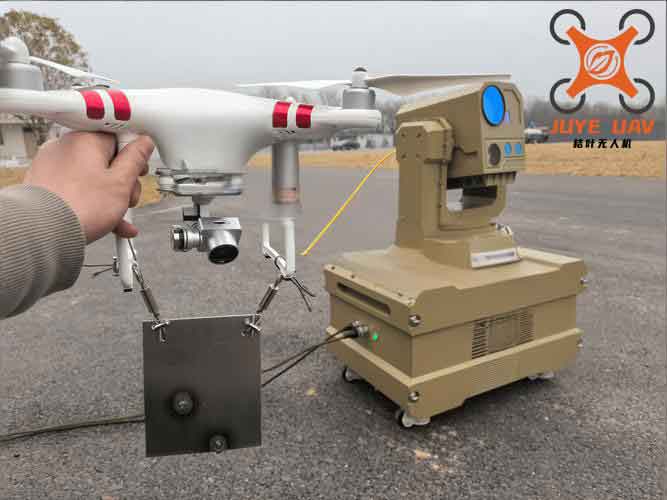
Current anti-drone practices at the artillery battalion level primarily focus on passive and reactive measures. The cornerstone is enhanced camouflage, concealment, and deception (CCD). This involves using multispectral camouflage nets that provide protection across visual, infrared, and radar bands, alongside the deployment of realistic physical decoys (dummy guns, vehicles, and thermal simulants) to saturate the enemy’s targeting cycle. Secondly, units employ electronic countermeasures (ECM), primarily jamming the command and control (C2) links (often in the 1.2GHz, 2.4GHz, and 5.8GHz bands) or Global Navigation Satellite System (GNSS) signals to disrupt drone navigation. The third pillar is procedural: emphasizing rapid shoot-and-scoot tactics to minimize the time a firing position is occupied and visible. However, these measures are increasingly strained by the evolving capabilities of drone systems, revealing significant gaps in the anti-drone shield.
The core challenges in establishing effective anti-drone defense for artillery stem from the drone’s inherent advantages and innovative tactics. These problems are multifaceted:
| Challenge Category | Specific Issues | Consequence for Defender |
|---|---|---|
| Low Detectability | Small radar cross-section (RCS), low acoustic and thermal signatures; use of composite materials and stealth shaping. | Severely reduced early warning time; saturation of air defense picture with “low-slow-small” (LSS) targets. |
| Asymmetric Cost & Swarm Tactics | Low production cost of drones enables mass “swarm” attacks. Loss of individual units is acceptable. | Defensive cost-exchange ratio becomes prohibitive; traditional air defense weapons are economically drained. |
| Autonomous & Networked Operations | AI-enabled swarms with decentralized control; resilience to losing individual nodes. | Difficulty in disrupting the swarm’s mission; no single point of failure to target. |
| Multi-Mission & Deceptive Payloads | Rapid reconfiguration for ISR, electronic warfare (EW), or kinetic strike roles. | Complicates threat identification and prioritization (ISR vs. attack drone). |
| Exploitation of Airspace Gaps | Operation at very low altitudes (below radar coverage) or very high altitudes. | Creates blind spots in traditional air defense radar envelopes. |
A robust anti-drone strategy for artillery positions must therefore be layered, integrated, and proactive. It cannot rely on a single silver bullet but must combine detection, disruption, and destruction across multiple domains. The effectiveness $E_{AD}$ of such an anti-drone system can be conceptualized as the product of interdependent layers:
$$E_{AD} = P_{detect} \cdot P_{disrupt} \cdot P_{destroy} \cdot P_{recover}$$
where each $P$ represents the probability of success in the detection, disruption, destruction, and system recovery layers, respectively.
Layer 1: Integrated Sensing and Early Warning. Defeating drones first requires finding them. A networked sensor grid is essential, fusing data from:
- Radar: Dedicated counter-UAV radars optimized for LSS target detection.
- Electro-Optical/Infrared (EO/IR): Pan-tilt-zoom cameras and thermal imagers for visual confirmation and tracking.
- Radio Frequency (RF) Sensors: Passive detectors to pinpoint drone controller and telemetry signals, providing early cueing.
- Acoustic Sensors: Arrays to detect and triangulate the distinct acoustic signature of small UAV motors.
Data fusion from these disparate sources increases the composite probability of detection $P_{detect}$ and reduces false alarms.
Layer 2: Electronic Warfare and Soft-Kill Disruption. This layer aims to neutralize drones without physical destruction ($P_{disrupt}$). It includes:
- GNSS Jamming/Spoofing: Denying or corrupting satellite navigation signals to cause loss of position or controlled capture.
- C2 Link Jamming: Broadband or targeted jamming of known UAV communication frequencies to force a lost-link return-to-home or landing.
- Cyber-Electronic Attacks: More advanced systems that can hijack the drone’s data stream, taking control or injecting malicious commands.
- Directed Energy (Soft-Kill): High-powered microwave (HPM) systems that can fry the drone’s internal electronics over a wide area, effective against swarms. The effective range $R_{HPM}$ against a swarm density $\rho$ can be related to the power $P$ and antenna gain $G$: $$R_{HPM} \propto \sqrt{\frac{P \cdot G}{\rho}}$$
Layer 3: Kinetic and Hard-Kill Destruction. When drones penetrate the electronic barrier, physical interception ($P_{destroy}$) is required. Options are evolving beyond expensive missiles:
- Kinetic Energy Weapons: Modified air defense artillery or specialized munitions (e.g., shotgun-like fragmentation rounds) effective against drone swarms.
- High-Energy Laser (HEL): Offering a low cost-per-shot, precision engagement to thermally disable drones. The time-to-effect $t_{burn}$ for a laser of power $P_{laser}$ on a target with specific absorption characteristics is a critical parameter.
- Net-Capture Drones: “Hunter” UAVs that physically entangle or capture hostile drones.
Layer 4: Passive Protection and Deception. This foundational layer supports all others by reducing the signature and raising the enemy’s targeting ambiguity. It combines advanced multispectral camouflage, rigorous emission discipline (EMCON), and the widespread use of deceptive signatures (radar reflectors, thermal decoys). The goal is to increase the enemy’s sensor-to-shooter timeline, providing more opportunity for the active anti-drone layers to engage.
Layer 5: Organizational and Tactical Adaptation. Finally, artillery units must institutionalize anti-drone warfare (ADW) into their tactics, techniques, and procedures (TTPs). This includes:
- Designating and training anti-drone teams within units.
- Developing rapid displacement drills that account for the persistent surveillance threat.
- Integrating ADW systems into the unit’s overall air defense and C2 architecture.
- Conducting regular anti-drone exercises in realistic, EW-heavy environments.
The recovery probability $P_{recover}$ is high for a unit that can effectively execute these TTPs after an engagement.
In conclusion, the threat of drone surveillance to artillery is a complex, multi-domain problem demanding an equally sophisticated solution. A successful anti-drone posture is not merely about purchasing new hardware; it requires a holistic system-of-systems approach. By integrating persistent and layered sensing, scalable soft-kill and hard-kill effectors, robust passive protection, and adaptive tactics, artillery forces can significantly degrade the enemy’s ISR advantage. The future of artillery survivability hinges on mastering this integrated anti-drone defense, turning the skies above their positions from a vulnerability into a controlled battlespace.