
As a technical analyst specializing in counter-unmanned aerial systems, I have observed the rapid proliferation of small and medium-sized drones with growing concern. Their low cost, ease of use, and adaptability have democratized aerial capabilities, but this accessibility is a double-edged sword. These platforms are increasingly leveraged for illicit activities, ranging from smuggling and espionage to direct kinetic attacks, as evidenced by conflicts in the Middle East. This evolving threat landscape has catalyzed a global race to develop and deploy effective anti-drone systems. However, the “low, slow, and small” (LSS) signature of these targets presents a paradigm shift from traditional air defense. The engagement protocols, sensor requirements, and kill chains are fundamentally different, often relying on a mix of electronic warfare “soft-kill” and directed energy “hard-kill” measures. Consequently, the operational proficiency of personnel tasked with employing these novel anti-drone systems cannot be assumed; it must be rigorously cultivated. This article details the design philosophy and architectural components of a high-fidelity simulation-based training system, engineered to efficiently and effectively bridge this critical capability gap in complex operational environments.
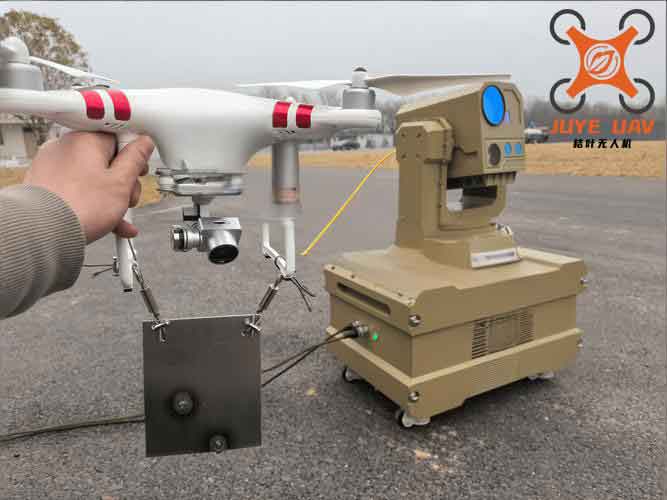
The impetus for a simulated training environment is clear when contrasted with the significant limitations of live training with physical anti-drone systems. Real-world exercises are constrained by hardware availability, maintenance cycles, and restrictive environmental factors like weather, which can severely degrade electro-optical sensor performance. The high unit cost of commercial drones used as realistic targets makes repetitive live-fire training with laser-based interceptors prohibitively expensive. Furthermore, training throughput is bottlenecked by the physical space within operational vehicles, allowing only a handful of trainees per session. A well-designed simulator transcends these limitations, offering a safe, repeatable, scalable, and cost-effective platform for both individual operator training and collective crew drills.
Core Simulator Architecture: Virtualizing the Battlefield
The foundation of any effective anti-drone training system is a high-fidelity simulator that accurately models the key entities and their interactions in a synthetic environment. This involves the creation of computationally rigorous models for targets, sensors, and effectors, all orchestrated within dynamically scriptable scenarios.
1. Drone Target Model Formulation
The target model must encapsulate the defining characteristics of LSS drones to present a credible threat. Our model is structured across three interconnected layers: intrinsic properties, kinematic behavior, and battlefield identity.
Intrinsic Properties: This database contains the physical and electronic fingerprints of various drone types (multi-rotor, fixed-wing). Key parameters include Radar Cross Section (RCS), which is typically very small (on the order of 0.01 m²); communication frequencies for command & control and video downlink; maximum velocity $v_{max}$ and climb/descent rates; endurance; and payload capacity. For a generic quadcopter, these can be summarized as:
$$
\begin{aligned}
& RCS \approx 0.01 \, \text{m}^2 \\
& v_{max} \in [10, 25] \, \text{m/s} \\
& \text{Comms Freq.} \in [2.4, 5.8] \, \text{GHz (ISM bands)}
\end{aligned}
$$
Kinematic Behavior: Beyond simple point-to-point navigation, the model must replicate complex flight modes. This includes stochastic hovering (a significant challenge for Doppler-based radar), high-G maneuvering, pre-programmed ingress/egress routes, and coordinated swarm behaviors. The kinematic state $S(t)$ at time $t$ is defined as:
$$
S(t) = \{ \vec{P}(t), \vec{V}(t), \vec{A}(t), \Phi(t) \}
$$
where $\vec{P}$ is position, $\vec{V}$ is velocity, $\vec{A}$ is acceleration, and $\Phi$ represents the current flight mode (e.g., hover, cruise, evasion).
Battlefield Identity: This layer manages the information available to the trainee’s command and control system. It involves generating or obscuring data like track number, platform type (friend/foe/unknown), assessed threat level, and estimated model based on observed signatures and behavior, feeding into the operator’s decision-making loop.
| Drone Type | RCS (m²) | Max Speed (m/s) | Typical Altitude (m) | Common Freq. Band | Key Behaviors |
|---|---|---|---|---|---|
| Commercial Quadcopter | 0.005 – 0.02 | 15 – 25 | 10 – 120 | 2.4 GHz, 5.8 GHz | Hover, pre-programmed routes, vertical take-off/landing |
| Fixed-Wing UAV | 0.02 – 0.1 | 30 – 50 | 50 – 500 | 433 MHz, 915 MHz | Continuous forward flight, less maneuverable, longer range |
| Micro-Drone | < 0.001 | 5 – 15 | 5 – 50 | 2.4 GHz | Very low altitude, high maneuverability, short endurance |
2. Sensor and Weapon Model Synthesis
A comprehensive anti-drone suite employs a layered sensor grid and diverse effectors. Each virtual device model must simulate its performance characteristics, detection/engagement envelopes, and the specific data messages it generates.
Performance Parameters: Generic attributes include field of regard, probability of detection $P_d$ as a function of range and target RCS, measurement errors (azimuth, elevation, range), and update rate. For a surveillance radar, $P_d$ can be modeled using the radar range equation modified for small targets:
$$
P_d = f\left( \frac{P_t G_t G_r \lambda^2 \sigma}{(4\pi)^3 R^4 k T_s B F_n L} \right)
$$
where $P_t$ is transmit power, $G$ are gains, $\lambda$ is wavelength, $\sigma$ is target RCS, $R$ is range, and the denominator represents system noise. For LSS targets, $\sigma$ and $R$ are small, drastically reducing $P_d$ compared to conventional aircraft.
Device-Specific Features:
- Radar: Models include scan patterns (mechanical, electronic), frequency agility, clutter rejection capabilities, and low-velocity detection thresholds.
- Electro-Optical/Infrared (EO/IR): Models account for resolution, field of view, day/night performance, and degradation due to atmospheric conditions (fog, rain). The maximum detection range can be estimated using contrast and modulation transfer function (MTF) analysis.
- Radio Frequency (RF) Sensors: These models simulate detection, direction-finding, and signal analysis of drone communication links. Parameters include frequency coverage, sensitivity, and probability of intercept.
- Effectors (Jammers, Lasers): Jamming models require parameters like effective radiated power (ERP), jamming bandwidth, and techniques (noise, deception). Laser effector models must compute dwell time $t_{dwell}$ required for lethal effect based on target range $R$, atmospheric attenuation $\alpha$, and laser power $P_{laser}$:
$$
t_{dwell} \propto \frac{R^2 e^{\alpha R}}{P_{laser}}
$$
Data Messaging: Each model generates the specific message types used by the real anti-drone C2 system, such as radar plots/tracks, RF emitter bearing reports, jammer status messages, and laser fire control solutions, ensuring software compatibility for trainees.
| System Type | Key Modeled Parameters | Primary Output Messages | Engagement Role |
|---|---|---|---|
| Surveillance Radar | Scan pattern, min detectable RCS, max/min range, low-speed cutoff | Plot report, Track report, Status report | Wide-area detection & tracking |
| EO/IR & Laser Designator | FOV, resolution, wavelength, atmospheric transmission, slew rates | Video stream, Designated target coordinates, Auto-track status | Positive ID, precision tracking, laser guidance |
| RF Detection & Jamming | Frequency range, DF accuracy, ERP, jamming technique library | Emitter report (bearing, freq), Jamming status, Protocol analysis | Passive detection, C2 link denial (soft-kill) |
| High-Energy Laser | Beam power, wavelength, beam director accuracy, atmospheric loss model | Target engagement order, Dwell time calculation, System readiness | Physical destruction (hard-kill) |
3. Constructing Complex Operational Scenarios
The true training value emerges when models are integrated into dynamic, challenging scenarios. An Instructor/Operator Station (IOS) provides the tools to design and control these environments. Key complex scenario types include:
Swarm Attacks: Simulating multiple drones employing coordinated or emergent behaviors. This stresses sensor correlation, target prioritization, and resource allocation, as engaging a swarm often requires a mix of soft-kill (wide-area jamming) and hard-kill (laser pick-off) tactics.
High-Density Clutter Environments: Placing threats in urban canyons or near critical infrastructure, where radar multipath and line-of-sight limitations for EO/IR and lasers are significant. This trains operators on sensor siting and the use of non-line-of-sight sensors like RF detectors.
Mixed Threat Profiles: Introducing a combination of a slow-moving quadcopter, a fast fixed-wing UAV, and micro-drones simultaneously, each requiring different detection and engagement strategies.
Electronic Countermeasures (ECM): Scripting drones that employ frequency hopping, low-probability-of-intercept (LPI) datalinks, or reactive navigation in response to jamming, testing the limits of the anti-drone system’s electronic support and attack measures.
The scenario editor allows the instructor to define precise spawn times, 4D flight paths, waypoint actions (e.g., hover, orbit), and trigger conditions for drone behaviors, creating a limitless repository of training vignettes.
Comprehensive Training Functionality
The simulator is not merely a sandbox; it is an instrumented training platform centered on an Instructor/Operator Station (IOS). The IOS provides control, monitoring, assessment, and pedagogical tools.
1. Scenario Monitoring and Control
The IOS presents a “God’s-eye-view” of the exercise, displaying the ground truth of all entities. Instructors can monitor the real-time status of all simulated drones (position, health, mode), sensor coverage cones, weapon states (cooling, reload), and communication networks. This situational awareness allows the instructor to make informed decisions about when to inject additional threats, degrade sensor performance (simulating weather), or introduce system faults, maintaining appropriate training pressure.
2. Structured Training Workflow
Training follows a standard anti-drone engagement cycle, allowing trainees to practice their roles (Sensor Operator, Combat Commander, System Monitor) in a cohesive workflow:
- Pre-Mission Planning: Trainees configure the system—setting up defended areas, no-fly zones, sensor schedules, and rules of engagement.
- Detection & Tracking: Trainees manage the sensor suite: controlling radar scan sectors, directing EO/IR cameras, and analyzing RF signals to detect, classify, and establish tracks on potential threats.
- Threat Evaluation & Weapon Assignment: Using the C2 software, trainees assess threat priority (based on proximity, heading, behavior) and run weapon-to-target pairing simulations to determine the optimal effector.
- Engagement: Trainees authorize and execute engagements, whether issuing a jamming command to break a drone’s C2 link or firing a laser effector, observing the simulated result in real-time.
- Battle Damage Assessment (BDA): Trainees confirm the status of engaged targets (e.g., destroyed, drifting, fleeing).
The instructor can pause, rewind, or fast-forward the scenario at any point to highlight lessons, correct errors, or repeat critical sequences.
3. Automated Performance Assessment
A core feature is the objective, automated evaluation of trainee performance. Metrics are calculated for each action and aggregated into a final score. The assessment algorithm typically evaluates three dimensions:
Proficiency (Speed): Time $T_a$ taken to complete an assigned task from the moment it is viable. A lower time yields a higher score. This is normalized against a benchmark time $T_{bench}$ set by subject matter experts.
$$
\text{Speed Score} \propto \frac{T_{bench}}{T_a} \quad \text{for} \quad T_a \leq T_{bench}
$$
Accuracy (Correctness): Binary or graded score $C$ based on whether the correct action was taken (e.g., selecting the right radar mode, assigning the proper weapon). An incorrect action scores 0.
Completeness (Thoroughness): The ratio of completed required tasks $N_{completed}$ to the total number of tasks $N_{total}$ for the scenario.
$$
\text{Completeness Score} = \frac{N_{completed}}{N_{total}}
$$
A composite score $S_{total}$ can be a weighted sum:
$$
S_{total} = w_1 \cdot \text{Speed Score} + w_2 \cdot \text{Accuracy Score} + w_3 \cdot \text{Completeness Score}
$$
where $w_1 + w_2 + w_3 = 1$.
The system generates detailed after-action review (AAR) reports, breaking down performance by phase and task, allowing for focused feedback.
| Assessment Dimension | Measured Variable | Scoring Method | Example |
|---|---|---|---|
| Proficiency | Time-on-Task (T) | Inverse proportional scoring against expert benchmark time. | Taking 45 seconds vs. a 30-sec benchmark to establish a radar track yields a lower score. |
| Accuracy | Correct Action (C) | Binary (0/1) or multi-level scoring (e.g., 0, 0.5, 1). | Selecting “Anti-LSS” radar mode when required scores 1; selecting “Air Surveillance” mode scores 0. |
| Completeness | Tasks Completed (N_c) / Total Tasks (N_t) | Direct ratio calculation. | Completing 18 out of 20 defined scenario tasks yields a score of 0.9. |
4. Integrated Multimedia Didactic Tools
To support both initial familiarization and just-in-time learning, the system incorporates a rich library of multimedia training aids. This includes interactive 3D models of the actual anti-drone vehicles and hardware, allowing trainees to virtually explore component locations. Video tutorials demonstrate standard operating procedures for system startup, shutdown, and basic fault resolution. Structured lessons and technical manuals are accessible within the interface. Furthermore, the system can administer knowledge-based tests on system capabilities, tactics, and identification, ensuring a blend of cognitive and psychomotor skill development.
Conclusion and Future Trajectory
The design of an anti-drone simulation training system based on high-fidelity modeling of targets, sensors, and effectors within complex, dynamically controlled scenarios represents a force multiplier for modern defense forces. It delivers a safe, cost-effective, and highly scalable solution to the critical challenge of building operator competency for these specialized systems. By incorporating a powerful Instructor Station with comprehensive monitoring, control, and automated assessment tools, it benefits not only the trainee but also elevates the instructional capabilities of the trainer. The integration of multimedia materials creates a holistic learning ecosystem that accelerates the transition from novice to proficient operator.
Future enhancements will focus on increasing realism and expanding training scope. This includes integrating more advanced artificial intelligence for drone swarm behaviors, improving physical models for asymmetric damage effects (e.g., partial laser hits), and incorporating virtual/augmented reality interfaces to immerse operators in their actual console environments. Furthermore, linking multiple standalone simulators for distributed, collective team training across geographically separated units will be crucial for rehearsing large-scale anti-drone defense operations. As the drone threat continues to evolve in sophistication, so too must the tools we use to train our defenders, ensuring they maintain a decisive advantage in this new domain of conflict.