
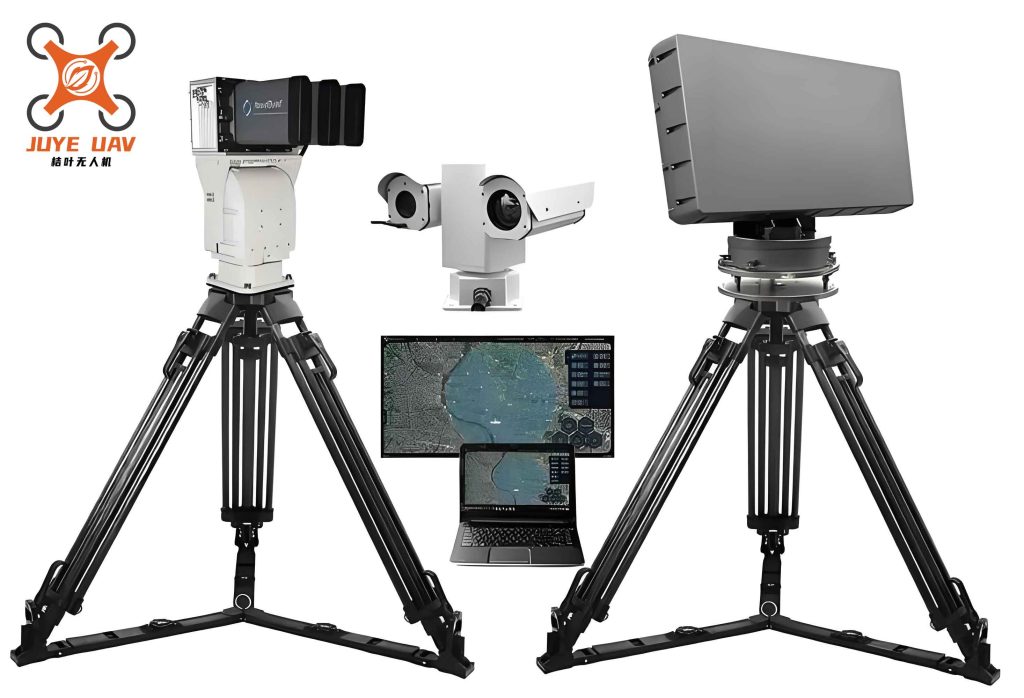
The proliferation of unmanned aerial vehicle (UAV) technology has introduced a pervasive and asymmetric threat to modern battlefields. From low-altitude reconnaissance to swarming and kamikaze attacks, drones have become a critical disruptive factor in contemporary warfare. In response to this growing challenge, directed energy weapons, particularly high-energy laser (HEL) systems, have emerged as a cornerstone of modern counter-UAV, or anti-drone, defense architectures. Laser weapons offer distinct advantages, including near-instantaneous engagement speed, low cost-per-shot, deep magazine capacity, and precision engagement, making them uniquely suited for countering a wide spectrum of drone threats. Operational systems like Israel’s “Iron Beam” and tests by U.S. developers have demonstrated compelling interception rates against small UAVs in various environments. However, the operational effectiveness of a laser weapon in an anti-drone role is not solely determined by its raw power output. It is a complex function of its inherent technical parameters, its performance under realistic combat conditions, and its adaptability to diverse operational scenarios. Therefore, establishing a scientific, robust, and quantifiable framework for assessing the combat effectiveness of different laser weapon systems in anti-drone missions is essential to inform critical decisions regarding system selection, deployment optimization, and tactical employment.
1. Constructing the Anti-Drone Laser Weapon Effectiveness Evaluation Index System
The foundation of any rigorous assessment is a well-structured, comprehensive, and representative set of evaluation criteria. For anti-drone laser weapons, the index system must capture the unique “cause-and-effect” chain from energy generation to target defeat, while also accounting for the practical constraints of the battlefield. Moving beyond generic weapon evaluation models, we propose a three-tiered hierarchy built on the logical progression of “Basic Projection Capability – Comprehensive Combat Efficacy – Scenario Adaptability.” This system comprises 3 primary (first-level) criteria and 12 secondary (second-level) indicators, as detailed in the structure below and summarized in Table 1.
| Tier 1 Criteria (A) | Tier 2 Indicators (B) | Description & Rationale |
|---|---|---|
| A1: Basic Projection Capability | B11: Available Energy (kJ) | The net usable energy stored in the system (full charge minus minimum operational reserve), determining the potential number of shots or duration of sustained fire. A fundamental resource constraint. |
| B12: On-Target Power Density (W/cm²) | The irradiance delivered to the UAV’s surface. This is the core parameter governing lethality, dependent on laser power, beam quality (wavelength, divergence), transmitter aperture, atmospheric transmission, and range. | |
| B13: Beam Aiming Accuracy (µrad) | The angular error in pointing and tracking the target. Critical for maintaining the high irradiance spot on a vulnerable part of a small, maneuvering drone. | |
| B14: Effective Engagement Range (km) | The maximum distance at which the system can achieve a specified probability of kill (e.g., 90%) against a defined drone target under standard conditions. Encapsulates the combined effect of beam propagation, tracking, and lethality over distance. | |
| A2: Comprehensive Combat Efficacy | B21: Single-Shot Kill Probability (SSKP) (%) | The probability that a single engagement (dwell) results in the functional kill or destruction of the target, given specific range, weather, and dwell time conditions. |
| B22: Maximum Continuous Operation Time (min) | The duration the laser can fire continuously before thermal management or energy storage limits require a pause. Governed by cooling capacity and total available energy. | |
| B23: Firepower Transition Time (s) | The time required to disengage from one target, slew, acquire, lock onto, and begin engaging a subsequent target. Crucial for engaging swarms or multiple sequential threats. | |
| B24: Saturation Interception Capacity (# of drones) | The total number of drones the system can defeat in a single engagement cycle (e.g., from full charge to a specified low-energy state), factoring in SSKP, dwell time per kill, and firepower transition time. | |
| A3: Scenario Adaptability | B31: Cooperative Engagement Capability | A qualitative measure of the system’s ability to integrate and operate within a broader air defense network (e.g., data linking, command and control compatibility, sensor cuing). |
| B32: Target Type Adaptability | A qualitative rating of the system’s effectiveness against diverse UAV types (small quadcopters, fixed-wing, Group 1/2/3) based on their size, speed, and material composition. | |
| B33: Environmental Robustness | A qualitative rating of performance consistency across different weather and atmospheric conditions (clear, haze, light rain, fog). Laser propagation is highly sensitive to atmospheric attenuation. | |
| B34: Platform Integration Flexibility | A qualitative rating of the system’s adaptability to different mounting platforms (ground vehicle, naval ship, aircraft), considering size, weight, power, and cooling (SWaP-C) requirements. |
2. The GTOW-TOPSIS Methodology for Anti-Drone Effectiveness Assessment
Assigning appropriate weights to the diverse indicators in Table 1 is a critical and non-trivial step. Sole reliance on subjective expert judgment (e.g., Analytic Hierarchy Process) can introduce bias, while purely data-driven objective methods (e.g., Entropy Weight) may ignore crucial tactical experience. To achieve a balanced and optimal weighting, we propose a hybrid approach: Game Theory Optimized Weighting (GTOW) combined with the Technique for Order Preference by Similarity to Ideal Solution (TOPSIS) for final ranking. This GTOW-TOPSIS framework mitigates the limitations of single-method weighting for a more credible anti-drone effectiveness evaluation.
2.1. Subjective Weighting via Fuzzy Analytic Hierarchy Process (FAHP)
The FAHP extends the classic AHP to handle the imprecision inherent in expert comparisons. Experts provide judgments using a 0.1–0.9 scale to construct fuzzy complementary judgment matrices for each tier of the hierarchy. For a given matrix R = (rij)n×n, where rij denotes the importance of indicator i over j, the subjective weight for indicator i, wiF, is calculated as:
$$ w_i^F = \frac{\sum_{j=1}^{n} r_{ij} + \frac{n}{2} – 1}{n(n-1)} $$
A consistency check is performed to ensure the judgments are logically coherent before the weights are accepted. The final global subjective weight vector WF is obtained by synthesizing weights across all levels of the hierarchy.
2.2. Objective Weighting via Entropy Weight Method
The Entropy Weight method determines weights based on the intrinsic information divergence of the performance data across different laser weapon alternatives. For m alternative systems and n indicators, let the normalized decision matrix (after handling benefit/cost attributes) be P = (pij)m×n.
First, the information entropy ej for the j-th indicator is computed:
$$ e_j = -\frac{1}{\ln m} \sum_{i=1}^{m} p_{ij} \ln(p_{ij}) $$
The information utility value or degree of divergence dj is then:
$$ d_j = 1 – e_j $$
Finally, the objective weight for indicator j is given by:
$$ w_j^E = \frac{d_j}{\sum_{j=1}^{n} d_j} $$
This yields the objective weight vector WE = [w1E, w2E, …, wnE]T.
2.3. Optimal Hybrid Weighting via Game Theory (GTOW)
The GTOW method seeks a Nash equilibrium between the subjective (WF) and objective (WE) weight vectors to find a compromise consensus weight. Let the combined weight vector be a linear combination:
$$ W^* = \alpha_1 \cdot (W^F)^T + \alpha_2 \cdot (W^E)^T $$
where α1 and α2 are combination coefficients to be optimized. The goal is to minimize the deviation between the combined weight and each base weight set, formulated as:
$$ \min \left\| \alpha_1 (W^F)^T + \alpha_2 (W^E)^T – (W^F)^T \right\|_2 $$
$$ \min \left\| \alpha_1 (W^F)^T + \alpha_2 (W^E)^T – (W^E)^T \right\|_2 $$
This leads to solving the following linear equations derived from the first-order optimality conditions:
$$
\begin{bmatrix}
W^F (W^F)^T & W^F (W^E)^T \\
W^E (W^F)^T & W^E (W^E)^T
\end{bmatrix}
\begin{bmatrix}
\alpha_1 \\
\alpha_2
\end{bmatrix}
=
\begin{bmatrix}
W^F (W^F)^T \\
W^E (W^E)^T
\end{bmatrix}
$$
Solving for α1, α2, normalizing them so that α1* + α2* = 1, and substituting back gives the final optimized integrated weight vector:
$$ W^* = \alpha_1^* \cdot (W^F)^T + \alpha_2^* \cdot (W^E)^T $$
This W* represents the balanced weights for the anti-drone laser weapon evaluation indicators, harmonizing expert insight with empirical data.
2.4. Final Ranking via TOPSIS
With the optimal weights W* determined, the TOPSIS method ranks the alternative laser weapon systems. The process is as follows:
Step 1: Construct the Weighted Normalized Decision Matrix (V).
Multiply the normalized performance matrix P by the diagonal matrix of optimal weights W*.
Step 2: Determine the Ideal Solutions.
Identify the Positive Ideal Solution (PIS, V+) and Negative Ideal Solution (NIS, V–). For benefit criteria, PIS is the maximum value; for cost criteria, PIS is the minimum value (and vice-versa for NIS).
$$ V^+ = \{ (\max_i v_{ij} | j \in J_{\text{benefit}}), (\min_i v_{ij} | j \in J_{\text{cost}}) \} $$
$$ V^- = \{ (\min_i v_{ij} | j \in J_{\text{benefit}}), (\max_i v_{ij} | j \in J_{\text{cost}}) \} $$
Step 3: Calculate Separation Measures.
Compute the Euclidean distance of each alternative i from the PIS and NIS.
$$ S_i^+ = \sqrt{ \sum_{j=1}^{n} (v_{ij} – v_j^+)^2 } $$
$$ S_i^- = \sqrt{ \sum_{j=1}^{n} (v_{ij} – v_j^-)^2 } $$
Step 4: Calculate Relative Closeness to the Ideal Solution.
The relative closeness coefficient Ci for each alternative is:
$$ C_i = \frac{S_i^-}{S_i^+ + S_i^-}, \quad 0 \leq C_i \leq 1 $$
A higher Ci indicates better overall anti-drone combat effectiveness. The alternatives are ranked in descending order of Ci.
3. Illustrative Case Study: Assessing Five Laser Weapon Systems
To demonstrate the applicability of the proposed GTOW-TOPSIS framework for anti-drone evaluation, we consider a case study involving five notional laser weapon systems (S1, S2, S3, S4, S5). Their performance data across the 12 quantitative and qualitative indicators are collected, with qualitative ratings (Excellent, Good, etc.) converted to a 5-1 numerical scale. The raw data is presented in Table 2.
| Indicator | Type | Alternative Systems | ||||
|---|---|---|---|---|---|---|
| S1 | S2 | S3 | S4 | S5 | ||
| B11: Available Energy (kJ) | Benefit | 700 | 800 | 1000 | 800 | 650 |
| B12: On-Target Power Density (W/cm²) | Benefit | 500 | 700 | 600 | 550 | 400 |
| B13: Effective Range (km) | Benefit | 3.0 | 5.0 | 4.0 | 3.5 | 2.5 |
| B14: Aiming Accuracy (µrad) | Cost | 1 | 8 | 5 | 6 | 4 |
| B21: SSKP (%) | Benefit | 90 | 95 | 88 | 92 | 90 |
| B22: Max Op Time (min) | Benefit | 180 | 100 | 120 | 160 | 200 |
| B23: Transition Time (s) | Cost | 2.5 | 5 | 4 | 3 | 1 |
| B24: Saturation Capacity (#) | Benefit | 10 | 8 | 12 | 8 | 7 |
| B31: Cooperative Capability | Benefit | 5 (E) | 4 (G) | 4 (G) | 3 (F) | 4 (G) |
| B32: Target Adaptability | Benefit | 4 (G) | 5 (E) | 3 (F) | 4 (G) | 2 (P) |
| B33: Environmental Robustness | Benefit | 4 (G) | 2 (P) | 2 (P) | 4 (G) | 3 (F) |
| B34: Platform Flexibility | Benefit | 3 (F) | 4 (G) | 2 (P) | 2 (P) | 4 (G) |
Note: E=Excellent(5), G=Good(4), F=Fair(3), P=Poor(2).
Following the steps outlined in Section 2, we first calculate the subjective weights using FAHP based on expert pairwise comparisons. Then, we calculate the objective weights using the Entropy method based on the data in Table 2. Finally, the GTOW method is applied to find the optimal combined weights. The resulting weight vectors from all three methods are compared in Table 3.
| Indicator | FAHP Weight (WF) | Entropy Weight (WE) | GTOW Optimal Weight (W*) |
|---|---|---|---|
| B11 | 0.0933 | 0.0791 | 0.0836 |
| B12 | 0.1050 | 0.0573 | 0.0725 |
| B13 | 0.0817 | 0.0704 | 0.0740 |
| B14 | 0.0700 | 0.0517 | 0.0575 |
| B21 | 0.1200 | 0.0695 | 0.0856 |
| B22 | 0.0933 | 0.0656 | 0.0744 |
| B23 | 0.0800 | 0.0554 | 0.0633 |
| B24 | 0.1067 | 0.0843 | 0.0915 |
| B31 | 0.0729 | 0.1857 | 0.1497 |
| B32 | 0.0667 | 0.0635 | 0.0645 |
| B33 | 0.0583 | 0.1088 | 0.0927 |
| B34 | 0.0521 | 0.1088 | 0.0907 |
The GTOW process yielded optimal combination coefficients of α1* = 0.319 and α2* = 0.681, indicating a greater reliance on the objective entropy weights in this case, while still incorporating expert judgment. Notable differences are observed; for example, FAHP assigns high importance to On-Target Power Density (B12) and SSKP (B21), reflecting expert focus on core lethality parameters. The Entropy method, driven by data variability, assigns very high weight to Cooperative Capability (B31) and the adaptability indicators (B33, B34), suggesting these are key discriminators among the five alternatives. The GTOW weights strike a balance, moderating the extremes.
Applying the GTOW-derived weights W* within the TOPSIS procedure, we calculate the separation distances (S+, S–) and the relative closeness coefficient (Ci) for each laser system. The final ranking for anti-drone combat effectiveness is presented in Table 4.
| Laser System | Distance to PIS (S+) | Distance to NIS (S–) | Relative Closeness (Ci) | Overall Rank |
|---|---|---|---|---|
| S1 | 0.1586 | 0.2047 | 0.5635 | 1 |
| S2 | 0.2150 | 0.1822 | 0.4587 | 2 |
| S3 | 0.1796 | 0.1382 | 0.4348 | 3 |
| S4 | 0.2299 | 0.1583 | 0.4078 | 4 |
| S5 | 0.2521 | 0.1319 | 0.3435 | 5 |
The results indicate that System S1 possesses the best integrated anti-drone combat effectiveness among the five alternatives, with the highest closeness coefficient of 0.5635. While it may not lead in every single parameter (e.g., its range is less than S2 and S3), it exhibits a well-balanced and robust profile with strong performance in key areas like aiming accuracy, environmental robustness, and cooperative capability, as weighted by the GTOW model. System S5 ranks last, primarily due to its lower scores in power density, target adaptability, and environmental robustness, which are heavily weighted in the final assessment.
4. Concluding Remarks
Evaluating the combat effectiveness of laser weapons in the critical anti-drone mission requires a nuanced and multidimensional approach. This work has presented a comprehensive framework to address this need. The proposed evaluation index system moves beyond generic models by explicitly linking the fundamental physics of laser engagement (Basic Projection Capability) with operational outcomes (Comprehensive Combat Efficacy) and practical deployment constraints (Scenario Adaptability). To overcome the biases inherent in single-method weighting, the hybrid GTOW-TOPSIS methodology was introduced. This approach strategically integrates the experiential wisdom captured by FAHP with the data-driven objectivity of the Entropy Weight method, achieving an optimal balance through a game-theoretic equilibrium. The illustrative case study validated the framework’s practicality, demonstrating its ability to process both quantitative and qualitative data to produce a clear, defensible ranking of alternative anti-drone laser systems. The GTOW-TOPSIS framework provides defense analysts and decision-makers with a robust, transparent, and adaptable tool for comparative assessment. It supports critical functions such as capability gap analysis, procurement justification, deployment optimization, and operational planning for directed energy-based anti-drone defenses, ultimately contributing to more resilient and effective protection against evolving aerial threats.