
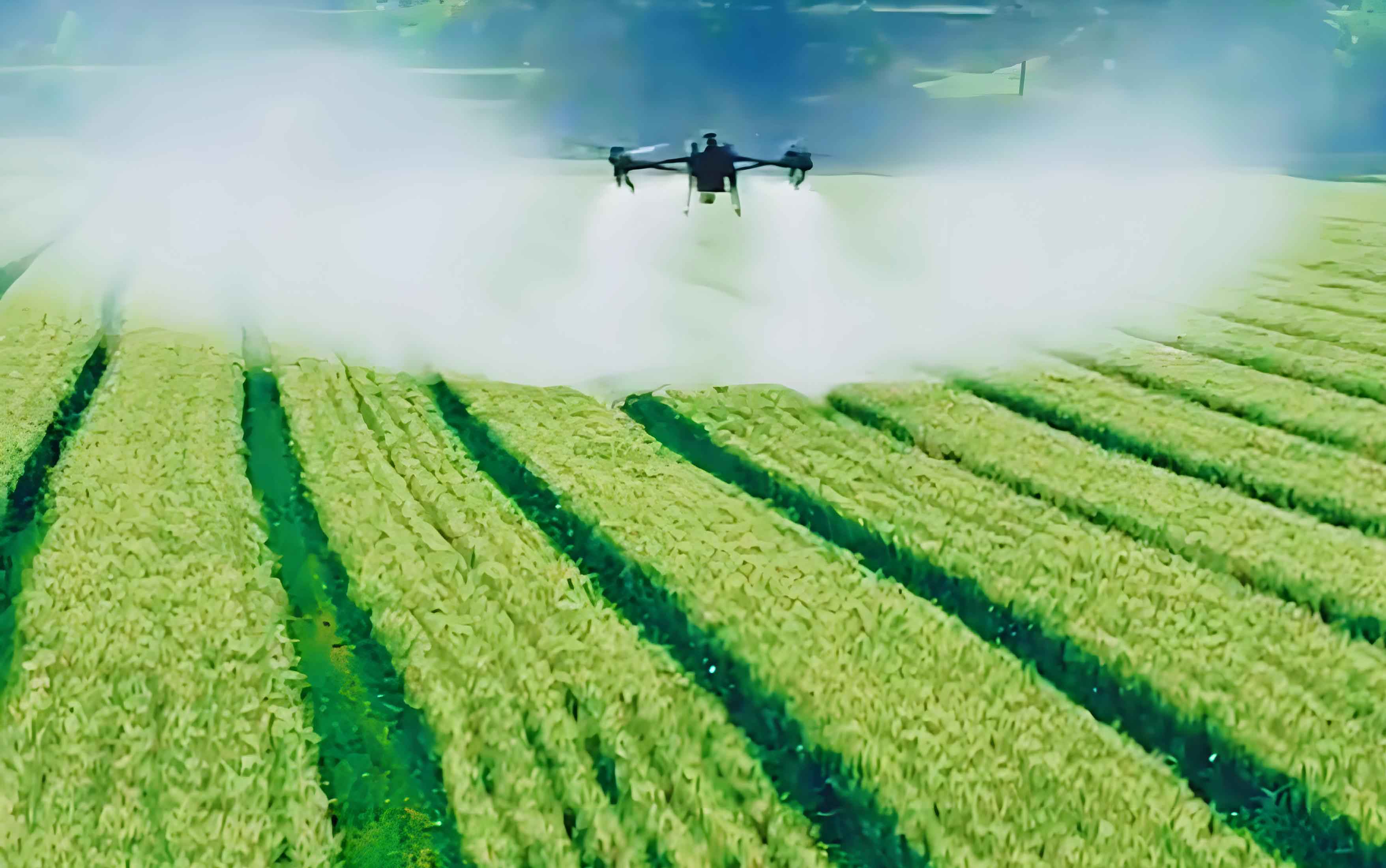
Smart agriculture represents a transformative economic paradigm shift driven by technological evolution, integrating information technology, IoT, big data, and AI to enable intelligent, efficient farming. Central to this revolution are agricultural drones (UAVs), which execute precision tasks like spraying, pollination, and seeding. Their operational efficiency can be quantified by:
$$
\text{Operational Efficiency } (\eta) = \frac{\text{Area Covered per Unit Time (ha/hr)} \times \text{Resource Savings (\%)}}{\text{Operational Cost}}
$$
Despite their potential, vocational education struggles to cultivate industry-ready talent. At a vocational university in Guangxi, an overhaul of the agricultural UAV curriculum addressed critical gaps through systemic reforms.
Theoretical Foundations and Vocational Alignment
Curriculum design merged Competency-Based Education with Systems Theory, ensuring modular coherence. Vocational demands emphasized:
- Practical immersion: 60% lab/field work.
- Industry integration: Direct alignment with precision farming standards.
The framework prioritized dynamic updates to reflect real-time technological shifts in agricultural drone systems.
Identifying Systemic Shortcomings
Pre-reform diagnostics revealed five core issues:
| Problem Area | Manifestation | Impact |
|---|---|---|
| Outdated Content | Absence of AI-driven pest analytics, multispectral imaging | Skills-market disconnect |
| Insufficient Practice | 1 instructor per 40 students; <10 hrs/practical module | Low operational proficiency |
| Faculty Gaps | 70% instructors lacking industry UAV certification | Obsolete technical pedagogy |
| Evaluation Deficits | Over 50% weight on theoretical exams | Neglected problem-solving skills |
| Weak Industry Links | No collaborative R&D; superficial internships | Graduate employability lag |
Curriculum Reconstruction Framework
The redesigned program featured three pillars:
| Module | Components | Delivery Mode |
|---|---|---|
| Core Theory | Smart Agronomy, UAV Aerodynamics, FAA Regulations | Flipped classrooms + MOOCs |
| Technical Skills | Path Planning, Payload Calibration, Data Interpretation | VR simulators + field drills |
| Applied Projects | Rice Blast Mitigation, Citrus Canopy Management | Corporate co-mentored capstones |
Project-based learning required solving real-world challenges like optimizing spray dispersion:
$$
\text{Droplet Density } (D_d) = \frac{\text{Nozzle Flow Rate (l/min)} \times \text{Swath Width (m)}}{\text{Flight Speed (m/s)}}
$$
Resource and Faculty Transformation
Strategic investments modernized infrastructure:
- Dedicated agricultural UAV labs with 25+ drones and edge-computing stations.
- Industry partnerships providing proprietary flight-log software.
Faculty upskilling included:
- Mandatory annual UAV operator certifications.
- Corporate residencies for 30% of staff.
Pedagogical Innovation and Assessment
Hybrid learning merged:
- Gamified micro-modules for autonomous navigation theory.
- Field trials using IoT-enabled agricultural drones for crop health mapping.
A multifactor evaluation system replaced exams:
$$
\text{Final Grade} = 0.3 \times \text{Project Portfolio} + 0.4 \times \text{Skill Demos} + 0.2 \times \text{Peer Review} + 0.1 \times \text{Theory Test}
$$
Quantifiable Outcomes and Future Trajectory
Post-implementation metrics showed:
- 40% rise in job placements with agritech firms.
- 85% pass rate for national UAV certification.
- 30% reduction in pesticide use in student-managed plots.
Sustainability requires:
- Semesterly curriculum updates reflecting AI advancements.
- Global partnerships for cross-border agricultural UAV research.
This paradigm demonstrates how dynamically structured education bridges the smart agriculture talent gap, positioning agricultural drones as catalysts for sustainable food systems.