
Tea, a globally significant cash crop, faces substantial threats from pests and diseases that compromise yield and quality. Traditional monitoring and spraying methods are labor-intensive and imprecise. As a transformative solution, agricultural drones (or agricultural UAVs) have emerged, revolutionizing tea plantation management through precision, efficiency, and sustainability.
Defining Agricultural Drones
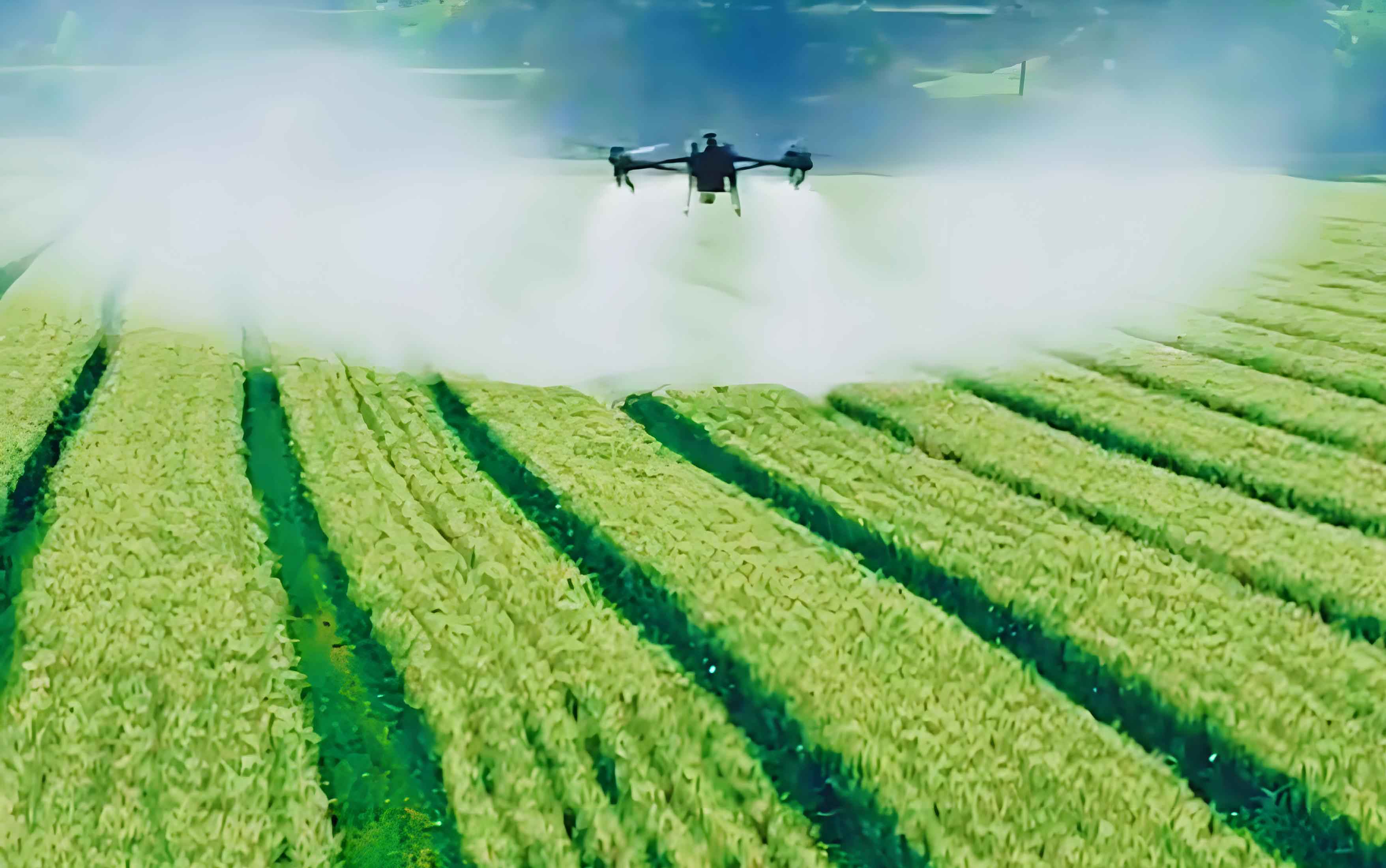
Agricultural drones are unmanned aerial vehicles engineered for crop protection. Equipped with spraying systems or multispectral sensors, they execute tasks like pesticide application, fertilization, and health monitoring. Core advantages include:
| Advantage | Description |
|---|---|
| Flight Stability | Advanced control systems enable steady hovering and navigation in complex terrains. |
| Operational Simplicity | Intuitive remote/app controls reduce training requirements. |
| High Efficiency | Rapid coverage of large areas minimizes operational time. |
| Uniform Spraying | Atomization technology ensures consistent agrochemical distribution. |
Applications in Tea Cultivation
Pest and Disease Monitoring
Agricultural drones equipped with multispectral sensors detect early infestations by analyzing spectral reflectance. Key vegetation indices like the Normalized Difference Vegetation Index (NDVI) quantify plant health:
$$ NDVI = \frac{(NIR – Red)}{(NIR + Red)} $$
where \( NIR \) is near-infrared reflectance and \( Red \) is visible red reflectance. Deviations in NDVI values signal stress, enabling targeted interventions.
Precision Spraying Operations
Agricultural UAVs optimize pesticide application. Compared to manual methods, they enhance coverage and reduce chemical usage:
| Method | Daily Coverage (mu) | Pesticide Utilization Rate (%) |
|---|---|---|
| Agricultural Drone | 200 | >70 |
| Manual Spraying | 5 | ~30 |
Note: 1 mu ≈ 0.067 hectares
Spraying efficiency \( E_s \) is calculated as:
$$ E_s = \left( \frac{\text{Effective Coverage Area}}{\text{Total Area}} \right) \times 100\% $$
Fertilizer Application
Agricultural UAVs enable variable-rate fertilization based on soil and plant data. Fertilizer utilization rate (FUR) improves dramatically:
$$ FUR = \left( \frac{\text{Nutrient Absorbed by Plants}}{\text{Total Nutrient Applied}} \right) \times 100\% $$
Drone operations elevate FUR from 60% to 85%, minimizing waste and environmental impact.
Growth Vigor Assessment
Multispectral data from agricultural drones track chlorophyll content and hydration levels. Critical metrics include:
$$ Chlorophyll Index = \frac{NIR}{Green} – 1 $$
Continuous monitoring informs irrigation and nutrient schedules, boosting yield potential.
Case Study: 300-Mu Tea Plantation
We deployed DJI Agras T40 agricultural drones in a mountainous tea estate. Implementation involved:
- Preparation: Terrain mapping and operator training.
- Operations: Flight altitude of 2 meters, real-time monitoring via multispectral sensors.
- Results:
| Metric | Pre-Implementation | Post-Implementation |
|---|---|---|
| Pest Incidence | 100% (Baseline) | 60% |
| Yield | 100% (Baseline) | 115% |
| Labor Cost | $X/mu | $0.7X/mu |
| Fertilizer Utilization | 60% | 85% |
Future Development Trends
Agricultural drone technology will evolve through:
- AI Integration: Autonomous navigation and anomaly detection using machine learning.
- Cost Reduction: Scalable manufacturing lowering upfront investment.
- Policy Frameworks: Standardized regulations for flight safety and agrochemical use.
- Multi-Functionality: Soil moisture mapping and yield prediction via advanced sensors.
The operational scope of agricultural UAVs will expand, with swarm coordination efficiency modeled as:
$$ \text{Swarm Efficiency} = \frac{n \times \text{Area}_{drone}}{\text{Time}_{operation}} $$
where \( n \) is the number of drones.
Conclusion
Agricultural drones enhance tea plantation sustainability through precision spraying, efficient monitoring, and resource optimization. Challenges like battery life and regulatory gaps persist, but advancements in AI and cost reduction will drive broader adoption. As agricultural UAV technology matures, it will become indispensable for high-yield, eco-friendly tea production.