
As modern communications, artificial intelligence, and other technologies advance rapidly, the design and development of unmanned equipment have entered a new era. Unmanned Aerial Vehicles (UAVs) applied in the military domain have become a key focus for nations worldwide. Compared to the domestic UAV industry, foreign military UAVs started earlier, accumulating extensive development experience and advanced concepts. In this article, we explore the current status of operational military UAV systems among foreign forces, analyze their advanced practices and experiences in system construction and development, and project future trends based on operational patterns. The term ‘military UAV’ will be emphasized throughout to highlight its significance in modern warfare.
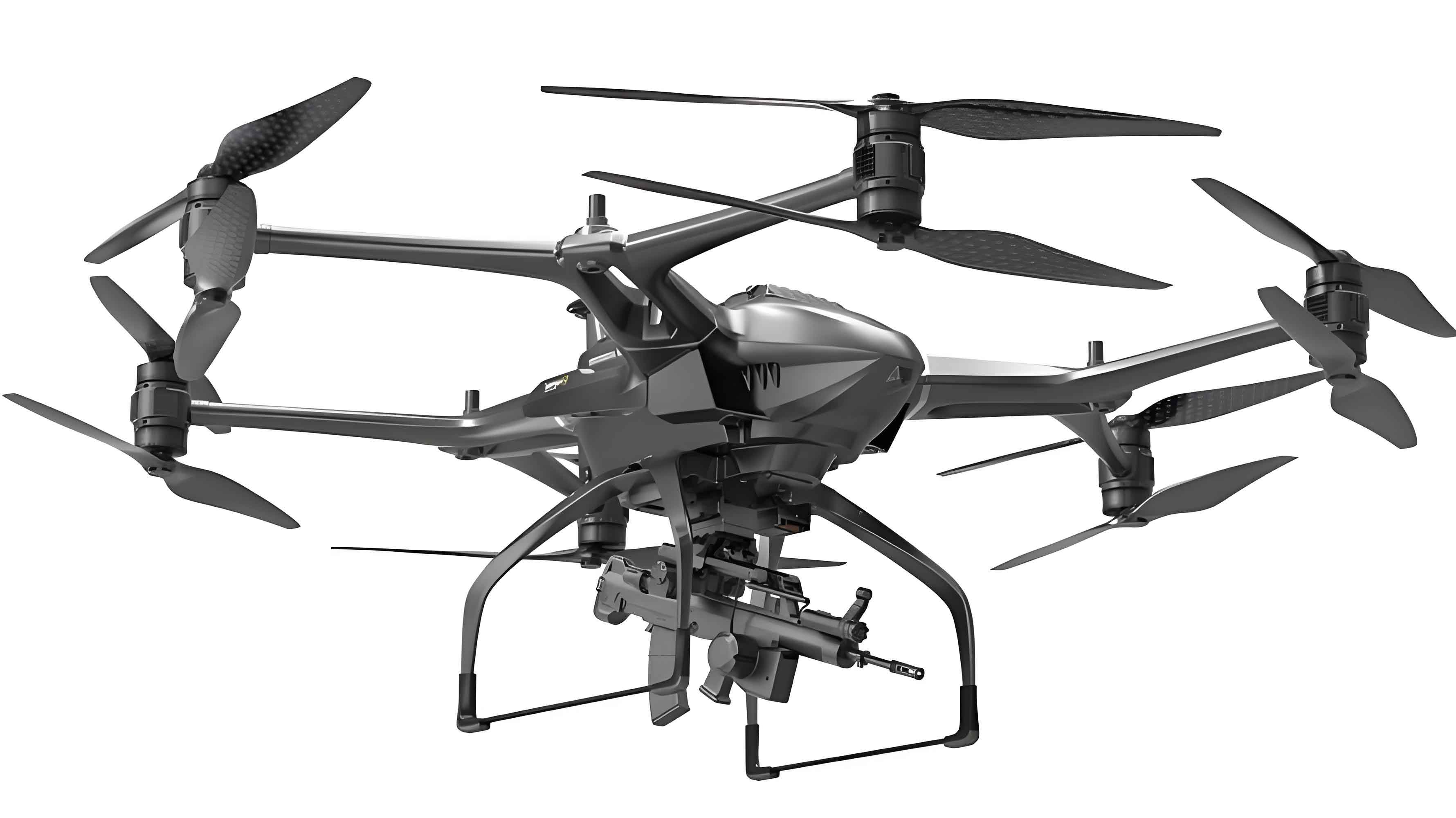
The military UAV, as an unmanned aircraft controlled via radio remote or autonomous programming, has gained favor globally due to its performance advantages such as versatility, low cost-effectiveness, high survivability, and mobility. Today, it has become a crucial new air combat force. Leading military powers, notably the United States, invest heavily in expanding application methods and practical models, having developed and fielded over 20 types of military UAVs for various units. Their RQ and MQ series have been deployed in overseas joint operations and counter-terrorism missions multiple times. Influenced by this, countries like Russia, Israel, the United Kingdom, and France have increased their efforts in military UAV development and investment, accelerating the formation of a ‘unmanned rivalry’ landscape. This article delves into the systematic research on foreign military UAV systems, focusing on the US, Israel, and other nations, and examines the evolving trends shaping the future of military UAV technology.
Research on Foreign Military UAV Systems
Foreign military forces have prioritized the development of unmanned equipment and operational systems, with military UAVs at the forefront. We analyze the systems of key players, emphasizing the role of military UAVs in enhancing strategic capabilities.
US Military UAV Research
The United States, as a world military power, places high importance on unmanned equipment and combat systems, particularly the application and development of military UAVs. From the strategic document “Unmanned Systems Integrated Roadmap FY2013-2038” released by the Department of Defense in September 2013, it is evident that the US military aims to optimize nearly 60 types of UAVs over the next decade for comprehensive operations under all-weather complex conditions, including non-military actions. Additionally, based on iterative requirement assessments, new models continue to be developed and modified for contingency needs. The US has refined technical and tactical parameter classification standards for military UAVs, with the Pentagon’s research management center specifying parameters for ultra-micro categories, such as dimensions not exceeding 50–75 mm in any direction and flight capabilities of 1,000 m at speeds of 25–35 km/h, aiming to integrate design and application for mission-specific optimization.
The US military has established a relatively systematic and complete military UAV system, continuously improving it based on post-operational effectiveness evaluations. Below, we present a table summarizing typical US military UAV models according to refined standards, highlighting the diversity of military UAV platforms.
| Classification Standard | Name | Technical and Tactical Indicators |
|---|---|---|
| Nano | Nano Hummingbird | Battery-powered, speed 17.7 km/h, endurance 8 min |
| Micro | MicroStar | Battery-powered, speed 20 km/h, endurance approx. 20 min |
| Small | Pointer | Battery-powered, operational radius 5 km, endurance 20 min to 1 h |
| Light | Shadow 200 (RQ-7B) | Catapult/rocket-assisted takeoff, operational radius 80 km, endurance 5–6 h |
| Medium | Predator (RQ-1) | Taxi/rocket-assisted takeoff, operational radius 3,700 km, endurance 40 h |
| Large | Dark Star (RQ-3A) | Taxi/rocket-assisted takeoff, operational radius 1,850 km, endurance 8–12 h |
| Heavy | Global Hawk (RQ-4) | Taxi/rocket-assisted takeoff, operational radius 5,500 km, endurance 42 h |
To quantify the performance of military UAVs, we can use formulas such as for endurance time: $$E = \frac{W \cdot \eta}{P}$$ where \(E\) is endurance time, \(W\) is energy weight (e.g., fuel or battery capacity), \(\eta\) is efficiency, and \(P\) is power consumption. For instance, in the Global Hawk military UAV, high endurance is achieved through optimized energy management. Another key metric is operational radius, given by $$R = v \cdot t$$ where \(R\) is radius, \(v\) is cruising speed, and \(t\) is time. These formulas help in assessing military UAV capabilities across classifications.
The participation of US military UAVs in local wars from 1990 to 2011 demonstrates their operational utility. The table below summarizes this involvement, underscoring the widespread use of military UAVs in conflicts.
| UAV Model | Operation Code | Time | Location |
|---|---|---|---|
| Dragon Eye | Operation Iraqi Freedom | 2003 | Iraq |
| MQ-1 Predator | Operation Enduring Freedom | 2001 | Afghanistan |
| RQ-4 Global Hawk | Operation Iraqi Freedom | 2003 | Iraq |
| RQ-7 Shadow | Airstrikes in Syria | 2011 | Syria |
Based on the Third Offset Strategy and actual needs for anti-access/area denial, the US military has focused on upgrading armed military UAVs. For example, in 2016, the MQ-9 Reaper military UAV was enhanced with two fuel tanks each holding 612 kg, increasing endurance to over 22 hours and payload to 1,700 kg. The Avenger Extended Range military UAV added 1,000 kg of fuel by utilizing inner wing sections, achieving a range of 12,900 km and endurance of 20 hours. In small military UAVs, the US Air Force’s “Small Unmanned Aircraft Systems Flight Plan 2016-2036” prioritizes developing small platforms and improving human-UAV teaming, notably in distributed low-cost “swarm tactics” like the Gremlins project. The US Navy has also demonstrated swarm penetration of Aegis systems using Coyote UAV clusters. These efforts highlight the US’s scientific planning, rational direction selection, and emphasis on operational effectiveness improvements. Future trends for US military UAVs include reduced R&D projects due to budget instability, with upgrades to existing models becoming mainstream, and development shifting toward miniaturization, sophistication, and hybridization. The military UAV remains central to these advancements.
Israeli Military UAV Research
Israel, due to frequent military applications and urgent task requirements, ranks second only to the US in military UAV development and application, also being a UAV powerhouse. In the Middle East wars, its tactical use of military UAVs has been exemplary, serving as a learning model for UAV tactical support in ground operations worldwide. Israel possesses various types of military UAVs, with typical models summarized in the table below.
| Classification Standard | Name | Technical and Tactical Indicators |
|---|---|---|
| Small | Skylark Series | Catapult launch, operational radius 10 km, endurance 2 h |
| Light | Pioneer (RQ-2) | Catapult/rocket-assisted takeoff, operational radius 185 km, endurance 3.5–4 h |
| Large Long-Endurance | Heron TP | Piston engine/propeller, operational radius 350 km, endurance 50 h |
| Suicide Attack | Harop | Piston engine/propeller, cruising speed 250 km/h, loiter time 6 h |
| Rescue/Medevac | Air Mule | Turbine engine/propeller, payload 227 kg |
Unlike the US, Israeli military UAV R&D institutions have recently focused on upgrading rescue and anti-radiation military UAVs. In December 2016, the Cormorant medevac military UAV, capable of flying to high-risk areas, completed its first autonomous flight. This 1-ton “ambulance” uses radar, lidar altimeters, and high-sensitivity sensors for autonomous control, enabling delivery of supplies to combat zones or rapid evacuation of casualties. Regarding anti-radiation military UAVs, Israel has enhanced performance against evolving missile defense systems, promoting export of existing models while breaking new ground in miniaturization, rapid deployment, and engine optimization. Israel’s modular series development approach saves defense funds and allows adaptation to more mission needs by altering engine types and payloads. This model is worth studying and emulating. Future trends for Israeli military UAVs include emphasizing multi-UAV coordinated actions and协同作战 between military UAVs, manned aircraft, satellites, and missiles. The military UAV is pivotal in these协同 strategies.
Military UAV Research in Other Countries
Due to limited R&D funding and technical levels, and considering the high efficiency and cost-effectiveness of military UAVs, some countries adopt joint development models or use leasing methods to advance their military UAV system industries. Notable examples include the UK’s Watchkeeper and Taranis, and France’s Neuron. The Watchkeeper military UAV results from the Joint UAV Experimentation Programme (JUEP) and Watchkeeper UAV system plan, designed as a tactical system for use in NATO forces. The Taranis military UAV is the UK’s first high-tech stealth UAV, featuring exceptional stealth, AI systems, and recognition capabilities for autonomous command execution and defense, with intercontinental flight ability transforming Royal Air Force combat concepts. The Neuron military UAV, led by France with participation from Sweden, Spain, Italy, Switzerland, and Greece, can operate independently without instructions, performing self-correction in complex environments. It incorporates stealth, automatic fault tolerance, neural networks, and AI for target identification and capture, enabling adaptive mission execution. After multiple tests, it has addressed technologies like formation flight control, information fusion, and tactical decision-making with fire coordination. These examples illustrate global efforts in advancing military UAV capabilities through collaboration.
To compare the development focus across countries, we present a table summarizing key military UAV projects and their attributes, emphasizing the role of military UAVs in national defense strategies.
| Country | Project/Model | Key Features | Development Status |
|---|---|---|---|
| United States | Gremlins Swarm | Low-cost, swarm tactics, electronic attack | Ongoing R&D |
| Israel | Harop Anti-Radiation | Suicide attack, loitering, anti-radar | Operational and exported |
| United Kingdom | Taranis | Stealth, AI, intercontinental range | Prototype tested |
| France/Consortium | Neuron | Autonomous, stealth,协同作战 | Demonstration phase |
The performance of these military UAVs can be modeled using formulas for stealth effectiveness, such as radar cross-section reduction: $$\sigma = \sigma_0 \cdot e^{-k \cdot t}$$ where \(\sigma\) is the reduced cross-section, \(\sigma_0\) is the original, \(k\) is a material constant, and \(t\) is thickness. This highlights the technological advancements in military UAV design.
Development Trends of Military UAVs
Currently, military forces worldwide highly prioritize the development of unmanned equipment, striving to seize technological high ground to achieve strong military deterrence with minimal resources and personnel, aiming for “winning without fighting” strategic intent. Especially for leading UAV powers like the US, denial/access is a primary direction for future military conflict trends. Accordingly, as the “vanguard” of future military operations, the strategic position of military UAVs becomes more prominent, battlefield deployment more frequent, and tactical methods and styles for offense and defense around military UAVs more diverse. It is certain that in future integrated land, sea, air, space, electronic, and cyber operations, military UAVs will not only perform various non-lethal tasks like surveillance, reconnaissance, and communications guidance under complex conditions but also utilize mounted weapons for conventional or unconventional strikes against enemies. With breakthroughs in advanced layouts, integrated design, nanocomposites, and smart skins/structures, the future of military UAVs is rapidly evolving, showing the following trends.
Expanded Application Scope
The application scope of military UAVs is expanding in several dimensions, driven by mission requirements and technological progress. We discuss key aspects below, with mathematical models to illustrate capabilities.
Polarization: Military UAVs will develop toward two poles: high-altitude long-endurance (HALE) large platforms and micro swarm systems. HALE military UAVs can cover vast operational areas, providing comprehensive real-time intelligence via onboard equipment. These military UAVs can approach near-space altitudes, maintaining flight for weeks or months through aerial refueling or high-energy battery charging. For example, by 2030, the US plans to assign strategic and operational aerial surveillance tasks to satellites and HALE military UAVs. The endurance of such military UAVs can be expressed as: $$T_{\text{total}} = T_{\text{base}} + \sum_{i=1}^{n} \frac{F_i}{C_i}$$ where \(T_{\text{total}}\) is total endurance, \(T_{\text{base}}\) is base endurance, \(F_i\) is fuel added in refueling \(i\), and \(C_i\) is consumption rate. Conversely, micro swarm military UAVs leverage small size,隐蔽性, high mobility, and low cost, favored by special forces. As military actions shift from remote areas to populated cities, micro military UAVs can penetrate狭小空间, detect死角, and carry non-lethal weapons like EMP or explosives for close operations. Swarm development is a focus for the US, Russia, Israel, and others. The US DARPA’s Gremlins project involves launching and recovering swarms of micro military UAVs equipped for electronic attack and close reconnaissance. Swarm performance can be modeled using collective behavior equations: $$\frac{dx_i}{dt} = f(x_i) + \sum_{j \neq i} g(x_i, x_j)$$ where \(x_i\) is the state of UAV \(i\), \(f\) is individual dynamics, and \(g\) is interaction function. This highlights the polarization trend in military UAV applications.
Multi-purpose: Driven by technology and operational needs, the utility of military UAVs has continuously expanded, now forming a comprehensive task system. Against air targets, military UAVs can打击高价值目标, perform medium-to-long-range interception, and close air combat; against ground, they provide fire suppression, air support, and time-sensitive/strategic target strikes; against sea, they execute anti-surface and anti-submarine attacks; additionally, they handle missile defense, cyber-electronic warfare, emergency communications, and logistics. Through “one platform, multiple payloads” or “plug-and-play” configurations, military UAVs achieve multi-role functionality, meeting complex行动需求 under emergencies. The versatility of a military UAV can be quantified by a capability index: $$C = \sum_{k=1}^{m} w_k \cdot A_k$$ where \(C\) is overall capability, \(w_k\) is weight for mission type \(k\), and \(A_k\) is performance score. This multi-purpose nature ensures military UAVs remain adaptable.
Unrestricted Takeoff and Landing: Since the US X-47B’s successful carrier deck takeoff and landing, vertical takeoff and landing (VTOL) military UAVs that require no runway have become a key R&D focus. Examples include Israel’s Air Mule and the US Department of Defense’s Tern. These military UAVs differ from helicopter UAVs, offering superior flight distance, endurance, and space efficiency under同等载荷. They are ideal for limited spaces like islands, where long runways are impractical, and can enhance防空作用 when协同 with manned aircraft. The VTOL capability can be described by thrust-to-weight ratio: $$\frac{T}{W} > 1$$ where \(T\) is thrust and \(W\) is weight, ensuring vertical lift. This trend expands deployment options for military UAVs.
Enhanced Operational Effectiveness
Operational effectiveness of military UAVs is improving exponentially through advancements in speed, stealth, surveillance, data transmission, control, and协同. We explore each aspect with relevant formulas and tables.
High Speed and Stealth: Military operations value隐秘性和迅速性, making stealth a critical survival指标 for military UAVs. Technologies include composites, radar-absorbent and infrared-suppressive materials, reduced surface gaps, improved skin structures, and low-noise engines. For speed, the US first-generation hypersonic unmanned attack aircraft X-51 reaches Mach 5, while the second-generation HTV-2, despite test failures, aims for Mach 20 by 2020 through control improvements, enabling “one-hour global strike”战略意图. Other countries are also investing in high-speed stealth military UAVs and countermeasures. The relationship between speed and detectability can be modeled: $$D = \frac{S}{v} + \alpha \cdot \sigma$$ where \(D\) is detection probability, \(S\) is sensor sensitivity, \(v\) is speed, \(\alpha\) is constant, and \(\sigma\) is radar cross-section. This shows the trade-offs in military UAV design.
Integrated Surveillance and Reconnaissance Means: To gather more intelligence for全维全域侦察, nations equip military UAVs with advanced surveillance tools beyond高清变焦彩色摄像机, such as third-generation infrared sensors and synthetic aperture radar (SAR). As electro-optical detection and IT advance, sensors on military UAVs will become more sophisticated and integrated. The resolution of SAR can be expressed as: $$\delta_r = \frac{c}{2B}$$ where \(\delta_r\) is range resolution, \(c\) is speed of light, and \(B\) is bandwidth. This enhances the reconnaissance capabilities of military UAVs.
Diversified Data Transmission Methods: Timely情报信息传递和处理 is essential for military operations. Military UAVs as侦察先锋 carry advanced data transmission systems. One type uses satellite-based systems, like UHF satellite links for periodic high-resolution still images or dedicated satellites for real-time态势图像输出. Another employs specified band data link systems for communication within ranges. The data rate can be given by Shannon’s formula: $$C = B \log_2(1 + \frac{S}{N})$$ where \(C\) is capacity, \(B\) is bandwidth, \(S\) is signal power, and \(N\) is noise power. This ensures reliable communication for military UAVs.
Intelligent Flight Control and Strike: UAV flight control ensures stable attitude and autonomous/semi-autonomous flight, comprising hardware like IMU, GPS, barometers, ultrasonic modules, microcomputers, and interfaces. Military UAVs prioritize high stability and precision, critical for mission success. Control modes include remote, programmed, and intelligent autonomous flight. As tasks grow more complex, intelligent control and strike become key. An autonomous decision model can use: $$a^* = \arg\max_a Q(s,a)$$ where \(a^*\) is optimal action, \(Q\) is value function, and \(s\) is state. This enables military UAVs to adapt dynamically.
Cluster Synergy: Military UAVs are now fielded in large numbers across services in欧美等国. Due to global economic downturn and defense budget cuts, low-cost military UAVs will replace manned aircraft and cruise missiles as primary battlefield forces, leading to mixed有人/无人力量集群 and independent clusters. Examples include Neuron and Taranis for manned-UAV teaming, and Gremlins for UAV swarm独立行动. With advances in无人自主技术, micro military UAV swarm operations将成为主流, reducing costs and energy consumption while improving agility. Other集群式无人化装备 like unmanned ground and naval vehicles will emerge. Synergy effectiveness can be measured by: $$E_{\text{swarm}} = n \cdot e_{\text{individual}} \cdot \gamma(n)$$ where \(n\) is number of military UAVs, \(e_{\text{individual}}\) is individual effectiveness, and \(\gamma(n)\) is synergy factor (>1 for positive协同). This trend underscores the future of military UAV operations.
To summarize these trends, we present a table comparing key aspects of military UAV development, emphasizing how军事无人机 are evolving.
| Trend Category | Specific Aspect | Technological Enablers | Impact on Military UAVs |
|---|---|---|---|
| Application Scope | Polarization | HALE platforms, micro-electromechanical systems | Extended reach and swarm tactics |
| Application Scope | Multi-purpose | Modular payloads, AI integration | Versatility in missions |
| Application Scope | VTOL Capability | Advanced propulsion, control algorithms | Flexible deployment |
| Operational Effectiveness | High Speed/Stealth | Hypersonic engines, stealth materials | Survivability and rapid strike |
| Operational Effectiveness | Integrated Surveillance | Multi-spectral sensors, data fusion | Enhanced situational awareness |
| Operational Effectiveness | Diversified Data Transmission | Satellite coms, secure data links | Real-time intelligence分享 |
| Operational Effectiveness | Intelligent Control | Machine learning, autonomous systems | Reduced human intervention |
| Operational Effectiveness | Cluster Synergy | Swarm intelligence,协同 algorithms | Collective combat power |
Conclusion
In this article, we have systematically examined the current status of military UAV systems among foreign forces, focusing on the United States, Israel, and other countries. Through in-depth analysis of foreign military UAVs and their future trends, we can foresee that unmanned equipment based on deep AI decision-making control and command will become the protagonist of future military operations. The development of unmanned equipment centered on winning unmanned wars will be a top priority for military powers worldwide. The military UAV, as a cornerstone of this transformation, will continue to evolve in polarization, multi-purpose roles, VTOL capabilities, speed and stealth, integrated surveillance, diversified data transmission, intelligent control, and cluster synergy. Mathematical models and formulas, such as those for endurance $$E = \frac{W \cdot \eta}{P}$$ and swarm effectiveness $$E_{\text{swarm}} = n \cdot e_{\text{individual}} \cdot \gamma(n)$$, help quantify these advancements. As nations invest in military UAV technologies, the landscape of warfare will shift toward greater autonomy and efficiency, with the military UAV at the heart of this paradigm shift. We emphasize that ongoing research and collaboration will shape the next generation of military UAVs, ensuring their pivotal role in global security strategies.