
In the era of agricultural modernization, the integration of intelligent agricultural machinery and agricultural drones, specifically plant protection UAVs, has emerged as a transformative force, driving unprecedented efficiency in production management. This synergy leverages automation and smart technologies to optimize tasks like soil cultivation, fertilization, seeding, pest monitoring, and precision spraying. Having been successfully deployed on numerous farms for several years, this approach has demonstrated significant benefits, including reduced labor costs, minimized environmental impact, and enhanced crop yields. However, practical implementation reveals persistent challenges: high technical complexity, escalating maintenance expenses, algorithmic bottlenecks, and inadequate real-time monitoring and feedback mechanisms. These issues hinder widespread adoption and full performance realization. In this analysis, I explore the underlying principles, identify critical problems, and propose actionable solutions to accelerate the evolution of sustainable agriculture through advanced technological integration.
The core of this synergy lies in a unified system architecture where intelligent agricultural machinery handles ground-based operations such as tilling and planting, while agricultural UAVs excel in aerial tasks like pest surveillance and targeted chemical application. This integration relies on seamless data exchange, facilitated by interconnected modules for data collection, transmission, processing, and sharing. For instance, sensors on both systems capture real-time data on soil moisture, crop health, and pest infestations, which is wirelessly transmitted to a central hub. Advanced algorithms, powered by big data and cloud computing, analyze this information to enable dynamic decision-making. A typical workflow involves task planning based on agricultural needs, data acquisition during operations, transmission via networks like 5G, analytical processing for insights, optimization of parameters, execution of adjusted tasks, and feedback loops for continuous improvement. This structured approach ensures coordinated functionality, as evidenced by field trials where efficiency gains exceeded 20% and resource savings were substantial.
Data interoperability is fundamental to this synergy. The data collection module gathers inputs from diverse sources, such as soil probes and drone-mounted cameras. Transmission occurs over robust wireless channels, with latency minimized for real-time responsiveness. Processing employs machine learning models to filter and interpret data, while sharing mechanisms push actionable insights back to equipment. To quantify efficiency, consider the formula for operational coverage:
$$ \text{Efficiency} = \frac{\text{Area Covered}}{\text{Time}} \times \text{Accuracy Factor} $$
Here, the accuracy factor accounts for precision in tasks like spraying, where agricultural UAVs reduce chemical usage by up to 30%. Functional coordination is further enhanced through intelligent task allocation, where algorithms dynamically assign roles based on priority and environmental conditions. For example, in response to sudden pest outbreaks, agricultural drones are prioritized for rapid aerial intervention, while ground machinery adjusts planting schedules. Studies show that optimized scheduling can improve resource utilization by over 25%, as summarized in Table 1.
| Coordination Aspect | Key Mechanism | Impact on Efficiency |
|---|---|---|
| Task Allocation | AI-driven priority ranking based on real-time data | Reduces idle time by 20-30% |
| Real-time Adjustment | Dynamic parameter updates via cloud analytics | Enhances precision by 15-25% |
| Data Sharing | Unified protocols for cross-device communication | Cuts decision latency by 40% |
This visual representation underscores the role of agricultural drones in achieving such gains. Field validations, such as those in rice-wheat rotation systems, reported labor savings above 50% and yield increases of 3%, with errors under 2.5 cm, highlighting the potential when algorithms are finely tuned. However, achieving this requires overcoming substantial barriers.
Despite the advantages, the technical complexity of integrating intelligent agricultural machinery with agricultural UAVs drives up maintenance costs. A standard plant protection UAV, priced around $7,000, incurs significant initial outlays for batteries and accessories. Operating expenses compound this; for instance, battery consumption alone accounts for approximately 10% of costs per mission. If covering 10,000 acres annually at $15 per acre, battery costs reach $15,000. Depreciation adds another 20% yearly over a 5-year lifespan, alongside repair, training, and management overheads. The total cost model can be expressed as:
$$ \text{Total Cost} = C_{\text{initial}} + C_{\text{operating}} + C_{\text{maintenance}} $$
where \( C_{\text{operating}} = \text{Fuel/Battery Cost} + \text{Labor Cost} \), and \( C_{\text{maintenance}} \) includes parts and software updates. For small to mid-sized farms, this represents a formidable barrier, limiting scalability. Algorithmic interoperability presents another hurdle; disparate data standards and slow transmission impede real-time analysis, causing inefficiencies in task scheduling. Response delays in dynamic scenarios, such as weather shifts, can degrade accuracy by up to 15%, as current models lack the sophistication for rapid adaptation. Moreover, continuous monitoring systems often fail to provide real-time feedback due to technological gaps. Without instantaneous data loops, resource wastage escalates—estimated at 10-20% of inputs—and crop losses mount. Organizational silos and insufficient training exacerbate this, preventing proactive adjustments.
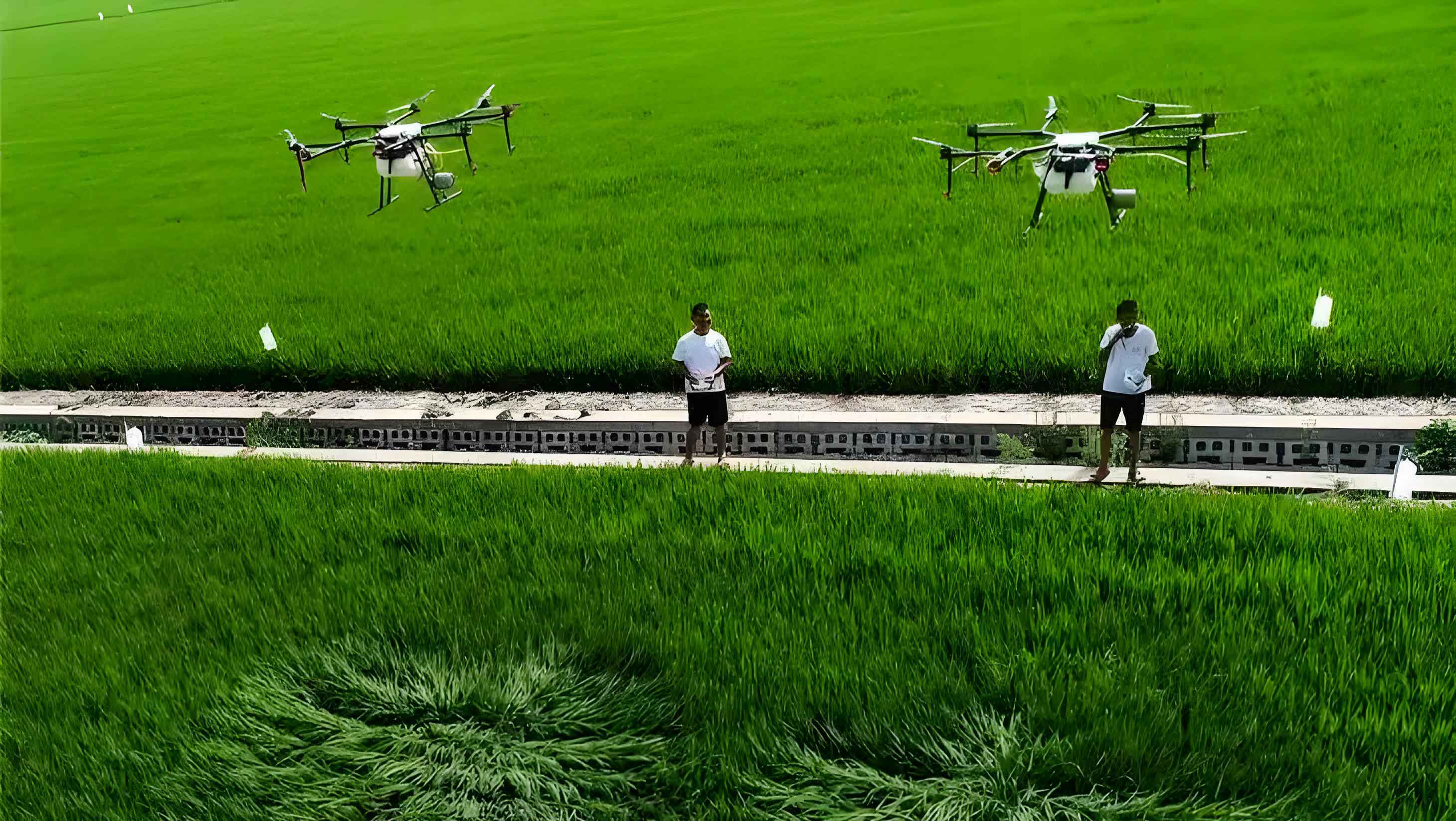
To address these challenges, optimizing equipment design is crucial for cost reduction. Large farms can leverage bulk procurement and partnerships with manufacturers to standardize components, while smaller operations benefit from shared maintenance platforms and rental schemes for agricultural drones. Collaborations with tech firms can yield modular designs that simplify repairs, cutting expenses by 15-20%. Training programs for operators enhance efficiency, reducing labor costs by 10%. Government subsidies, as piloted in some regions, further alleviate financial burdens, making adoption more accessible. Additionally, fostering industry-academia partnerships accelerates algorithmic breakthroughs. By engaging universities and research institutes, farms can integrate advanced AI, such as reinforcement learning, to refine task allocation. This improves response times and data harmonization, as shown by trials where algorithm upgrades boosted scheduling efficiency by 30%. Standardizing data formats and enhancing transmission protocols, like using edge computing, minimizes delays, enabling real-time decisions.
Establishing comprehensive operational platforms is vital for robust monitoring. A centralized management system enables remote diagnostics and predictive maintenance, reducing downtime by 25%. Implementing feedback loops with IoT sensors ensures continuous data flow, allowing for immediate parameter tweaks. For example, precision models can be refined using:
$$ \text{Optimization Score} = \alpha \times \text{Data Accuracy} + \beta \times \text{Response Time} $$
where coefficients α and β are calibrated via machine learning. Training initiatives for farmers foster active participation, while incentive programs encourage reporting of anomalies. This holistic approach, inspired by successful models like standardized production systems, ensures scalability. Table 2 outlines the strategic framework for overcoming barriers.
| Challenge | Solution Strategy | Expected Outcome |
|---|---|---|
| High Maintenance Costs | Design optimization and rental programs for agricultural UAVs | Cost reduction by 20-30% |
| Algorithmic Bottlenecks | AI integration through research collaborations | Efficiency gain of 25-35% |
| Inadequate Monitoring | Centralized platforms with real-time feedback | Resource waste cut by 15-25% |
In conclusion, the synergistic operation of intelligent agricultural machinery and agricultural drones represents a pivotal advancement in modern farming, offering substantial productivity and sustainability benefits. Yet, challenges like cost escalations, algorithmic limitations, and feedback deficiencies constrain its potential. By adopting strategies such as cost-effective design innovations, collaborative research for smarter algorithms, and integrated monitoring platforms, we can surmount these obstacles. This will not only enhance operational efficacy but also propel agricultural modernization, fostering a future where resource-efficient, high-yield farming becomes the global norm. As agricultural UAVs evolve, their integration with ground machinery will continue to redefine agricultural landscapes, driving toward a more resilient and productive agri-food system.