
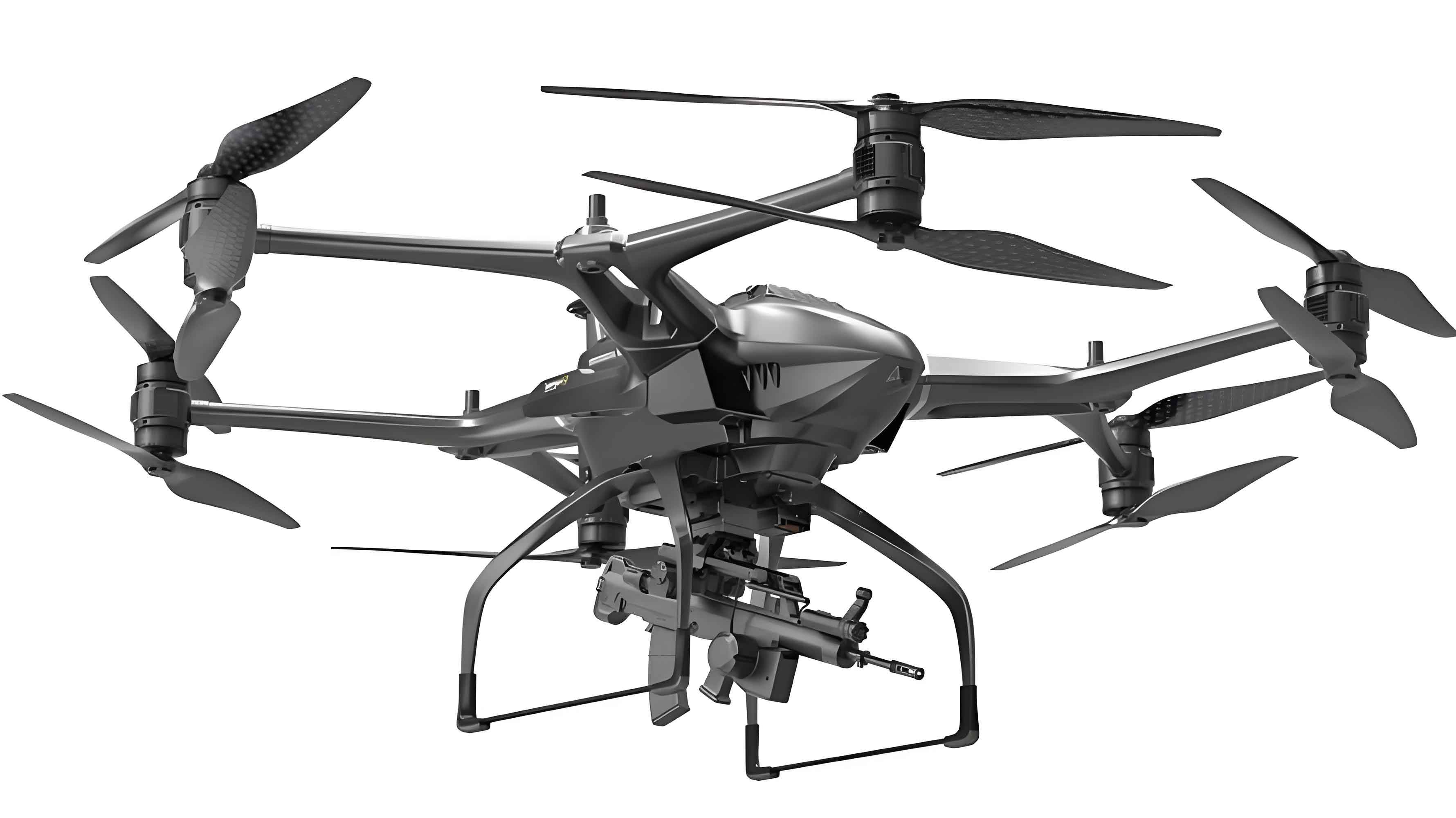
The strategic landscape of Central Asia, comprising Kazakhstan, Kyrgyzstan, Tajikistan, Turkmenistan, and Uzbekistan, has been undergoing a quiet but significant transformation in its defense postures. A key driver of this change is the accelerated adoption and integration of military UAV technology. Nestled at the crossroads of Eurasia, bordering conflict zones like Afghanistan and marked by intricate, often disputed internal boundaries, the region presents unique security challenges. The proliferation of military UAV systems offers these nations enhanced capabilities for surveillance, border control, and deterrence, altering traditional paradigms of power projection and territorial defense. This analysis delves into the development trajectories, operational applications, and broader strategic implications of military UAV assets across the five Central Asian states.
1. The Developmental Trajectory of Central Asian Military UAV Fleets
The journey of military UAV technology in Central Asia began in the Soviet era, limited primarily to target drones like the LA-17. The post-independence period saw a technological hiatus until the early 2000s, when global defense contractors, notably from Israel, identified the region as a potential market. Since then, acquisition strategies have diverged based on national budgets, threat perceptions, and strategic partnerships, leading to a diverse ecosystem of military UAV platforms.
1.1. Turkmenistan: The Early and Diversified Adopter
Turkmenistan holds the distinction of being the first post-Soviet state in the region to pursue modern military UAV capabilities. Its strategy has been characterized by early and diversified procurement from non-traditional suppliers.
- Early Procurement (2009-2016): Initial interests included Russian “Zala” systems for counter-terrorism. This was followed by acquisitions from Italy (Selex ES “Falco” UAVs) and China (models like the CH-3A and WJ-600A/D showcased in national parades).
- Strategic Diversification (2021-Present): Turkmenistan significantly expanded its portfolio by integrating Turkish and Israeli systems. The Baykar Bayraktar TB2 armed UAV and the Elbit Systems “Skystriker” loitering munition were paraded, marking a clear shift towards combat-capable platforms. It also operates smaller tactical systems like the Insitu “ScanEagle” and ADS “Orbiter 2B”.
- Limited Indigenous Steps: Attempts at local assembly under Belarusian license for the “Busel” series UAVs were reported around 2016 but have not led to sustained indigenous production.
Turkmenistan’s military UAV fleet is arguably the most varied and advanced in the region, reflecting its “positive neutrality” foreign policy through diversified sourcing.
1.2. Uzbekistan: From Procurement to Aspirational Production
Uzbekistan’s path involves initial cautious procurement followed by a recent, decisive push towards establishing domestic capabilities.
- Phased Acquisitions: Early tests involved Israeli “Skylark” and “Hermes” systems. Major procurements include the US-made “RQ-11B Raven” and AeroVironment “Puma AE” for tactical reconnaissance. Flight tests of the Chinese “Wing Loong-I” MALE (Medium-Altitude Long-Endurance) UAV were conducted.
- Operational Integration: In 2023, President Shavkat Mirziyoyev was shown the operational Bayraktar TB2 system, confirming its deployment within Uzbek forces.
- Drive for Indigenous Capacity: Uzbekistan has publicly stated ambitions to become a regional hub for military UAV technology. The “Lochin” series of multi-role UAVs, developed by a state-owned scientific production center, represents the first claimed indigenously produced military-grade UAV in Central Asia. The government has directly ordered the establishment of local UAV assembly lines.
1.3. Kazakhstan: Pursuing a Dual-Track Strategy
Kazakhstan, with the largest economy and defense budget, is pursuing a comprehensive strategy combining direct purchase, licensed production, and indigenous R&D.
- Multi-Source Procurement: Its inventory includes Israeli “Skylark I-LEX” and “Heron MK II” UAVs, Chinese “Wing Loong-I”, and Russian “Orlan-10” systems. It has also received US “Raven” drones for border security.
- Licensed Production Agreements: Kazakhstan has signed landmark agreements to assemble foreign systems locally. A deal with Turkish Aerospace Industries (TAI) to assemble the “Anka” MALE UAV makes Kazakhstan the first country outside Turkey licensed for its production. Earlier agreements with Israel’s Elbit Systems also laid groundwork for local UAV manufacturing.
- Indigenous Development: The state-owned engineering group has developed and tested the “Shagala” and improved “Shagala-M” mini-UAVs, indicating serious investment in domestic R&D for military UAV technology.
1.4. Kyrgyzstan and Tajikistan: Security-Driven Acquisitions
These two nations, with smaller economies and a history of border clashes, have entered the military UAV arena more recently, driven by immediate security imperatives.
- Kyrgyzstan: Following deadly border conflicts with Tajikistan in 2021-2022, Kyrgyzstan accelerated purchases. It acquired Turkish Bayraktar TB2 and Russian “Orlan-10E” drones. Future plans may include larger Turkish systems like the “Aksungur” and “Akinci”. Its approach remains primarily procurement-based.
- Tajikistan: After a failed attempt to purchase Bayraktar TB2 drones (reportedly blocked by Kyrgyzstan), Tajikistan turned to Iran. In 2022, it established an assembly plant for the Iranian “Ababil-2” tactical UAV in Dushanbe, marking a significant strategic partnership and providing a foothold for indigenous assembly capabilities.
The following table summarizes the key military UAV types and sources across Central Asia:
| Country | Key UAV Types & Roles | Primary Source Countries | Indigenous/Assembly Status |
|---|---|---|---|
| Turkmenistan | Bayraktar TB2 (Attack), Falco (MALE ISR), Skystriker (Loitering Munition), ScanEagle (Tactical ISR) | Turkey, Italy, Israel, China, USA | Limited past assembly (Belarus license). |
| Uzbekistan | Bayraktar TB2 (Attack), Wing Loong-I (MALE), Puma AE/Raven (Tactical), Lochin (Multi-role) | Turkey, China, USA, Israel, Domestic | Active indigenous production (“Lochin”); ordered local assembly. |
| Kazakhstan | Heron MK II (MALE), Wing Loong-I (MALE), Anka (MALE – future), Orlan-10 (Tactical), Shagala-M (Mini) | Israel, China, Turkey, Russia, Domestic | Licensed production (Anka); Indigenous R&D (Shagala series). |
| Kyrgyzstan | Bayraktar TB2 (Attack), Orlan-10E (Tactical) | Turkey, Russia | Procurement only. |
| Tajikistan | Ababil-2 (Tactical Attack) | Iran (Assembly) | Local assembly plant operational. |
2. Operational Applications of Military UAVs in Central Asia
The deployment of military UAV systems in the region is tailored to address its specific security landscape. The applications can be modeled based on mission profiles:
1. Border Surveillance and Sovereignty Enforcement: This is the paramount application. The long, rugged, and often contested borders make continuous manned patrols inefficient. Military UAV platforms provide persistent ISR (Intelligence, Surveillance, Reconnaissance) capabilities to monitor illicit trafficking, illegal crossings, and military build-ups. The US-provided “Raven” drones to Kazakh and Uzbek border services exemplify this use. The operational payoff can be conceptualized as an increase in effective patrol coverage. If a ground patrol covers an area \(A_g\) in time \(t\), a military UAV with speed \(v_u\) and loiter time \(L\) can cover an area proportional to \(v_u \times L\), significantly greater than \(A_g\), enhancing situational awareness.
$$ \text{Coverage Ratio} \approx \frac{v_u \cdot L}{A_g / t} $$
2. Counter-Terrorism and Internal Security: The threat of spillover from Afghanistan and the presence of extremist groups necessitate advanced monitoring capabilities. Military UAV systems, particularly MALE types like the “Heron” or “Wing Loong”, offer wide-area surveillance of remote regions like the Ferghana Valley or the Tajik-Afghan border, providing early warning and target identification for counter-terror operations.
3. Artillery Correction and Battlefield Awareness: The 2022 Kyrgyzstan-Tajikistan border conflict served as a stark demonstration. Reports indicated Tajik forces used UAVs for reconnaissance and fire correction, increasing the accuracy and lethality of indirect fire. This event was a catalyst for regional nations, highlighting the transformative impact of even tactical military UAV systems in conventional border clashes.
4. Deterrence and Signaling: The acquisition of armed military UAV systems like the Bayraktar TB2 is not only about capability but also about strategic signaling. Possessing a weapon system demonstrated effective in conflicts (Nagorno-Karabakh, Ukraine) serves as a deterrent to neighbors and projects a image of military modernization to both allies and adversaries.
3. Drivers, Challenges, and Strategic Calculus
The rapid infusion of military UAV technology into Central Asia is driven by a confluence of factors, but also faces significant hurdles.
3.1. Key Drivers
- Asymmetric Security Needs: Nations need to guard vast territories with limited manpower and traditional equipment. Military UAV systems offer a cost-effective force multiplier.
- Regional Arms Dynamics: Actions by one state (e.g., Turkmenistan buying TB2s) create security dilemmas, prompting neighbors (Uzbekistan, Kyrgyzstan) to follow suit, leading to regional proliferation.
- Diversification of Partnerships: Acquiring military UAV from Turkey, Israel, China, or Iran allows states to reduce dependence on a single major power (traditionally Russia), enhancing strategic autonomy.
- Demonstrated Effectiveness: The proven combat performance of platforms like the Bayraktar TB2 in recent wars has made them highly desirable assets.
3.2. Persistent Challenges
- Limited Capacity and Sustainability: Small fleet sizes, a shortage of trained operators and maintenance crews, and fragile logistics chains for spare parts and munitions limit operational readiness. The total number of high-end military UAV platforms in any Central Asian country remains in the single digits or low teens.
- Financial Constraints: Despite being relatively affordable compared to manned aircraft, building a robust military UAV ecosystem with training, C2 systems, and sustainment is expensive for smaller economies like Kyrgyzstan and Tajikistan.
- Technological Dependency: Even “indigenous” models often rely on foreign-made critical components (engines, sensors, datalinks). Licensed assembly builds some capacity but does not equate to full technological sovereignty.
- Vulnerability to Counter-UAV Systems: As regional military UAV fleets grow, so does the incentive to acquire electronic warfare and air defense systems to counter them, potentially leading to a new arms race.
4. Future Trajectories and Conclusion
The future of military UAV development in Central Asia points towards consolidation, increased capability, and deeper strategic entanglements.
- Qualitative Upgrade: The focus will shift from initial acquisition to acquiring more capable, armed MALE/HALE (High-Altitude Long-Endurance) UAVs, integrated satellite communication, and sophisticated payloads (SAR, SIGINT).
- Industrialization of Capacity: Kazakhstan and Uzbekistan will push their licensed production and indigenous programs. The success of the “Anka” assembly line in Kazakhstan will be a key regional benchmark.
- Doctrinal Integration: The greatest challenge will be moving beyond ad-hoc use to fully integrating military UAV systems into national defense doctrines, joint operations with ground forces, and combined air defense networks.
- Geopolitical Alignment: Military UAV procurement will remain a barometer of strategic alignment. Turkish drones indicate deepening Ankara ties, Iranian assembly signals a Tehran-Dushanbe axis, while Russian and Chinese systems maintain traditional linkages.
In conclusion, Central Asia has emerged as a active and dynamic market for military UAV technology. The adoption of these systems is fundamentally altering the region’s security calculus, providing smaller nations with unprecedented surveillance and strike capabilities. While challenges of capacity, sustainability, and doctrine remain significant, the trend is clearly towards greater proliferation and sophistication. The military UAV is no longer a novelty but a central component of national defense strategies across the region, reflecting its adaptation to the realities of 21st-century warfare and its enduring, complex security dilemmas. The continued evolution of Central Asia’s military UAV landscape will be a critical factor in shaping the regional balance of power and the nature of future conflicts.