
As an observer and analyst in the field of defense technology, I have witnessed a transformative shift in the capabilities of small tactical platforms. The evolution of compact Electro-Optical/Infrared (EO/IR) payloads represents one of the most significant advancements, fundamentally altering the role of small and micro military UAVs. Once limited primarily to basic intelligence gathering and surveillance, these platforms are now emerging as multi-role assets capable of complex missions including precision targeting, battle damage assessment, and direct fire support. This metamorphosis is driven by relentless innovation in sensor miniaturization, multi-spectral integration, and stabilization technologies, all while adhering to stringent Size, Weight, and Power (SWaP) constraints.
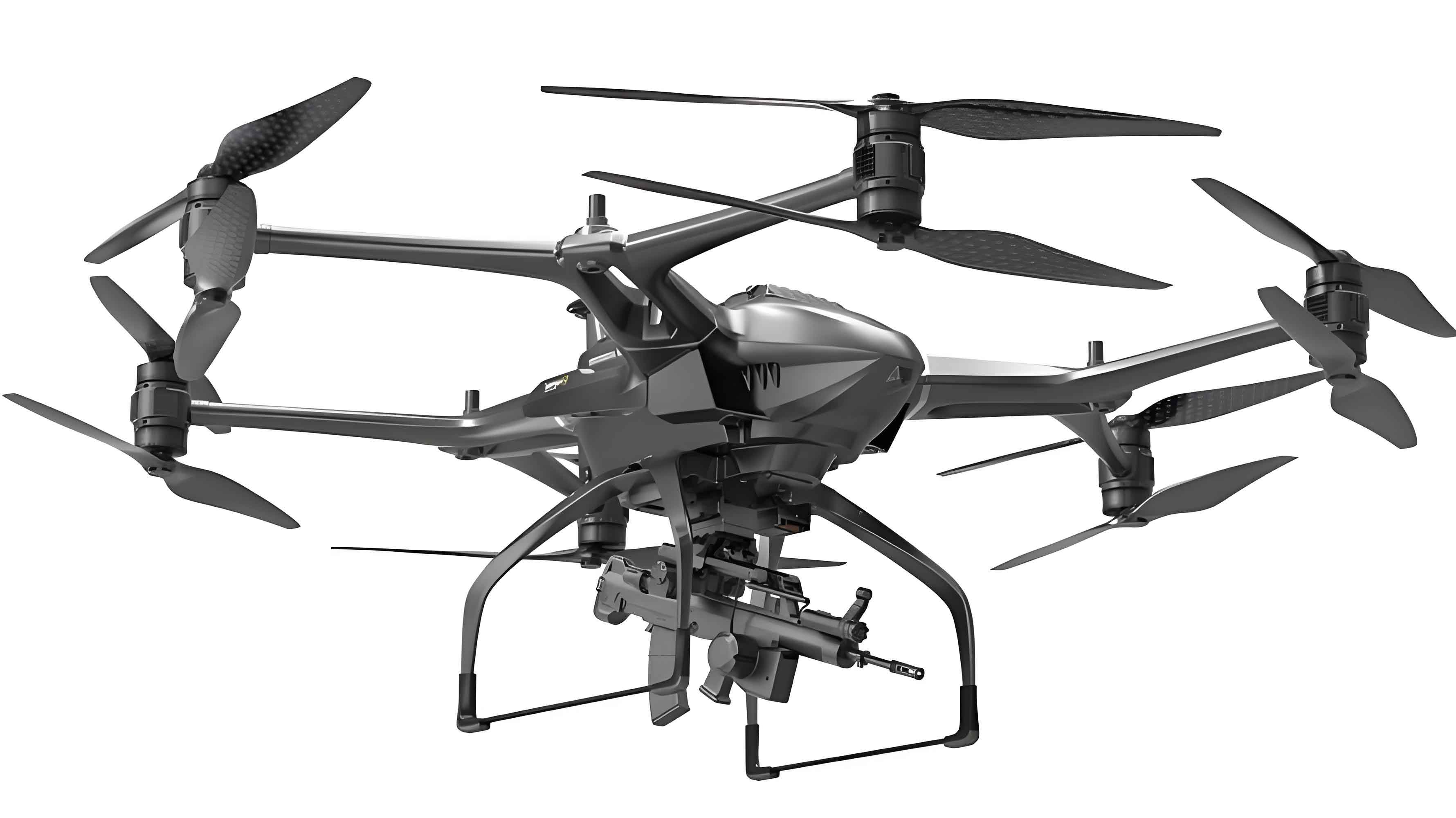
The core of this revolution lies in the payload. Modern compact EO/IR gimbals integrate multiple sensor channels—visible light cameras, infrared imagers (often mid-wave or long-wave), laser rangefinders, laser illuminators, and, most critically, laser target designators—into a single, gyro-stabilized unit weighing less than 8 kg. This level of integration was once the exclusive domain of large aircraft and sophisticated attack helicopters. By bringing this capability down to Group 1, 2, and light Group 3 military UAVs, operators gain a persistent, low-observable, and survivable sensor node that can operate in contested environments where larger platforms would be at high risk. The technical progression follows a clear trajectory toward greater functionality per unit of mass, a key metric we can express as:
$$ \text{Payload Effectiveness Density} = \frac{\sum (\text{Sensor Capabilities} \times \text{Performance Coefficients})}{\text{Mass} \times \text{Volume}} $$
Where ‘Sensor Capabilities’ can be quantified by parameters like detection range, resolution, and designation accuracy. The drive is to maximize this ratio.
The Technological Leap: From Observation to Designation
The landscape of compact payloads is defined by a few key players whose products set the standard. What distinguishes the latest generation is not just improved imagery, but the integration of NATO-standard (e.g., STANAG 3733) laser target designation. This capability allows a military UAV to “paint” a target with a coded laser beam, guiding semi-active laser-homing munitions from other platforms or ground forces to a precise impact point.
Let’s examine some defining systems. The StormCaster-DX is a paradigm shift, being one of the first payloads under 1.5 kg to offer a dual-field-of-view long-wave infrared imager and a fully capable laser target designator. Its incorporation of AI for辅助 targeting and non-cooperative laser detection showcases the move towards intelligent sensors. The Alticam 11EOIR5 exemplifies high performance in a slightly larger form factor, providing continuous optical zoom in the mid-wave infrared band alongside its designation capability. Systems like the Orion HD95 and T-STAMP-XD further reinforce this trend, offering stabilized, multi-spectral surveillance with the critical addition of a rangefinder and designator. The Epsilon 180, though lacking a designator, packs a powerful cooled mid-wave IR sensor and laser illuminator into a very compact package, highlighting the trade-offs sometimes made within SWaP limits.
The performance of these systems can be summarized by key parameters. A fundamental figure of merit for the imaging chain is the Noise Equivalent Temperature Difference (NETD), measuring thermal sensitivity:
$$ \text{NETD} = \frac{4 F^2 \sqrt{A_d \Delta f}}{D^* \tau_{optics} \sqrt{\pi} \frac{\partial M}{\partial T}} $$
Where \(F\) is the f-number, \(A_d\) is the detector area, \(\Delta f\) is the electronic bandwidth, \(D^*\) is the specific detectivity, \(\tau_{optics}\) is the optical transmission, and \(\frac{\partial M}{\partial T}\) is the change in radiant exitance with temperature. Lower NETD values, often below 50 mK in modern cooled systems, are crucial for long-range detection.
The maximum detection range for a target of a given size is governed by the sensor’s resolution and atmospheric conditions. A simplified model based on Johnson’s criteria states that the range \(R\) at which a task (detect, recognize, identify) can be performed is:
$$ R = \frac{H_t \cdot f}{n_{cycles} \cdot p} $$
Where \(H_t\) is the target height, \(f\) is the focal length, \(n_{cycles}\) is the number of resolvable cycles across the target required for the task (e.g., ~1.5 for detection, ~6 for recognition), and \(p\) is the detector pixel pitch. Modern compact payloads achieve recognition ranges of several kilometers against vehicle-sized targets.
| Parameter | StormCaster-DX | Alticam 11EOIR5 | Orion HD95 | T-STAMP-XD | Epsilon 180 |
|---|---|---|---|---|---|
| Approx. Mass | 1.25 kg | 6.2 kg | 7.6 kg | 5.75 kg | 3.75 kg |
| IR Sensor | Dual FOV LWIR Uncooled | Cooled MWIR, Continuous Zoom | Cooled MWIR, Continuous Zoom | Cooled MWIR, Zoom | Cooled MWIR, Zoom |
| Laser Capability | Rangefinder & Designator | Rangefinder & Designator | Rangefinder & Designator | Rangefinder & Designator | Rangefinder & Illuminator |
| Stabilization Accuracy | < 300 μrad | Not Specified | 25-75 μrad | < 150 μrad | < 50 μrad |
| Key Innovation | Ultra-light designator; AI/Non-coop laser detection | High-performance MWIR in compact dome | Optimized for specific UAV integration | Proven mechanical gyro-stabilization | Excellent SWaP ratio for core ISR |
This table highlights the diversity in the trade-space. Stabilization accuracy is paramount for maintaining a laser spot on target at long ranges. The error in pointing, \(\sigma_{point}\), aggregates from multiple sources:
$$ \sigma_{point} = \sqrt{ \sigma_{gyro}^2 + \sigma_{encoder}^2 + \sigma_{servo}^2 + \sigma_{flex}^2 } $$
Where the subscripts denote error contributions from the gyroscope, shaft encoder, servo control loop, and structural flexure. Sub-100 μrad performance, as seen in some systems, is essential for effective long-range laser designation.
The Domestic Landscape and the Performance Gap
Turning to the domestic industry, progress has been significant, particularly within the commercial and dual-use sector. Products from leading companies offer impressive features such as multi-sensor fusion (visible, thermal, laser rangefinder), high-resolution visible cameras with significant optical zoom, and sophisticated 3-axis gimbals. These systems have undoubtedly enhanced the capabilities of commercial and tactical military UAVs for surveillance and reconnaissance.
However, a comparative analysis reveals a multi-faceted performance gap when measured against the cutting-edge international systems profiled earlier. The差距 is not merely incremental but spans several critical dimensions:
- Sensor Integration and Sophistication: While domestic payloads commonly integrate three sensors (visible, IR, rangefinder), the integration of a laser target designator into a truly compact (<8 kg) gimbal remains a significant challenge. This limits the platform’s ability to close the kill chain autonomously. Furthermore, the performance of cooled mid-wave infrared detectors, which offer superior range and clarity compared to uncooled long-wave sensors, is an area where domestic compact solutions often lag.
- Core Sensor Performance: Parameters such as maximum laser rangefinding distance (often capped around 5 km in available specifications, versus 15+ km for some foreign systems), continuous optical zoom range in the IR band, and thermal sensitivity (NETD) indicate that fundamental sensor technology and optical design still face hurdles in the ultra-SWaP domain.
- System-Level Optimization: Foreign systems often incorporate advanced features like Inertial Measurement Unit (IMU)/GPS tight coupling for highly accurate geo-location of targets, AI-based tracking and auto-classification, and electronic warfare support measures (ESM) like laser warning receivers. This level of holistic, intelligent system design is less prevalent in current domestic compact offerings.
| Capability Area | Advanced International Payloads | Current Domestic Compact Payloads |
|---|---|---|
| Laser Target Designation | Common in ~5-8 kg class | Rare in <8 kg class; adds significant mass/volume |
| IR Sensor Type | Commonly cooled MWIR with continuous zoom | Often uncooled LWIR with digital zoom or limited optical zoom |
| Max Laser Range | Up to 15-20 km (rangefinder) | Typically ~2-5 km (rangefinder) |
| Advanced Features (AI, ESM) | Emerging as differentiators (e.g., StormCaster-DX) | Primarily focused on core imaging & tracking |
| Typical Stabilization Accuracy | < 150 μrad (often < 50 μrad for high-end) | ~50-200 μrad |
The consequence of this gap is a difference in operational potential. A military UAV equipped with a foreign-designated payload can serve as a direct force multiplier for laser-guided artillery, missiles, or bombs. A similar domestic platform, while excellent for surveillance, would require a separate designator—another aircraft, a ground team—to enable the same precision strike, complicating the kill chain and increasing risk.
Operational Employment: Reshaping the Tactical Battlefield
The deployment of these advanced compact payloads on tactical military UAVs is fundamentally altering modern combat, particularly in dispersed and contested operations. Their utility can be analyzed through several core mission threads.
1. Persistent, Survivable Intelligence, Surveillance, and Reconnaissance (ISR): This remains the foundational role. Small military UAVs with low radar cross-sections and acoustic signatures can loiter near the forward line of troops (FLOT) or behind enemy lines, providing real-time, overhead video of enemy movements, fortifications, and logistics. The dual-band (visible/IR) capability ensures 24/7 operation. The value \(V_{ISR}\) of such a platform can be conceptualized as a function of its persistence \(P\), area coverage rate \(A_c\), and probability of survival \(S\):
$$ V_{ISR} = k \cdot \frac{P \cdot A_c \cdot S}{\text{Cost}} $$
where \(k\) is a mission-specific constant. Small UAVs optimize for high \(S\) and low cost, compensating for potentially lower \(P\) and \(A_c\) compared to larger platforms.
2. Target Acquisition and Terminal Guidance: This is the most impactful new mission set. It manifests in two primary modes:
- Coordinate Generation and Cueing: The military UAV uses its gimbaled sensors and integrated GPS/IMU to identify a target and calculate its precise geolocation (latitude, longitude, altitude). These coordinates are then transmitted to a fire unit—such as an artillery battery, naval gun, or loitering munition (e.g., the “UAV + loitering munition” pairing seen in recent conflicts). The guided weapon uses GPS or inertial navigation to fly to that coordinate. The accuracy of this method, \(\sigma_{geo}\), depends on the UAV’s navigation error \(\sigma_{nav}\), the bore-sight error between the sensor and IMU \(\sigma_{bore}\), and the range \(R\):
$$ \sigma_{geo} \approx \sqrt{ (\sigma_{nav})^2 + (R \cdot \tan(\sigma_{bore}))^2 } $$
While effective for stationary targets, it can be less optimal for moving ones.
- Active Laser Designation: This is the gold standard for engaging moving or time-sensitive targets. The military UAV illuminates the target with its coded laser designator. A laser-homing weapon (e.g., a guided artillery shell like Excalibur or a missile like Hellfire) launched from a distant, safe location flies toward the reflected laser energy, achieving pinpoint accuracy. This completely decouples the vulnerable designation platform from the launch platform. The probability of hit \(P_h\) in this scenario is a function of the designator’s stability, atmospheric attenuation \(\tau_{atm}\), and the seeker’s sensitivity:
$$ P_h \propto \tau_{atm}(R) \cdot \text{erf}\left(\frac{\theta_{div} \cdot R}{2 \cdot \sigma_{point} \cdot R}\right) $$
where \(\theta_{div}\) is the laser divergence angle. This mode fully leverages the capabilities of payloads like the StormCaster-DX or Alticam 11EOIR5.
3. Battle Damage Assessment (BDA): Following a strike, the same military UAV that designated the target can immediately assess the effects. It provides commanders with visual confirmation of destruction, preventing wasteful re-attacks on neutralized targets and informing follow-on actions. The speed of this feedback loop, from sensor to shooter to sensor again, is a key advantage in modern tempo of operations.
| Operational Mode | Key Enabling Payload Features | Effect on Kill Chain | Typical Engagement Range |
|---|---|---|---|
| Long-Range Reconnaissance | High-zoom IR/EO, Stabilization | Finds and Fixes the target | 5-10+ km |
| Coordinate-Based Strike | Precise Geo-Location (IMU/GPS), Laser Rangefinder | Transmits target location for indirect fire | Limited by comms and weapon range |
| Laser-Guided Strike | STANAG-Coded Laser Designator, High Stability | Provides terminal guidance for SAL weapons | Limited by designator power and line-of-sight (~5-10 km typical) |
| Battle Damage Assessment | Multi-spectral imaging, Loiter endurance | Completes the loop, informs re-engagement decision | Visual range |
Future Trajectory and Strategic Imperatives
Based on the observed trends and operational needs, the development path for next-generation compact EO/IR payloads, particularly for domestic military UAV applications, should focus on several strategic imperatives.
1. Indigenous, High-Performance Sensor Cores: Reliance on foreign-sourced critical components like infrared focal plane arrays (FPAs) and laser diodes is a strategic vulnerability. Investment must focus on closing the performance gap in cooled MWIR detector technology, high-efficiency laser diodes, and associated low-noise read-out integrated circuits (ROICs). The detector’s responsivity \(R_\lambda\) and specific detectivity \(D^*\) are fundamental to system range:
$$ R_\lambda = \frac{\eta q \lambda}{h c} $$
$$ D^* = \frac{R_\lambda \sqrt{A_d \Delta f}}{i_n} $$
where \(\eta\) is quantum efficiency, \(q\) is electron charge, \(\lambda\) is wavelength, \(h\) is Planck’s constant, \(c\) is light speed, \(A_d\) is detector area, \(\Delta f\) is bandwidth, and \(i_n\) is noise current. Achieving higher \(D^*\) at smaller pixel pitches is a core research objective.
2. Multi-Function Integration and SWaP Optimization: The goal is to integrate more capability without proportionally increasing size and weight. This requires a system-level co-design approach between optics, mechanics, electronics, and software. Advanced packaging techniques (e.g., 3D stacking), common aperture designs that serve multiple sensor bands, and lightweight composite materials are essential. The total system weight \(W_{total}\) can be modeled as:
$$ W_{total} = \sum_{i=1}^{n} w_i + k_{struc} \cdot \left(\sum_{i=1}^{n} w_i\right) $$
where \(w_i\) is the weight of each subsystem (optics, sensor, laser, etc.) and \(k_{struc}\) is the structural scaling factor. The design challenge is to minimize both \(w_i\) and \(k_{struc}\) through integrated architecture.
3. Standardization, Modularity, and Open Architecture: To accelerate development and reduce lifecycle costs, a family-of-systems approach with standardized mechanical, electrical, and data interfaces is crucial. A modular design would allow a common stabilized gimbal core to accept different sensor “pods” (e.g., an ISR pod, a designator pod, an electronic warfare pod) based on mission needs. This plug-and-play philosophy, governed by an open software architecture, enables rapid upgrades and adaptation.
4. Incorporation of Artificial Intelligence and Autonomy: Onboard AI for real-time image processing, automatic target detection and tracking (ATDT), change detection, and even limited target classification will dramatically reduce the operator’s workload and accelerate decision-making. Furthermore, AI can optimize sensor management (e.g., automatically switching between EO and IR based on scene content) and improve stabilization algorithms.
In conclusion, the compact EO/IR payload is no longer just an accessory for the tactical military UAV; it is its center of gravity, defining its role and combat potential. The ongoing revolution—characterized by the fusion of multiple lethal and non-lethal functions into ever-smaller packages—is democratizing high-end sensing and targeting capabilities. It pushes these capabilities down to the squad and platoon level, fundamentally altering the dynamics of the future battlefield. For any modern military, mastering this technology is not merely an option for maintaining a technological edge; it is an imperative for achieving dominance in the complex, multi-domain conflicts of the 21st century. The formula for success in this domain is clear: maximize capability density through innovation in sensors, integration, and intelligent design, all tailored to empower the versatile and ubiquitous military UAV.