
The rapid advancement of military UAV (Unmanned Aerial Vehicle) technology has fundamentally transformed the landscape of modern warfare and military operations. Various types of military UAVs have become indispensable assets, altering tactics and operational paradigms. While the inherent advantage of military UAVs lies in reducing operator casualties and lowering operational costs compared to manned aircraft, the safety risks inherent in their development and manufacturing phases remain significant and cannot be overlooked. Presently, there is a lack of systematic, standardized regulatory frameworks specifically addressing safety risk prevention throughout the military UAV development lifecycle globally. Drawing from practical experience in establishing Risk Graded Control and Hidden Hazard Investigation & Governance (dual prevention mechanism) systems, this article analyzes typical issues encountered in safety risk identification and assessment during military UAV realization processes. It examines the rationality of existing workflows and the feasibility of proposed solutions, ultimately exploring an optimized model for safety risk identification and assessment tailored to the military UAV sector.
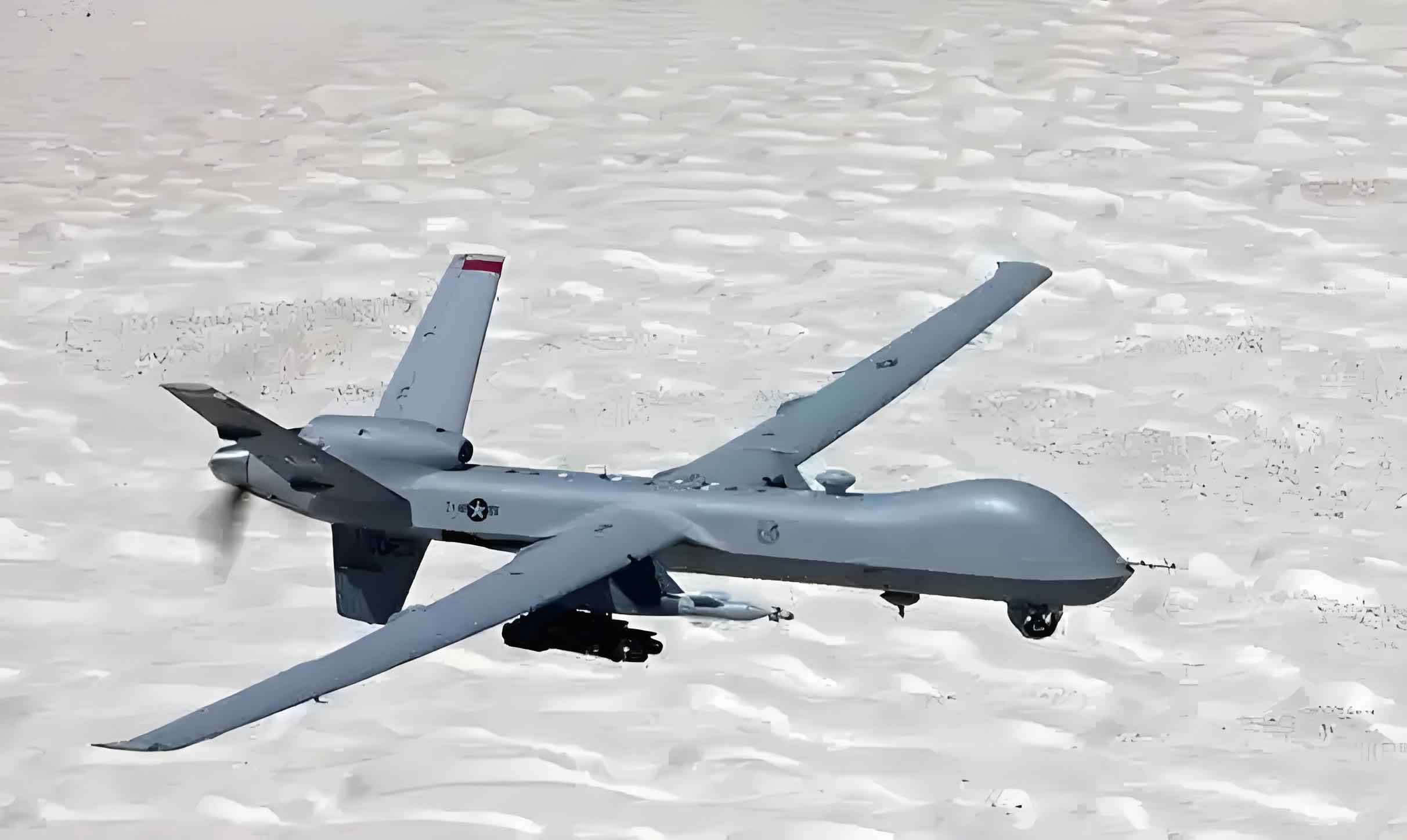
The integration of sophisticated military UAV systems into combat and reconnaissance roles demands an equally sophisticated approach to managing the inherent safety risks during their creation. The complexity of these systems, involving advanced aerodynamics, propulsion, payload integration, and ground control, introduces multifaceted hazards that span design, prototyping, testing, and low-rate initial production.
Current State of Safety Risk Identification and Assessment in Military UAV Development
1. Status Quo of Safety Risk Identification
Current practices in safety risk identification for military UAV programs often grapple with several systemic shortcomings: incomplete hazard source identification, inaccurate risk evaluation, and the formulation of control measures lacking in specificity and effectiveness. An analysis of risk identification activities within a typical military UAV development team, which covered product design, manufacturing processes, testing, occupational health, emergency management, and general office activities, revealed recurring issues:
- Misinterpretation of Core Concepts: A fundamental misunderstanding of the definition of a “hazard source” leads to inaccurate descriptions. Examples include vague statements like “external personnel entering the workplace carrying tools, equipment, or materials that could cause injury,” “injury while moving heavy objects,” or “motor vehicle operation on icy or wet roads.” These describe scenarios or potential consequences rather than the underlying energy or hazardous substance coupled with a triggering mechanism.
- Incomplete Hazard Identification: The focus tends to be disproportionately placed on physical equipment and facilities, neglecting crucial human factors (unsafe acts), management system deficiencies, and environmental conditions that contribute to risk.
- Illogical Linkage between Hazard and Risk: The logical connection between an identified hazard source and the resultant risk is often broken. For instance, a hazard described as “personnel activity in an office area” is incorrectly linked to a risk named “failure to hold required certifications.”
- Overly Broad Assessment Unit Division: Crude division of work processes can obscure specific hazards. Grouping distinct operations like “lifting a heavy object with a crane” and “transferring the object” into a single step masks the different hazards, risk levels, and control measures applicable to each sub-step.
- Non-Standardized Process Descriptions: Descriptions of job steps or production processes are often ambiguous (e.g., “factory disinfection personnel”), leading to confusion during assessment.
- Dominance of General Management Risks: A large proportion of identified risk items often pertains to general office or administrative safety, which, while important, may overshadow the unique and high-consequence risks intrinsic to the core military UAV development activities like flight testing, hazardous material handling, or structural load testing.
These problems highlight a widespread lack of foundational safety knowledge among risk identification personnel, including confusion between the concepts of “hazard source,” “risk,” and “critical hazard point,” leading to incomplete and inaccurate identification.
2. Status Quo of Safety Risk Assessment
Prior to standardization, development teams frequently employed methods like the LEC (Likelihood, Exposure, Consequence) method. While useful, its application revealed limitations:
- High Subjectivity: The scoring intervals (e.g., a risk value D ranging from 6 to 63) are broad, and the final score heavily depends on the evaluator’s subjective judgment, leading to inconsistent risk ratings across teams or projects for similar military UAV activities.
- Disregard for the Hierarchy of Controls: Proposed safety risk control and occupational disease prevention measures often do not follow the established hierarchy (Elimination, Substitution, Engineering Controls, Administrative Controls, PPE). This can result in over-reliance on less effective measures like personal protective equipment (PPE) or procedures when more robust engineering solutions are feasible for a military UAV subsystem.
- Incomplete Risk Registers: Risk tracking documentation frequently lacks essential management information such as clear ownership (responsible department/project team/personnel), control hierarchy assignment, and standardized risk categorization, hindering effective monitoring and accountability.
Optimization Philosophy and Framework
To address the aforementioned issues, the optimization model is built upon foundational standards and guidelines, including principles from dual prevention mechanism construction, classification standards for accidents and hazardous factors in production processes. The model synthesizes lessons learned from multiple cycles of developing and updating “four-color” safety risk registers. It formalizes the logical relationships between hazard sources, risks, and critical control points, defines standardized descriptions, and establishes applicable risk grading methodologies. The core optimization elements are summarized below:
| Serial No. | Existing Problem | Optimization Content |
|---|---|---|
| 1 | Inaccurate hazard source description | Standardize the description format: “Energy/Hazardous material, due to unsafe condition of an object/unsafe human act/management deficiency/adverse environment, may lead to personnel fatality/injury/occupational illness or equipment/instrument damage.” |
| 2 | Incomplete hazard source identification | Systematically identify hazards by considering three temporal states (past, present, future) and three operational states (normal, abnormal, emergency) of personnel and facilities. Focus on energy/hazardous substances and analyze geographical layout, infrastructure, process flow, material properties, and management systems to uncover unsafe acts, unsafe conditions, environmental factors, and management defects. |
| 3 | Illogical hazard-risk linkage | Clarify that the hazard source is the foundation of risk. Risk is defined as the type of accident and its potential consequences that a hazard source could trigger, linked directly to likelihood and severity. |
| 4 | Overly broad assessment units | Categorize work activities into three main classes: 1. Product Design & Development, 2. Office & General Management, 3. Production & Operations. Further subdivide: e.g., Class 1 into Design, Manufacturing, Testing; Class 3 into specific processes/sequences (e.g., 81 sub-categories based on workflow). |
| 5 | Non-standard process descriptions | Standardize the description of job steps as: “In [Location/Area], using [Materials/Equipment], perform [Specific Action].” Use clear verbs like “manage,” “operate,” “maintain,” “inspect,” “approve.” |
| 6 | General risks overshadowing core military UAV risks | Guide specialized departments (e.g., aerodynamics, structures, propulsion, GCS) to lead identification based on their product design focus, extending the analysis to cover associated production, testing, maintenance, and disposal hazards throughout the military UAV lifecycle. |
| 7 | Subjectivity in LEC assessment | Select assessment methods (e.g., Risk Matrix) based on program objectives and unit characteristics. Follow method-specific guidelines for factor assignment. Determine risk level using the method’s acceptance criteria or the ALARP (As Low As Reasonably Practicable) principle. |
| 8 | Controls not following hierarchy | Mandate that proposed control measures adhere to the hierarchy of controls, prioritizing Engineering and Administrative measures before relying on PPE and Emergency Response. |
| 9 | Missing management info in risk register | Enhance the risk register template to include mandatory fields for Control Entity (Department/Team), Responsible Person, Control Hierarchy Level, and Risk Category. |
The Optimized Model for Hazard Identification and Risk Assessment in Military UAV Development
1. Preliminary Preparation
Effective implementation begins with comprehensive data collection relevant to the military UAV program:
- Layout & Inventory: Site floor plans, lists of critical hazard points, and major equipment/facility inventories.
- Material Data: Physicochemical property data and Safety Data Sheets (SDS) for all raw materials, chemicals, and consumables used in military UAV fabrication and testing.
- Product Lifecycle Data: Documentation detailing the UAV’s transportation, intended use scenarios (including edge cases), maintenance, and eventual disposal requirements—particularly for hazardous components like lithium batteries.
- Procedural Documentation: Equipment run-in procedures, operating manuals, maintenance protocols, and emergency response plans.
- Technical Safety Specifications: Notes, warnings, and mandated technical safety/assurance conditions from system assembly, user manuals, and technical data sheets for critical subsystems.
2. Hazard Identification and Risk Assessment Process
The core optimized process is visualized in the following flowchart and described in detail thereafter:
Flowchart: Military UAV Development Hazard ID & Risk Assessment Process
[Define Work Activity] -> [Divide into Assessment Units/Job Steps using JHA] -> [Conduct Hazard ID, Create List] -> [Define Risk Name (Accident Type)] -> [Perform Risk Analysis using LS Matrix] -> [Determine Risk Level] -> [Propose Risk Control Measures] -> [Assign Control Ownership] -> [Create/Update Risk Register]
In operational practice, to ensure the process provides robust support for daily safety risk management in military UAV projects, the following points are critical:
A. Dividing Identification & Assessment Units: To precisely locate risk points, units should be delineated along two dimensions: Physical Location (e.g., campus, building, workshop, lab) and Discrete Job Step. This granularity ensures accurate tracking and management.
B. Accurate & Comprehensive Hazard Identification: Using defined job steps as input, the team must consider the “Three Temporal States” and “Three Operational States.” The search for hazards should start by identifying sources of energy (e.g., kinetic, electrical, chemical, potential) or hazardous substances, then determine how they could be released or activated due to:
$$ \text{Hazard Trigger} = f(\text{Unsafe Condition}, \text{Unsafe Act}, \text{Management Defect}, \text{Adverse Environment}) $$
The standardized description format is enforced.
C. Standardizing Risk Names: To ensure consistency, risk names should directly correspond to standardized accident types (e.g., “Struck-by,” “Fire,” “Explosion,” “Toxic Release,” “Fall from Height”) as defined in relevant occupational safety standards. This creates a clear, unambiguous link: Hazard Source -> Potential Accident Type (Risk).
D. Performing Risk Analysis & Linking to Critical Points: A Risk Matrix (Likelihood-Severity) method is recommended for its balance of objectivity and simplicity. Risk (R) is calculated as:
$$ R = L \times S $$
where \( L \) is the Likelihood score and \( S \) is the Severity score. The resulting R value maps to a risk level (e.g., Low, Medium, High, Critical). This level must be aligned with the organization’s predefined “Critical Hazard Point” tiers. For example, Level I Critical Points automatically correspond to “Critical Risk (Red).”
| Hazard Source Category | Examples in Military UAV Context |
|---|---|
| Energy – Kinetic | Moving rotor blades during engine test, released tension in a catapult, falling UAV during hoisting. |
| Energy – Electrical | High-voltage systems in powertrain testing, RF emissions from avionics, damaged cable insulation. |
| Energy – Chemical | Fuel during refueling, electrolyte in lithium batteries, composite resin vapors. |
| Hazardous Substance | Pyrotechnics (ejection seats/cutters), hydraulic fluid, degreasing solvents. |
| Unsafe Condition (Object) | Uncalibrated torque wrench, cracked load test fixture, faulty interlock on test equipment. |
| Unsafe Act (Human) | Bypassing a safety procedure to speed up testing, incorrect assembly sequence, lack of communication during team lift. |
| Management Defect | Unclear roles for hazardous operations, lack of specific training for new UAV subsystem, inadequate maintenance schedule for test equipment. |
| Adverse Environment | High winds during outdoor integration, poorly lit work area for detailed assembly, noisy environment masking equipment alarms. |
E. Proposing Effective Risk Control Measures: Measures must follow the Hierarchy of Controls. The table below details measure types with military UAV-specific examples:
| Measure Type (Priority Order) | Definition & Purpose | Military UAV Application Example |
|---|---|---|
| 1. Engineering Controls | Physical modifications, hardware, or technical solutions to eliminate or isolate the hazard. | Designing a guarded test cell for propeller endurance runs; implementing automatic shut-off for fuel pump if flow is irregular; specifying precise torque values for critical fasteners in design documents and assembly checklists. |
| 2. Administrative Controls | Changes in work procedures, policies, training, and supervision to reduce exposure. | Establishing a strict “safe-to-arm” physical and procedural sequence for UAVs with munitions or pyro devices; implementing a permit-to-work system for live electrical testing; mandating pre-flight safety briefings and checklists. |
| 3. Training & Awareness | Educating personnel on hazards, procedures, and safe practices. | Specialized training for handling lithium batteries; simulator training for ground control station operators on emergency procedures; safety workshops on composite dust exposure. |
| 4. Personal Protective Equipment (PPE) | Equipment worn to minimize exposure to hazards. | Requiring arc-flash suits for high-voltage work, anti-static suits and grounding straps during avionics integration, hearing protection in high-noise test areas. |
| 5. Emergency Preparedness | Plans and resources to respond effectively if an incident occurs. | Developing and drilling a specific emergency response plan for a fuel fire during ground testing; placing appropriate spill kits near chemical storage; establishing clear medevac procedures for remote test sites. |
F. Assigning Clear Ownership: Each identified risk, based on its level, must have a clearly assigned owner—a specific department, project team, or even a named individual. This is crucial for accountability in the dynamic environment of military UAV development.
3. Practical Application Example
The optimized model was applied to a specific military UAV development program. The team segmented its activities into the three main classes:
Class 1: Product Design & Development
– Design: Steps included overall scheme, aerodynamics, structural strength, propulsion, avionics, command & control, datalink, launch/recovery, and support system design.
– Manufacturing Support: Steps included requirements handover and production line follow-up.
– Testing: This was extensively broken down into over 20 steps, such as test plan writing, safety briefings for contractors, daily inspections, pre-flight safety confirms, handling of pyrotechnics and fuel, battery management, ground tests (static load, engine run, taxi), and flight tests.
Class 2 & 3: Were similarly detailed for office activities and specific shop floor processes.
Guided by this structure, the team identified dozens of hazard sources. The distribution was telling: 48% originated from core Product Design & Development activities, 33% from Office & General Management, and 19% from the Production & Operations floor. This represented a significant shift, successfully capturing the unique and high-stakes risks of the military UAV development process itself, moving beyond a generic office safety list. The resulting risk register, with clear descriptions, matrix-based ratings, hierarchically-appropriate controls, and assigned owners, provided a actionable and living document for managing safety throughout the program’s lifecycle.
Conclusion
The military UAV industry is in a phase of accelerated evolution. Consequently, the frameworks for managing safety risks during their development must be dynamic, iterative, and responsive to emerging technologies and methodologies. This article, starting from the fundamental concepts and logical relationships between hazards and risks, and building upon dual prevention mechanism optimization research, has presented an applied exploration of a safety risk identification and assessment model for military UAV development. By proposing a standardized, systematic, and hierarchical process—from granular job step analysis through to assigned control ownership—this model aims to bring effective monitoring and control to the multifaceted safety challenges in military UAV programs. It provides a structured yet adaptable workflow to support management activities and on-site risk control, contributing to the overarching goal of safeguarding personnel, assets, and mission success throughout the complex journey of bringing a military UAV from concept to deployment.