
In recent years, the deployment of military UAVs has expanded rapidly across various domains such as intelligence reconnaissance, command decision-making, and precision strikes. As evidenced in conflicts like the Russia-Ukraine war and the Hamas-Israel clashes, military UAVs have become an indispensable force in modern warfare. Currently, most military UAV operations rely on manual control, where human operators play a critical role, especially during the操控 phases. Therefore, assessing the competency of military UAV operators is of paramount importance, necessitating scientific evaluation methods that reflect the complexities of battlefield environments. Traditional assessment models often focus on单一-dimensional performance, overlooking the integrated and multifaceted nature of combat scenarios, and struggle to accurately gauge the comprehensive operational capabilities of military UAV operators. Moreover, these models typically depend on clear quantitative metrics, failing to address the inherent fuzziness and uncertainties in evaluation processes. To tackle these challenges, I introduce the Fuzzy Analytic Hierarchy Process (FAHP), a decision-analysis method that combines qualitative and quantitative approaches for multi-objective complex problems. FAHP, developed by Saaty in the 1970s, has been widely applied in various assessment practices, including evaluations of missile support capabilities, radar equipment combat effectiveness, and troop mobilization readiness. In this study, I explore the construction of an assessment model based on FAHP for military UAV operator competency, aiming to incorporate multiple dimensions of performance during military UAV operations, handle fuzzy and uncertain factors, and reduce human bias in evaluations.
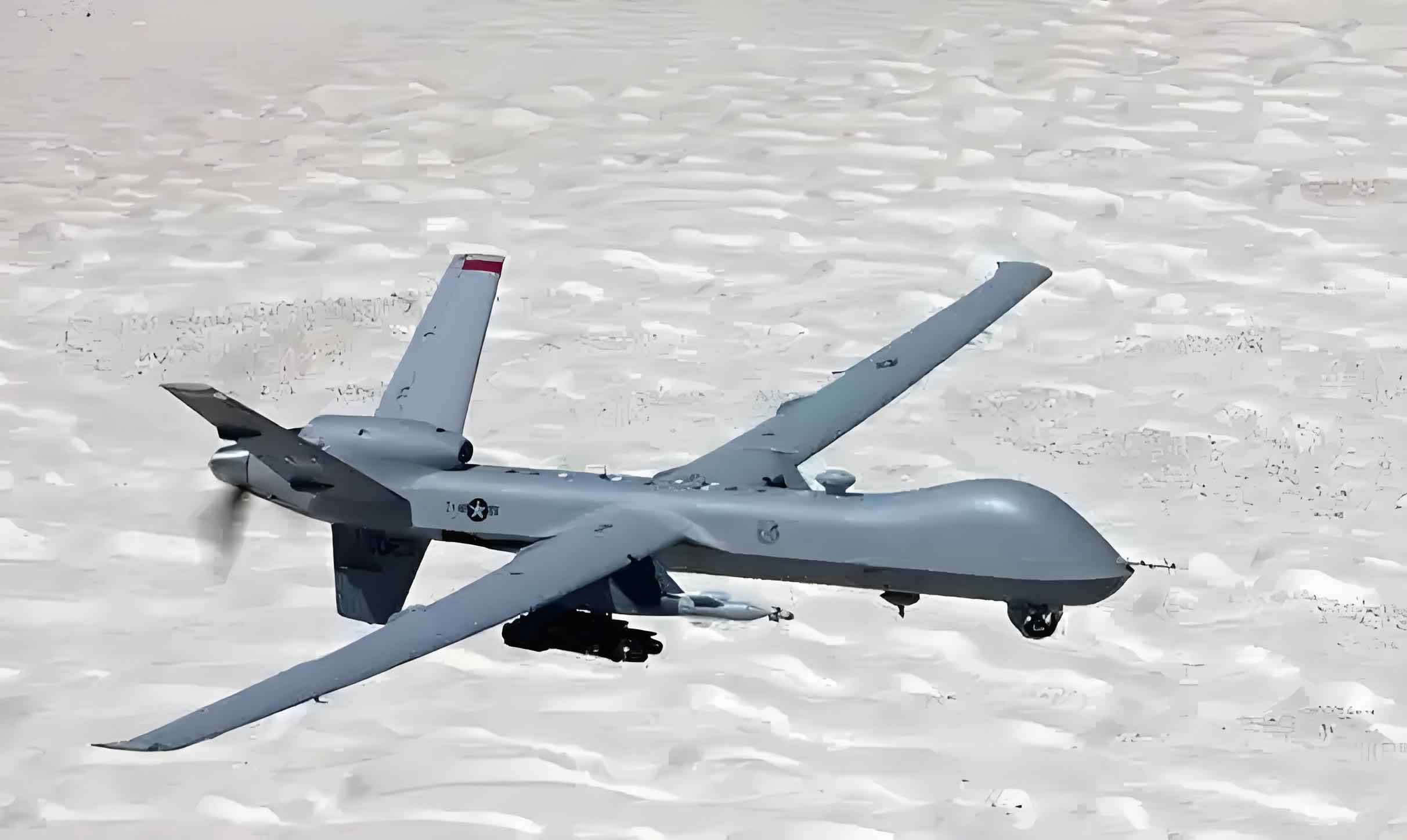
The proliferation of military UAVs underscores the need for robust operator assessment frameworks. As these systems become more integral to military strategies, the role of the operator evolves beyond mere操控 to encompass战术 planning, maintenance, and psychological resilience. My research focuses on developing a structured approach to evaluate these competencies, leveraging FAHP to ensure a holistic view. This method is particularly suitable for military UAV operator assessments due to the模糊 nature of human performance factors, such as心理素质 and skill execution under stress. By integrating fuzzy logic with AHP, I can model the uncertainties in expert judgments and provide a more nuanced evaluation. In this article, I will detail the steps involved, from building the assessment index system to applying fuzzy comprehensive evaluation, and demonstrate its practicality through a case study. The goal is to offer a reliable tool for enhancing the training and selection processes for military UAV operators, ultimately contributing to improved operational effectiveness in defense sectors.
Establishing an assessment index system is the first step in applying FAHP. This system comprises a set of elements that represent the typical characteristics of the evaluation object, and its scientific and rational selection is crucial for accurate results. To construct an assessment index system for military UAV operator competency, I systematically analyze various influencing factors, synthesize expert opinions and relevant theoretical支撑, and organize them into a hierarchical structure. From a task- and element-based perspective, considering missions like takeoff/landing, reconnaissance, and penetration, as well as岗位 requirements encompassing theory versus practice, skills versus psychology, and operation versus maintenance, I categorize the key influencing factors for military UAV operator competency into four groups: flight skills, flight theory, maintenance skills, and psychological quality. Each category includes multiple sub-factors arranged in a阶梯状 hierarchy.
Flight skills form the foundation of UAV operation, directly impacting safety, efficiency, and mission accomplishment. Proficiency in flight skills enables precise maneuvers such as起飞,降落,悬停,转弯, and平稳飞行, as well as various军事战术 actions. Thus, flight skills are a core competency for military UAV operators. I define six indicators to measure flight skills: ascent/descent/turning, circling, diving/surge, rolling, tactical maneuvers, and looping. Flight theory encompasses knowledge essential for understanding飞行原理, enhancing操控 skills, planning missions, and应对复杂环境 to improve safety. For military UAV operations, this is critical. I set three indicators: aircraft knowledge (including components, functions, and flight principles), safety usage knowledge (covering regulations and safety protocols), and操控 theory knowledge (such as operation techniques and空中 navigation). Maintenance skills are vital for ensuring the正常使用 of military UAVs, as timely and appropriate repairs prevent failures. For instance, operators of systems like the U.S. “Raven” UAV are required to complete common基层-level maintenance within 15 minutes. I divide maintenance skills into three indicators: upkeep and保养 skills, preventive maintenance skills, and corrective maintenance skills. Upkeep involves日常 activities like cleaning and inspection; preventive maintenance includes preemptive measures like testing and part replacement; and corrective maintenance covers故障 diagnosis and repair. Psychological quality is paramount due to the high-stress environments of military UAV operations, which often involve reconnaissance, decision-making, and strikes under threat. Studies indicate that military UAV operators experience stress levels comparable to or exceeding those of manned aircraft pilots, with issues like anxiety and fatigue prevalent. Poor psychological素质 can lead to操控 errors, causing UAV damage, mission failure, or casualties. Thus, I include psychological quality as a key assessment factor, with three indicators: mental state, emotional state, and emergency response capability.
To quantify the influence of each assessment indicator, I introduce权重 concepts, transforming qualitative影响程度 into numerical values using AHP. This involves establishing a hierarchical analysis model, where factors are layered into目标层,准则层, and指标层. Based on prior research, I define the factor set \( J \) and its subsets. The hierarchical structure for military UAV operator competency assessment is summarized in Table 1.
| Target Layer | Criterion Layer | Indicator Layer |
|---|---|---|
| Military UAV Operator Competency Assessment | Flight Skills (\(A_1\)) | Ascent/Descent/Turning (\(B_1\)) |
| Circling (\(B_2\)) | ||
| Diving/Surge (\(B_3\)) | ||
| Rolling (\(B_4\)) | ||
| Tactical Maneuvers (\(B_5\)) | ||
| Looping (\(B_6\)) | ||
| Flight Theory (\(A_2\)) | Aircraft Knowledge (\(B_7\)) | |
| Safety Usage Knowledge (\(B_8\)) | ||
| 操控 Theory Knowledge (\(B_9\)) | ||
| Maintenance Skills (\(A_3\)) | Upkeep and保养 (\(B_{10}\)) | |
| Preventive Maintenance (\(B_{11}\)) | ||
| Corrective Maintenance (\(B_{12}\)) | ||
| Psychological Quality (\(A_4\)) | Mental State (\(B_{13}\)) | |
| Emotional State (\(B_{14}\)) | ||
| Emergency Response (\(B_{15}\)) |
Constructing a judgment matrix is essential to avoid reliance on subjective assessments. Using AHP, I invite multiple experts to perform pairwise comparisons of factors within the same层次, employing the 1–9 scale method proposed by Saaty. The scale assigns values based on relative importance: 1 for equal importance, 3 for slightly more important, 5 for明显 more important, 7 for strongly more important, and 9 for extremely more important, with intermediate values like 2, 4, 6, and 8. For a set of factors \(\{x_1, x_2, \dots, x_n\}\) in a given layer, the模糊判断矩阵 \(A\) is defined as:
$$A = [a_{ij}], \quad a_{ij} > 0, \quad a_{ji} = \frac{1}{a_{ij}}, \quad a_{ii} = 1$$
where \(a_{ij}\) represents the ratio of the influence of \(x_i\) to \(x_j\) on the upper layer. Experts score the factors in Table 1 accordingly. To compute weights and check consistency, I use the方根法. First, calculate the geometric mean for each row of the judgment matrix:
$$w_i’ = \left( \prod_{j=1}^n a_{ij} \right)^{1/n} \quad \text{for } i = 1, 2, \dots, n$$
Then, normalize these values to obtain the weight vector \(W = [w_1, w_2, \dots, w_n]\):
$$w_i = \frac{w_i’}{\sum_{k=1}^n w_k’}$$
The maximum eigenvalue \(\lambda_{\text{max}}\) is computed as:
$$\lambda_{\text{max}} = \frac{1}{n} \sum_{i=1}^n \frac{(AW)_i}{w_i}$$
where \((AW)_i\) is the \(i\)-th element of the product of matrix \(A\) and vector \(W\). Consistency is verified using the consistency ratio \(CR\):
$$CI = \frac{\lambda_{\text{max}} – n}{n-1}, \quad CR = \frac{CI}{RI}$$
Here, \(CI\) is the consistency index, and \(RI\) is the average随机一致性 index from Table 2. If \(CR < 0.1\), the matrix is acceptable; otherwise, revisions are needed. Based on expert inputs and consistency checks, I derive the comprehensive weights for the assessment indicators, as shown in Table 3.
| Matrix Order | 1 | 2 | 3 | 4 | 5 | 6 | 7 | 8 | 9 |
|---|---|---|---|---|---|---|---|---|---|
| RI | 0 | 0 | 0.58 | 0.90 | 1.12 | 1.24 | 1.32 | 1.41 | 1.45 |
| Target Layer | Criterion Layer (Weights) | Indicator Layer (Weights) |
|---|---|---|
| Military UAV Operator Competency Assessment | Flight Skills (\(A_1\)): 0.449 | Ascent/Descent/Turning (\(B_1\)): 0.286 |
| Circling (\(B_2\)): 0.104 | ||
| Diving/Surge (\(B_3\)): 0.162 | ||
| Rolling (\(B_4\)): 0.151 | ||
| Tactical Maneuvers (\(B_5\)): 0.167 | ||
| Looping (\(B_6\)): 0.130 | ||
| Flight Theory (\(A_2\)): 0.080 | Aircraft Knowledge (\(B_7\)): 0.376 | |
| Safety Usage Knowledge (\(B_8\)): 0.263 | ||
| 操控 Theory Knowledge (\(B_9\)): 0.361 | ||
| Maintenance Skills (\(A_3\)): 0.370 | Upkeep and保养 (\(B_{10}\)): 0.362 | |
| Preventive Maintenance (\(B_{11}\)): 0.362 | ||
| Corrective Maintenance (\(B_{12}\)): 0.275 | ||
| Psychological Quality (\(A_4\)): 0.101 | Mental State (\(B_{13}\)): 0.302 | |
| Emotional State (\(B_{14}\)): 0.302 | ||
| Emergency Response (\(B_{15}\)): 0.397 |
The weights reveal that flight skills are the most critical component for military UAV operators, with a weight of 0.449, emphasizing their role as the core competency. Maintenance skills follow closely at 0.370, highlighting the importance of technical upkeep for sustained UAV operations. Psychological quality and flight theory have lower weights (0.101 and 0.080, respectively), but they remain essential for comprehensive performance. At the indicator level, ascent/descent/turning actions hold the highest weight among flight skills, underscoring their fundamental role in daily operations for military UAVs. Similarly, aircraft knowledge and upkeep activities are prioritized in their respective categories. These insights guide training programs to focus on high-impact areas for enhancing operator effectiveness in军事 UAV contexts.
To perform the模糊 comprehensive evaluation, I first create a评语集, which is a set of possible assessment conclusions. Typically, the评语集 \( V \) has 3 to 5 levels. In this study, I define \( V = \{v_1, v_2, v_3, v_4\} = \{\text{Excellent}, \text{Good}, \text{Fair}, \text{Poor}\} \), with corresponding score vector \( S_v = [90, 75, 60, 45] \). Next, I determine the隶属度, which is the frequency of an factor being rated at a particular level. Based on expert questionnaires, the隶属度 values form the单因素评判矩阵 \( R \) for each criterion layer. For a factor set with \( m \) indicators and \( n \)评语 levels, \( R \) is given by:
$$R = \begin{bmatrix}
r_{11} & r_{12} & \cdots & r_{1n} \\
r_{21} & r_{22} & \cdots & r_{2n} \\
\vdots & \vdots & \ddots & \vdots \\
r_{m1} & r_{m2} & \cdots & r_{mn}
\end{bmatrix}$$
where \( r_{ij} \) is the隶属度 of the \( i \)-th indicator for the \( j \)-th评语. Using the weight vector \( W \) from AHP, the comprehensive隶属度 for a criterion layer is calculated as:
$$S = W \times R$$
This yields a vector \( S = [s_1, s_2, s_3, s_4] \), where each \( s_j \) represents the overall隶属度 for the对应评语. To obtain the final assessment result, I apply the最大隶属度 principle, selecting the评语 with the highest \( s_j \) value. Alternatively, for a numerical score, I use the总分法:
$$F = S_v \cdot S^T = \sum_{j=1}^4 s_j \cdot v_j$$
where \( v_j \) are the scores from \( S_v \). This process is repeated across hierarchical levels until reaching the target layer, providing a comprehensive evaluation of military UAV operator competency.
To demonstrate the practicality of this model, I conduct a case study on a trainee \( L \) from a UAV application and maintenance program. Experts assess \( L \) based on the评语集, resulting in the隶属度 table (Table 4). For flight skills, the judgment matrix \( R_{A1} \) is constructed from the indicator层隶属度 values. Using the weight vector \( W_{A1} = [0.286, 0.104, 0.162, 0.151, 0.167, 0.130] \), the comprehensive隶属度 for flight skills is computed as \( S_{A1} = W_{A1} \times R_{A1} \). Similarly, for other criteria layers: flight theory (\( S_{A2} \)), maintenance skills (\( S_{A3} \)), and psychological quality (\( S_{A4} \)). These results form the criterion layer judgment matrix \( R_{\text{criteria}} \), which, combined with the criterion weights \( W = [0.449, 0.080, 0.370, 0.101] \), gives the overall comprehensive隶属度 \( S_{\text{total}} \). The final score is calculated using the总分法. For trainee \( L \), the computation yields \( S_{\text{total}} = [0.206, 0.418, 0.299, 0.077] \), leading to a score of \( F = 71.282 \). According to the最大隶属度 principle, the assessment result is “Good,” as 0.418 is the highest value. This indicates that \( L \) possesses competent skills for operating military UAVs but has room for improvement, particularly in maintenance skills where the隶属度 for “Fair” is relatively high.
| Criterion Layer | Indicator Layer | Excellent (v1) | Good (v2) | Fair (v3) | Poor (v4) |
|---|---|---|---|---|---|
| Flight Skills (A1) | Ascent/Descent/Turning (B1) | 0.385 | 0.615 | 0.000 | 0.000 |
| Circling (B2) | 0.308 | 0.692 | 0.000 | 0.000 | |
| Diving/Surge (B3) | 0.007 | 0.692 | 0.213 | 0.000 | |
| Rolling (B4) | 0.000 | 0.385 | 0.615 | 0.000 | |
| Tactical Maneuvers (B5) | 0.000 | 0.077 | 0.846 | 0.077 | |
| Looping (B6) | 0.000 | 0.077 | 0.538 | 0.385 | |
| Flight Theory (A2) | Aircraft Knowledge (B7) | 0.077 | 0.615 | 0.231 | 0.077 |
| Safety Usage Knowledge (B8) | 0.692 | 0.308 | 0.000 | 0.000 | |
| 操控 Theory Knowledge (B9) | 0.308 | 0.615 | 0.077 | 0.000 | |
| Maintenance Skills (A3) | Upkeep and保养 (B10) | 0.538 | 0.385 | 0.077 | 0.000 |
| Preventive Maintenance (B11) | 0.077 | 0.308 | 0.077 | 0.000 | |
| Corrective Maintenance (B12) | 0.000 | 0.231 | 0.615 | 0.154 | |
| Psychological Quality (A4) | Mental State (B13) | 0.538 | 0.462 | 0.000 | 0.000 |
| Emotional State (B14) | 0.382 | 0.615 | 0.000 | 0.000 | |
| Emergency Response (B15) | 0.000 | 0.692 | 0.308 | 0.000 |
The analysis of weights and results offers valuable insights for training military UAV operators. Flight skills dominate the competency profile, reflecting the hands-on nature of UAV operations in combat scenarios. Maintenance skills are equally crucial, as operational readiness of military UAVs depends on prompt repairs and upkeep. Psychological quality, though weighted lower, is essential for handling stress during missions, such as in surveillance or strike roles where decisions must be made under pressure. Flight theory provides the foundational knowledge that supports practical skills, emphasizing the need for balanced training programs. The case study of trainee \( L \) highlights how the model identifies strengths and weaknesses: for instance, \( L \)’s lower performance in maintenance skills suggests a focus area for improvement. This aligns with the broader goal of enhancing military UAV operator effectiveness through targeted assessment and development. The FAHP model proves effective in managing the模糊 nature of human competencies, offering a structured yet flexible approach for defense organizations.
In conclusion, my research on military UAV operator competency assessment using FAHP provides a robust framework for evaluating critical performance factors. By integrating fuzzy logic with hierarchical analysis, I address the uncertainties in human-centric evaluations and derive meaningful权重 for diverse indicators. The model encompasses flight skills, flight theory, maintenance skills, and psychological quality, each broken down into specific metrics relevant to military UAV operations. Through systematic weight calculation and fuzzy comprehensive evaluation, I obtain precise assessment scores that reflect operator capabilities. The case study validates the model’s applicability, demonstrating its ability to generate actionable insights for training and selection. As military UAVs continue to evolve, such assessment tools will be vital for ensuring operator proficiency and mission success. Future work could expand this model to include real-time performance data or adapt it for autonomous UAV systems, further advancing the field of军事 UAV operations. Ultimately, this study contributes to the scientific evaluation of military UAV personnel, supporting defense forces in optimizing their human resources for unmanned aerial missions.
The deployment of military UAVs in modern warfare necessitates continuous improvement in operator training and assessment. My FAHP-based model offers a scalable solution that can be customized for different UAV types, from small tactical drones to large strategic systems. By emphasizing key competencies like flight maneuvers and maintenance, it addresses the core requirements for effective军事 UAV deployment. Moreover, the inclusion of psychological factors ensures that operators are prepared for the mental demands of combat environments. This holistic approach aligns with best practices in human factors engineering, making it a valuable asset for military organizations worldwide. As technology advances, integrating this model with simulation-based training and AI-driven analytics could further enhance its accuracy and utility. For now, it stands as a practical tool for elevating the standards of military UAV operator competency, contributing to safer and more successful missions in defense operations.