
As an analyst observing the modern battlespace, the trajectory of military unmanned aerial vehicles (UAVs) is unmistakable. From their initial roles in surveillance to their current status as primary strike assets, military UAVs have irrevocably altered the calculus of conflict. The conflict in Nagorno-Karabakh served not as an anomaly but as a stark demonstration of a new normal: affordable, proliferated military UAVs can grant even numerically or conventionally inferior forces significant tactical and operational advantage. This has triggered a global, urgent, and technologically diverse response in the form of counter-UAV (C-UAV) systems. This article delves into the explosive growth of military UAVs, the panoply of countermeasures being developed, and the strategic imperatives for building a resilient defense.
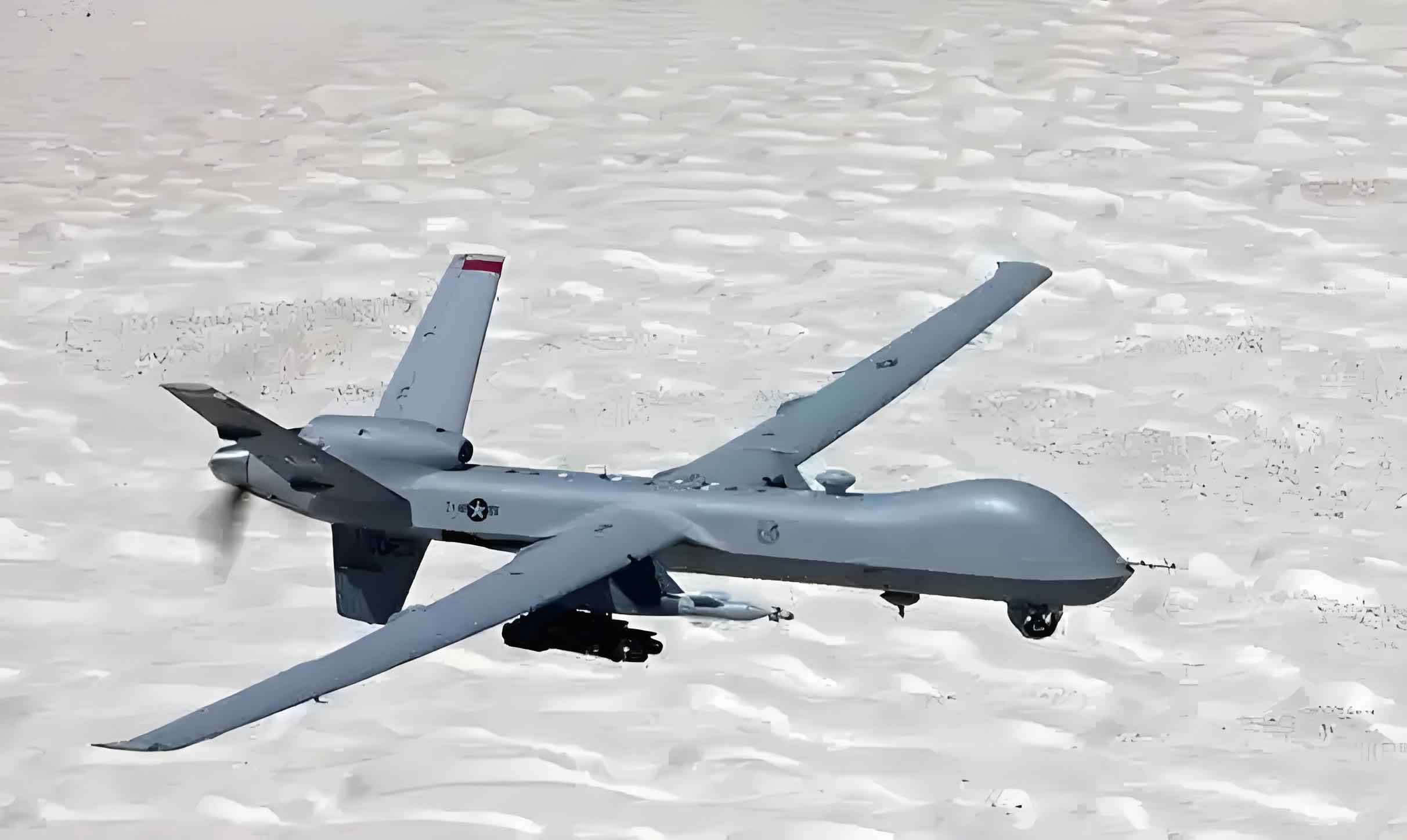
The proliferation of military UAVs is not linear; it is exponential and multi-dimensional. We are witnessing expansion across capability, quantity, and the number of actors possessing them. The following table categorizes the current landscape of military UAV threats, which is essential for understanding the corresponding defense requirements.
| Category | Weight / Class | Primary Roles | Key Challenges for Defense | Exemplar Systems (Generalized) |
|---|---|---|---|---|
| Mini/Micro UAV | < 150 kg (Class I) | Tactical ISR, Squad-level Reconnaissance | Very low radar cross-section (RCS), low-altitude flight, acoustic/visual stealth, commercial components. | Hand-launched quadcopters, small fixed-wing scouts. |
| Tactical UAV | 150 – 600 kg (Class II) | Reconnaissance, Artillery Spotting, Light Strike | Small RCS, operates below traditional radar cover, potential for swarm behavior. | Medium endurance, fixed-wing systems. |
| MALE/HALE UAV | > 600 kg (Class III) | Strategic ISR, Persistent Surveillance, Precision Strike | High-altitude, long-endurance, sophisticated sensors/weapons, often satellite-linked. | High-altitude long-endurance fixed-wing platforms. |
| Loitering Munitions (Kamikaze UAV) | Varies (I-III) | Suppression of Enemy Air Defenses (SEAD), Precision Strike on Time-Sensitive Targets | Low/slow profile, unpredictable loiter pattern, terminal dive, often used in saturation attacks. | Pre-programmed or man-in-the-loop explosive drones. |
| Unmanned Combat Aerial Vehicle (UCAV) | Heavy (Class III+) | High-Threat Penetration, Air-to-Air Combat, Deep Strike | Low-observable (stealth) features, high speed, advanced autonomy. | Next-generation, fighter-like autonomous systems. |
The quantitative growth is staggering. From only a handful of nations possessing armed military UAVs a decade ago, the number now exceeds 70. The international arms market reflects this, with a 330% increase in new military UAV models introduced in the 2000-2020 period compared to the previous two decades. While traditional aerospace powers dominate the high-end market, the technology diffusion is profound. Nations are rapidly developing indigenous production capabilities, ensuring that the future operational environment will be saturated with a wide spectrum of military UAV threats. We can model the threat capability of a military UAV swarm as a function of several variables:
$$
\text{Swarm Threat Index } (T_s) = N \cdot \left( \frac{\sum_{i=1}^{n} (P_i + S_i + A_i)}{n} \right) \cdot C_c
$$
Where:
- $N$ = Number of UAVs in the swarm
- $P_i$ = Payload lethality score of UAV $i$
- $S_i$ = Survivability (stealth, maneuverability) score of UAV $i$
- $A_i$ = Autonomous coordination capability score of UAV $i$
- $n$ = Number of unique UAV types in the swarm
- $C_c$ = Networked Command and Control cohesion factor (0 to 1)
This simple model illustrates that the threat multiplies not just with numbers ($N$), but with the average capability of individual platforms and, crucially, the sophistication of their coordination ($C_c$). Defeating such a system requires a layered, integrated approach.
The Multi-Layered Counter-UAV Arsenal: From Jammers to Lasers
There is no single “silver bullet” against the diverse military UAV threat matrix. Effective defense necessitates a combination of kinetic and non-kinetic, soft-kill and hard-kill measures, integrated under a unified command and control system. The following table summarizes the primary technological approaches.
| Technology | Mechanism of Action | Best Against | Key Advantages | Key Limitations |
|---|---|---|---|---|
| Electronic Warfare (EW) / Jamming | Disrupts or spoofs Command & Control (C2) and Global Navigation Satellite System (GNSS) links. | Commercial & lower-tier military UAVs reliant on RF links. | Low cost-per-engagement, wide area effect, rapid effect. | Ineffective against pre-programmed/autonomous drones; potential for collateral jamming. |
| Kinetic Hard-Kill (Guns/Missiles) | Physical destruction using bullets, fragmentation, or directed blast. | All categories, but cost-effective for larger, expensive UAVs. | High certainty of kill, proven technology. | High cost-per-engagement for missiles; limited magazine depth against swarms; collateral damage risk. |
| High-Energy Laser (HEL) | Directs concentrated photonic energy to thermally disable or destroy critical components. | Class I & II UAVs, loitering munitions; effective against materiel. | Very low cost-per-shot, deep magazine, speed-of-light engagement, precision. | Line-of-sight only; atmospheric attenuation (rain, fog, smoke); high power/weight requirements. |
| High-Power Microwave (HPM) | Emits a burst of electromagnetic energy to fry electronic circuits. | UAV swarms; area denial against electronics. | Wide beam, area effect, engages multiple targets simultaneously, all-weather capability. | Short effective range compared to lasers; high power requirement; significant collateral damage to friendly electronics. |
| Counter-UAV UAVs (Drone-on-Drone) | Uses interceptor UAVs for kinetic collision, net capture, or EW payload delivery. | Small UAVs in complex urban or no-fire environments. | High maneuverability, can engage in denied or sensitive airspace, reusable platform. | Limited payload/endurance; requires its own C2; adds complexity to airspace management. |
1. Electronic Warfare: The First Line of Disruption
EW remains the most ubiquitous and rapidly deployable C-UAV tool. Its effectiveness stems from targeting the most universal vulnerability of military UAVs: their reliance on the electromagnetic spectrum. Jamming can be modeled as a power and frequency competition. The success of a jammer in breaking a link depends on the jamming-to-signal ratio (J/S) at the target UAV’s receiver:
$$
\frac{J}{S} = \frac{P_j G_j G’_r \lambda^2 R_s^2 L_s}{P_s G_s G_r \lambda^2 R_j^2 L_j} = \frac{P_j G_j G’_r R_s^2 L_s}{P_s G_s G_r R_j^2 L_j}
$$
Where $P_j$ and $P_s$ are jammer and signal power, $G_j$ and $G_s$ are antenna gains, $G_r$ and $G’_r$ are receiver gains towards signal and jammer, $R$ represents ranges, $L$ represents losses, and $\lambda$ is wavelength. Modern systems use direction-finding and targeted, agile jamming to maximize this ratio against specific threats while minimizing friendly disruption.
2. Kinetic and Missile Defenses: The High-Certainty, High-Cost Option
Traditional air defense artillery and missiles have been adapted for the C-UAV role. The challenge is economic. Engaging a \$1,000 quadcopter with a \$200,000 missile is unsustainable. The solution vector is driving towards lower-cost interceptors and increasing the efficiency of guns. For a gun system, the probability of hit ($P_{hit}$) against a small, maneuvering military UAV can be approximated by improvements in fire control:
$$
P_{hit} \propto \frac{1}{t_{track} \cdot \sigma_{UAV} \cdot v_{UAV}} \cdot (A_{FC} + S_{munition})
$$
Here, $t_{track}$ is tracking time, $\sigma_{UAV}$ is the UAV’s cross-section, $v_{UAV}$ its velocity, $A_{FC}$ is the fire control system’s accuracy coefficient, and $S_{munition}$ is the lethality enhancement from using airburst or guided munitions. This drives development in advanced sights for small arms and programmable airburst munitions for autocannons.
3. Directed Energy: The Game-Changer for Asymmetric Cost Exchange
Directed Energy Weapons (DEWs), namely lasers and microwaves, promise to flip the cost-exchange ratio on its head. For a High-Energy Laser, the key parameter is the irradiance ($I$) on target, which must exceed a damage threshold ($I_{th}$) for a required time ($t_{dwell}$) to cause failure.
$$
I = \frac{P \cdot \eta \cdot \tau_{atm}}{ \pi \left( \frac{\theta \cdot R}{2} \right)^2 } \quad \text{and must satisfy} \quad I \cdot t_{dwell} > E_{th}
$$
$P$ is laser power, $\eta$ is beam quality factor, $\tau_{atm}$ is atmospheric transmission, $\theta$ is beam divergence, $R$ is range, and $E_{th}$ is the target’s specific energy threshold for damage. This shows why increasing laser power ($P$) and improving beam quality/reducing divergence ($\theta$) are paramount. Solid-state laser technology is making systems like 50-300 kW truck-mounted lasers a near-term battlefield reality for countering military UAVs.
4. Systemic and Passive Measures
Beyond direct engagement, passive defense and systemic attacks are crucial. Deception (decoy targets), concealment (smoke screens that attenuate both visual and laser targeting), hardening, and dispersal of assets reduce the payoff for a UAV strike. Most critically, targeting the enemy’s C-UAV system—its ground control stations (GCS), launch vehicles, and supply lines—is the most efficient form of defense. Destroying one GCS can neutralize an entire squadron of military UAVs.
Strategic Imperatives and Future Trajectory
The evolution of military UAV and C-UAV systems is a classic offense-defense spiral. Future success depends on several strategic pillars.
Integration Over Isolation: A standalone jamming truck or laser is not a solution. The future lies in Integrated Air and Missile Defense (IAMD) architectures that fuse sensor data from radars, EW detectors, and electro-optical systems into a single, coherent picture. A central battle management system must then dynamically assign threats to the most appropriate effector—be it a jammer, laser, missile, or interceptor drone—based on threat priority, weapon state, and rules of engagement. Interoperability standards are critical for this “plug-and-fight” capability.
The Five-Layer Defense Framework: A robust C-UAV architecture should be conceptualized in layers:
- Early Warning and Tracking: A network of radars (including counter-swarm low-frequency radars), radio frequency (RF) sensors, and electro-optical/infrared (EO/IR) cameras for persistent, low-altitude surveillance.
- Electronic Denial Umbrella: Wide-area and targeted EW systems to disrupt and deceive inbound UAVs at maximum range.
- Hard-Kill Point Defense: Kinetic systems (guns, missiles, interceptor drones) for assured destruction of leakers within a critical radius.
- Ground-Based Directed Energy: Laser and HPM systems for high-volume, low-cost engagements against swarms and individual targets.
- Offensive Counter-UAV: Stand-off assets (air, artillery, cyber, special forces) to find and destroy enemy UAV infrastructure before launch.
| System Type | Engagement Cycle Time | Estimated Cost-Per-Engagement | Suitability for Swarms | Technology Readiness Level (TRL) |
|---|---|---|---|---|
| RF Jamming System | Seconds | \$10 – \$100 (energy cost) | Medium (can blanket area, but autonomous drones may penetrate) | High (9 – Fielded) |
| 30mm Airburst Cannon | Seconds | \$500 – \$5,000 per burst | High (with advanced FCS) | High (9 – Fielded) |
| Very Short-Range Air Defense (VSHORAD) Missile | Seconds to Minutes | \$50,000 – \$200,000+ | Very Low (limited magazine) | High (9 – Fielded) |
| 50-100 kW Laser Weapon | Seconds (dwell time) | \$1 – \$10 (energy cost) | High (deep magazine, rapid re-engagement) | Medium-High (7-8 – Prototype Demo) |
| High-Power Microwave Weapon | < 1 Second (pulse) | \$10 – \$100 (energy cost) | Very High (wide-area, multi-target) | Medium (6-7 – Tech Demo) |
Investing in the Asymmetric Edge (Directed Energy and AI): To counter the numerical and cost advantage of adversary military UAVs, investment must prioritize technologies that restore favorable exchange ratios. This means accelerating the deployment of operational laser and microwave systems. Concurrently, Artificial Intelligence (AI) and Machine Learning (ML) are force multipliers for C-UAV. AI is essential for rapid sensor fusion, target identification/classification in cluttered environments, predicting swarm behavior, and orchestrating the optimal multi-weapon engagement sequence faster than human operators can.
Continuous Operational Testing and Tactics Development: C-UAV systems cannot be developed in a vacuum. Regular, large-scale exercises featuring realistic red teams employing adversary military UAV tactics (swarms, saturation attacks, GNSS-denied navigation) are essential to stress-test systems and develop effective Tactics, Techniques, and Procedures (TTPs). The lessons from such exercises must feed directly back into the development cycle.
The age of the military UAV is undeniable, and the race to counter them defines contemporary defense planning. The future battlefield will be contested by intelligent drone swarms facing off against a networked, automated shield of sensors and effectors. Victory will belong not to the side with the most advanced single weapon, but to the force that most effectively integrates diverse technologies—from radio frequency jammers to photon lasers—into a resilient, adaptive, and intelligent system. The imperative is clear: develop an orchestrated defense-in-depth that is as dynamic, scalable, and cost-effective as the military UAV threat it is designed to defeat.