
The rapid ascent of military UAVs as pivotal assets in modern warfare has fundamentally reshaped operational doctrines. As a designer focused on sustainment solutions, I observe that while these platforms offer unparalleled advantages in reconnaissance, strike, and persistent surveillance, their logistical tail presents a unique and pressing challenge. Their relatively recent introduction into service, coupled with limited production runs and high technological complexity, has resulted in a support infrastructure that is often nascent and not fully optimized for high-tempo, expeditionary operations. This gap between operational capability and support agility threatens to undermine the very advantages that make military UAVs so valuable. Therefore, my exploration centers on the design and development of specialized equipment readiness shelters—mobile, modular warehouses specifically engineered for the end-to-end support of military UAV systems. The primary objective is to create a solution that drastically enhances the mobility, flexibility, and responsiveness of UAV logistics, thereby elevating the overall mission readiness and sustainability of military UAV units in diverse and demanding environments.
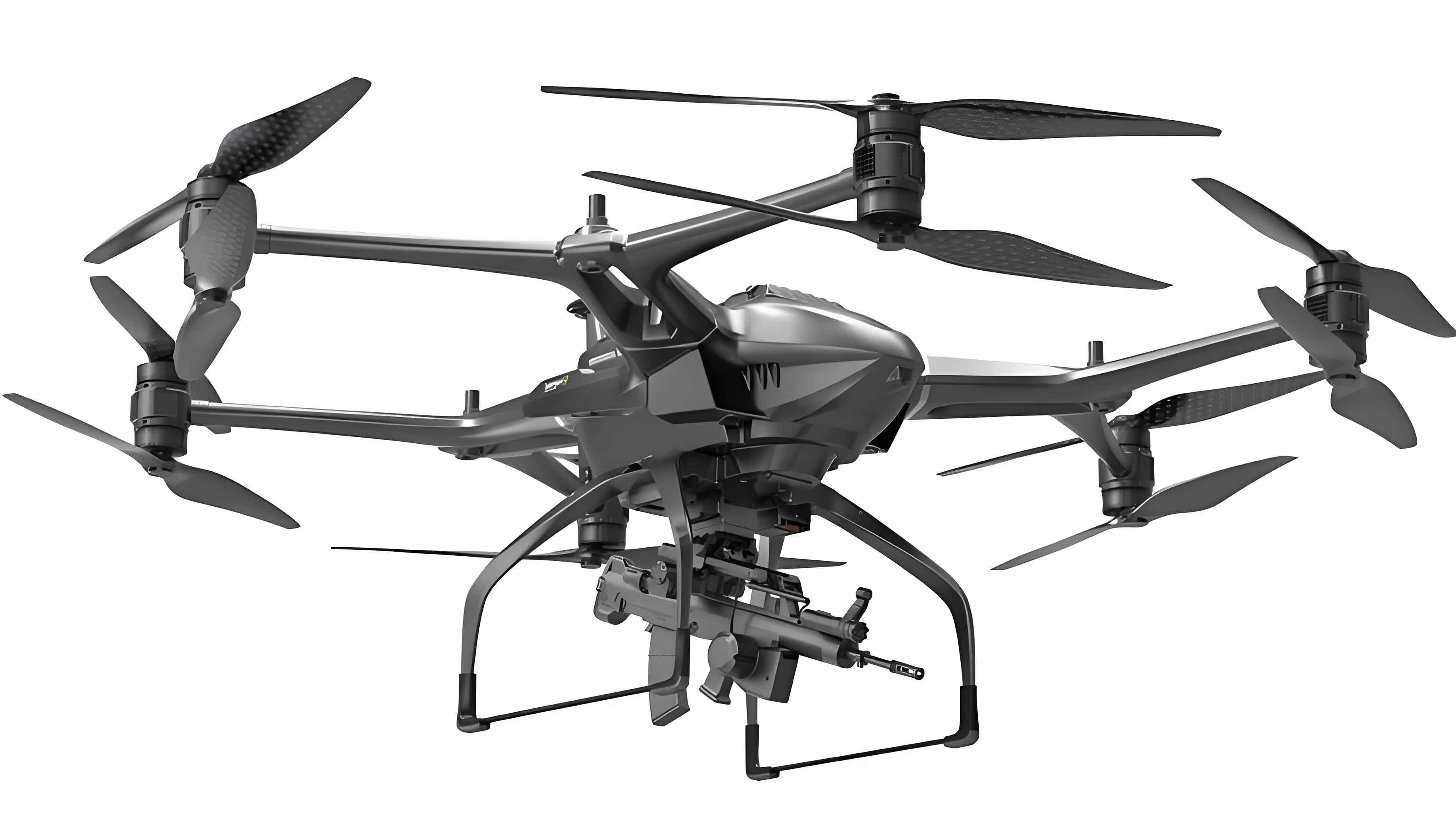
The design imperatives for a military UAV readiness shelter are derived directly from the distinct characteristics of the systems they must support. Unlike manned aircraft, a military UAV’s operational capability is entirely dependent on the seamless integration of the aerial vehicle with its ground control station (GCS), data links, and a suite of support equipment. This interdependence creates a multifaceted design demand. First, the UAV itself, often packed with sensitive avionics, precision sensors, and composite structures, requires extremely careful handling and storage. Parameters such as shock, vibration, temperature, and humidity must be rigorously controlled during transport to prevent latent damage or calibration drift. The requirement for protection can be expressed as maintaining environmental parameters within a strict envelope:
$$ T_{storage} \in [T_{min}, T_{max}], \quad H_{storage} \le H_{max}, \quad G_{shock} \le G_{max} $$
where \( T_{storage} \) is the storage temperature, \( H_{storage} \) is relative humidity, and \( G_{shock} \) is the maximum allowable shock load during handling.
Second, the ground segment—comprising the GCS, communication relays, launch and recovery equipment, and maintenance tools—is equally critical. This equipment is often diverse, bulky, and electronically sophisticated. A readiness shelter cannot be designed solely for the UAV airframe; it must be a holistic solution for the entire military UAV system. Furthermore, the variety of military UAV sizes and roles—from small hand-launched systems to large medium-altitude long-endurance (MALE) platforms—necessitates a modular or configurable design approach. The shelter must adapt to different payloads, which is a core challenge. The shelter’s internal volume utilization efficiency, \( \eta_{volume} \), is a key metric:
$$ \eta_{volume} = \frac{\sum_{i=1}^{n} V_{equipment_i}}{V_{shelter_{internal}}} \times 100\% $$
The goal is to maximize \( \eta_{volume} \) while ensuring safe access and handling for all stored items.
The functional role of this military UAV readiness shelter is dual-purpose: it serves as a highly mobile warehouse for expeditionary operations and a consolidated storage facility for home-station use. Its value proposition lies in optimizing the spatial efficiency of transport vehicles (like trucks, railcars, or transport aircraft), enabling the rapid, secure, and reliable movement of a complete military UAV support package to any designated point of need. It must facilitate swift issue and receipt of equipment in field conditions, solving problems of storage, transport, and immediate supply for military UAV squadrons. Crucially, it must be interoperable across all strategic and tactical transport modalities—road, rail, sea, and air—complying with recognized intermodal standards. This requires adherence to dimensional and structural specifications, such as those for ISO containers or military-specific equivalents. The shelter’s transportability condition can be summarized as compliance with a set of standards \( S \):
$$ Shelter_{design} \mapsto \forall s \in S (s = true) $$
where \( S = \{ s_{dimensions}, s_{corner\_fitting}, s_{stacking\_strength}, s_{lifting\_strength} \} \).
| Functional Requirement | Design Implication | Key Performance Indicator (KPI) |
|---|---|---|
| System-Level Transport | Internal layout configurable for UAV, GCS, spares, and tools. | Percentage of a standard UAV system’s equipment accommodated. |
| Rapid Deployment | Multiple access doors, intuitive internal organization, integrated handling points. | Time to unload/ready a critical subsystem (e.g., GCS). |
| Multi-Modal Transport | External dimensions and corner fittings per ISO 668 or MIL-STD. | Compliance certification for road, rail, sea, air transport. |
| Environmental Protection | Robust, insulated structure with controlled internal environment. | Maintenance of specified temperature and humidity range for 24/48/72 hours. |
| Daily Storage & Security | Robust locking mechanisms, inventory management aids, durable construction. | Resistance to forced entry; ease of routine inventory checks. |
The structural design is the backbone of the shelter’s functionality. Externally, it resembles a standardized shipping container, typically a 20-foot or 40-foot equivalent unit, to guarantee transport compatibility. The primary structure consists of a high-strength steel frame forming the skeleton, with integrated top and bottom rails, corner posts, and corner castings. The corner castings are critical, as they are the standardized interface for all lifting, stacking, and securing operations during intermodal transit. The base frame must include fork lift pockets and recesses for twist-lock mechanisms. To enhance utility and environmental adaptability, a multi-door configuration is optimal—doors on one or both long sides and possibly on the ends. This allows for direct access to different internal zones without needing to empty the entire shelter. Each door is fitted with robust locking bars or rotary locks to ensure security during transit.
The internal structural design is where the customization for military UAV logistics truly takes shape. It cannot be a simple empty box. The space must be intelligently partitioned using a combination of fixed and adjustable racking, shelving, drawers, and specialized cradles or restraints for large, irregularly shaped items like UAV wings, fuselages, or ground antennas. The design principles are: Adaptability: Shelf heights and rack positions should be adjustable without tools to accommodate different sizes of equipment from various military UAV types. Consolidation: Items of the same type or belonging to the same subsystem should be co-located to speed up kitting and issue. Optimization: The layout should exploit the three-dimensional volume fully. For irregularly shaped components, complementary shapes should be nested together where possible to minimize wasted space. This is a classic 3D bin-packing optimization problem. A simplified objective function for a single configuration could be:
$$ \text{Maximize } Z = \sum_{i=1}^{n} v_i x_i $$
$$ \text{Subject to: } \sum_{i=1}^{n} a_{ji} x_i \le b_j \quad \text{for } j = 1, …, m $$
$$ x_i \in \{0, 1\} $$
where \( v_i \) is the value (or volume) of item \( i \), \( x_i \) is a binary variable indicating if item \( i \) is packed, \( a_{ji} \) is the amount of resource \( j \) (e.g., length, width, height, weight capacity) used by item \( i \), and \( b_j \) is the total available resource \( j \) of the shelter. Weight Distribution & Security: The internal structure must anchor securely to the external frame and ensure an even center of gravity. Heavy items (e.g., generator sets) are placed low and centered. All items, especially small, high-value components (like spare circuit boards or sensors), must have dedicated, secure storage locations to prevent loss and damage from movement during transport.
The choice of materials directly impacts the shelter’s weight, durability, thermal performance, and cost. The shelter’s wall and roof/floor panels typically employ a sandwich composite structure for optimal strength-to-weight ratio and insulation. This structure consists of an inner and outer skin (the “face sheets”) bonded to a lightweight core material.
Face Sheets (Inner & Outer Skin): These bear the primary tensile and compressive loads. For military applications, glass-reinforced plastic (GRP) or corrosion-resistant coated steel sheets are common. A promising material is pre-finished galvanized steel or aluminum sheet with a protective/paint coating, offering excellent strength, weatherability, and relatively low weight. The skin thickness \( t_{skin} \) is calculated based on required bending stiffness \( D \) and core shear modulus \( G_c \):
$$ D \approx \frac{E_f t_f h^2}{2(1-\nu_f^2)}, \quad \text{and the shear rigidity is influenced by } G_c \cdot h $$
where \( E_f \) is the face sheet modulus, \( t_f \) is the face sheet thickness, \( h \) is the core height, and \( \nu_f \) is Poisson’s ratio of the face sheet.
Core Material: The core sustains shear loads and stabilizes the face sheets. For a military UAV readiness shelter requiring good thermal insulation, closed-cell polymer foams like polyurethane (PUR) or polyisocyanurate (PIR) are ideal choices. They provide excellent thermal resistance (high R-value), low weight, and reasonable compressive strength. Their low density \( \rho_{core} \) is a major advantage for a mobile unit.
Adhesive: The bond between the face sheets and the core is critical; a poor bond leads to delamination and failure. The adhesive must have high strength, good temperature tolerance (from desert heat to arctic cold), and resistance to moisture and fatigue. Modified epoxy or toughened acrylic adhesives are typically specified. Their performance is often defined by shear strength \( \tau_{adh} \):
$$ \tau_{adh} \ge \frac{Q}{A_{bond}} $$
where \( Q \) is the shear flow in the panel and \( A_{bond} \) is the bonded area per unit length.
| Material Component | Candidate Materials | Key Properties for UAV Shelter | Typical Values / Notes |
|---|---|---|---|
| Outer Skin | Pre-coated Galvanized Steel, Aluminum Alloy, GRP | Yield Strength, Corrosion Resistance, Weatherability | σ_y > 250 MPa; Polyester or PVDF coating for durability. |
| Core | Polyurethane (PUR) Foam, Polyisocyanurate (PIR) Foam | Thermal Conductivity (k), Density (ρ), Compressive Strength | k ~ 0.022 W/m·K; ρ ~ 40-60 kg/m³; Comp. Strength > 0.15 MPa. |
| Adhesive | Toughened Epoxy, Modified Acrylic | Shear Strength, Service Temperature Range, Fatigue Life | τ > 10 MPa; Temp Range: -40°C to +80°C. |
| Internal Racking | Steel (powder-coated), Aluminum | Load Capacity per Shelf, Adjustability, Corrosion Resistance | Dynamic load capacity > 250 kg per shelf level. |
Looking beyond the physical structure, the true modernisation of a military UAV readiness shelter lies in its integration with digital logistics technologies. The future shelter is not just a box, but a smart node in the logistics network. The incorporation of Radio-Frequency Identification (RFID) is transformative. By tagging every major component and spare part within the shelter—from a complete military UAV engine to individual line-replaceable units (LRUs)—inventory management becomes automated and real-time. Readers mounted at shelter doors or internally can scan contents without opening every crate, providing instant visibility. The location of the shelter itself can be tracked via GPS and integrated with the RFID data, giving logistics commanders a clear picture of where every critical asset is in the supply chain. This connectivity enables predictive logistics, where usage data from the tags can trigger automatic resupply requests. The benefit for military UAV operations is profound: reduced downtime, optimized spare parts holdings, and elimination of manual inventory errors.
Furthermore, environmental monitoring sensors (for temperature, humidity, shock) can be integrated, sending alerts if conditions inside the shelter deviate from preset safe zones for sensitive military UAV electronics. Power management systems, integrated lighting, and even climate control units (for shelters intended to store extremely sensitive equipment) can be incorporated, powered by either an external source or an onboard quiet generator.
In conclusion, the design of a dedicated equipment readiness shelter is a critical enabler for unlocking the full operational potential of military UAV assets. It addresses the salient weaknesses in current support structures by providing a standardized, robust, and intelligent platform for system-level mobility. Through a thoughtful integration of intermodal transport geometry, optimized internal ergonomics, advanced composite materials, and embedded digital tracking technologies, this mobile warehouse becomes more than a container—it becomes a force multiplier. It ensures that the advanced capabilities of the military UAV, which hinge on complex ground support, can be projected and sustained with speed and reliability wherever needed, directly contributing to mission success and strategic flexibility. The continuous evolution of military UAV technology will demand parallel innovation in these support platforms, making their design an ongoing and essential field of study.