
In modern warfare, military unmanned aerial vehicles (UAVs) have emerged as pivotal assets, reshaping operational paradigms through their versatility and capability to perform missions without onboard pilots. As a researcher in aerospace propulsion, I delve into the intricate relationship between military UAV platforms and their propulsion systems, focusing on turbofan engines. The effectiveness of a military UAV is profoundly dependent on its powerplant, which must balance performance, stealth, reliability, and cost. This analysis aims to systematically explore the key requirements imposed by various military UAV types—such as unmanned combat aerial vehicles (UCAVs), unmanned reconnaissance aircraft, and unmanned tankers—on their turbofan engines, and how these requirements correlate with engine characteristic parameters. By examining existing data and trends, I seek to provide insights that can guide the design, selection, and optimization of propulsion systems for enhanced battlefield efficacy.
The evolution of military UAVs has been driven by advancements in technology and shifting tactical needs. Unlike manned aircraft, military UAVs eliminate pilot physiological limitations, allowing for designs optimized for extreme endurance, altitude, and maneuverability. However, this freedom imposes unique demands on the propulsion system, which must adapt to diverse mission profiles. From my perspective, understanding these demands is crucial for developing engines that not only meet performance thresholds but also integrate seamlessly into the UAV’s overall architecture. The propulsion system becomes the enabler of mission success, whether it involves stealthy penetration, long-duration surveillance, or aerial refueling.
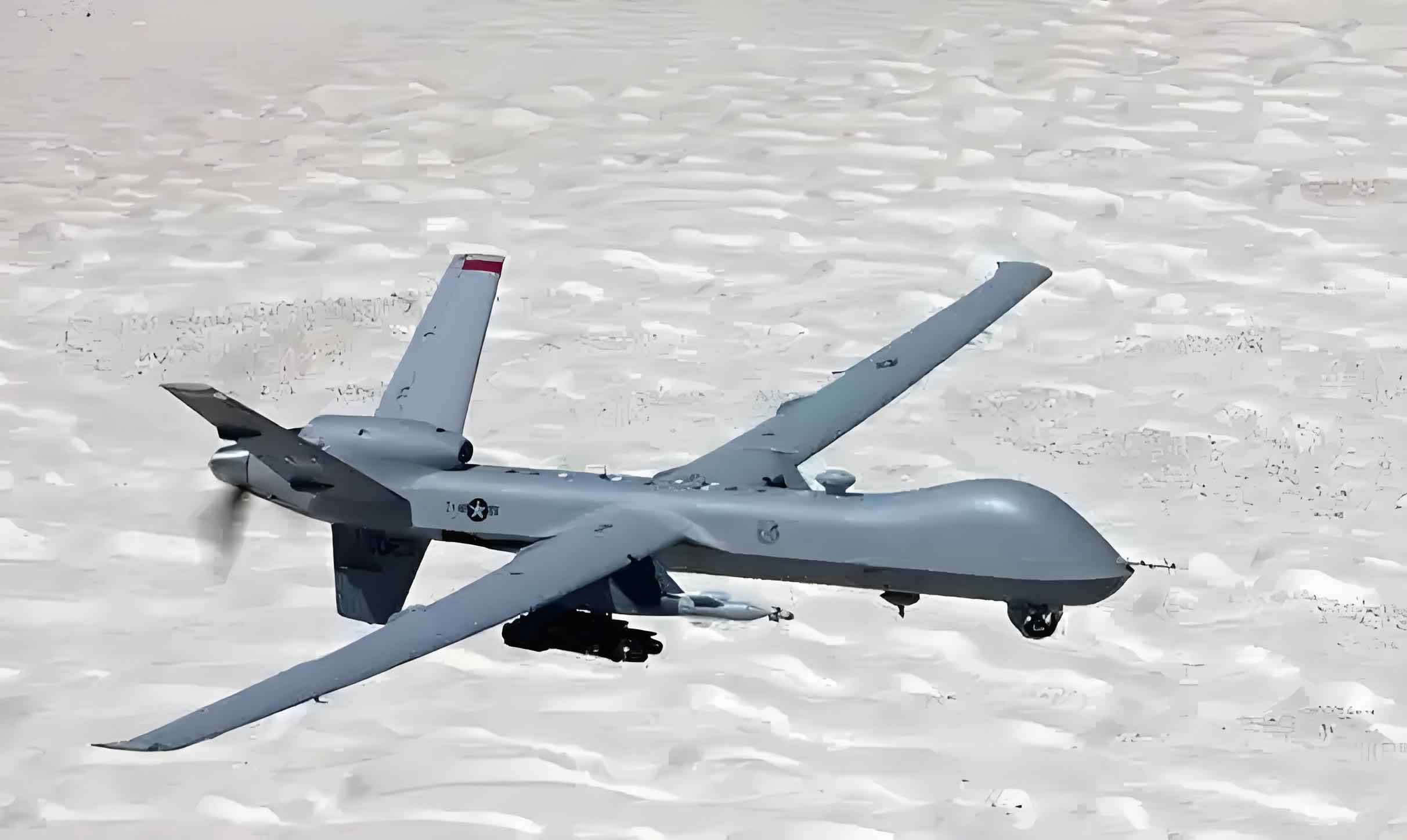
Military UAVs can be broadly categorized based on their primary roles. Unmanned combat aerial vehicles (UCAVs) are designed for strike missions, including air-to-ground attacks, air superiority, and electronic warfare. Unmanned reconnaissance aircraft focus on intelligence, surveillance, and reconnaissance (ISR) tasks, requiring prolonged loitering at high altitudes. Unmanned tankers, such as the MQ-25, provide aerial refueling to extend the operational range of other aircraft. Each category imposes distinct requirements on the propulsion system, influencing engine selection from existing mature platforms or spurring new developments. In this analysis, I emphasize that the propulsion system for a military UAV must be tailored to its specific mission, often involving trade-offs between parameters like specific fuel consumption (SFC), thrust-to-weight ratio, and stealth characteristics.
To quantify the performance of turbofan engines for military UAVs, several key parameters are essential. The thrust (F) generated by an engine can be expressed as a function of mass flow rate and velocity change. For a turbofan, the net thrust is given by:
$$F = \dot{m}_a \left( (1 + f) V_j – V_0 \right) + \dot{m}_f (V_j – V_0)$$
where \(\dot{m}_a\) is the air mass flow rate, \(f\) is the fuel-air ratio, \(V_j\) is the jet velocity, and \(V_0\) is the flight velocity. The bypass ratio (BPR) is a critical design parameter, defined as the ratio of bypass air mass flow to core air mass flow:
$$\text{BPR} = \frac{\dot{m}_{\text{bypass}}}{\dot{m}_{\text{core}}}$$
A higher BPR generally leads to better fuel efficiency and lower noise, which is beneficial for long-endurance military UAVs like reconnaissance platforms. However, for UCAVs requiring high thrust-to-weight ratios and compact designs for stealth, lower BPR engines are preferred. The specific fuel consumption (SFC) measures fuel efficiency and is defined as:
$$\text{SFC} = \frac{\dot{m}_f}{F}$$
where \(\dot{m}_f\) is the fuel flow rate. Minimizing SFC is crucial for extending the range and endurance of military UAVs, especially for ISR missions. Another important parameter is the overall pressure ratio (OPR), which impacts thermal efficiency and is given by:
$$\text{OPR} = \frac{P_{03}}{P_{02}}$$
where \(P_{03}\) is the compressor outlet total pressure and \(P_{02}\) is the inlet total pressure. Higher OPR can improve efficiency but may increase engine complexity and cost.
The selection of turbofan engines for military UAVs often involves adapting mature engines from manned aircraft. This approach reduces development risk and cost while leveraging proven reliability. For instance, UCAVs like the X-47B utilize modified military turbofans such as the F100-PW-220U, derived from fighter engines, whereas reconnaissance UAVs like the RQ-4 rely on commercial derivatives like the AE 3007H. The table below summarizes typical engine parameters for different military UAV categories, highlighting how mission requirements influence choices.
| Military UAV Type | Example UAV | Engine Model | Thrust (kN) | Bypass Ratio | Source Engine Type |
|---|---|---|---|---|---|
| UCAV | X-47B | F100-PW-220U | 74.0 | 0.6 | Fighter Engine |
| UCAV | Neuron | MK951 | 40.0 | 0.75 | Trainer Engine |
| Reconnaissance | RQ-4 Global Hawk | AE 3007H | 42.0 | 4.9 | Regional Jet Engine |
| Reconnaissance | MQ-20 Avenger | PW545B | 20.0 | 4.12 | Business Jet Engine |
| Tanker | MQ-25 Stingray | AE 3007N | 40.0 | 5.0 | Regional Jet Engine |
From this table, it is evident that military UAVs designed for combat roles tend to use engines with lower bypass ratios, which favor high thrust density and compatibility with stealth features. In contrast, reconnaissance and tanker military UAVs opt for higher bypass ratios to achieve better fuel economy and lower acoustic signatures. This dichotomy underscores the need for a tailored propulsion strategy based on the military UAV’s operational envelope.
The key requirements for military UAV propulsion systems can be grouped into five domains: performance, environmental compatibility, stealth, reliability/maintainability, and cost. Each domain encompasses specific criteria that directly impact engine design. For performance, military UAVs demand low SFC for endurance, high thrust-to-weight ratio for agility, capability to operate at high inlet temperatures (T1) for supersonic or high-speed dash, high power extraction for onboard systems, high-altitude operation, and tolerance to high maneuver loads. Environmental requirements include low noise and low emissions, though these are often secondary for military UAVs compared to civilian applications. Stealth requirements involve low radar cross-section (RCS) and low infrared (IR) signature to evade detection. Reliability and maintainability call for long service life, high cycle durability, and ease of maintenance. Cost requirements encompass low procurement, development, and maintenance expenses.
To illustrate the relative importance of these requirements for different military UAV types, I have compiled a qualitative assessment table. This table uses High (H), Medium (M), and Low (L) ratings to indicate priority levels.
| Requirement | UCAV | Unmanned Reconnaissance | Unmanned Tanker |
|---|---|---|---|
| Low SFC | M | H | H |
| High Thrust-to-Weight Ratio | H | L | L |
| High T1 Operation | H | L | M |
| High Power Extraction | M | H | M |
| High-Altitude Operation | M | H | M |
| High Maneuver Tolerance | H | L | L |
| Low Noise | L | L | L |
| Low Emissions | L | M | L |
| Low RCS | H | M | L |
| Low IR Signature | H | M | M |
| Long Life | L | H | M |
| High Cycle Durability | M | L | M |
| Maintainability | M | H | H |
| Low Procurement Cost | H | M | H |
| Low Development Cost | L | H | M |
| Low Maintenance Cost | M | M | H |
This table reveals that UCAVs prioritize stealth and high-performance metrics, while reconnaissance military UAVs emphasize fuel efficiency, altitude capability, and maintainability. Tanker military UAVs share some reconnaissance traits but with a stronger focus on cost-effectiveness. Such distinctions guide engine manufacturers in optimizing designs for each military UAV category.
The relationship between engine characteristic parameters and the key requirements is complex, often involving trade-offs. For instance, achieving low SFC typically requires a high bypass ratio, which increases engine diameter and can compromise stealth by raising RCS. Conversely, a low bypass ratio enhances thrust-to-weight ratio but worsens fuel economy. To formalize these interactions, I propose a matrix that maps engine features to requirements. The matrix uses symbols: ** for critical, * for important, o for minor, – for negative impact, and — for strongly negative impact.
| Engine Characteristic | Low SFC | High Thrust-to-Weight | Low RCS | Low IR | Maintainability | Low Cost |
|---|---|---|---|---|---|---|
| Low Fan Pressure Ratio (FPR) | ** | — | – | * | o | * |
| High OPR | * | o | o | o | – | – |
| High Turbine Inlet Temperature (SOT) | * | ** | o | o | – | o |
| High Component Efficiency | ** | o | o | o | – | – |
| Mixed Exhaust Flow | * | o | * | ** | o | o |
| Serpentine Inlet Ducts | — | o | ** | * | o | – |
| Advanced Materials for Stealth | o | o | ** | ** | o | — |
| Modular Design | o | – | o | o | ** | * |
This matrix illustrates that no single characteristic excels in all areas; instead, designers must balance these factors based on the military UAV’s mission. For example, serpentine inlet ducts are critical for low RCS but can reduce aerodynamic efficiency, increasing SFC. Similarly, advanced stealth materials lower detectability but raise costs. Therefore, the propulsion system for a military UAV must be a carefully optimized compromise.
To delve deeper into performance trade-offs, mathematical models can be employed. The thrust-to-weight ratio (TWR) of an engine is a key metric for military UAVs, especially UCAVs, and is defined as:
$$\text{TWR} = \frac{F}{W}$$
where \(W\) is the engine weight. Engine weight correlates with size and complexity, which can be estimated using empirical relations. For instance, the engine mass flow rate \(\dot{m}\) relates to thrust through specific thrust \(F_s\):
$$F = \dot{m} \cdot F_s$$
Specific thrust depends on bypass ratio and thermodynamic cycle. A lower bypass ratio yields higher specific thrust, beneficial for TWR but detrimental to SFC. The SFC can be expressed in terms of thermal efficiency \(\eta_t\) and propulsive efficiency \(\eta_p\):
$$\text{SFC} = \frac{1}{\eta_t \cdot \eta_p \cdot \text{LHV}}$$
where LHV is the lower heating value of fuel. For a turbofan, propulsive efficiency improves with bypass ratio, as given by:
$$\eta_p = \frac{2 V_0}{V_j + V_0}$$
Thus, for a military UAV requiring long endurance, maximizing \(\eta_p\) via high bypass ratio is essential, even if it sacrifices TWR.
Stealth considerations for military UAV propulsion involve reducing both RCS and IR signature. RCS reduction techniques include using serpentine inlet ducts to hide engine faces from radar, radar-absorbent materials (RAM) on nacelles, and careful shaping of exhaust nozzles. IR suppression involves cooling exhaust gases and shielding hot parts. The IR signature can be modeled using the Stefan-Boltzmann law for radiative heat transfer:
$$Q = \epsilon \sigma A T^4$$
where \(Q\) is the radiative power, \(\epsilon\) is emissivity, \(\sigma\) is the Stefan-Boltzmann constant, \(A\) is area, and \(T\) is temperature. By lowering exhaust gas temperature through mixing or using cooled nozzles, the IR signature of a military UAV can be minimized. However, such measures often add weight and complexity, impacting TWR and cost.
Reliability and maintainability are paramount for military UAVs deployed in contested environments. Mean time between failures (MTBF) and mean time to repair (MTTR) are key metrics. Engine health monitoring (EHM) systems, which use sensors and data analytics, can predict failures and schedule maintenance, enhancing availability. For military UAVs, especially those operating from remote bases, modular engine designs allow quick replacement of units, reducing downtime. The life cycle cost (LCC) of a propulsion system includes development, production, operation, and support costs. For a military UAV fleet, minimizing LCC is crucial, often favoring derivative engines over clean-sheet designs.
Based on the analysis, I can summarize the preferred engine characteristics for each military UAV category. The table below highlights the prioritization of features during design optimization.
| Engine Characteristic | UCAV | Unmanned Reconnaissance | Unmanned Tanker |
|---|---|---|---|
| Low FPR / High BPR | Low Priority | High Priority | Medium Priority |
| High OPR | Medium | High | Medium |
| Mixed Exhaust | Critical | Medium | Medium |
| Serpentine Inlets | Critical | Medium | Low |
| Stealth Materials | Critical | Medium | Low |
| Modular Design | Medium | Critical | Critical |
| EHM Integration | High | Critical | Critical |
| Cost-Effective Manufacturing | High | High | Critical |
For UCAVs, stealth and high performance are paramount, so characteristics like mixed exhaust, serpentine inlets, and stealth materials are critical. Reconnaissance military UAVs prioritize modular design and EHM for maintainability and endurance. Tanker military UAVs emphasize cost-effectiveness and reliability, with modularity and EHM being critical. This tailored approach ensures that each military UAV type receives a propulsion system optimized for its mission profile.
Looking ahead, the future of military UAV propulsion will involve advancements in adaptive cycles, hybrid-electric systems, and artificial intelligence for engine control. Adaptive cycle engines can vary bypass ratio in flight, offering optimal efficiency across different flight regimes—a boon for multi-role military UAVs. Hybrid-electric propulsion could enable silent operation for stealthy penetration or extended loiter for ISR missions. Moreover, AI-driven EHM could predict failures with greater accuracy, reducing maintenance burdens. As military UAVs become more autonomous and integrated into networked forces, their propulsion systems must evolve to support new capabilities like swarming or manned-unmanned teaming.
In conclusion, the propulsion system is a cornerstone of military UAV effectiveness, requiring a nuanced balance of performance, stealth, reliability, and cost. Through this analysis, I have shown that key requirements vary significantly across UCAVs, reconnaissance platforms, and tankers, driving distinct engine selections and design optimizations. By leveraging mature engine derivatives and focusing on critical characteristic parameters, developers can meet the diverse needs of military UAVs while managing risks. Continued innovation in propulsion technology will further enhance the capabilities of military UAVs, ensuring their pivotal role in future warfare. As the demand for versatile and resilient military UAVs grows, so too will the importance of advanced propulsion solutions tailored to these unmanned platforms.