
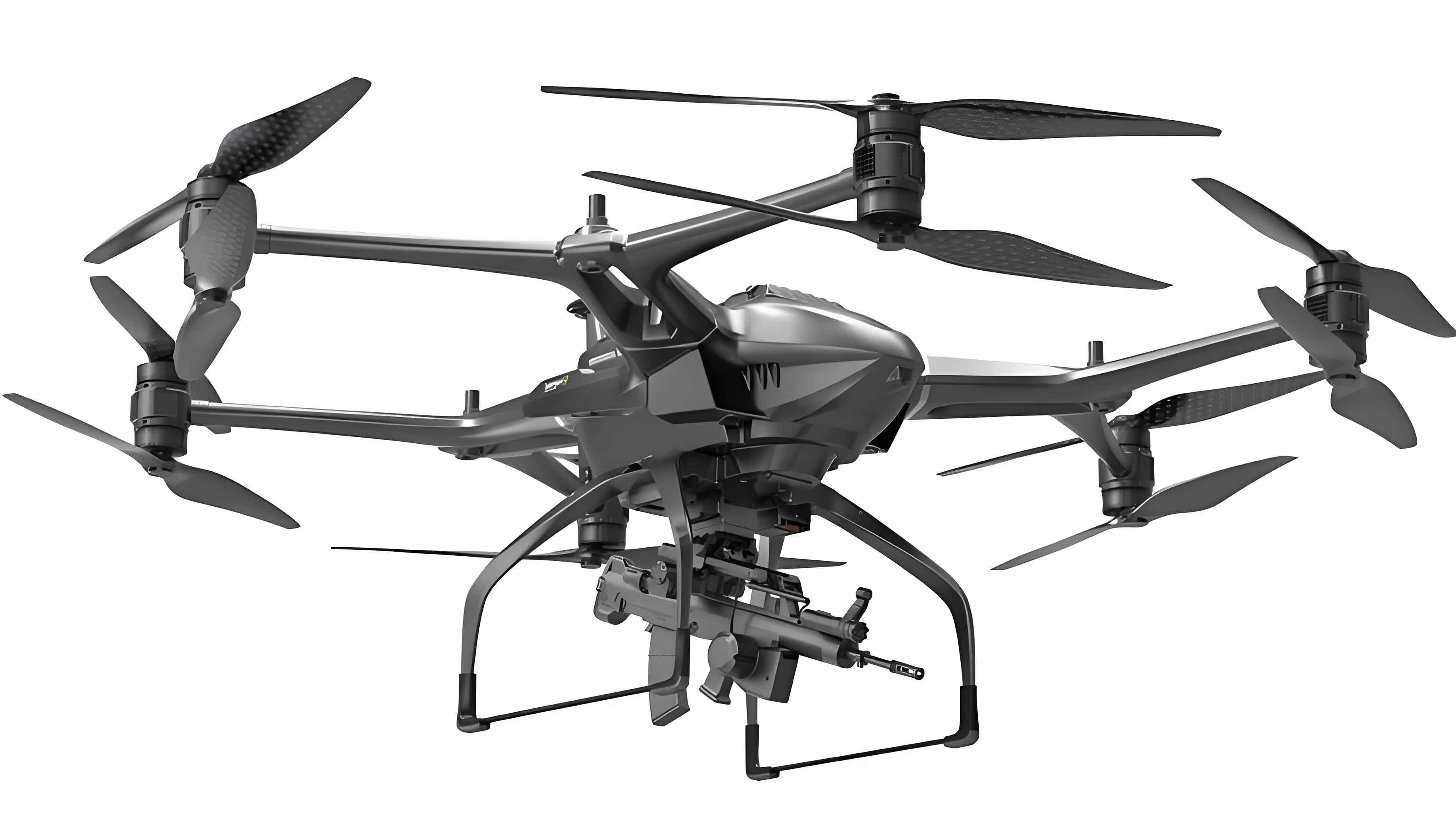
The post-2011 landscape of the Middle East has been fundamentally reshaped by the widespread adoption and application of military UAVs. This phenomenon represents a significant shift in the region’s military and security dynamics. The journey of the military drone from a niche surveillance asset to a ubiquitous tool of warfare has followed a distinct trajectory, characterized by phases of initial monopoly, slow proliferation, and finally, rapid diffusion. This proliferation is not a random occurrence but a calculated response by state and non-state actors to a deteriorating security environment, enabled by technological advancements and shifting geopolitical alliances. As these actors integrate military UAVs into their strategic arsenals—employing them for tactical support, punitive strikes, and denial campaigns—they are rewriting the rules of engagement, altering risk calculations, and introducing profound complexities into the already volatile security architecture of the region.
Phases of Proliferation: From Monopoly to Ubiquity
The diffusion of military UAV capabilities in the Middle East can be segmented into three distinct phases, each marked by advancements in both the number of possessors (horizontal proliferation) and the technological sophistication of the systems (vertical proliferation).
Initial Phase (1971–2004): This era was defined by state-led development and a focus on Intelligence, Surveillance, and Reconnaissance (ISR). Israel pioneered indigenous programs, fielding systems like the ‘Scout’. Iran, isolated after its revolution, began developing its own military UAVs, such as the ‘Mohajer-1’. Acquisition was limited to a select few states, primarily through indigenous programs or restricted imports from the United States, with platforms like Egypt’s ‘Scarab’. The primary function was non-kinetic observation.
Slow Proliferation Phase (2004–2014): This period was catalyzed by two pivotal events in 2004: Israel’s first kinetic strike using a military UAV in Gaza, and Hezbollah’s deployment of an Iranian-supplied drone into Israeli airspace. The key development was vertical proliferation—the enhancement of capabilities. Drones evolved from pure ISR platforms to integrated ‘ISR-strike’ systems. The number of state actors remained relatively stable, but the entry of a non-state actor (Hezbollah) signaled a paradigm shift, demonstrating the potential of military UAVs as tools of asymmetric warfare.
Rapid Proliferation Phase (2014–Present): Marked by Saudi Arabia’s acquisition of armed military UAVs in 2014, this phase witnessed explosive horizontal and vertical proliferation. A multitude of states—including the UAE, Iraq, Jordan, Algeria, and Qatar—entered the field, primarily through imports. Concurrently, non-state actors like the Houthis in Yemen, Hamas in Gaza, and various militias in Iraq and Syria acquired military UAV capabilities through external patronage, commercial modification, or makeshift assembly. Technological sophistication surged, with countries like Turkey and Iran deploying increasingly advanced indigenous systems like the ‘Bayraktar TB2’ and ‘Shahed-129’. The region transformed into the world’s most active testing ground for drone warfare.
Characteristics of the Military UAV Landscape
The progression through these phases reveals several defining characteristics of the military UAV ecosystem in the Middle East:
- From Elite Monopoly to Mass Possession: Military UAVs have transitioned from being the exclusive domain of technologically advanced states to becoming accessible to a wide array of medium powers and even non-state militias.
- From Passive Observation to Active Engagement: The core mission set expanded from reconnaissance to encompass precision strikes, force protection, and direct combat roles.
- From Indigenous Development to Hybrid Acquisition: While pioneers like Israel and Iran relied on in-house programs, most actors now employ a mixed strategy: importing high-end systems while developing or assembling lower-tier tactical military UAVs domestically.
- From Uniformity to Stratified Capability: A clear hierarchy of military UAV power has emerged, as illustrated in Table 1.
| Tier | State Actor | Key Military UAV Platforms (Source) | Primary Operational Context |
|---|---|---|---|
| Top Tier (Advanced R&D, Export Power) | Israel | Heron TP, Hermes 900 (Indigenous) | Cross-border strikes (Syria, Iran), Counter-terrorism (Gaza) |
| High Tier (Strong Indigenous Production & Deployment) | Turkey | Bayraktar TB2, Akıncı (Indigenous*) | Cross-border interventions (Syria, Libya), Counter-insurgency |
| Iran | Shahed-129, Mohajer-6 (Indigenous) | Proxy warfare, Asymmetric deterrence in Persian Gulf | |
| UAE | Wing Loong II (Import), Joint-40 (Indigenous) | Proxy warfare (Libya, Yemen), Counter-terrorism | |
| Medium Tier (Limited Production, Reliant on Key Imports) | Saudi Arabia, Egypt | Wing Loong, CH-4 (Import) | Counter-insurgency (Domestic, Yemen) |
| Lower Tier (Consumer/Modified UAVs) | Houthis, Hamas, ISIS, Various Militias | Modified commercial drones, improvised loitering munitions | Asymmetric strikes, Terrorism, Harassment |
*Note: While Turkey designs and assembles its military UAVs, it relies on foreign-made critical components like engines.
The Drivers of Rapid Military UAV Diffusion
The accelerated spread of military UAVs since 2014 is a function of demand-side necessity and supply-side feasibility.
1. Demand: Coping with a Deteriorating Security Environment. The post-Arab Spring era intensified the region’s inherent security dilemmas. States face multifarious threats: transnational terrorism (e.g., ISIS), intra-state civil wars, and heightened interstate rivalry. Non-state actors fight for survival and influence. In this context, the military UAV presents an attractive solution. Its value proposition can be modeled as a cost-benefit equation favoring acquisition:
$$ CE = \frac{(M + O) \times R}{C} $$
Where:
– \(CE\) = Cost-Effectiveness of military UAV adoption.
– \(M\) = Enhanced mission capability (long endurance, persistent surveillance, precision strike).
– \(O\) = Reduction in operational risk (pilot safety, lower political “audience costs” from casualties).
– \(R\) = Range of strategic utility (from counter-terrorism to interstate coercion).
– \(C\) = Total cost (acquisition, operation, maintenance), significantly lower than manned aircraft.
A high \(CE\) ratio explains the demand from both cash-rich Gulf states and resource-constrained militias.
2. Supply: Lowered Barriers to Entry. Demand alone does not explain proliferation; the means to acquire military UAVs must exist.
– Technological Democratization: The Fourth Industrial Revolution (advanced composites, 3D printing, improved software) has lowered the threshold for developing or modifying military UAVs. Non-state actors can weaponize commercial drones; states like Turkey and Iran can accelerate indigenous programs.
– Competitive Global Market: The entry of exporters like China into the market after 2014 provided an alternative source for capable armed military UAVs, breaking earlier monopolies and fulfilling demand unmet by Western restrictions.
– Regional Alliance Networks: Patron states (Iran, Turkey, UAE) actively transfer military UAV technology, complete systems, or training to allied proxies (e.g., Houthis, Libyan factions), directly fueling horizontal proliferation.
Strategic Employment and Coercive Logic of Military UAVs
Actors in the Middle East employ military UAVs not merely as tactical tools but as instruments of strategy, following distinct coercive logics. These can be categorized into three primary modes of use:
1. Tactical Support (ISR & Battlefield Enhancement). This is the most ubiquitous function, serving as a force multiplier. Military UAVs provide real-time intelligence, surveillance, target acquisition, and battle damage assessment. They reduce the “fog of war,” allowing commanders to make informed decisions, direct artillery or manned aircraft, and protect forces. This was evident in Israel’s meticulous pre-strike surveillance before operations in Gaza and in Turkey’s use of drones to direct artillery fire against Kurdish PKK targets.
2. Punishment Strategy (Targeting Civilian Infrastructure). Primarily used by non-state actors like the Houthis, this logic aims to coerce an adversary by raising its costs through attacks on economic and civilian targets (airports, oil facilities, cities). The goal is to inflict enough pain to sway public opinion and pressure the adversary’s government into making political concessions. However, its strategic efficacy is often limited, as such attacks can harden the adversary’s resolve and draw international condemnation.
3. Denial Strategy (Degrading Military Capacity). This is the dominant kinetic strategy for state actors and advanced non-state actors. It aims to compel an adversary by directly destroying their means to fight. Military UAVs execute this through:
– Decapitation Strikes: Targeted killings of high-value military leaders (e.g., U.S. strike on Qasem Soleimani, Israeli strikes on Iranian commanders in Syria).
– Interdiction Campaigns: Attacking supply lines, weapons depots, and manufacturing sites (e.g., Turkish strikes on Syrian Army convoys in Idlib).
– Direct Combat & SEAD: Engaging enemy forces and suppressing air defenses. Turkey’s “Bayraktar TB2” drones were instrumental in destroying Syrian air defense systems in 2020, enabling air dominance.
The strategic effectiveness of a military UAV campaign is not automatic; it is contingent on the system’s capabilities and how they are integrated. The impact \(I\) of military UAV use can be conceptualized as:
$$ I = T_{UAV} \times (I_{Sys} + D_{Doc}) $$
Where:
– \(T_{UAV}\) = Technical capabilities of the military UAV platform (altitude, payload, sensors).
– \(I_{Sys}\) = Degree of integration into a broader military system (C4ISR, electronic warfare, manned-unmanned teaming).
– \(D_{Doc}\) = Quality of doctrine, training, and strategic planning governing its use.
This explains why Turkey’s integrated use of military UAVs in Syria achieved significant denial effects, while ISIS’s use of modified commercial drones, though tactically harassing, failed to achieve strategic objectives.
Security Implications: A Region Transformed
The proliferation and use of military UAVs have profound and multifaceted security consequences for the Middle East.
1. Reshaping Risk Calculus and Offense-Defense Balance. Military UAVs dissociate physical risk from the attacker. This lowers the perceived cost of using force for the operator state or group, potentially making conflict initiation more likely. Simultaneously, they challenge traditional air defense paradigms. Small, low-flying tactical military UAVs can be difficult for expensive, high-altitude-focused防空 systems to detect and intercept, creating temporary windows of offensive advantage and demanding new, costly investments in counter-UAV technologies.
2. Altering Deterrence Dynamics and Conflict Trajectories. The low cost and perceived low escalatory risk of drone strikes can lead to their frequent use, increasing the overall frequency of violent incidents. However, the very attributes that encourage use—deniability, lower stakes—can also undermine their coercive power. An adversary may not find a drone strike sufficiently credible or costly to warrant major concessions, potentially leading to protracted, low-level conflicts rather than decisive outcomes. This can be modeled as a dynamic where conflict intensity \(I_c\) is a function of drone use frequency \(F_{UAV}\) and adversary response \(C_{response}\):
$$ I_c = \alpha F_{UAV} + \beta C_{response} – \gamma D_{balance} $$
Here, high \(F_{UAV}\) may not lead to high \(I_c\) if \(C_{response}\) is muted due to low perceived credibility, but it erodes \(D_{balance}\) (deterrence stability), making the conflict more enduring.
3. Exacerbating Regional Security Governance Challenges.
– Normative Erosion: Routine cross-border strikes by military UAVs violate sovereignty norms with relative impunity. The principle of non-intervention is severely weakened.
– Accountability Deficit: Attribution is often difficult, and the physical and psychological distance of the operator complicates assigning responsibility for violations of International Humanitarian Law (IHL), such as disproportionate strikes or civilian casualties.
– Regulatory Void: Existing arms control regimes like the Missile Technology Control Regime (MTCR) are ill-suited to control the spread of most military UAVs used in the region, leaving a critical governance gap.
The aggregate effect is a region where the threshold for using aerial violence is lower, conflicts are more likely to simmer than resolve, and the tools of war are increasingly in the hands of diverse and often unaccountable actors. The security dilemma is intensified, as states feel compelled to acquire their own military UAVs or counter-drone systems in response to perceived threats, fueling arms races.
Conclusion: The Imperative for Responsible Governance
The military UAV has irrevocably altered the security landscape of the Middle East. It is no longer a novel curiosity but a central feature of regional warfare, employed by strong and weak alike across a spectrum of conflicts. Its proliferation is driven by tangible security needs and enabled by technological and market forces. While offering tactical advantages to its users, the widespread adoption of military UAVs has introduced new vectors of instability, challenging traditional notions of deterrence, sovereignty, and accountability.
Addressing the security challenges posed by military UAVs cannot be achieved through a purely competitive, arms-race mindset focused on developing more advanced drones or counter-drone systems alone. This only deepens the security dilemma. A sustainable approach must be grounded in cooperative security principles. First and foremost, the legitimate security concerns of all regional states must be acknowledged and addressed through dialogue, respecting the fundamental norm of sovereign equality. Second, a concerted effort is needed to develop and strengthen normative and regulatory frameworks governing the development, transfer, and use of military UAVs. This includes clear rules of engagement that strictly adhere to IHL principles—distinction, proportionality, and necessity—and mechanisms for ensuring transparency and accountability for violations. The path forward lies not in seeking unilateral advantage through the next generation of military UAVs, but in building a regional security architecture that mitigates the risks and governs the realities of this transformative technology.