
In recent years, I have observed a significant shift in military operations, where unmanned aerial vehicles (UAVs) have become indispensable for intelligence, surveillance, and reconnaissance (ISR) missions. As a researcher focusing on defense technologies, I aim to explore the current landscape of military UAV applications in ISR, drawing from extensive studies and developments, particularly in the U.S. military. The advantages of military UAVs are manifold: they offer cost-effectiveness, extended endurance beyond human limits, and the ability to perform hazardous tasks without risking pilots’ lives. This article delves into the key aspects of military UAV ISR, including task types, sensor payloads, processing systems, and adversarial design considerations, all while emphasizing the critical role of military UAVs in modern warfare.
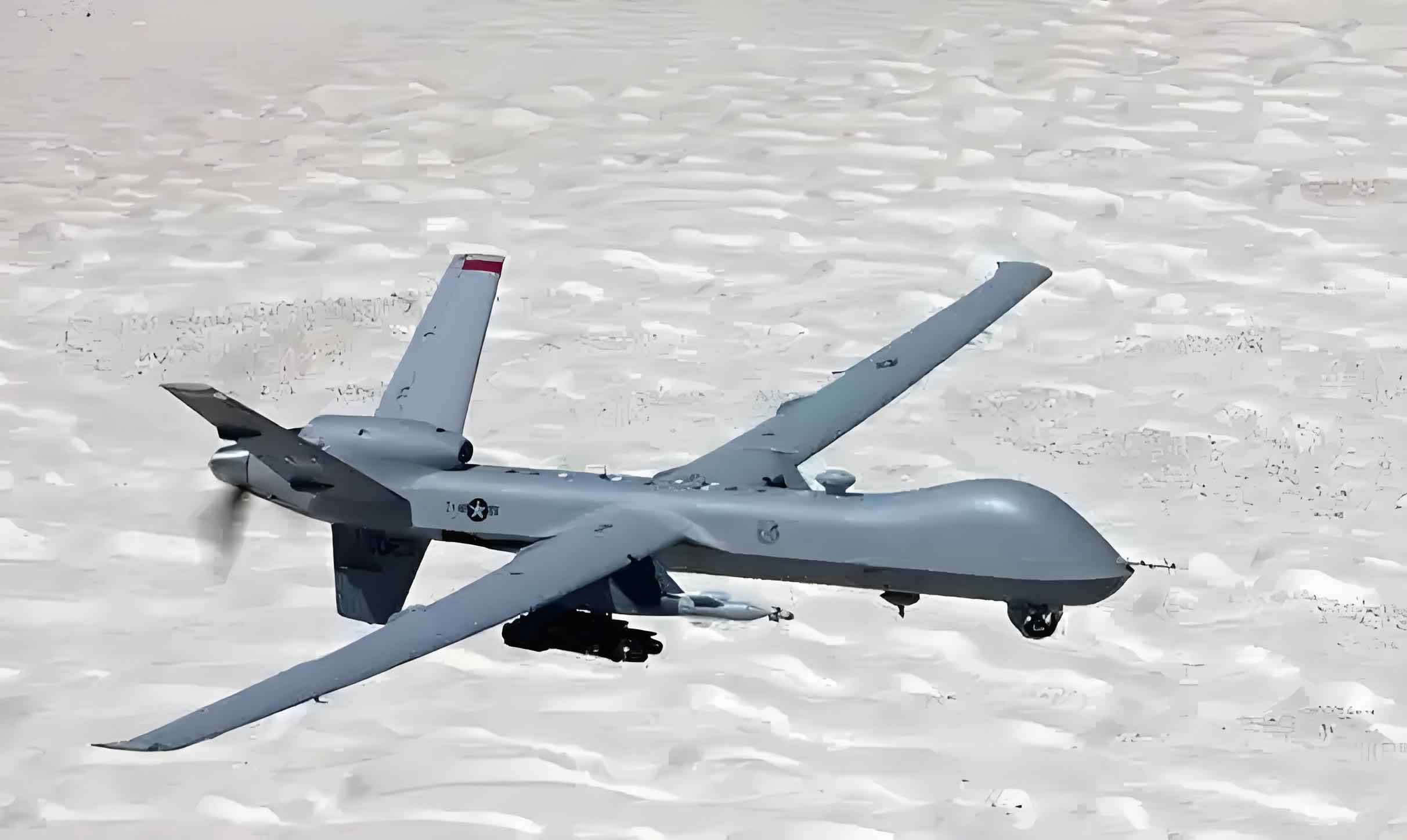
The reliance on military UAVs for ISR has grown exponentially over the past decade, driven by their ability to enhance situational awareness, support rapid decision-making, and operate in complex, contested environments. In this analysis, I will structure the discussion around several core areas, incorporating tables and mathematical formulas to summarize key points. The term “military UAV” will be frequently reiterated to underscore its centrality in ISR operations. From wide-area mapping to target tracking, and from advanced sensor technologies to artificial intelligence-driven data processing, military UAVs represent a transformative force in defense strategy. However, challenges such as cybersecurity threats and navigation in denied environments necessitate continuous innovation. Through this first-person perspective, I aim to provide a comprehensive overview, highlighting both capabilities and limitations, to inform future developments in military UAV ISR systems.
1. ISR Task Types for Military UAVs
Military UAVs are deployed for a variety of ISR tasks, each leveraging their unique advantages. Based on my research, I categorize these tasks into four primary types, which are summarized in Table 1. The flexibility of military UAVs allows them to adapt to diverse mission requirements, from high-altitude surveillance to low-altitude reconnaissance in urban settings.
| Task Type | Description | Key Military UAV Examples |
|---|---|---|
| Wide-Area Mapping and Monitoring | Military UAVs operate at high altitudes for prolonged periods to survey large geographical areas, providing real-time data on enemy positions, resources, and terrain. This is essential for strategic planning and battlefield awareness. | RQ-4 Global Hawk |
| Target Tracking | Using agile and stealthy designs, military UAVs can closely follow targets of interest, even in obstructed environments. Advanced sensors and AI enable continuous tracking without direct human intervention. | Fast Lightweight Autonomy (FLA) drones, MQ-9 Reaper |
| Chemical, Biological, Radiological, Nuclear, and Explosive (CBRNE) Detection | Military UAVs equipped with specialized sensors can remotely detect hazardous materials, reducing risks to personnel in contaminated or dangerous zones. | Customized UAVs for radiation monitoring |
| Close-Range Reconnaissance | In complex terrains like urban areas, military UAVs provide real-time intelligence by navigating around obstacles, offering troops insights into nearby threats and environments. | OFFSET swarm drones, FLA projects |
The effectiveness of military UAVs in these tasks stems from their endurance and adaptability. For instance, in wide-area monitoring, the altitude and persistence of military UAVs allow for coverage that would be impractical for manned aircraft. I have analyzed that the mathematical representation of coverage area $A$ for a military UAV can be expressed as:
$$ A = \pi \cdot R^2 \cdot \frac{T}{t} $$
where $R$ is the sensor range, $T$ is the total mission time, and $t$ is the time per scan cycle. This formula highlights how military UAVs optimize ISR efficiency through extended loiter times.
2. Sensor Payloads for Military UAV ISR Missions
Sensor technology is the backbone of military UAV ISR capabilities. From my studies, I identify several key sensor types that are tailored to specific tasks, as detailed in Table 2. The integration of these sensors onto military UAV platforms enables multifaceted data collection, enhancing intelligence accuracy and reliability.
| Sensor Type | Function | Applications in Military UAV ISR |
|---|---|---|
| Electro-Optical (EO) Cameras | Capture high-resolution still images and full-motion video (FMV) in visible light, providing real-time visual intelligence for target identification and battle damage assessment. | Used in MQ-1 Predator for daytime surveillance |
| Infrared (IR) Imaging Sensors | Detect heat signatures to operate in low-light or dark conditions, enabling night surveillance and tracking of hidden targets. | Integrated on MQ-9 Reaper for 24/7 operations |
| Synthetic Aperture Radar (SAR) | Provide all-weather, day-and-night imaging by synthesizing radar signals to create high-resolution maps, compensating for optical limitations. | Deployed on RQ-4 Global Hawk for persistent surveillance |
| Multispectral (MSI) and Hyperspectral (HSI) Sensors | Capture data across multiple spectral bands, aiding in terrain analysis, camouflage detection, and environmental monitoring. | Utilized in specialized reconnaissance military UAVs |
| Signal Intelligence (SIGINT) Sensors | Intercept and analyze electronic signals, such as communications and radar emissions, to gather electronic warfare intelligence. | Equipped on advanced military UAVs like the RQ-170 Sentinel |
| CBRNE Detection Sensors | Specialized payloads for identifying chemical, biological, radiological, nuclear, and explosive threats, often used in hazardous environments. | Mounted on UAVs for post-disaster or conflict zone assessments |
The selection of sensors on a military UAV is mission-dependent, and I often model the sensor performance using parameters like resolution $\delta$ and signal-to-noise ratio (SNR). For example, the resolution of a SAR sensor on a military UAV can be approximated by:
$$ \delta = \frac{\lambda \cdot R}{2 \cdot L} $$
where $\lambda$ is the wavelength, $R$ is the range to target, and $L$ is the synthetic aperture length. This equation underscores the engineering trade-offs in designing sensor payloads for military UAVs. Moreover, the fusion of data from multiple sensors on a single military UAV platform enhances situational awareness, a concept I explore through data fusion algorithms like:
$$ F = \sum_{i=1}^{n} w_i \cdot S_i $$
where $F$ is the fused output, $S_i$ are sensor readings, and $w_i$ are weights based on sensor reliability. Such approaches are critical for maximizing the utility of military UAV ISR systems.
3. Processing, Exploitation, and Dissemination (PED) Systems for Military UAV ISR
The massive data collected by military UAV sensors necessitate advanced PED systems to transform raw information into actionable intelligence. In my analysis, I distinguish between two primary PED paradigms: onboard real-time processing and ground-based analysis with AI enhancements. The evolution of PED systems for military UAVs has been driven by the need for speed and accuracy in dynamic combat scenarios.
Onboard real-time PED systems, such as the Lynx multi-mode radar developed by General Atomics, enable military UAVs to process data internally during missions. This reduces latency and bandwidth dependencies, which is crucial for time-sensitive operations. I have studied that these systems often employ high-performance embedded computing (HPEC) to handle complex algorithms. For instance, the Lynx system uses continuous phase history data processing to provide real-time moving target indication (MTI) and synthetic aperture radar (SAR) imaging. The computational load $C$ for such a system on a military UAV can be modeled as:
$$ C = k \cdot D \cdot f $$
where $D$ is the data volume, $f$ is the processing frequency, and $k$ is a constant factor dependent on algorithm efficiency. This allows military UAVs like the MQ-9 Reaper to maintain persistent surveillance without overwhelming communication links.
In contrast, ground-based PED systems leverage artificial intelligence and machine learning to analyze data post-collection. Projects like the U.S. Department of Defense’s Maven initiative use algorithms to automate target detection and classification from full-motion video (FMV) captured by military UAVs. From my perspective, these AI-driven systems enhance analyst productivity by filtering out irrelevant data. A common machine learning formula applied in military UAV PED is the convolutional neural network (CNN) for image recognition:
$$ y = \sigma \left( \sum_{i} W_i * x_i + b \right) $$
where $y$ is the output classification, $x_i$ are input features (e.g., pixel values), $W_i$ are weights, $b$ is bias, and $\sigma$ is an activation function. This enables military UAVs to identify patterns in imagery with high accuracy, as demonstrated in tests with MQ-9 and MQ-19 platforms.
However, challenges remain in PED for military UAVs, such as data overload and interoperability. I often emphasize the importance of scalable architectures that can integrate with existing command and control systems. The trend toward edge computing on military UAVs themselves is promising, as it reduces reliance on vulnerable communication networks. Overall, the advancement of PED systems is pivotal for maximizing the intelligence yield from military UAV ISR missions.
4. Adversarial Design Considerations for Military UAV ISR
The adversarial nature of modern warfare requires military UAVs to be resilient against various threats. In my research, I categorize these considerations into five key areas: cybersecurity, battlefield survivability, anti-jamming capabilities, GPS-denied navigation, and distributed battle management. Each aspect is critical for ensuring the effectiveness of military UAVs in contested environments.
| Challenge | Description | Mitigation Strategies |
|---|---|---|
| Cybersecurity Attacks | Military UAVs are vulnerable to hacking, command hijacking, and data corruption due to their reliance on software and networks. | Implementation of high-assurance cyber military systems (HACMS), encryption, and intrusion detection algorithms. |
| Battlefield Flight Safety | Slow speeds and low maneuverability make military UAVs susceptible to enemy fire, such as shoulder-launched missiles. | Enhancing stealth features, using electronic countermeasures, and deploying swarm tactics for redundancy. |
| Anti-Communication Control Jamming | Adversaries can disrupt UAV command links using radio frequency jammers, leading to loss of control. | Frequency hopping, secure waveforms, and autonomous fallback modes to maintain operations. |
| GPS-Denied Navigation | In environments where GPS signals are blocked or spoofed, military UAVs must navigate using alternative methods. | Inertial navigation systems (INS), visual odometry, and algorithms from programs like FLA for obstacle avoidance. |
| Communication-Denied Distributed Battle Management | In contested airspace with limited communications, coordinating multiple military UAVs becomes complex. | Advanced distributed battle management (DBM) systems that enable autonomous decision-making and collaboration. |
From a technical standpoint, I analyze these challenges using mathematical models. For cybersecurity, the probability of a successful attack on a military UAV can be expressed as:
$$ P_{attack} = 1 – e^{-\lambda t} $$
where $\lambda$ is the attack rate and $t$ is the exposure time. This highlights the need for robust defense mechanisms. In GPS-denied navigation, military UAVs often rely on sensor fusion, such as combining INS with visual data. The position error $\epsilon$ in such systems can be modeled by:
$$ \epsilon = \sqrt{ \epsilon_{INS}^2 + \epsilon_{vision}^2 } $$
where $\epsilon_{INS}$ and $\epsilon_{vision}$ are errors from inertial and visual sensors, respectively. Programs like DARPA’s FLA have demonstrated that military UAVs can achieve autonomous navigation in cluttered environments using these techniques.
Moreover, distributed battle management for military UAVs involves multi-agent coordination algorithms. I have studied that these can be represented using game theory or consensus protocols. For example, in a swarm of military UAVs, the decision-making process for task allocation can be optimized with:
$$ \min \sum_{i=1}^{n} c_i \cdot x_i \quad \text{subject to} \quad A x \leq b $$
where $c_i$ are costs, $x_i$ are decision variables for each military UAV, and $A, b$ define constraints. This ensures efficient resource utilization in denied environments. The ongoing research in adversarial design underscores the importance of resilience for military UAV ISR operations, as seen in U.S. military projects targeting Russian jamming technologies.
5. Conclusion and Future Directions
In conclusion, my exploration of military UAV ISR applications reveals a rapidly evolving field where technology and strategy intersect. Military UAVs have proven invaluable for tasks ranging from wide-area surveillance to close-range reconnaissance, driven by advanced sensor payloads and sophisticated PED systems. The integration of artificial intelligence and machine learning is poised to further enhance the capabilities of military UAVs, enabling faster and more accurate intelligence extraction. However, adversarial challenges such as cybersecurity threats and navigation in denied environments require continuous innovation in design and protocols.
Looking ahead, I anticipate that military UAVs will become even more autonomous and integrated into networked warfare systems. The development of swarm technologies, where multiple military UAVs operate collaboratively, could revolutionize ISR missions by providing redundant and scalable coverage. Additionally, advancements in quantum-resistant encryption and bio-inspired sensors may address current limitations. From my perspective, the key to future success lies in balancing technological advancement with practical deployment, ensuring that military UAVs remain adaptable to emerging threats. As I reflect on this analysis, it is clear that military UAVs will continue to be a cornerstone of military ISR, shaping the future of defense operations worldwide.
Throughout this article, I have emphasized the term “military UAV” to reinforce its centrality in modern ISR frameworks. By leveraging tables and mathematical formulas, I have summarized complex concepts, from sensor performance to adversarial resilience. The ongoing research and real-world applications, particularly in the U.S. military, provide a robust foundation for understanding the current state and future potential of military UAV ISR. As a researcher, I believe that continued investment in these areas will yield significant strategic advantages, making military UAVs indispensable assets in the ever-changing landscape of global security.