
From my perspective, the evolution of warfare into a domain dominated by high technology, intense information exchange, and network-centric operations has catalyzed the development of a pivotal asset: the military UAV. These systems represent the new vanguard of reconnaissance and combat, shifting the paradigm from manned to increasingly autonomous platforms. It is projected by experts that these unmanned systems possess the potential to succeed even the most advanced fourth-generation fighter aircraft—characterized by the 4S standards of Super-maneuverability, Supercruise, Stealth, and Superior Avionics—becoming the de facto fifth-generation combatants on future battlefields. This transition is not merely a change in piloting but a fundamental re-engineering of aerial platforms, where materials science plays a critical role.
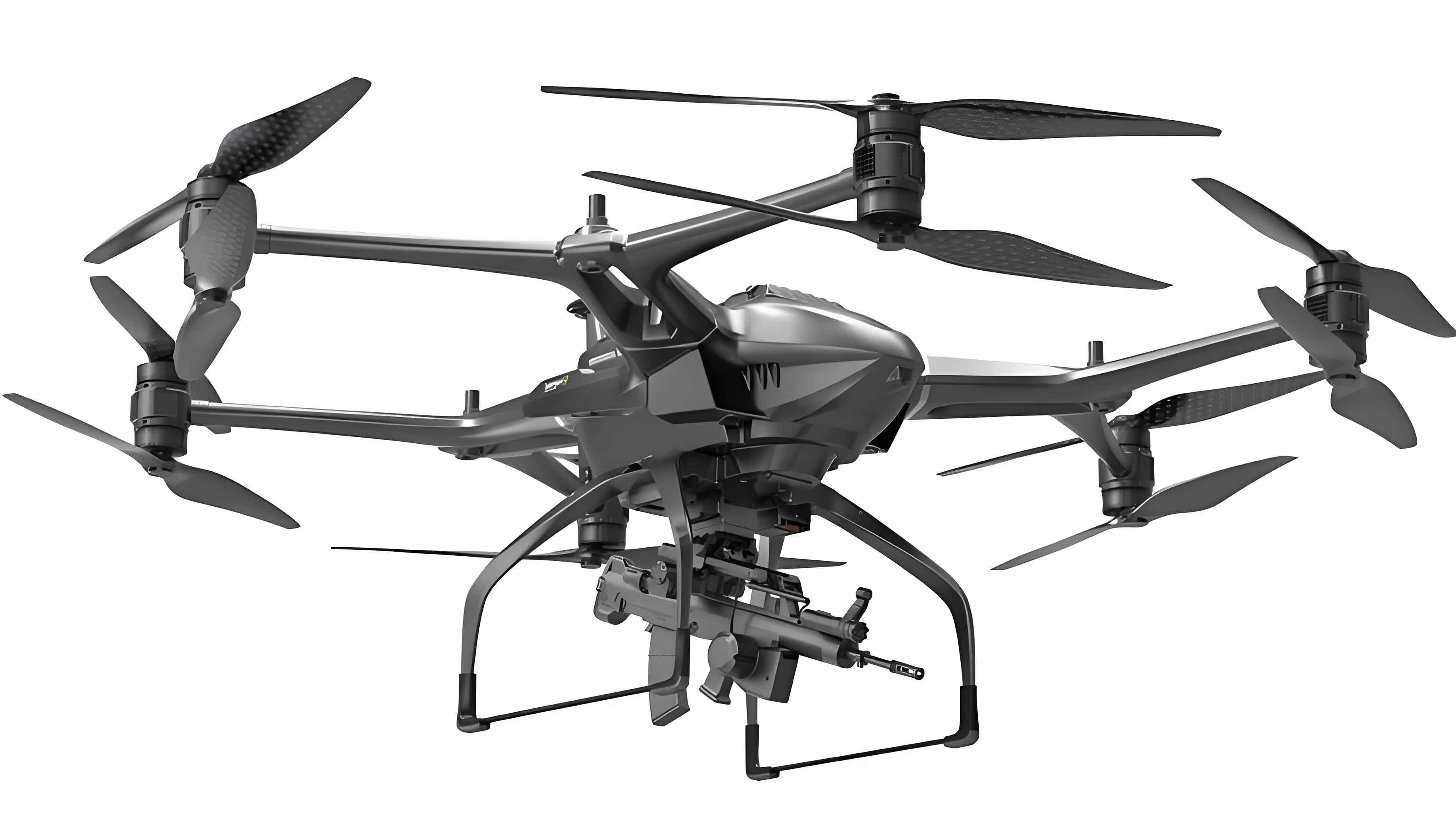
The central enabler of this revolution, in my analysis, is the systemic adoption of Advanced Composite Materials. The precedent was set notably by commercial aviation, such as the Boeing 787 Dreamliner, which demonstrated that large-scale use of composites could lead to significant weight reduction and enable innovative design philosophies previously deemed unfeasible. For the military UAV, the imperatives are even more pronounced: extreme lightness for extended endurance and payload capacity, structural integrity for high-G maneuvers, radar-absorbent properties for stealth, and resilience in harsh operational environments. Advanced composites meet these challenges not as a mere substitute for metals but as a transformative technology that integrates multiple functions into a single, optimized system.
1. The Scientific Foundation of Advanced Composites
Advanced composite materials are engineered by combining two or more distinct constituents—a reinforcement and a matrix—to produce a material with properties superior to those of the individual components. The defining advantage for aerospace applications is their exceptional specific strength and specific stiffness. These ratios are paramount for any flying vehicle, as they directly dictate the structural efficiency.
The specific strength \(\sigma_{sp}\) and specific stiffness \(E_{sp}\) can be expressed as:
$$
\sigma_{sp} = \frac{\sigma}{\rho}, \quad E_{sp} = \frac{E}{\rho}
$$
where \(\sigma\) is the ultimate tensile strength, \(E\) is the modulus of elasticity (stiffness), and \(\rho\) is the material density. For a military UAV, maximizing these values allows for either a drastic reduction in airframe weight for a given performance envelope or a significant increase in payload and fuel capacity. The following table compares typical values for traditional aerospace aluminum alloys with common advanced composites.
| Material | Density, \(\rho\) (g/cm³) | Tensile Strength, \(\sigma\) (MPa) | Specific Strength, \(\sigma_{sp}\) (MPa·cm³/g) | Modulus, E (GPa) | Specific Stiffness, \(E_{sp}\) (GPa·cm³/g) |
|---|---|---|---|---|---|
| Aerospace Aluminum (7075-T6) | 2.81 | 572 | 203.6 | 71.7 | 25.5 |
| High-Strength Carbon Fiber/Epoxy | 1.55 | 1,800 | 1,161.3 | 140 | 90.3 |
| Intermediate Modulus Carbon Fiber/Epoxy | 1.60 | 2,800 | 1,750.0 | 230 | 143.8 |
Beyond these fundamental metrics, advanced composites offer a suite of critical properties for military UAV applications:
- Tailorable Anisotropy: Unlike isotropic metals, composites can have their strength and stiffness oriented precisely along the primary load paths by aligning the fiber reinforcement. This design freedom allows for highly optimized, efficient structures.
- Superior Fatigue and Corrosion Resistance: Composites, particularly polymer-based ones, exhibit excellent resistance to cyclic loading and atmospheric corrosion, reducing lifecycle maintenance costs and increasing operational availability—a key factor for a military UAV fleet.
- Radar Absorbent and Low Observable Characteristics: Non-conductive carbon or glass fibers, combined with specialized resin systems and core materials, can be engineered to absorb radar waves, contributing directly to a military UAV‘s stealth signature.
- Integrated Manufacturing: Large, complex structures like wings or fuselage sections can be co-cured or co-bonded as single units, drastically reducing part count, assembly time, and potential failure points from fasteners.
The primary classes of advanced composites used in aerospace are defined by their matrix material:
| Composite Class | Matrix Material | Key Characteristics | Typical Military UAV Application |
|---|---|---|---|
| Advanced Polymer Matrix Composites (PMCs) | Epoxy, Bismaleimide (BMI), Polyimide, Thermoplastics (PEEK, PEKK) | High specific strength/stiffness, good fatigue resistance, tunable thermal/electrical properties. Dominant class for primary structures. | Wings, fuselage, empennage, control surfaces, payload bays. |
| Metal Matrix Composites (MMCs) | Aluminum, Titanium, Magnesium | High temperature capability, high thermal conductivity, good toughness, easier machining than ceramics. | Engine components (pistons, blades), high-load brackets, heat sinks. |
| Ceramic Matrix Composites (CMCs) | Silicon Carbide (SiC), Carbon | Exceptional thermal stability and wear resistance in ultra-high temperature environments. | Leading edges, engine exhaust components (nozzles, flaps) for high-speed military UAV. |
| Carbon-Carbon Composites (CCCs) | Carbon | Retains mechanical properties at extremely high temperatures (>2000°C), ablative. | Thermal protection systems for hypersonic military UAV concepts. |
2. Application in Military UAVs: A Global Landscape Analysis
The integration of composites has followed an evolutionary path, from secondary structures in manned aircraft to primary load-bearing structures in modern military UAV platforms.
2.1 International Development Status
The lead in this domain is firmly established. The progression in manned aviation served as a direct precursor. For instance, the F-22 Raptor, a fourth-generation fighter, utilized approximately 25% composites by weight. This figure escalated rapidly in subsequent designs and directly informed unmanned development. Modern High-Altitude Long-Endurance (HALE) and Medium-Altitude Long-Endurance (MALE) military UAV platforms exhibit composite usage rates of 60% to over 90%.
Key international platforms exemplify this trend:
- Northrop Grumman RQ-4 Global Hawk / Triton: This HALE reconnaissance military UAV features wings, fuselage, tail booms, and engine nacelles primarily constructed from carbon-fiber reinforced polymer (CFRP) composites. Its all-composite construction is essential for achieving its extreme 130+ foot wingspan while maintaining the low weight necessary for 30+ hour endurance at altitudes over 60,000 feet.
- General Atomics MQ-9 Reaper: As a versatile MALE multi-role military UAV, the Reaper’s airframe is predominantly composite. The V-tail, wings, and fuselage leverage carbon fiber composites to balance durability, low radar signature, and the capacity to carry significant payloads (Hellfire missiles, PGMs, sensors) over long durations.
- Boeing X-45 / MQ-25 Stingray & Northrop Grumman X-47B: These Unmanned Combat Aerial Vehicles (UCAVs) and carrier-based drone demonstrators pushed the boundaries further. Their flying-wing designs, which are inherently stealthy, rely almost entirely on advanced composites. The integration of complex contours, embedded antennas, and low-observable material treatments is only feasible with composite construction. The material properties are integral to meeting the demanding requirements for a carrier-suitable military UAV.
The manufacturing ecosystem has evolved in parallel. Global aerospace corporations have established dedicated centers for composite design and production automation. For example, automated fiber placement (AFP) and automated tape laying (ATL) machines are now standard, capable of building up complex, large-scale composite preforms with minimal material waste and high repeatability—a crucial factor for the potential mass production of military UAV systems.
2.2 Current Status and Strategic Journey
The development path has been one of strategic acquisition, digestion, and indigenization. Initial technology access in the 1980s, such as through licensed production agreements, provided a foundational understanding. Sustained domestic research and development efforts over decades have led to significant milestones.
The progress can be quantified in phases. Early indigenous UAVs and aircraft utilized fiberglass-reinforced plastics (GFRP). A pivotal shift occurred with the increased adoption of advanced resin systems and carbon fiber reinforcements. Modern indigenous HALE and MALE military UAV concepts publicly displayed at exhibitions showcase airframes that are clearly dominated by advanced composite construction, indicative of a mature design and manufacturing capability for large, integrated structures.
However, from my analytical standpoint, key challenges persist within the supply chain. The performance of a composite structure is fundamentally dependent on the quality of its constituent materials—the fibers and the resins. While domestic production of both has expanded, the highest-performance grades of carbon fibers (e.g., intermediate and high modulus) and specialized, toughened resin systems for critical primary structures have, at times, relied on external sources. This dependency can influence production schedules, costs, and the performance ceiling of advanced military UAV designs. Substantial and sustained national investment in both foundational material science and advanced manufacturing processes is aimed at achieving full-spectrum self-reliance.
The following table summarizes a comparative analysis of the composite application trajectory.
| Aspect | International Leaders (e.g., U.S.) | Domestic Development Trajectory |
|---|---|---|
| Technology Maturity | Very High. Composites are the default for primary structures. Mature design, analysis, and certification standards (e.g., CMH-17, MIL-HDBK-17). | High and rapidly advancing. Capable of designing and manufacturing complex integrated composite structures for advanced platforms. |
| Material Base | Complete, vertically integrated supply chain for all fiber and resin grades. Dominant position in high-performance precursor and fiber production. | Expanding rapidly but with historical gaps in consistent, cost-effective production of the very highest performance carbon fibers and specialty resins. |
| Manufacturing Technology | Widespread use of fully automated AFP/ATL, Automated Ultrasonic Inspection (AUI), and high-rate Out-of-Autoclave (OoA) processes like VBO. | Increasing adoption of automation. Research and implementation of advanced OoA techniques (e.g., RTM, VaRTM) to reduce costs and cycle times for military UAV production. |
| Design Philosophy | Composites-first, integral design. Extensive use of multidisciplinary design optimization (MDO) tools that co-optimize aerodynamics, structures (composite layup), and stealth. | Moving from a metal-replacement mindset to a true composites-optimized design approach, enabled by growing experience and advanced simulation tools. |
3. Quantitative Impact and Future Application Trends
The future application of advanced composites in military UAV systems is not merely an extension of current practice but a deepening integration driven by new performance demands and economic imperatives.
3.1 The Drive for Further Integration and Functionalization
The trend is toward Total Structural Composites and Multifunctional Structures. Future military UAV platforms, particularly those designed for loyal wingman roles, deep penetration, or hypersonic flight, will push composite usage toward 100%. More importantly, the structure itself will become a multi-purpose system. This involves:
- Structural Health Monitoring (SHM): Embedding fiber optic sensors or piezoelectric networks within the composite layup during manufacturing. These sensors can monitor strain, temperature, and detect impact damage in real-time, providing crucial data for condition-based maintenance and improving the survivability of the military UAV.
- Conformal Load-Bearing Antenna Structures (CLAS): Integrating radio frequency (RF) antenna elements directly into the composite skin. This eliminates drag-inducing external antennas, improves aerodynamic efficiency, and contributes to a cleaner low-observable profile.
- Energy Storage and Thermal Management: Research into composites that can store electrical energy (structural batteries) or effectively dissipate heat (high-thermal-conductivity composites) is ongoing. This could lead to airframe sections that double as power sources or heat sinks for high-energy directed weapons on a military UAV.
3.2 The Imperative of Cost Reduction and Manufacturing Innovation
Widespread deployment of military UAV systems necessitates a drastic reduction in manufacturing cost and time. Composites have traditionally been expensive due to material costs and labor-intensive processes. The future lies in novel manufacturing techniques that address this.
One key metric is the cost per unit weight savings, \(C_{save}\), which must be minimized:
$$
C_{save} = \frac{\Delta C_{manuf} + \Delta C_{material}}{\Delta W_{saved}}
$$
Where \(\Delta C_{manuf}\) is the change in manufacturing cost, \(\Delta C_{material}\) is the change in raw material cost, and \(\Delta W_{saved}\) is the weight saved versus a metallic baseline. The goal of next-gen processes is to drive \(C_{save}\) down by reducing the numerator (through cheaper materials and faster processes) and increasing the denominator (through more efficient design).
Promising technologies include:
- High-Rate Out-of-Autoclave (OoA) Processes: Resin Transfer Molding (RTM) and its variants (VaRTM, Light-RTM) inject resin into a dry fiber preform in a closed mold. This allows for excellent dimensional control, smooth surfaces ideal for stealth, and significantly faster cycle times than autoclave curing. It is ideal for medium-to-high volume production of military UAV components.
- Additive Manufacturing (AM) of Composites: Continuous fiber 3D printing enables the creation of highly complex, optimized topology structures that are impossible to make with traditional layup. This is particularly suited for internal brackets, joints, and unmanned aerial vehicle propulsion system components, allowing for extreme lightweighting.
- Thermoplastic Composites: Materials like Carbon Fiber/PEEK can be thermoformed and welded, enabling rapid assembly and easier repair—a vital feature for forward-deployed military UAV maintenance.
The table below forecasts the evolution of key manufacturing parameters.
| Parameter | Current State (Typical Autoclave Cure) | Future State (Advanced OoA & Automation) | Impact on Military UAV Production |
|---|---|---|---|
| Part Cycle Time | Hours to days (including bagging, cure, de-tooling) | Minutes to a few hours | Enables higher production rates for swarm-capable military UAV systems. |
| Material Utilization | ~60-70% (significant scrap from cutting prepreg) | >90% (near-net-shape preforms, dry fiber placement) | Reduces raw material cost, a major contributor to overall airframe cost. |
| Energy Consumption | Very High (large autoclave operation) | Low to Moderate (oven or in-mold cure) | Lowers operational cost and environmental footprint of manufacturing. |
| Repairability | Complex, often requiring depot-level support | Simplified via welded thermoplastics or bonded patches with portable systems | Increases operational availability and deployability of military UAV fleets. |
3.3 The Challenge of End-of-Life and Sustainability
As the fleet of composite-intensive military UAV platforms ages, the issue of recycling and disposal becomes critical. Unlike metals, thermoset composites are not easily remelted. Future developments must address the full lifecycle. Research into recyclable thermoset resins, thermoplastic composites (which are melt-reprocessable), and efficient mechanical or chemical recycling methods for carbon fiber is essential to ensure the environmental and economic sustainability of the advanced military UAV ecosystem.
4. Concluding Synthesis
In my assessment, the synergy between advanced composite materials and military UAV design is absolute and irreversible. Composites are not just another material option; they are the foundational technology that unlocks the core performance attributes—endurance, stealth, payload fraction, and survivability—required for next-generation unmanned systems. The global landscape shows a trajectory from partial use to complete structural reliance, coupled with a drive toward multifunctional integration and radically improved manufacturing economics.
The path forward involves a multi-disciplinary convergence. It requires sustained advancement in materials science to develop newer, better-performing, and eventually recyclable composites. It demands the full maturation of digital design, simulation, and certification protocols tailored for composite-intensive airframes. Most critically, it hinges on the industrial scaling of cost-effective, high-rate manufacturing processes that can translate advanced designs into reliable, deployable hardware.
For any nation seeking to establish or maintain a lead in aerial warfare, mastering the complete spectrum of advanced composite technology—from precursor chemistry to automated fiber placement and end-of-life recycling—is as strategically vital as developing the flight control algorithms or sensor suites for the military UAV itself. The future battlespace will be shaped by unmanned systems, and those systems will be built, fundamentally, from advanced composites.