
As an observer and analyst of modern defense technologies, I find the evolution of military unmanned aerial vehicles (UAVs) to be one of the most transformative developments in contemporary warfare. From their humble beginnings in the early 20th century to today’s sophisticated systems, military UAVs have redefined reconnaissance, surveillance, and combat operations. In this extensive discussion, I will delve into the classifications, current global status, and future trajectories of these pivotal assets. The integration of advanced materials, artificial intelligence, and novel propulsion systems continues to push the boundaries of what military UAVs can achieve. Throughout this analysis, the term ‘military UAV’ will be emphasized to underscore its centrality in modern military strategy.
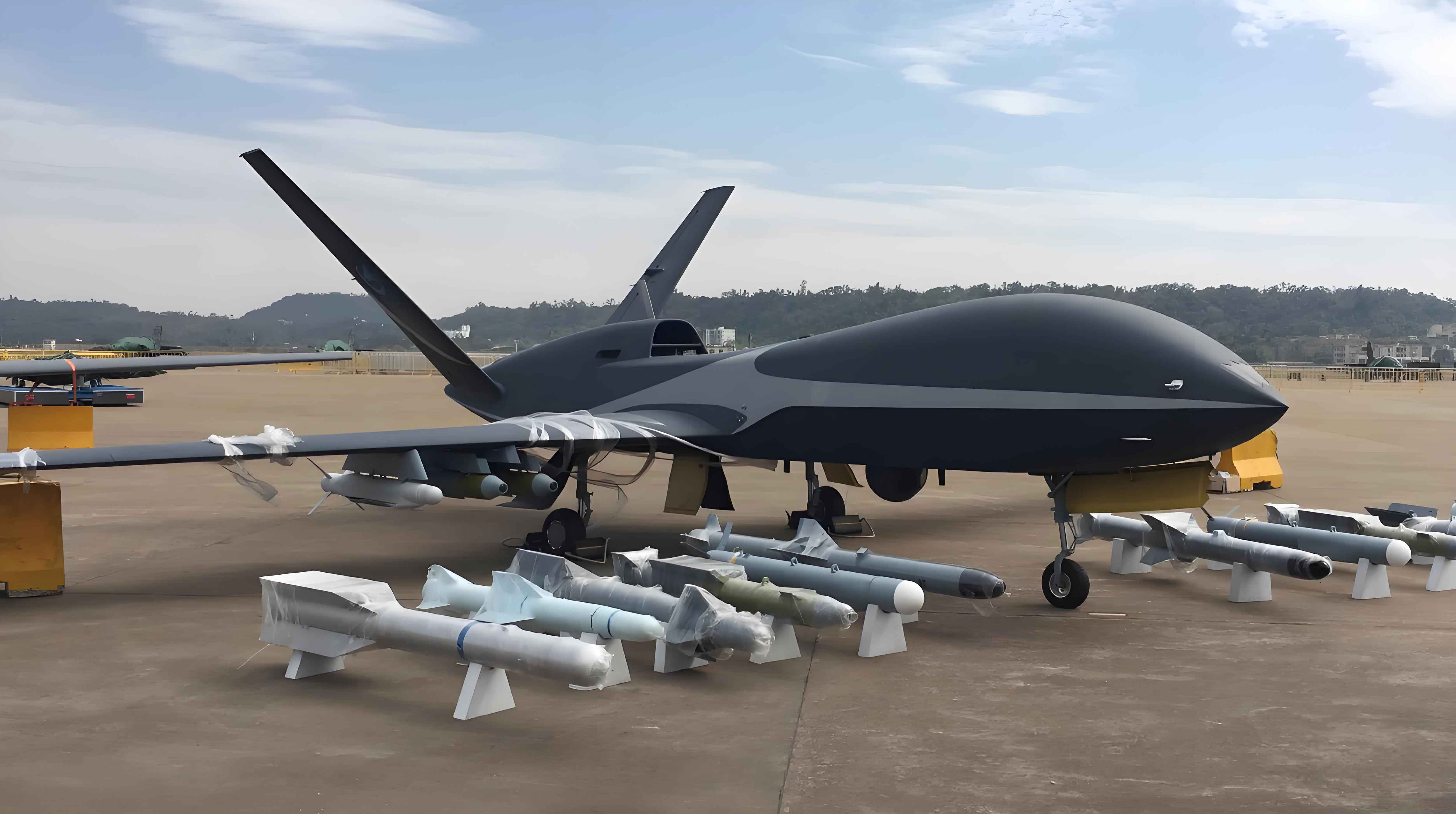
The concept of a military UAV, or unmanned aerial vehicle, revolves around an aircraft operated without a human pilot onboard. Its control is managed either remotely by operators or through autonomous systems programmed for specific missions. I recall that the first successful military UAV was developed in Britain during World War I, but it is in recent decades that their proliferation has accelerated. The core advantages of military UAVs—such as reduced risk to human life, lower operational costs, enhanced survivability, and mission flexibility—make them indispensable. Today, military UAVs are not merely supplementary tools but central components of national defense architectures worldwide.
Classification of Military UAVs
In my assessment, military UAVs can be categorized primarily by their mission profiles. The two dominant classes are unmanned reconnaissance vehicles and unmanned combat aerial vehicles. However, a more granular classification is often used based on altitude, endurance, and role. The following table summarizes the primary categories of military UAVs:
| Category | Typical Altitude Range | Endurance | Primary Missions | Examples |
|---|---|---|---|---|
| Mini/Micro UAVs | 0-5000 ft | 1-2 hours | Close-range reconnaissance, urban surveillance | Black Hornet, PD-100 |
| Tactical UAVs | 5,000-15,000 ft | 5-24 hours | Battlefield surveillance, target acquisition | RQ-7 Shadow, Hermes 450 |
| Medium-Altitude Long-Endurance (MALE) UAVs | 15,000-30,000 ft | 24-48 hours | Persistent surveillance, communications relay | MQ-1 Predator, MQ-9 Reaper |
| High-Altitude Long-Endurance (HALE) UAVs | Above 30,000 ft | Over 30 hours | Strategic reconnaissance, wide-area monitoring | RQ-4 Global Hawk, Triton |
| Unmanned Combat Aerial Vehicles (UCAVs) | Varies widely | Mission-dependent | Precision strike, air-to-air combat, suppression of enemy air defenses | X-47B, Avenger, Wing Loong II |
From my perspective, the unmanned reconnaissance military UAV is a workhorse for intelligence gathering. These systems, equipped with electro-optical, infrared, and synthetic aperture radar sensors, provide real-time data with minimal risk. For instance, the Global Hawk military UAV can survey vast areas for over 30 hours, relaying high-resolution imagery. On the other hand, the unmanned combat military UAV, or UCAV, represents a more aggressive application. Armed with air-to-surface missiles or guided bombs, platforms like the MQ-9 Reaper demonstrate the lethal potential of military UAVs. The evolution from surveillance to strike capabilities marks a significant shift in the role of military UAVs.
To quantify the reconnaissance capability of a military UAV, one might consider the area coverage rate. A simplified model is given by:
$$A_{cov} = v \cdot h \cdot t \cdot \theta$$
where \(A_{cov}\) is the total area covered, \(v\) is the velocity of the military UAV, \(h\) is the altitude, \(t\) is the endurance time, and \(\theta\) is the sensor’s angular field of view. This formula highlights how increasing endurance directly enhances the operational value of a reconnaissance military UAV.
Current Global Development Status of Military UAVs
In my analysis, the global landscape for military UAV development is highly stratified, with a few nations leading in technology and exports. The United States remains the preeminent power, investing heavily in next-generation systems. Israel excels in tactical and MALE military UAVs, with a strong export market. European nations are collaborating on projects to catch up, while China has emerged as a rapid innovator. The following table provides a comparative overview:
| Country/Region | Key Military UAV Programs | Technological Focus | Market Position | Notable Advances |
|---|---|---|---|---|
| United States | RQ-4 Global Hawk, MQ-9 Reaper, X-47B, Valkyrie | HALE UCAVs, stealth, autonomous swarming | Technology leader, extensive deployment | AI-driven autonomy, modular payloads |
| Israel | Heron TP, Harop, Orbiter, Skylark | MALE UAVs, loitering munitions, electronic warfare | Major exporter, proven in conflict | Integrated C4ISR systems, counter-UAV tech | Europe (Consortium) | nEUROn (France/Sweden/Italy), Barracuda (Germany/Spain), Taranis (UK) | Stealth UCAVs, collaborative combat | Moderate, reliant on partnerships | Low-observable designs, international cooperation |
| China | MALE/HALE, armed UAVs, carrier-based systems | Rapidly growing, competitive exporter | Indigenous engines, SATCOM integration | |
| Russia | Orion, Altius, Okhotnik, Forpost | Heavy UCAVs, reconnaissance-strike complexes | Developing, focused on domestic needs | Weaponization of existing platforms |
| Others (Turkey, Iran, India) | Bayraktar TB2 (Turkey), Shahed-129 (Iran), Rustom (India) | Tactical UAVs, indigenous development | Emerging, regional influence | Cost-effective designs, asymmetric warfare focus |
I believe the United States’ dominance in military UAV technology stems from substantial R&D funding and operational experience. Programs like the Skyborg aim to create an AI-enabled ‘brain’ for loyal wingman military UAVs. Israel’s strength lies in pragmatic design and battle-tested systems; the Harop, for example, is a loitering munition military UAV that combines surveillance and lethal attack. Europe’s collaborative projects, such as the nEUROn, demonstrate a commitment to stealthy UCAVs but face challenges in integration and funding. China’s progress is remarkable; the Wing Loong military UAV series rivals Western MALE platforms in capability and cost. From my viewpoint, the proliferation of military UAV technology to smaller nations is altering regional security dynamics, making these systems tools of both deterrence and aggression.
The technological advancement of a military UAV can be modeled using a capability index. Suppose we define a composite metric \(C\) that incorporates stealth (\(S\)), payload (\(P\)), endurance (\(E\)), and autonomy (\(A\)). A simple weighted sum could be:
$$C = w_1 S + w_2 \log(P) + w_3 E + w_4 A$$
where \(w_i\) are weights reflecting mission priorities. For a reconnaissance military UAV, \(w_3\) and \(w_1\) might be high, while for a UCAV, \(w_2\) and \(w_4\) could dominate. This formula, though simplistic, helps in comparing different military UAV programs quantitatively.
Future Trends in Military UAV Development
Looking ahead, I foresee several interconnected trends that will shape the next generation of military UAVs. These include advances in stealth materials, propulsion for longer endurance, miniaturization of payloads, and leaps in artificial intelligence. Each trend reinforces the others, leading to increasingly capable and autonomous military UAV systems.
Trend 1: Enhanced Stealth and Low Observability
Stealth is becoming paramount for survivability in contested airspace. Future military UAVs will employ a multi-faceted approach to reduce their radar, infrared, visual, and acoustic signatures. I expect widespread use of radar-absorbent materials (RAMs), serpentine inlet ducts, and faceted geometries. The radar cross-section (RCS) reduction is crucial. A basic formula for the RCS of a simple shape is:
$$\sigma = \frac{4\pi A^2}{\lambda^2}$$
where \(\sigma\) is the RCS, \(A\) is the characteristic area, and \(\lambda\) is the radar wavelength. For a military UAV, designers aim to minimize \(A\) through shaping and use materials that absorb or scatter incident energy. Moreover, infrared suppression involves cooling engine exhaust and using low-emissivity paints. Acoustic stealth might involve specially designed propellers or electric propulsion. The table below summarizes key stealth techniques for military UAVs:
| Stealth Dimension | Techniques | Impact on Military UAV Design |
|---|---|---|
| Radar Signature | Shaping (planform alignment, curved surfaces), RAM coatings, passive cancellation | Often dictates airframe geometry (e.g., flying wing), increased cost and maintenance |
| Infrared Signature | Shielded exhaust, mixed cooling, non-circular nozzles, low-IR paints | Constraints on engine placement and exhaust design, potential weight penalty |
| Visual Signature | Camouflage, low-reflectivity coatings, minimizing contrails | Affects paint schemes and operational altitude choices |
| Acoustic Signature | Electric motors, slow-turning propellers, noise-absorbing materials | Promotion of electric propulsion, impacts propeller design and efficiency |
Trend 2: Towards Higher Altitudes and Longer Endurance
The quest for persistent surveillance drives the development of HALE and even stratospheric military UAVs. Solar-powered, high-altitude pseudo-satellites (HAPS) are a promising avenue. I envision military UAVs operating in the stratosphere for months, providing continuous coverage. The endurance of a solar-powered military UAV depends on energy balance. The net energy over a day must be positive:
$$E_{net} = \eta_{solar} \cdot A_{wing} \cdot I_{solar} \cdot t_{day} – P_{avionics} \cdot t_{day} – P_{prop} \cdot t_{night}$$
where \(\eta_{solar}\) is solar panel efficiency, \(A_{wing}\) is wing area, \(I_{solar}\) is solar irradiance, \(t_{day}\) and \(t_{night}\) are day and night durations, and \(P_{avionics}\) and \(P_{prop}\) are power for avionics and propulsion. To fly through the night, energy storage (batteries or fuel cells) is critical. The following table compares endurance enhancement technologies for military UAVs:
| Technology | Mechanism | Potential Endurance Gain | Challenges for Military UAVs |
|---|---|---|---|
| Solar-Electric | Photovoltaic cells charge batteries for night flight | Months (theoretically) | Low power density, weather dependence, large surface area |
| Hybrid Propulsion | Combines internal combustion engine with electric motor for optimal efficiency | Days to weeks | System complexity, weight, fuel logistics |
| Hydrogen Fuel Cells | Electrochemical conversion of hydrogen to electricity | Days, with quick refueling | Hydrogen storage and production infrastructure |
| Air-to-Air Refueling | UAV-to-UAV or tanker-to-UAV refueling | Virtually unlimited with support | Precise autonomous docking, additional tanker assets |
Trend 3: Miniaturization of Payloads and Sensors
The internal space of a military UAV is always at a premium. As missions diversify, the demand for smaller, lighter, and more power-efficient sensors and weapons grows. I observe rapid progress in micro-electromechanical systems (MEMS), nanotechnology, and compact radar designs. The size reduction of synthetic aperture radar (SAR) is particularly impactful, allowing high-resolution all-weather imaging on smaller military UAV platforms. A heuristic for payload miniaturization follows an exponential decay similar to Moore’s Law:
$$S(t) = S_0 \cdot e^{-k \cdot t}$$
where \(S(t)\) is the characteristic size at time \(t\), \(S_0\) is the initial size, and \(k\) is a technology improvement constant. This trend enables tactical and even micro military UAVs to carry capabilities once reserved for larger aircraft. The integration of multi-sensor pods (EO/IR, SIGINT, radar) on a single military UAV enhances situational awareness. Furthermore, miniaturized precision-guided munitions allow small UCAVs to conduct strikes previously requiring fighter jets.
Trend 4: Advanced Autonomy and Swarming Intelligence
Perhaps the most profound trend is the move towards greater autonomy. Future military UAVs will not just be remotely piloted but will operate collaboratively in swarms, making decisions based on shared situational awareness. I anticipate the use of machine learning for target recognition, adaptive mission planning, and resilient communications. Control algorithms are evolving from classical methods to deep reinforcement learning. A fundamental element in autonomous control is the PID controller, given by:
$$u(t) = K_p e(t) + K_i \int_0^t e(\tau) d\tau + K_d \frac{de(t)}{dt}$$
where \(u(t)\) is the control output (e.g., rudder command), \(e(t)\) is the error (deviation from desired path), and \(K_p, K_i, K_d\) are tuning parameters. For a military UAV swarm, coordination requires higher-level algorithms, often modeled as:
$$\dot{x}_i = f(x_i) + \sum_{j \in N_i} g(x_i, x_j)$$
where \(x_i\) is the state of the i-th military UAV in the swarm, \(N_i\) is its set of neighbors, \(f\) represents individual dynamics, and \(g\) is the interaction function ensuring cohesion and collision avoidance. Swarms of low-cost military UAVs can overwhelm enemy defenses, perform distributed sensing, or execute complex maneuvers. The table below outlines autonomy levels for military UAVs:
| Autonomy Level | Description | Typical Tasks for Military UAV |
|---|---|---|
| Remote Piloted | All decisions by human operator, UAV follows commands | Basic reconnaissance, manual strike approval |
| Automated | UAV follows pre-programmed waypoints, limited reaction to environment | Patrol routes, simple logistics |
| Semi-Autonomous | UAV can perform specific tasks (e.g., takeoff/landing, obstacle avoidance) independently | Target tracking, emergency return-to-base |
| Highly Autonomous | UAV can plan and execute missions within constraints, collaborate with other UAVs | Dynamic target search and engagement, swarm tactics |
| Fully Autonomous | UAV operates without human intervention, makes strategic decisions (theoretical for now) | Hypothetical: independent campaign planning |
In my view, the ethical and legal implications of autonomous lethal military UAVs are as important as the technological ones. However, the trajectory is clear: military UAVs will become smarter, more connected, and more independent.
Concluding Perspectives
Reflecting on the journey of military UAVs, I am convinced that they represent a cornerstone of 21st-century military power. Their roles have expanded from simple reconnaissance to complex combat and support missions. The ongoing advancements in stealth, endurance, miniaturization, and intelligence will further cement their status. The proliferation of military UAV technology also raises important questions about arms control, airspace regulation, and the nature of warfare itself. As these systems become more accessible, non-state actors may also deploy military UAVs, altering the security calculus. Ultimately, the future military landscape will be increasingly shaped by unmanned systems, with military UAVs at the forefront. Continued innovation will ensure that military UAVs remain adaptable, survivable, and decisive in both conventional and asymmetric conflicts.
Moreover, the dual-use nature of military UAV technology means that breakthroughs often spill over into civilian domains, such as disaster management, agriculture, and logistics. This symbiotic relationship accelerates overall technological progress. However, the core driver remains national defense, where the military UAV is a symbol of technological prowess and strategic foresight. As I conclude this analysis, it is evident that the evolution of the military UAV is far from complete; it is an ongoing saga of engineering ingenuity and tactical adaptation.