
In recent years, the military UAV (Unmanned Aerial Vehicle) has become a central component of conflicts within the Middle East and beyond. My analysis posits that the strategic value of the military UAV lies in its unique fusion of two critical attributes: ‘low cost’ and ‘high threat’. This combination is reshaping strategic calculations and conflict dynamics across the region. The use of military UAVs is characterized by significantly lower financial, human, and political costs compared to traditional manned platforms. Concurrently, the threat they pose to the regional security architecture is escalating. Since approximately 2015, the development and deployment of military UAVs in the Middle East have accelerated dramatically, shifting from a state of near-monopoly by the United States and Israel to a complex, multi-actor competitive landscape. While Israel remains a traditional power, Turkey and Iran have made remarkable strides in indigenous development and operational use, driven by specific national security demands. Several Arab states, meanwhile, are attempting to catch up through a mix of foreign procurement and fledgling domestic研发 programs. This proliferation of military UAV capabilities is exerting a profound influence on the regional security environment, empowering non-state actors, facilitating targeted killings, exacerbating security fragmentation, and potentially fueling a new dimension of arms competition, thereby introducing a potent new variable of uncertainty.
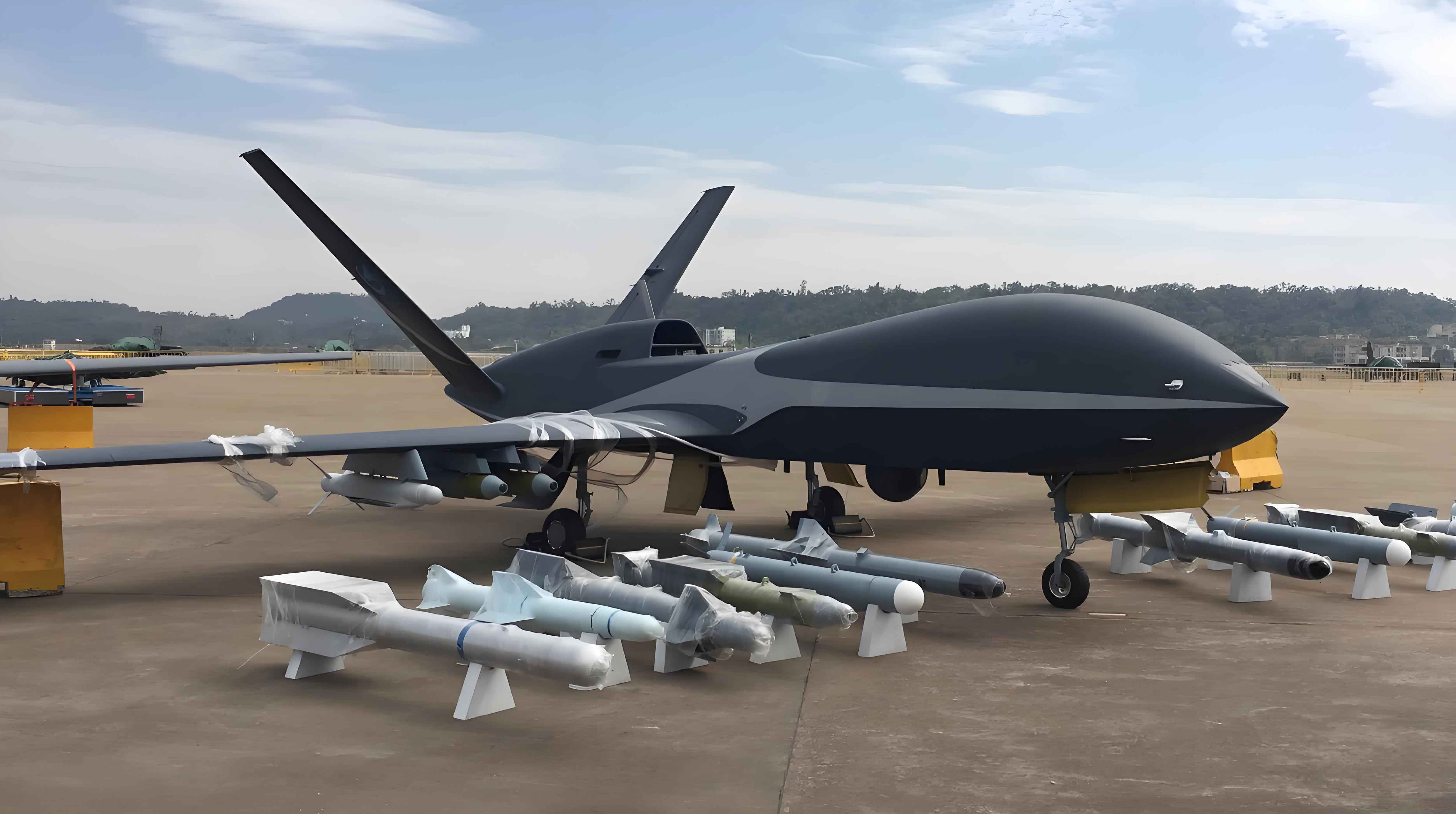
The operational utility and strategic weight of the military UAV stem from distinct tactical capabilities—primarily Intelligence, Surveillance, Target Acquisition, and Reconnaissance (ISTAR). Advanced models integrate strike functions, creating a seamless ‘sensor-to-shooter’ link that drastically reduces engagement time. The revolutionary aspect of the military UAV is its ability to package these capabilities—along with attributes like persistence, precision, and reach—into a single platform at a historically low relative cost. This fundamental characteristic influences strategic decision-making at the state level.
A comparative cost-benefit model illustrates this advantage. The total lifecycle cost $C_{total}$ of a weapons system can be broken down as:
$$C_{total} = C_{acquisition} + C_{operation} + C_{risk}$$
For a traditional manned fighter aircraft (e.g., F-35), $C_{acquisition}$ is extremely high (~$100 million), $C_{operation}$ is also substantial (>$10 million/year), and $C_{risk}$—the potential cost in pilot lives—is a paramount political and moral factor. For a high-end military UAV like the MQ-9 Reaper, $C_{acquisition}$ is significantly lower (~$20 million), $C_{operation}$ is reduced (~$5 million/year), and crucially, $C_{risk}$ for the operator is effectively reduced to near zero. This dramatic reduction in $C_{risk}$ lowers the political and ‘audience’ costs of military action, potentially altering the threshold for the use of force. The economic affordability of military UAV systems, including smaller tactical models costing mere hundreds of thousands of dollars, makes them accessible to a wider range of state and non-state actors, a phenomenon central to their proliferation.
Simultaneously, the threat quotient $T$ of a military UAV system can be conceptualized as a function of its accessibility, survivability, and payload:
$$T \propto A \cdot S \cdot P$$
Where $A$ represents ease of proliferation (high for smaller systems), $S$ represents survivability or low detectability, and $P$ represents lethal payload. Even systems with moderate $P$ can achieve high $T$ if $A$ is very high, enabling swarming tactics or persistent harassment, as seen in Houthi attacks on Saudi Arabia. This ‘low-cost threat’ becomes credible and sustainable, imposing disproportionate security burdens on adversaries.
The Middle East’s military UAV landscape has rapidly stratified. The following table categorizes key regional actors based on their研发, operational, and export capabilities concerning military UAV technology.
| Tier | Countries | R&D Capability | Operational Proficiency | Export Profile |
|---|---|---|---|---|
| 1 | Israel | World-leading; pioneer in UAV technology. | Extensive, continuous use since 1970s; highly sophisticated. | Major global exporter; restrictive sales policy within MENA. |
| 2 | Turkey, Iran | Strong; capable of designing & producing high-altitude long-endurance (HALE) combat UAVs. | High; extensive combat experience since 2015+ in multiple theaters. | Active exporters, primarily within the region; less restrictive. |
| 3 | Egypt, Saudi Arabia, UAE | Moderate; focused on licensed production/assembly and incremental indigenous projects. | Growing; some combat experience (e.g., UAE in Libya/Yemen). | Limited exports; primarily importers seeking technology transfer. |
| 4 | Jordan, Iraq, Qatar, Morocco, Algeria | Low; reliant on foreign procurement. | Basic to moderate; used for ISTAR and limited strikes (e.g., Iraq vs. ISIS). | Non-exporters. |
The United States’ use of military UAVs for counter-terrorism strikes, particularly in Afghanistan, Pakistan, Yemen, and Somalia, established a template for remote, risk-averse warfare. While intended to minimize American casualties, this campaign demonstrated the military UAV’s role in targeted killings and raised significant concerns regarding civilian casualties and psychological trauma among affected populations. It also served as a catalyst, demonstrating the utility of the military UAV platform and stimulating regional demand for similar capabilities.
Israel’s status stems from decades of development driven by persistent, low-intensity conflicts with non-state actors like Hezbollah and Hamas. The Israeli military UAV fleet is integral to border surveillance, precision strikes, and signal intelligence. Israel has also been a dominant exporter, though traditionally cautious about sales in the Middle East. Recent normalization agreements with some Arab states may be gradually altering this calculus.
Turkey’s breakthrough with the Bayraktar TB2 military UAV was driven initially by the domestic counter-insurgency campaign against the PKK. The success of this relatively low-cost, effective platform transformed Turkey’s conflict with the PKK, shrinking the insurgents’ operational space. Turkey has aggressively exported the TB2, using it as a tool of military diplomacy and influence in conflicts from Libya and Syria to Nagorno-Karabakh and Ukraine, proving that a capable military UAV can be a geopolitical game-changer.
Iran’s military UAV program, developed under the constraints of international sanctions and a weakened conventional air force, has focused on asymmetric strategy. Iran produces a wide range of systems and has prolifically disseminated them to allied non-state actors—Hezbollah, Houthi forces, and Iraqi Shiite militias. This proxy deployment extends Iran’s reach, complicates attribution for attacks, and provides real-world testing for its military UAV technology. The Houthis’ use of Iranian-sourced UAVs to strike deep inside Saudi Arabia and the UAE is a prime example of how military UAVs can empower a non-state actor to challenge a conventionally superior state.
Arab states, primarily in the Gulf and Egypt, are motivated by a combination of perceived threats from Iran and Turkey, counter-terrorism needs, and prestige. Their approach largely involves purchasing high-end systems from outside the region (often facing restrictions from the US on armed models) while investing in local assembly and technology partnerships to build domestic capacity as part of broader economic diversification plans (e.g., Saudi Vision 2030).
The divergent drivers and strategies of these key actors are summarized below:
| Actor | Primary Motivations | Export Policy | Usage Pattern | Regional Security Impact |
|---|---|---|---|---|
| United States | Counter-terrorism, force protection, targeted killing. | Restrictive; exports only to close allies, often with capability limitations. | Frequent cross-border strikes outside formal war zones. | High; set precedent for extra-judicial strikes, fueled proliferation demand. |
| Israel | Border security, deterrence vs. non-state actors (Hezbollah, Hamas). | Historically restrictive in MENA; may be evolving. | Predominantly in border regions and adjacent territories. | Moderate; long-standing factor in its conflicts. |
| Turkey | Domestic counter-insurgency (PKK), regional power projection, strategic autonomy. | Very liberal; used as foreign policy and export commodity. | Frequent cross-border interventions (Syria, Iraq, Libya). | High; has altered dynamics in several regional conflicts. |
| Iran | Asymmetric warfare, power projection via proxies,弥补 conventional air weakness. | Liberal via proxy transfers and direct sales to allies. | Extensive use by partner militias across the region. | High; complicates conflict attribution, empowers non-state actors. |
| Arab States (e.g., KSA, UAE) | Counter-terrorism, prestige, balancing against Iran/Turkey, industrial development. | Minimal; net importers. | Primarily in specific theaters (e.g., Yemen, Libya). | Moderate/Increasing; contributes to regional capability diffusion. |
The proliferation of military UAV technology is fundamentally altering the Middle Eastern security landscape in several interconnected and often destabilizing ways.
Firstly, military UAVs are dramatically enhancing the capabilities of non-state actors, thereby accelerating regional security fragmentation. Groups like Hezbollah, the Houthis, and even terrorist organizations like ISIS have acquired varying levels of military UAV capability, either through state sponsorship (Iran) or commercial adaptation. This grants them a degree of aerial awareness and strike capacity previously reserved for state armies. The formula for a non-state actor’s relative power $P_{nsa}$ can be expressed as:
$$P_{nsa} \approx \frac{M_{UAV}}{C_{UAV}} + C_{asym}$$
Where $M_{UAV}$ is the military effectiveness gained from UAVs, $C_{UAV}$ is their low cost, and $C_{asym}$ represents other asymmetric advantages. The low $C_{UAV}$ allows these groups to inflict economic, military, and psychological costs on much stronger state adversaries (e.g., Houthi attacks on Saudi oil infrastructure), creating persistent, low-level conflicts that defy easy resolution and fragment security management.
Secondly, the military UAV has become the instrument of choice for targeted killings and extra-judicial assassinations, eroding international legal norms. While the US pioneered this model against terrorist suspects, the technology’s diffusion lowers the barrier for other states and even non-state actors to conduct similar operations. The lack of transparency, clear legal frameworks, and accountability for military UAV strikes sets a dangerous precedent, potentially normalizing remote assassination as a tool of statecraft or political vendetta, further destabilizing volatile regions.
Thirdly, the rapid advancement and demonstration of military UAV capabilities by Turkey and Iran act as a catalyst for a new layer of regional arms competition. Perceived gaps in capability drive states like Saudi Arabia, the UAE, and Egypt to accelerate their own military UAV programs through imports and indigenous projects. This competition can be modeled as an action-reaction cycle:
$$A_{state1}(t+1) = f(A_{state2}(t), T_{state1})$$
Where the military UAV capability $A$ of State 1 at time $t+1$ is a function of the capability of rival State 2 at time $t$ and State 1’s own threat perception $T$. This dynamic risks fueling regional tensions and diverting resources. Furthermore, the spread of military UAVs stimulates parallel investment in counter-UAV technologies, creating a new offense-defense sub-cycle within the broader regional arms race.
In conclusion, the military UAV is no longer merely a niche counter-terrorism tool but a transformative technology reshaping the Middle Eastern battlespace and strategic environment. Its core characteristics of low cost and high threat are democratizing aspects of air power, empowering non-state actors, lowering thresholds for cross-border violence, and introducing new hazards like unaccountable targeted killings. While offering tactical advantages in specific conflicts, the uncontrolled proliferation of military UAV capabilities exacerbates the region’s inherent security dilemmas, contributes to fragmentation, and adds a significant and unpredictable variable to an already volatile landscape. The trajectory suggests that the military UAV will remain a central feature of Middle Eastern conflict and diplomacy, necessitating urgent, coordinated international efforts to establish norms, rules of engagement, and non-proliferation measures tailored to this disruptive technology.