
The operational effectiveness of a military UAV is fundamentally dictated by the sophistication and capability of its onboard mission payloads. These systems transform the aerial platform from a simple remote-controlled vehicle into a critical node for intelligence, surveillance, reconnaissance (ISR), electronic warfare, and strike operations. As a professional in the field of aerospace and defense systems, I have observed the rapid evolution of these payloads, driven by advances in miniaturization, processing power, and sensor fusion. This analysis will delve into the current state and burgeoning trends in military UAV payloads, focusing on electro-optical/infrared (EO/IR) systems, radars, electronic warfare suites, and communication relays, with particular emphasis on developments from leading technological nations.
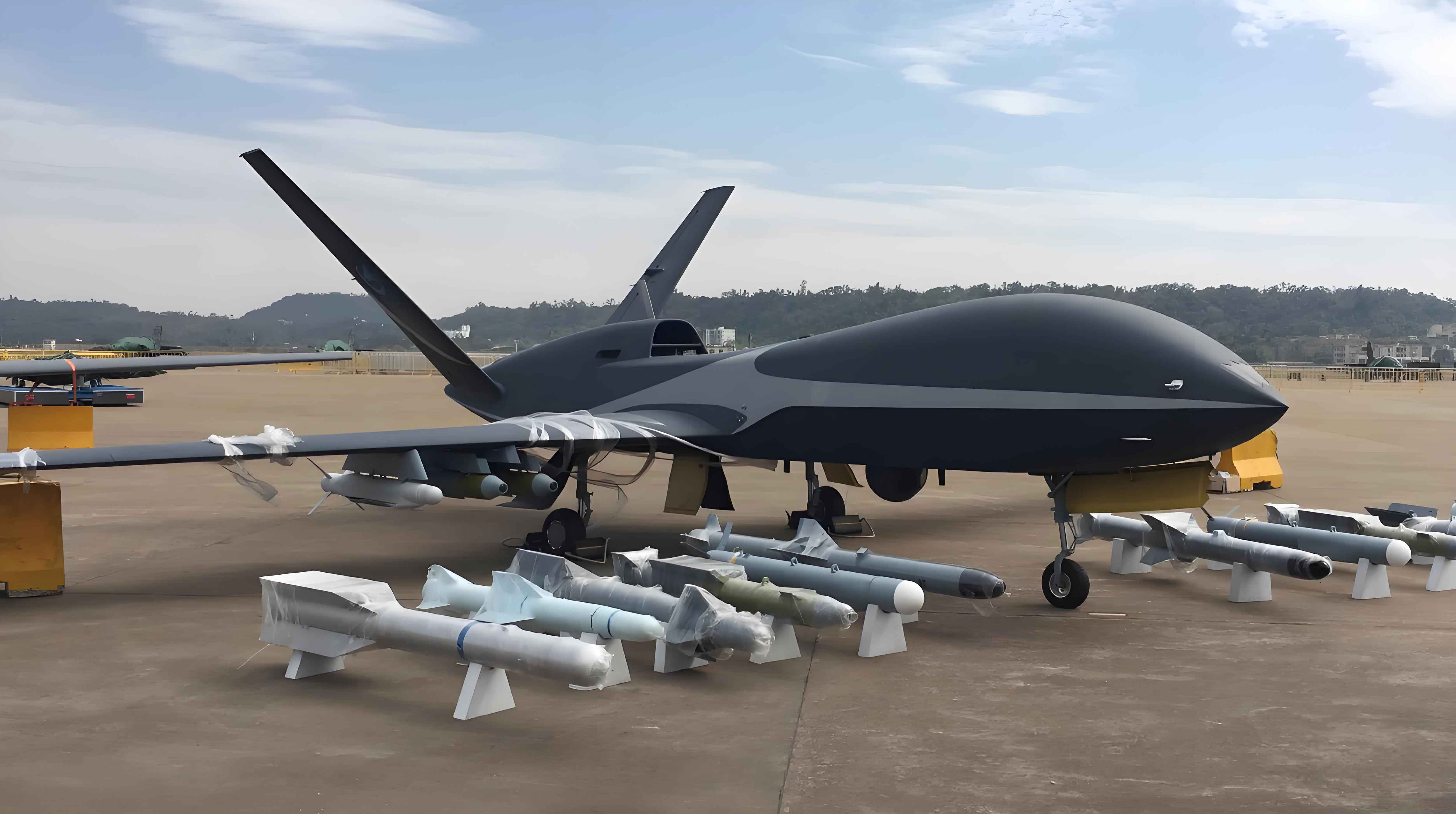
The payload suite of a military UAV is its raison d’être. Whether performing persistent stare over a region of interest, pinpointing targets for artillery, or jamming adversary communications, the mission equipment defines the drone’s role. Modern conflicts have underscored the necessity for multi-role, survivable, and networked unmanned systems, placing immense pressure on payload developers to deliver higher performance in smaller, lighter, and more power-efficient packages. The trajectory is clear: from dedicated single-sensor platforms towards integrated, multi-spectral systems capable of real-time data processing and dissemination.
Electro-Optical and Infrared (EO/IR) Surveillance Systems
EO/IR sensors remain the primary eyes of most military UAV fleets, providing high-resolution imagery for target identification, tracking, and battle damage assessment. The core components have evolved significantly from their early, bulky incarnations.
Daylight Cameras & Multi-Spectral Imagers: Modern systems have moved beyond simple television cameras. While high-resolution CCD (and now more commonly CMOS) matrix arrays are standard for daylight operations, the trend is towards multi-spectral and hyper-spectral imaging. These sensors capture data across many narrow wavelength bands, enabling the detection of camouflaged targets, material identification, and environmental monitoring. The performance is often summarized by the Ground Sample Distance (GSD), a function of altitude, focal length, and pixel size:
$$ \text{GSD} = \frac{\text{Altitude} \times \text{Pixel Size}}{\text{Focal Length}} $$
A smaller GSD indicates higher resolution. Modern compact EO pods for tactical military UAV can achieve submeter GSD from several kilometers of altitude.
Infrared Sensors: For night and low-visibility operations, infrared sensors are indispensable. Two main types are deployed:
- Forward-Looking Infrared (FLIR): These are imaging systems that create a picture from heat signatures. Modern FLIRs for military UAV use cooled (e.g., Indium Antimonide – InSb) or uncooled (e.g., Vanadium Oxide – VOx) focal plane arrays (FPAs). They offer multiple fields of view (FOV), typically a wide FOV for search and a narrow FOV for target identification. Key parameters include Noise Equivalent Temperature Difference (NETD), a measure of thermal sensitivity, and the operational waveband (Mid-Wave IR: 3-5µm or Long-Wave IR: 8-12µm).
- Infrared Line Scanners (IRLS): While historically larger, modern miniaturized IRLS provide wide-area surveillance by scanning perpendicular to the flight path. They are excellent for creating infrared maps but offer less real-time tracking capability than stabilized FLIR turrets.
Laser Systems: Laser designators and rangefinders are force multipliers. A military UAV equipped with a laser designator can illuminate a target for laser-guided munitions launched from other platforms (aircraft, ground units), enacting the role of a remote “target painter.” Laser rangefinders provide precise distance data for targeting solutions. The latest systems are incredibly compact, with eye-safe wavelengths and high pulse repetition rates.
The dominant trend in EO/IR for military UAV is sensor fusion and stabilization within a common gimbal. A modern multi-sensor turret typically houses a daylight camera, a FLIR, a laser rangefinder/designator, and sometimes a short-wave IR (SWIR) or spotter scope. Advanced stabilization ensures the line-of-sight remains locked on target despite platform motion. The following table summarizes key parameters for modern EO/IR payload categories:
| Payload Type | Key Metric | Typical Spec (Modern Systems) | Primary Function |
|---|---|---|---|
| EO/IR Gimbal (e.g., WESCAM MX-10, L3Harris Star SAFIRE) | Weight, Sensor Suite | 15-30 kg; Includes HD EO, MW/LW IR, Laser Desig./Rangefinder, IR Marker | Multi-role ISR, Target Acquisition & Tracking, Laser Designation |
| High-Res EO Camera | Resolution, GSD | 4K UHD (3840×2160) or higher; GSD < 10 cm at 3 km | Daylight Imagery, Target Identification |
| FLIR (Cooled FPA) | NETD, Resolution | < 30 mK; 1280×720 pixels (or higher) | Night/Obscurity Operations, Thermal Imaging |
| Laser Designator/Rangefinder | Range, Accuracy | > 10 km; Accuracy < 5 m | Precise Ranging, Guidance for Laser-Guided Weapons |
Radar Systems for All-Weather Persistence
While EO/IR systems are limited by weather and smoke, radar provides a crucial all-weather, day/night surveillance capability for military UAV. Two primary radar types have been successfully miniaturized for UAV applications.
Synthetic Aperture Radar (SAR): This is a transformative technology for military UAV. SAR uses the motion of the platform to synthesize a very large antenna aperture, achieving high-resolution imagery independent of range or weather. A key formula for azimuth resolution in a stripmap SAR mode is:
$$ \rho_a = \frac{D_a}{2} $$
where $ \rho_a $ is the azimuth resolution and $ D_a $ is the length of the physical antenna in the along-track direction. This shows that a smaller physical antenna inherently limits the best possible resolution, leading to techniques like spotlight SAR (steering the beam) to achieve submeter resolution even with small UAV-mounted antennas. Modern military UAV SAR systems, such as the Leonardo PicoSAR or the Raytheon ASARS-2 derivative on the Global Hawk, can provide:
- High-Resolution Imagery: Spot mode resolution better than 0.3m.
- Ground Moving Target Indication (GMTI): Detecting and tracking moving vehicles.
- Change Detection: Automatically highlighting alterations in a scene between successive passes.
GMTI Radars: Dedicated small GMTI radars, often using Pulse-Doppler waveforms, are deployed on tactical military UAV to monitor road movements, detect insurgent activity, or provide cueing for other sensors. They excel at filtering out stationary clutter to display only moving objects.
Emerging Radar Trends: The frontier for military UAV radar includes:
- Miniaturized AESA Radars: Active Electronically Scanned Array radars with no moving parts, enabling rapid beam steering for tracking multiple targets simultaneously. These are now appearing on advanced MALE and HALE platforms.
- Radar & EO/IR Fusion: Algorithms that correlate SAR detections with EO/IR imagery for automated target recognition (ATR).
- Low-Frequency SAR: Using UHF or VHF bands for foliage penetration (FOPEN) to detect vehicles and structures under forest canopy.
| Radar Type | Platform Example | Key Characteristics | Operational Advantage |
|---|---|---|---|
| Miniature SAR/GMTI | MQ-1C Gray Eagle, Hermes 900 | Weight: 30-100 kg; Resolution: 0.3-1 m (SAR); Detects moving vehicles | All-weather, day/night imaging and surveillance |
| High-Altitude Long-Range SAR | RQ-4 Global Hawk | Weight: 250+ kg; Wide Area Search & Spot Modes; Maritime surveillance capable | Persistent, wide-area coverage over vast ocean/land regions |
| Miniaturized AESA | Advanced R&D programs | Solid-state, multi-function (SAR, GMTI, Air-to-Air); Electronic protection | Multi-role capability, high reliability, electronic warfare resistance |
Electronic Warfare and Signals Intelligence Payloads
The military UAV is an ideal platform for electronic warfare (EW) due to its persistence, ability to loiter in hazardous areas, and relatively low cost compared to manned EW aircraft. EW payloads can be broadly categorized:
Signals Intelligence (SIGINT): These systems intercept and analyze electromagnetic emissions.
– Communications Intelligence (COMINT): Intercepts voice and data communications for intelligence gathering.
– Electronic Intelligence (ELINT): Intercepts and analyzes non-communication signals, primarily from radars, to identify threat systems and their locations through techniques like Time Difference of Arrival (TDoA) or Frequency Difference of Arrival (FDoA). The location accuracy often depends on the geometry between multiple collecting platforms, a concept formalized in the Geometric Dilution of Precision (GDOP).
Electronic Attack (EA) / Jamming: Military UAV can carry jammers to disrupt enemy communications and radars.
– Communications Jammers: Target tactical radios, cell networks, or satellite links used by adversaries.
– Radar Jammers: Can be used to protect friendly forces by degrading or deceiving surface-to-air missile (SAM) radars or air search radars. The effectiveness depends on jamming-to-signal ratio (J/S).
Anti-Radiation Payloads: Some military UAV are designed as “loitering munitions” or dedicated platforms equipped with passive homing seekers to detect and physically engage radar emitters, acting as unmanned anti-radiation missiles.
The development trend is towards cognitive, software-defined EW systems that can automatically detect, classify, and respond to new or adapting threats in real-time, a critical capability in modern contested electromagnetic spectrums.
Communication Relay and Network Nodal Payloads
Perhaps one of the most transformative uses of a military UAV is as an airborne communication node. By elevating relay equipment, a UAV can extend the line-of-sight (LOS) range of ground-based radios dramatically. The radio horizon distance $d$ for an airborne platform at altitude $h$ is approximately given by:
$$ d \approx \sqrt{2kRh} $$
where $R$ is the Earth’s radius and $k$ is an adjustment factor for atmospheric refraction (typically ~4/3). For example, a military UAV at 20,000 feet extends the LOS to over 200 miles. This capability enables:
- Tactical Data Link Extension: Relaying Link 16, VMF, or other tactical data between dispersed units and command centers.
- Beyond-Line-of-Sight (BLOS) Control: Allowing control of other UAVs or receiving sensor data via satellite-like relay.
- Ad-hoc Mobile Networks: Creating temporary communication networks for special operations or in infrastructure-denied environments.
Modern relay payloads are moving towards “smart relay” systems that can dynamically manage bandwidth, prioritize traffic, and maintain connectivity in complex, mobile scenarios, effectively acting as an airborne router or switch.
Future Trajectories and Convergence
The future of military UAV payloads is not merely incremental improvement but a convergence of capabilities and the integration of artificial intelligence (AI).
Multi-Domain Sensing and Fusion: The next generation of payloads will seamlessly integrate data from EO/IR, SAR, SIGINT, and other sensors (e.g., acoustic, chemical) at the processor level. AI algorithms will perform real-time fusion, automatically detecting anomalies, classifying targets with higher confidence, and cueing other sensors or weapons. The goal is a single, unified “common operational picture” generated autonomously by the military UAV.
AI-Powered Processing: Edge computing on the UAV will allow for onboard analytics. Instead of streaming terabytes of raw video, the UAV will send only compressed, tagged metadata or alert messages (e.g., “10 vehicles detected at grid X, moving east”). This drastically reduces bandwidth requirements and accelerates the decision-making cycle (OODA loop).
Payloads Enabling Uncrewed Combat: As we move towards loyal wingman drones and unmanned combat aerial vehicles (UCAVs), payloads will include advanced fire control radars, electronic warfare suites for self-protection, and internal weapons bays. The sensor fusion will be directly linked to autonomous engagement protocols under human supervision.
Swarm Technology: Payloads will evolve to support collaborative operations. One UAV in a swarm might carry a powerful radar emitter, while others carry passive receivers, creating a multistatic radar network that is difficult to locate and jam. Others might specialize in jamming or kinetic effects, all coordinated autonomously.
Conclusion: The payload is the soul of the military UAV. Its evolution from single-purpose sensors to integrated, intelligent, multi-spectral systems is a direct response to the demands of modern and future warfare. The trend is unequivocally towards greater autonomy, resilience, and networking, with AI acting as the central nervous system that binds sensor data to actionable combat effects. Nations that lead in the development of these advanced payloads will hold a significant advantage in the intelligence and strike capabilities of their unmanned aerial fleets. The military UAV has transitioned from a reconnaissance adjunct to a central pillar of military strategy, a transformation made possible almost entirely by the relentless advancement of its onboard mission equipment.