
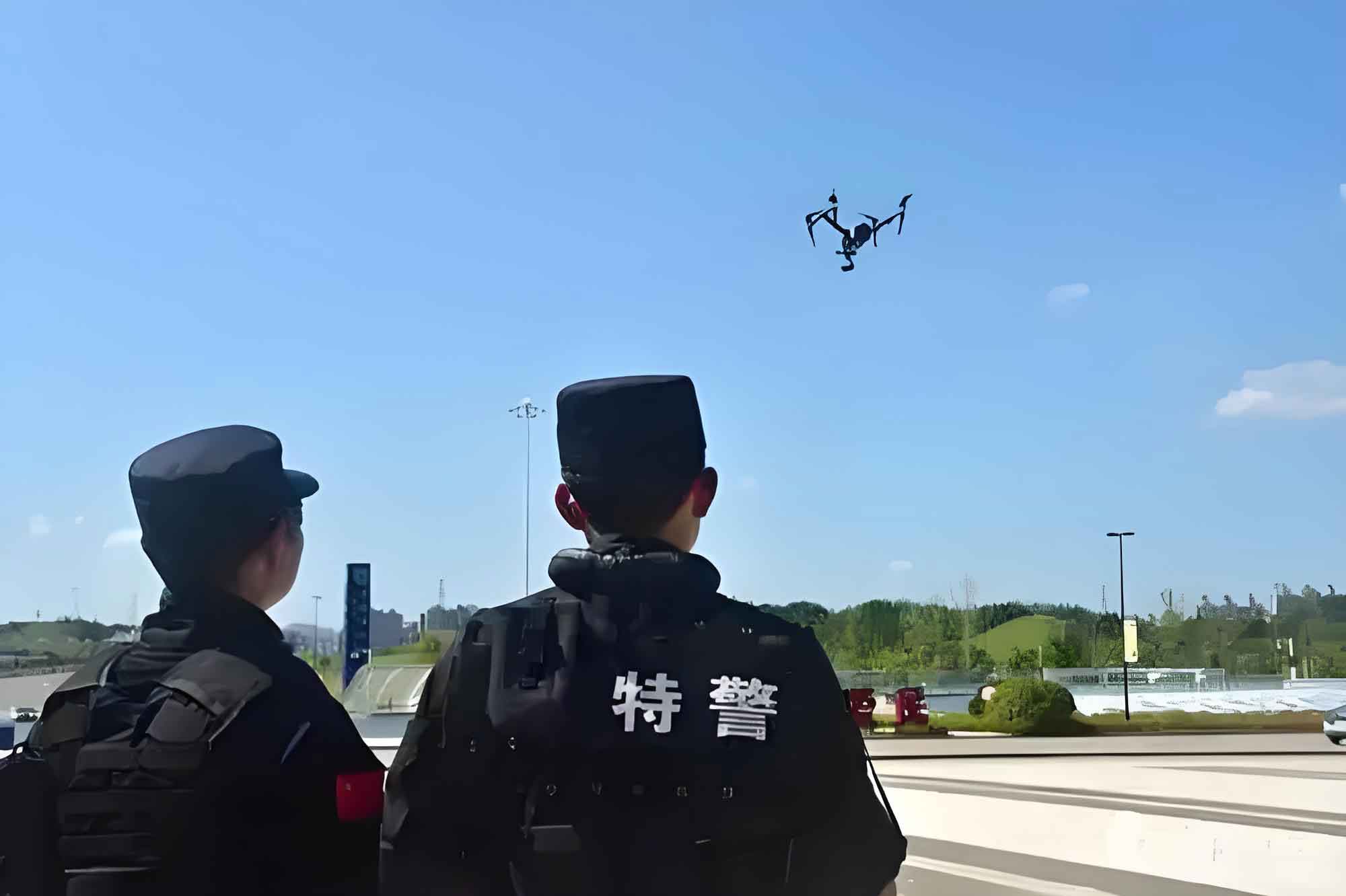
The integration of Unmanned Aerial Vehicles (UAVs) into public safety frameworks represents a transformative leap in policing methodologies. As a researcher deeply embedded in the study of investigative technologies, I have conducted extensive field surveys to understand the practical application, challenges, and strategic potential of police UAV operations. This article synthesizes findings from direct observation and interaction with specialized units, outlining a comprehensive view of how these aerial platforms are revolutionizing crime prevention, investigation, and emergency response. The core technology, the police UAV, serves as a force multiplier, providing an unprecedented “eye in the sky.”
The modern police UAV fleet is categorized primarily by aerodynamics and propulsion into three distinct types, each serving unique operational niches. The selection of a specific police UAV platform is a strategic decision based on mission parameters such as range, endurance, payload capacity, and operational environment.
| UAV Type | Key Characteristics | Primary Police Applications | Example Models/Series |
|---|---|---|---|
| Fixed-Wing | Long endurance, high speed, large area coverage, requires runway or launcher. | Highway traffic monitoring, large-scale aerial patrols (forests, borders), mapping, major event perimeter surveillance. | EWG-II, senseFly eBee, Quantum Systems Trinity F90+ |
| Rotary-Wing (Helicopter) | Vertical Take-Off and Landing (VTOL), excellent hover capability, moderate payload. | Tactical airborne surveillance, search and rescue (SAR), cargo/equipment delivery, persistent stare over an incident. | EWZ-1B, DJI Matrice 300/350 RTK (VTOL multirotor is dominant) |
| Multi-Rotor | VTOL, exceptional stability and hover, compact size, ease of operation, highly maneuverable. | Urban patrols, close-quarters reconnaissance, crime scene documentation, crowd monitoring, indoor search, immediate response. | DJI Mavic, Matrice, & Inspire series; Autel EVO; Skydio |
My investigation confirms that multi-rotor platforms, particularly from manufacturers like DJI, form the backbone of most urban police UAV units. Their operational flexibility in dense environments is unmatched. The payload versatility of a modern police UAV is critical. Standardized payload interfaces allow for rapid swapping of mission-specific modules, governed by a simple effectiveness function for sensor selection:
$$ E_{sensor} = \sum_{i=1}^{n} (w_i \cdot S_i) $$
Where \( E_{sensor} \) is the overall sensor effectiveness score for a mission, \( w_i \) is the weight (priority) of the i-th operational requirement (e.g., zoom, low-light, thermal), and \( S_i \) is the performance score of the sensor for that requirement. A unit might evaluate a zoom camera versus a thermal imager for a night search mission using this weighted model.
Cultivating Expertise: The Police UAV Pilot Training Protocol
The human element—the pilot—is the most critical component in a police UAV system. Effective training transforms an officer into a proficient sensor operator and tactical decision-maker. Regulatory compliance is the first step; beyond basic visual line-of-sight (VLOS) rules, pilots require certified credentials. In many jurisdictions, this involves certification from aviation authorities or specialized public safety programs, which focus on regulations, airspace, weather, and mission planning.
Advanced tactical training for a police UAV operator extends far beyond basic flight. A structured curriculum is essential. The training regimen I observed can be broken down into progressive tiers, each with specific skill objectives.
| Training Tier | Core Objectives | Tools & Methods | Success Metrics |
|---|---|---|---|
| Tier 1: Core Proficiency | Master basic flight controls, safety protocols, pre-flight checks, and regulatory knowledge. | Simulator software, small trainer drones, classroom instruction. | Passing written exam; demonstrating safe manual flight patterns (hover, square, circle). |
| Tier 2: Operational Skills | Develop mission-specific competencies: navigation, basic photography, live video monitoring. | Advanced simulators with scenarios, operational multi-rotor drones (e.g., DJI Phantom/Mavic). | Executing a simulated search pattern; capturing usable evidentiary photos/video. |
| Tier 3: Tactical Application | Execute complex, scenario-based operations under stress. Team coordination. | Advanced police UAV platforms (Matrice series), realistic field exercises, joint exercises with ground teams. | Successful completion of mock scenarios (e.g., tracking a vehicle, locating a missing person). |
| Tier 4: Specialized & Leadership | Master advanced payloads (thermal, LiDAR), counter-UAV tactics, mission command, and data analysis. | Specialized sensors, C-UAS technology, incident command system (ICS) integration training. | Planning and leading a full-scale UAV-involved operation; processing and analyzing collected data into intelligence. |
A continuous training cycle is maintained, often following a periodic schedule. A unit’s monthly training hours \( T_{month} \) can be modeled as:
$$ T_{month} = T_{sim} + T_{live} + T_{brief} $$
Here, \( T_{sim} \) represents simulator hours (crucial for adverse weather training), \( T_{live} \) represents actual flight hours, and \( T_{brief} \) represents time spent on mission debriefs and tactical discussions. Maintaining a high ratio of \( T_{sim} \) to \( T_{live} \) is cost-effective and ensures skill retention without excessive equipment wear.
Logistics and Sustainment: Managing the Police UAV Fleet
Sustained operational readiness of a police UAV unit hinges on rigorous logistical and maintenance protocols. Equipment management is not merely about storage; it involves lifecycle tracking, predictive maintenance, and secure data handling. A centralized asset management system is paramount.
The most critical and consumable component in electric police UAV operations is the battery. Its management follows strict electrochemical principles to ensure safety and longevity. The state of charge (SoC) for storage is meticulously maintained. The voltage \( V_{store} \) for long-term battery health is typically held at a nominal storage level, often around 3.85V per cell. The self-discharge management of smart batteries can be described by a voltage decay function over time \( t \) when idle:
$$ V(t) = V_{full} – \beta \cdot t $$
Where \( V_{full} \) is the voltage post-charge, and \( \beta \) is the self-discharge coefficient. Modern smart batteries automatically discharge to \( V_{store} \) after a set period (e.g., 10 days) to prevent swelling and capacity loss. A maintenance log for a battery fleet is essential, tracking metrics like cycle count \( C \), internal resistance \( R \), and capacity retention \( K \). A battery is typically retired when:
$$ K < 0.7 \quad \text{or} \quad R > R_{threshold} $$
Larger, more expensive police UAV platforms and sensitive payloads require controlled access and usage authorization, often following a double-approval process. The workflow can be formalized:
1. Request: Pilot submits mission plan detailing UAV type, flight area, purpose.
2. Authorization: Unit supervisor (\( A_1 \)) and sometimes a separate logistics or command officer (\( A_2 \)) must approve.
3. Check-out: Approved request logged in asset management system; equipment issued.
4. Post-Mission: Mandatory inspection and basic cleaning performed by pilot/technician.
5. Logging: Flight hours, any incidents, and battery cycles updated in the system.
This process, while adding steps, mitigates risk and ensures accountability for high-value assets.
Case Studies in Aerial Investigation: The Police UAV in Action
The theoretical and training value of a police UAV is fully realized in its field application. Documented case studies provide irrefutable evidence of its effectiveness. Here, I analyze two paradigmatic operations that highlight different strengths of police UAV deployment.
Case A: Covert Surveillance and Apprehension of a Fugitive. Intelligence indicated a fugitive was residing in a specific, densely populated residential complex. Traditional ground surveillance was challenging due to the labyrinthine layout and high risk of detection. A police UAV, equipped with a high-zoom camera, was deployed for discreet aerial observation over a 48-hour period.
The analytical process involved pattern-of-life analysis. The UAV recorded temporal data on apartment indicators: curtain movement \( M_c(t) \), window state \( W(t) \), and balcony activity \( A_b(t) \). For most units, these functions showed normal periodic variation. One target unit, however, exhibited null functions:
$$ M_c(t) \approx 0, \quad W(t) = \text{‘closed’}, \quad A_b(t) \approx 0 \quad \text{for} \quad t \in [0, 48\text{hrs}] $$
This statistical anomaly, the consistent absence of normal residential activity, identified the probable hideout. Corroborated with other intelligence, it allowed for a precise, dynamic entry operation, resulting in a successful capture with minimal risk to officers or the public.
Case B: Aerial Interdiction of a Fleeing Suspect Vehicle. During a late-night vehicle checkpoint operation, a car performed an abrupt evasive maneuver upon sighting police lights. A police UAV already on aerial patrol was immediately tasked with pursuit and identification.
This scenario highlights the UAV’s advantages in speed and perspective. While ground units mobilized to intercept, the UAV provided continuous tracking. The key was capturing the license plate, a function of the camera’s resolution, stabilization, and the pilot’s skill. The probability of successful plate capture \( P_{capture} \) can be modeled as a function of several variables:
$$ P_{capture} = f(R_{cam}, G_{stab}, D_{slant}, V_{rel}, L_{illum}) $$
Where \( R_{cam} \) is camera resolution, \( G_{stab} \) is gimbal stabilization performance, \( D_{slant} \) is the slant range to the target, \( V_{rel} \) is the relative velocity between UAV and vehicle, and \( L_{illum} \) is ambient illumination. The police UAV successfully acquired the plate, which was relayed to ground units who effected a safe stop. The driver was arrested for driving under the influence.
Confronting Operational Limitations and Technical Hurdles
Despite their prowess, police UAV operations face significant constraints that dictate their tactical employment. A clear understanding of these limitations is necessary for effective planning and for guiding future technological development.
1. Signal Degradation in Urban Canyons: The most frequently cited challenge is the severe attenuation and multipath interference of command and video signals in built-up areas. The effective operational radius \( R_{eff} \) in an urban environment is often a fraction of the manufacturer’s specified maximum range \( R_{max} \). This can be approximated by a degradation factor \( \alpha \) (where \( 0 < \alpha < 1 \)) influenced by building density \( \rho_b \) and height \( H \):
$$ R_{eff} = R_{max} \cdot \alpha(\rho_b, H) $$
Pilots must develop situational awareness to anticipate signal loss, often relying on “hugging” structures or positioning the control unit strategically. Solutions like mesh networking and satellite-controlled police UAV systems are in development to overcome this.
2. Navigation in Cluttered Environments: While obstacle avoidance sensors are standard, they are imperfect. Thin hazards like wires, branches, or chain-link fences often fall below the detection threshold. The probability of avoiding a thin obstacle \( P_{avoid} \) is a function of sensor resolution \( \Theta \), UAV speed \( v \), and obstacle thickness \( \phi \):
$$ P_{avoid} \propto \frac{\Theta}{v \cdot \phi} $$
This necessitates extensive pilot training in manual proximity flight and strict adherence to minimum safe distances.
3. Performance Ceilings: Fundamental physics limits current electric multi-rotor police UAV platforms. Key parameters are linked through the “lily pad” model of operations. Flight time \( t_{flight} \) is inversely related to payload weight \( W_{payload} \) and speed \( v \):
$$ t_{flight} \approx \frac{C_{batt}}{k_1 \cdot W_{total} + k_2 \cdot v^3} $$
Where \( C_{batt} \) is battery capacity, \( W_{total} \) is the total weight, and \( k_1, k_2 \) are constants. This cubic relationship with speed means high-speed pursuits drastically cut endurance. Furthermore, night vision capabilities, while good, often lack the resolution for definitive facial or plate identification at long ranges, governed by the sensor’s noise-equivalent irradiance (NEI) and lens aperture.
4. The Human Capital Gap: There is a pronounced shortage of personnel who are both expert pilots and trained in investigative or tactical disciplines. The ideal skill set is an intersection: \( S_{ideal} = S_{pilot} \cap S_{investigator} \cap S_{technician} \). Educational pipelines specifically for public safety UAS are still emerging.
Strategic Projections and Innovative Deployment Concepts
Looking forward, the evolution of police UAV technology and tactics will focus on overcoming current limitations and expanding into new mission areas. Based on operational needs and technological trends, several key development vectors are clear.
1. Automated Mass Area Surveillance: For monitoring vast, inaccessible areas like farmlands, forests, or waterways for illegal crops (e.g., cannabis, opium poppy), dumping, or fishing, automated patrol patterns using fixed-wing or long-endurance VTOL police UAV platforms are ideal. These systems would fly pre-programmed grids, using multispectral or thermal sensors to identify anomalies. The scan efficiency \( \eta_{scan} \) for an area \( A \) is:
$$ \eta_{scan} = \frac{v \cdot s \cdot t}{A} $$
Where \( v \) is speed, \( s \) is sensor swath width, and \( t \) is flight time. AI-powered image analysis would flag potential sites for human review and ground team dispatch, creating a powerful deterrence and detection network.
2. Swarm Tactics and Networked Operations: The future lies in coordinated fleets of police UAV systems. A swarm could blanket a large incident scene, providing multiple live feeds, creating a 3D map in minutes, or performing a coordinated search. The informational gain \( I_{swarm} \) over a single UAV scales with the number of units \( n \), but with diminishing returns due to overlap and communication overhead \( O(n) \):
$$ I_{swarm} \propto \log(1 + n) – O(n) $$
This requires advances in autonomous coordination and secure, high-bandwidth communication links.
3. Advanced Sensor Fusion and AI Analytics: The raw data from a police UAV is valuable; the analyzed intelligence is transformative. Future systems will integrate real-time data streams (visual, thermal, LiDAR, RF) and use edge-computing AI to perform immediate analytics: identifying unattended bags, tracking specific individuals across a crowd, detecting gunshot sounds and triangulating their origin, or automatically reading and cross-referencing license plates against databases.
4. Counter-UAS (C-UAS) Integration: As UAV technology proliferates, the threat of malicious use grows. A modern police UAV unit must also be a C-UAS unit. This involves deploying UAVs equipped with countermeasures (e.g., net guns, radio frequency inhibitors) to safely intercept rogue drones, especially over critical infrastructure or large public events. The operational doctrine expands from “owning the sky” to “policing the sky.”
The trajectory for police UAV integration is decidedly upward. Its value in enhancing officer safety, operational efficiency, and situational awareness is proven. The path forward requires continued investment in robust technology, comprehensive and standardized training programs, clear regulatory frameworks, and, most importantly, the fostering of a deep collaborative ecosystem between law enforcement agencies, academic institutions, and technology developers. The police UAV has ceased to be a novelty; it is now, indisputably, a cornerstone of intelligent, proactive, and effective 21st-century policing.