
In recent years, military drones have become integral to conflicts in the Middle East and globally, reshaping warfare dynamics. As a researcher analyzing regional security, I observe that the strategic value of military UAVs lies in their dual characteristics: low cost and high threat. This combination allows actors to engage in prolonged conflicts with reduced financial, human, and political expenditures. For instance, the economic cost of a high-end military drone like the Reaper is approximately $20 million, compared to $100 million for a manned fighter jet like the F-35. This disparity can be modeled with a simple cost equation:
$$Cost_{drone} = C_{acquisition} + C_{operation} \times t$$
where \(C_{acquisition}\) is the purchase price, \(C_{operation}\) is annual maintenance, and \(t\) is time in years. For a Reaper drone, this totals around $25 million over five years, versus $500+ million for an F-35. Simultaneously, military UAVs amplify threats through their proliferation, precision, and adaptability, quantified as:
$$Threat = Accuracy \times Range \times \frac{Payload}{Detection\ Time}$$
Here, higher values indicate greater risk, with military drones scoring significantly due to stealth and endurance. This article explores the evolution of military drone capabilities in the Middle East since 2015 and their profound impact on regional security, including enhanced non-state actor power and intensified arms races.
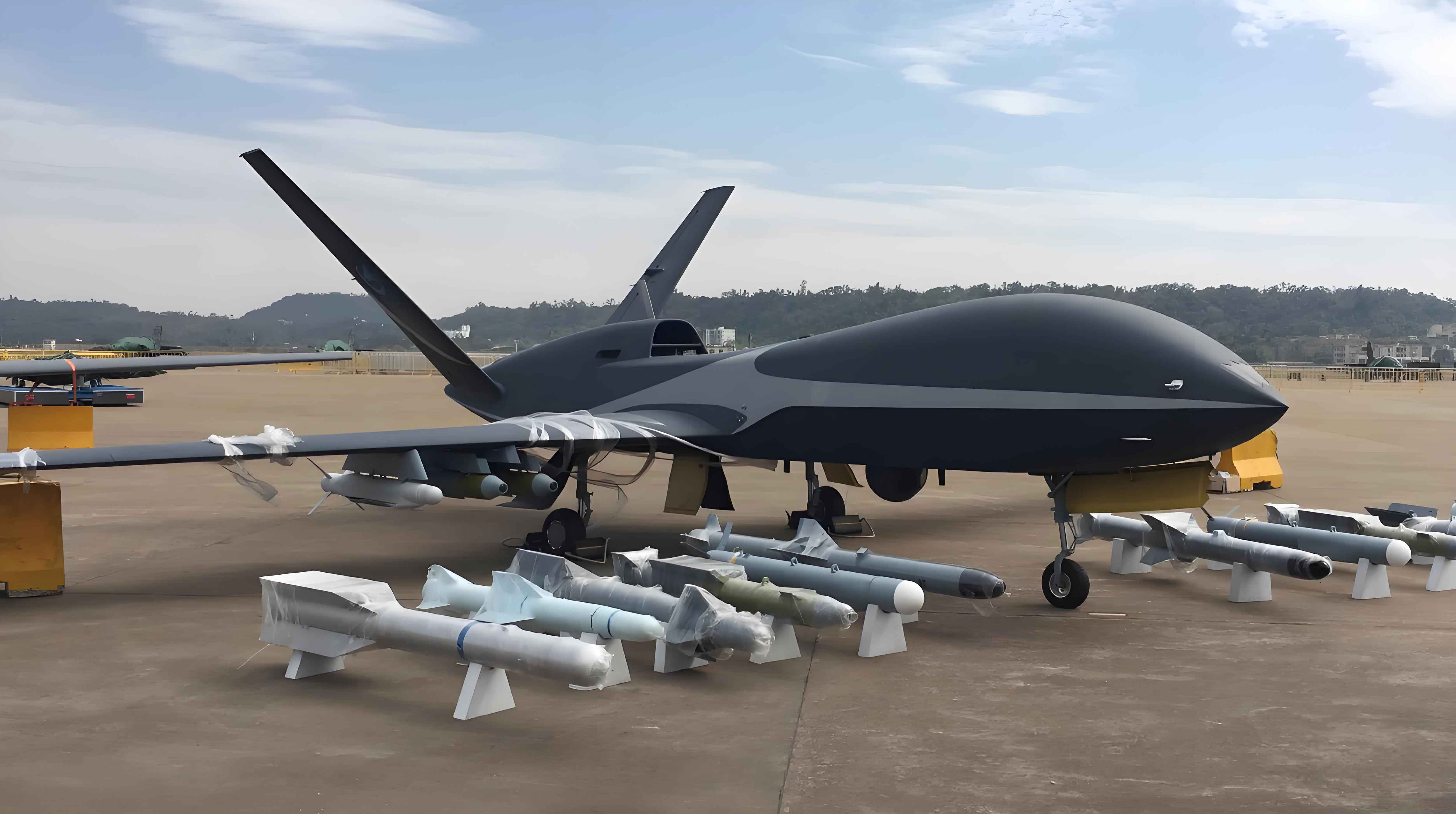
The proliferation of military drones in the Middle East has transitioned from U.S.-Israel dominance to a multipolar landscape. Initially, the U.S. leveraged military UAVs extensively in post-9/11 counterterrorism, conducting over 500 strikes in Yemen, Pakistan, and Somalia by 2020. Israel, a pioneer since the 1970s, used military drones in conflicts like the 1982 Lebanon War and continues to lead in exports. However, Turkey and Iran have emerged as formidable players, driven by domestic needs. Turkey’s Bayraktar TB2, costing under $5 million, proved decisive against Kurdish militants, while Iran supplies military UAVs to proxies like Hezbollah. Arab nations, such as Saudi Arabia and the UAE, lag but invest heavily in local production under initiatives like Saudi Vision 2030. This shift is summarized in Table 1, categorizing countries by military drone capabilities.
| Tier | Countries | Military Drone Development Status | Key Military UAV Models |
|---|---|---|---|
| 1 | Israel | Global leader in R&D and exports; used since 1974 | Heron, Eitan |
| 2 | Turkey, Iran | Advanced indigenous systems; combat-tested since 2015 | Bayraktar TB2 (Turkey), Shahed-129 (Iran) |
| 3 | Egypt, Saudi Arabia, UAE | Import-based with local R&D efforts | Wing Loong (UAE), SAQR (Saudi) |
| 4 | Iraq, Jordan, Morocco | Reliant on imports; limited deployment | CH-4 (Iraq), Anka (Jordan) |
Military drones exert multifaceted impacts on Middle Eastern security, primarily by empowering non-state actors. Groups like Hezbollah and Yemen’s Houthis now deploy military-grade UAVs, shifting airpower asymmetry. For example, Houthi drone attacks on Saudi oil facilities cost under $10,000 per unit but inflict billions in damage, a cost-benefit imbalance expressed as:
$$\frac{Damage_{inflicted}}{Cost_{drone}} \gg 1$$
This enhances their standoff capability against state forces, fragmenting security. Over 16 non-state actors in the region possess military drones, exacerbating instability through accessible aerial surveillance and strikes. Additionally, military UAVs facilitate targeted killings, with the U.S. conducting hundreds of drone strikes in the region, lowering the threshold for extrajudicial actions. The risk of escalation is captured by:
$$P(Conflict) = \frac{Number\ of\ Drone\ Strikes}{Diplomatic\ Channels}$$
where increased strikes heighten conflict probability. Furthermore, military drone proliferation fuels regional arms races. As Turkey and Iran advance, Arab states respond with imports and local projects, intensifying military expenditures. Table 2 compares drone usage strategies, highlighting how these dynamics contribute to insecurity.
| Actor Type | Primary Motivation for Military UAV Use | Security Impact | Example |
|---|---|---|---|
| State Actors (e.g., U.S., Israel) | Counterterrorism, border security | Rise in targeted killings; erosion of international norms | U.S. strikes in Pakistan (civilian casualty rate: 10-15%) |
| Regional Powers (e.g., Turkey, Iran) | Domestic counterinsurgency, regional influence | Proxy wars; non-state actor empowerment | Iran supplying drones to Houthis (100+ attacks on Saudi Arabia) |
| Non-State Actors (e.g., Houthis, ISIS) | Asymmetric warfare, propaganda | Increased fragmentation; terror tactics | ISIS drone bombings in Iraq (2016-2017) |
Looking ahead, military drones will continue to redefine Middle Eastern conflicts, acting as catalysts for uncertainty. The low entry barrier for military UAV technology enables even resource-poor groups to challenge states, deepening security fragmentation. For instance, the probability of a successful drone assassination by non-state actors can be estimated as:
$$P(Success) = Stealth \times \frac{Intel}{Defense\ Budget}$$
where higher stealth and intelligence ratios increase success likelihood. To mitigate risks, international frameworks for military drone regulation are urgent, focusing on non-proliferation and ethical use. As these military UAVs evolve, their role in regional stability remains double-edged—offering precision in counterterrorism but risking broader destabilization through unaccountable strikes and arms races. Ultimately, the future of Middle Eastern security hinges on balancing military drone advantages against their inherent perils.