
The landscape of modern security threats is constantly evolving, demanding a parallel evolution in law enforcement tactics and tools. In this context, the integration of Unmanned Aerial Vehicles (UAVs) into police operations, particularly for counter-terrorism, represents a paradigm shift. I have observed that the unique capabilities of drones—their aerial perspective, operational flexibility, and advanced sensor integration—offer unprecedented advantages in scenarios ranging from high-risk warrant services to active shooter and counter-terrorism incidents. However, the mere possession of this technology is not synonymous with operational effectiveness. The true force multiplier lies not in the drone itself, but in its standardized application. This entails moving beyond ad-hoc, pilot-dependent usage and establishing a comprehensive, doctrine-driven framework that governs every aspect of deployment, from pre-mission planning and crew resource management to tactical integration and post-mission analysis. Standardization ensures that police drone operations are predictable, repeatable, safe, and legally defensible, transforming a piece of advanced equipment into a reliable component of the tactical team. In the high-stakes environment of counter-terrorism, where seconds count and officer safety is paramount, this structured approach is not just beneficial—it is imperative.
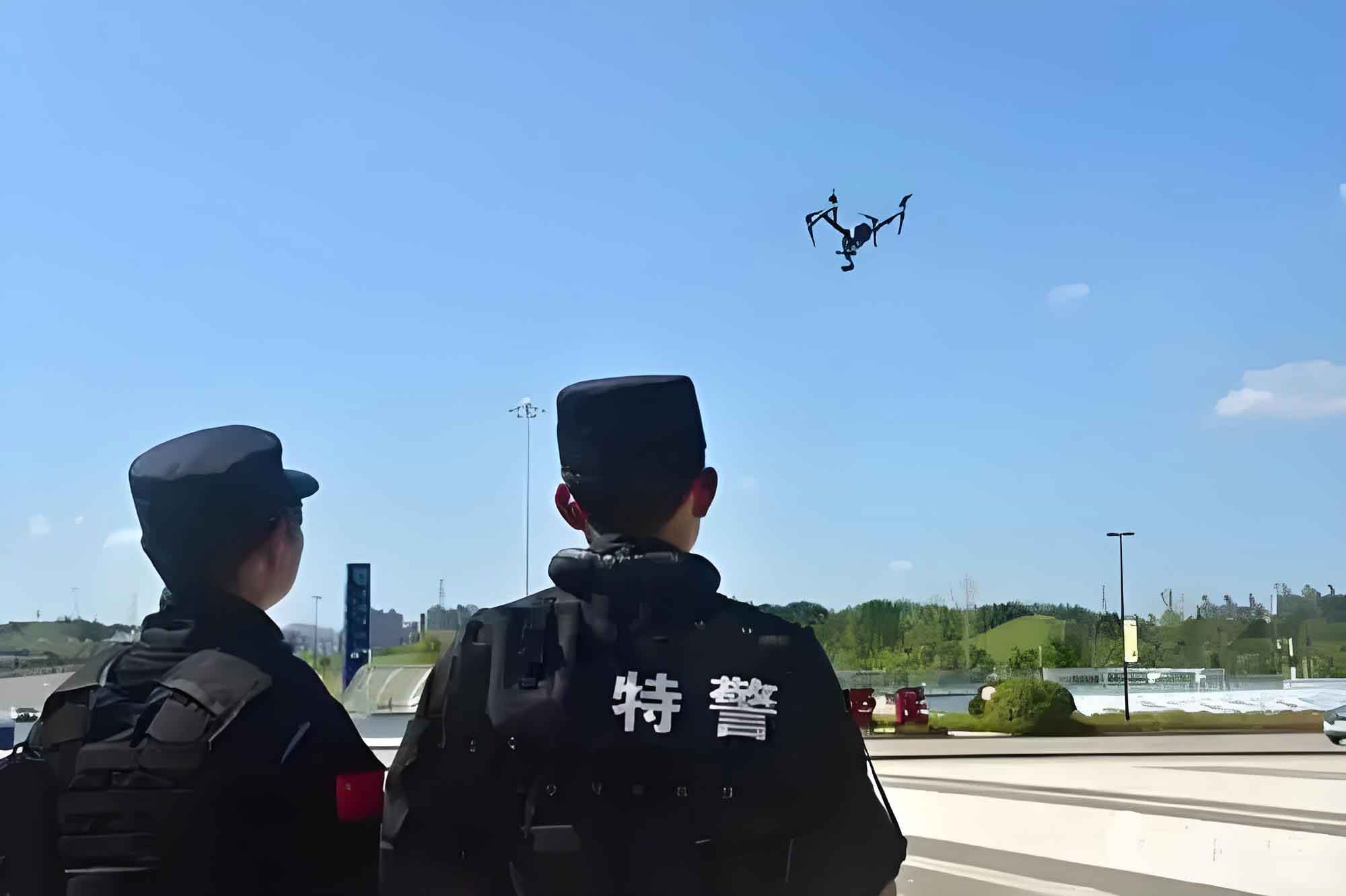
The operational advantages of the police drone in a counter-terrorism context are multifaceted and transformative. Primarily, they provide an “eye in the sky” that delivers persistent, real-time Intelligence, Surveillance, and Reconnaissance (ISR). This capability allows commanders to develop superior situational awareness without immediately committing ground personnel to potentially lethal environments. A drone can quickly map a complex structure, identify points of entry and egress, detect the presence of individuals through thermal signatures, and monitor suspect movement. This intelligence forms the bedrock of all subsequent tactical decisions. Furthermore, the modular payload capacity of modern police drone platforms enables a “sensor-to-shooter” or, more appropriately for law enforcement, a “sensor-to-responder” link. Beyond cameras, drones can be equipped with loudspeakers for negotiation, LED dazzlers for distraction and containment, or even non-lethal payload delivery systems. This creates a dynamic tool that can adapt its function to the evolving needs of the operation, from silent observation to active containment. The tactical flexibility is enhanced by their small size and agility, allowing them to navigate urban canyons, peer into windows, or hover in positions inaccessible to helicopters. This agility, combined with relatively low acoustic signatures for certain models, provides a stealthy option for gathering critical information. Finally, the use of a police drone inherently enhances officer safety. It acts as a remote scout, mitigating the need for personnel to physically expose themselves during the initial stages of containment and reconnaissance. This “standoff” capability is a cornerstone of modern, risk-averse policing tactics in high-threat scenarios.
However, to fully harness these advantages, a rigorous framework for standardized application must be established. This framework encompasses equipment, personnel, procedures, and integration. The following sections detail the core components of this framework, which I believe are essential for any agency seeking to deploy drones effectively in counter-terrorism operations.
I. The Standardization Framework: Pre-Mission to Post-Mission
Standardization begins long before the drone is airborne. It is a continuous cycle of planning, training, execution, and review. The cornerstone of this framework is the concept of a standardized Police Drone Team (PDT), operating under clear protocols.
A. Team Composition and Roles (Crew Resource Management)
Effective drone operation in a tactical setting is a team effort, not a single-pilot endeavor. A standardized PDT should consist of clearly defined roles, each with specific responsibilities. This mirrors aviation’s Crew Resource Management (CRM) principles, ensuring clear communication, task distribution, and error mitigation.
| Role | Primary Responsibility | Key Tasks | Required Certification/Training |
|---|---|---|---|
| Mission Commander (MC) | Overall tactical employment of the drone asset. Liaison with incident command. | Determines mission objectives, approves flight paths, authorizes payload use, manages airspace deconfliction. | Advanced Tactical Drone Operations; Incident Command System (ICS). |
| Remote Pilot in Command (RPIC) | Safe physical operation of the drone aircraft. | Executes flight maneuvers, maintains aircraft control, monitors aircraft health and telemetry, performs take-off/landing. | FAA Part 107 (or equivalent), Agency-specific flight proficiency. |
| Payload / Sensor Operator (PSO) | Operation of all mission payloads (cameras, speakers, etc.) and data collection. | Controls gimbal, zooms camera, operates thermal imaging, manages recording, interprets sensor data in real-time. | Advanced Sensor Operation; Visual Information Interpretation. |
| Visual Observer (VO) / Tactical Liaison | Maintains direct visual line of sight (VLOS) with drone and relays ground truth. | Monitors drone for air traffic hazards, provides situational context to the RPIC/PSO, communicates with tactical ground teams. | Basic Airspace Awareness; Tactical Communications. |
B. Equipment Standardization and Mission Configuration
Not all drones or payloads are suitable for all tasks. Standardization requires a deliberate selection process based on mission parameters. Key variables include operational duration, required sensor fidelity, environmental conditions (wind, rain, day/night), and the size of the area of operations.
| Mission Type | Primary Task | Recommended Platform Type | Key Payload Requirements | Standardized Flight Profile |
|---|---|---|---|---|
| Large-Area Search | Scanning open terrain, parks, or perimeters for suspects. | Fixed-Wing or Long-Range VTOL | High-resolution optical zoom, long-wave thermal camera (LWIR), mapping software. | Pre-programmed grid pattern (lawnmower) at optimal altitude for sensor sweep. |
| Urban Reconnaissance | Assessing building structures, rooftops, and alleyways. | Small Multi-Rotor (Quads/Hexacopters) | 4K visual camera, high-frame-rate thermal (for movement), obstacle avoidance sensors. | Slow, methodical “slicing the pie” around corners; controlled approaches to windows. |
| Close-Quarter Battle (CQB) Support | Breach preview, hallway clearance, room entry. | Micro or Nano Drones (FPV-capable) | Wide-angle, low-latency video transmitter (for FPV), protective cage. | High-speed, pilot-view immersion; rapid ingress/egress from openings. |
| Negotiation & Containment | Communicating with barricaded subjects, delivering items. | Medium Multi-Rotor | High-output loudspeaker, two-way audio module, secure payload drop mechanism. | Stable hover at a safe stand-off distance; controlled approach for delivery only on command. |
The operational readiness of a police drone can be quantified using a simplified Drone System Effectiveness Index (DSEI). This conceptual metric helps in pre-mission planning and platform selection:
$$ \text{DSEI} = \frac{(S_t \times R_t) + (P_f \times W_t)}{L_d} $$
Where:
- $S_t$ = Sensor capability score (e.g., zoom range, thermal resolution).
- $R_t$ = Real-time data transmission reliability (0 to 1 scale).
- $P_f$ = Platform flight time (minutes).
- $W_t$ = Weather tolerance factor (0 to 1 scale).
- $L_d$ = Logistical footprint/difficulty (lower is better).
A higher DSEI score indicates a platform better suited for a generalized, prolonged operation. Missions would specify a minimum required DSEI or weight individual factors differently (e.g., $S_t$ heavily weighted for search missions).
C. Standardized Operational Procedures (SOPs) and Tactical Integration
This is the heart of standardized application. SOPs provide the “how-to” for every phase of drone deployment.
1. Pre-Mission Planning & Briefing: A standardized checklist must be completed. This includes: airspace authorization (LAANC or COA activation), NOTAM checks, weather assessment, frequency coordination (to avoid interference with tactical comms), battery logistics, and a clear briefing to the PDT and incident command on the Rules of Engagement (ROE) for the drone, including when and how non-lethal payloads may be employed.
2. Tactical Integration with Ground Units: The police drone must not operate in a vacuum. Standardized communication protocols are critical. The PDT’s VO/Tactical Liaison is the primary link. A common language is needed:
- “UAV has eyes on”: Drone is observing the subject/target.
- “UAV painting”: Drone is using its laser pointer (if equipped) to designate a location for ground teams.
- “UAV loudspeaker active”: Warning/negotiation is being broadcast.
- “UAV repositioning, cover”: Drone is moving and may temporarily lose visual; ground teams should be aware.
Furthermore, tactics must be co-developed. For example, a standardized “Drone-Assisted Dynamic Entry” might involve the drone hovering at a second-story window to provide distraction and surveillance just as the breach team enters the ground floor, preventing suspects from fleeing to an upper level.
3. Data Management & Post-Mission Analysis: Standardization extends to data handling. All video feeds should be recorded with metadata (time, date, GPS, operator ID) intact and automatically streamed to a secure server if possible. A standardized post-mission debrief form should capture lessons learned: technical issues, communication successes/failures, and tactical outcomes. This data feeds back into training and SOP refinement, closing the standardization loop.
II. Addressing Operational and Ethical Challenges through Standardization
Standardized procedures are also the primary tool for mitigating the significant challenges associated with tactical drone use.
A. Airspace Deconfliction and Safety
The risk of mid-air collision with other drones, helicopters, or low-flying aircraft is real. Standardized protocols must include:
- Mandatory use of an Unmanned Traffic Management (UTM) service for airspace awareness.
- Establishing a Temporary Flight Restriction (TFR) for major incidents.
- A standardized “see-and-avoid” procedure for the VO, and a pre-defined emergency landing procedure for the RPIC.
A simple formula for calculating a safe minimum operating altitude above ground obstacles can be standardized:
$$ h_{safe} = h_{obstacle} + (V_{wind} \times k_{gust}) + h_{buffer} $$
Where $h_{obstacle}$ is the height of the tallest nearby structure, $V_{wind}$ is the current wind speed, $k_{gust}$ is a gust factor (e.g., 1.5), and $h_{buffer}$ is a mandatory safety buffer (e.g., 15 meters).
B. Legal and Ethical Use of Force
This is arguably the most critical area for standardization. The use of a police drone to deliver any form of force, even non-lethal, must be governed by strict ROE that are compliant with national and local laws (e.g., the U.S. Fourth Amendment, Use of Force Continuums). Standardization here means:
- Clear, written policy defining which payloads constitute “force.”
- A requirement for explicit authorization from the Incident Commander and/or a designated legal authority before deploying such payloads.
- Training scenarios that embed these legal thresholds into operator decision-making.
The decision matrix for deploying a non-lethal payload from a drone must be procedurally standardized and legally defensible.
C. Counter-Drone (C-UAS) Considerations
Terrorist actors may use their own drones for reconnaissance or as weaponized platforms. A standardized counter-drone protocol for the PDT is necessary. This includes:
- Training in visual and auditory identification of hostile drones.
- Procedures for reporting hostile UAVs to command.
- Understanding the agency’s own layered C-UAS capabilities (from net-drones to electronic warfare systems) and how to operate in an environment where those systems are active.
III. Future Directions: Technology and Doctrine Synergy
The future of police drone standardization lies in the convergence of advanced technology with refined doctrine. Several key areas will shape this future:
A. Artificial Intelligence (AI) and Automated Analysis: Standardized AI models can be deployed to automatically scan drone footage for anomalies—unattended bags, unusual heat signatures in buildings, specific vehicle types. This reduces operator cognitive load and speeds up detection. Standardization will be required for the training data and performance validation of these AI tools.
B. Swarm Technology and Networked Operations: The coordinated use of multiple drones (swarms) will revolutionize operations. Standardization will be essential for swarm command-and-control interfaces, communication protocols between drones, and the development of swarm-specific tactics (e.g., one drone provides a communication relay while two others perform simultaneous building scans).
C. Enhanced Sensor Fusion and Biometrics: Future payloads may combine thermal, optical, and millimeter-wave radar to see through certain barriers. The ethical and legal standards for collecting and processing biometric data (like facial recognition) from a drone platform must be established proactively through policy and law.
D. Regulatory Evolution and Professionalization: As the technology matures, so too must the regulatory and professional framework. This includes the development of advanced, scenario-based certifications for tactical drone operators, similar to specialized firearms training, and continued work on national standards for law enforcement drone use.
Conclusion
The integration of the police drone into the counter-terrorism toolkit is an inevitability driven by undeniable operational advantages. However, its value is fully realized only when its application is systematic, predictable, and integrated. The path to achieving this lies in comprehensive standardization—of teams, equipment, procedures, and ethics. By establishing a robust framework that governs planning, execution, and review, law enforcement agencies can ensure that their drone programs are safe, effective, legally sound, and trusted by the public they serve. The police drone is more than just a flying camera; it is a complex socio-technical system. Its successful and responsible deployment in high-threat environments demands a doctrine of standardized application that is as advanced as the technology itself. This structured approach transforms the drone from a novel gadget into a cornerstone of modern, intelligence-led, and safety-focused counter-terrorism operations.