
In recent years, the integration of unmanned aerial vehicles (UAVs) into police operations has revolutionized law enforcement capabilities, enabling enhanced surveillance, rapid response, and operational efficiency. As a practitioner involved in police drone training programs, I have observed a critical gap: many police units struggle with high loss rates during daily training due to inadequate pilot skills and insufficient training methodologies. This paper presents a comprehensive approach to assembling and training small police drones, aiming to mitigate these challenges by combining hands-on assembly, virtual simulation, and real-flight exercises. The method emphasizes a deep understanding of drone components, the development of robust control habits through simulation, and the consolidation of skills via practical application. Throughout this discussion, the term “police drone” will be frequently referenced to underscore its relevance in law enforcement contexts. By adopting this tripartite training framework, police agencies can reduce equipment damage, accelerate pilot proficiency, and ensure the effective deployment of police drones in diverse scenarios.
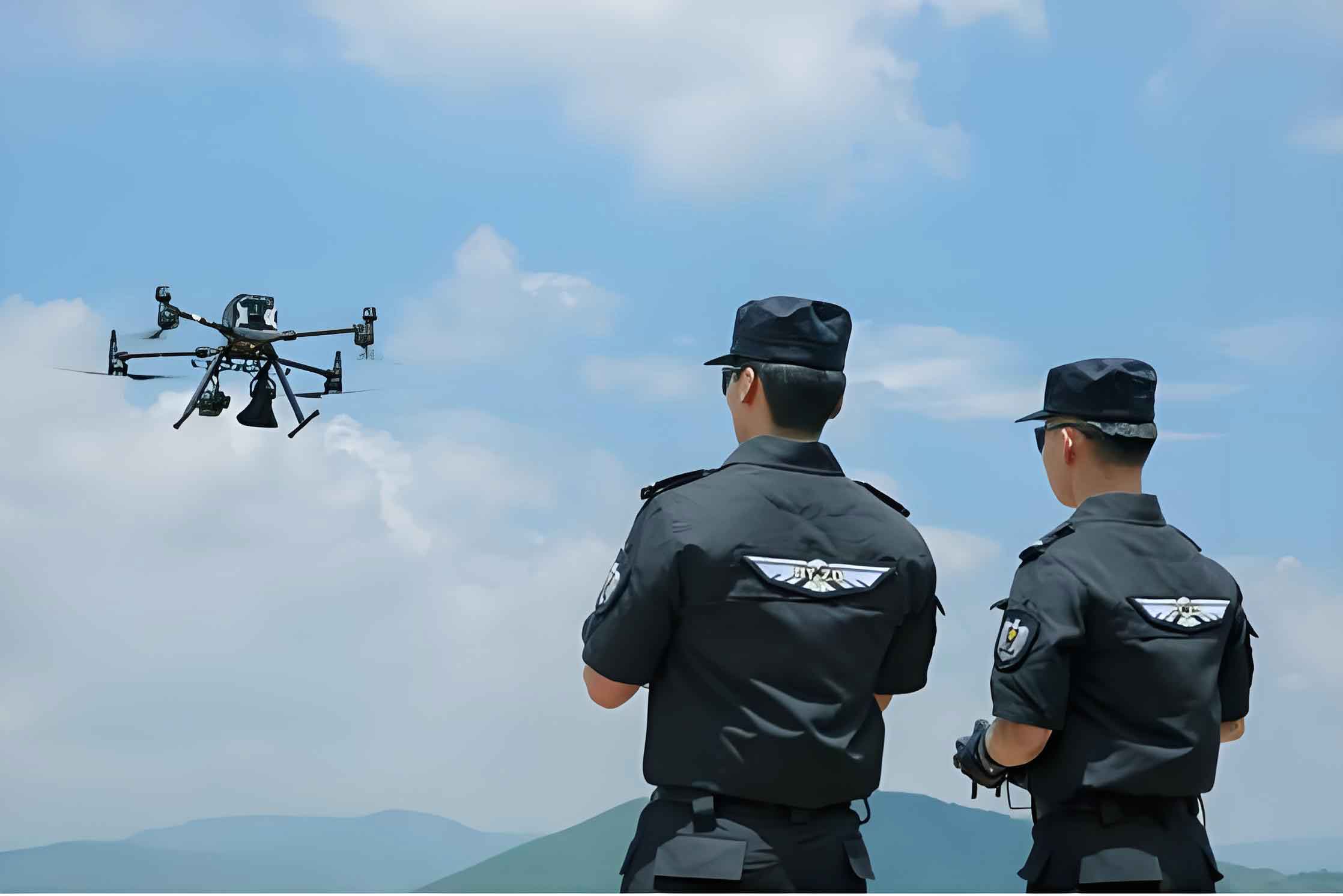
The training of police drone operators often relies on manufacturer-led programs, which may not fully address the unique needs of police personnel or provide sustained skill development. Moreover, many police academies lack standardized training systems, leading to inconsistent outcomes. To address this, I propose a method that begins with assembly training to familiarize operators with the intricacies of police drone components. This foundational step is crucial for troubleshooting and maintenance, which are essential for the longevity of police drone fleets. Following this, virtual training using advanced simulators like Phoenix RC allows operators to practice control techniques in a risk-free environment, fostering good habits before real-world application. Finally, real-flight training consolidates these skills through structured exercises, such as figure-eight patterns, which are integral to police drone maneuverability. A scientific evaluation system further refines the training process by assessing performance metrics. This holistic approach ensures that police drone operators are well-equipped to handle the demands of field operations, thereby enhancing the utility of police drones in public safety missions.
In the subsequent sections, I will detail each phase of this method, incorporating tables and formulas to summarize key concepts. The assembly training covers frame construction, circuit soldering, and flight controller installation; virtual training progresses from single-channel to full-channel exercises; and real-flight training includes pre-flight checks and complex maneuvers. Evaluation criteria are provided to measure progress. Throughout, the importance of police drones in modern policing will be emphasized, with repeated mentions of “police drone” to reinforce their role. By implementing this method, police units can build a sustainable training ecosystem that minimizes losses and maximizes operational readiness for police drone deployments.
Assembly Training for Police Drones
Assembly training is the cornerstone of understanding police drone mechanics, enabling operators to grasp the functionality and interconnections of various components. This phase involves three main tasks: frame assembly, circuit soldering, and flight controller installation. As an instructor, I have found that hands-on assembly reduces future maintenance issues and empowers operators to perform quick repairs in the field, which is vital for the reliability of police drones.
The frame serves as the skeleton of the police drone, providing structural support and mounting points for other parts. For a typical quadcopter police drone, the frame consists of four arms, an upper center plate, and a lower center plate. The arms are often color-coded to distinguish the front (e.g., red) and rear (e.g., black) directions, aiding in orientation during flight. Assembly begins by securing the arms to the upper center plate using screws, ensuring they are tightened appropriately to avoid vibrations that could destabilize the police drone. The lower center plate is then attached, along with landing gear, to complete the frame. This process not only builds manual dexterity but also instills an appreciation for the robustness required in police drone designs.
To summarize the components involved in frame assembly, Table 1 provides a detailed breakdown:
| Component | Description | Function |
|---|---|---|
| Arms (4) | Typically made of plastic or carbon fiber, color-coded for orientation. | Support motors and propellers; determine police drone geometry. |
| Upper Center Plate | Plate with screw holes for arm attachment. | Provides mounting surface for arms and flight controller. |
| Lower Center Plate | Plate with solder points for power distribution. | Holds electronic speed controllers (ESCs) and power lines. |
| Landing Gear | Attached to lower plate. | Protects police drone during takeoff and landing. |
Circuit soldering is critical for the electrical integrity of the police drone. It involves two primary tasks: soldering ESCs and soldering power supply wires. ESCs regulate motor speed, and their wires must be correctly connected to the lower center plate’s solder points. Positive wires (red or white) are soldered to points marked “+”, while negative wires (black) go to points marked “-“. For the power supply, an XT60 connector is used: the red positive wire is soldered to the “+” terminal, and the black negative wire to the “-” terminal, with heat shrink tubing applied to insulate connections. This ensures safe power delivery to the police drone, preventing short circuits that could compromise missions.
The flight controller (FC) is the brain of the police drone, processing sensor data and executing control algorithms. Installation involves mounting the FC board on a vibration-damping pad attached to the upper center plate, aligned with the drone’s front direction. Wiring connections follow manufacturer guidelines, linking the FC to ESCs and the receiver. A common FC like APM requires precise calibration, which can be expressed through control equations. For instance, the attitude control of a police drone often uses a PID controller, where the output is given by:
$$u(t) = K_p e(t) + K_i \int_0^t e(\tau) d\tau + K_d \frac{de(t)}{dt}$$
Here, \(u(t)\) is the control signal, \(e(t)\) is the error between desired and actual attitude, and \(K_p\), \(K_i\), \(K_d\) are tuning parameters. Understanding such formulas helps operators appreciate the complexity behind police drone stability. Assembly training concludes with a functional check, ensuring all components work harmoniously. This phase not only reduces reliance on external technicians but also fosters a deeper connection between the operator and their police drone, enhancing overall confidence.
Virtual Training for Police Drone Pilots
Virtual training bridges the gap between theoretical knowledge and real-flight experience, allowing police drone operators to practice in a simulated environment without risk of damage. Using simulators like Phoenix RC, which offers a wide range of drone models including police drone variants, operators can develop muscle memory and refine control techniques. I advocate for a progressive training regimen that starts with single-channel exercises and advances to full-channel maneuvers, all designed to build proficiency for police drone operations.
Single-channel training isolates individual control axes to focus on fundamental skills. In hover training mode, only the elevator channel is enabled initially, requiring the operator to maintain altitude using throttle control. This is done from different orientations: rear (tail-in), front (nose-in), and sides. The goal is to achieve stable hover, which is essential for police drone tasks like surveillance or precision landing. Similarly, aileron-only training hones lateral control. These exercises reinforce the basics, as summarized in Table 2:
| Training Phase | Channels Enabled | Orientation | Objective |
|---|---|---|---|
| Elevator Only | Throttle/Elevator | Rear, Front, Sides | Maintain altitude and orientation for police drone hover. |
| Aileron Only | Aileron | Rear, Front, Sides | Control lateral movement without altitude changes. |
Dual-channel training introduces simultaneous control of elevator and aileron channels, mimicking real-world police drone flight where multiple inputs are required. Operators must coordinate both sticks to keep the drone stable in hover from various orientations. This phase enhances multitasking abilities, preparing pilots for the dynamic environments where police drones operate. The difficulty can be quantified using a stability metric, such as the root mean square error (RMSE) of position deviations:
$$\text{RMSE} = \sqrt{\frac{1}{N} \sum_{i=1}^N (x_i – x_{\text{target}})^2}$$
where \(x_i\) is the police drone’s position at sample \(i\), and \(x_{\text{target}}\) is the desired hover point. Lower RMSE values indicate better control, a key goal for police drone operators.
Full-channel training unlocks all control axes: elevator, aileron, rudder (yaw), and throttle. This represents the complete control suite of a police drone, demanding coordinated inputs for complex maneuvers. Exercises include sustained hover in all orientations, circular flights, and obstacle avoidance. The simulator allows customization of weather conditions and terrains, simulating real-world challenges for police drones. To optimize training, I incorporate control theory concepts. For example, the dynamics of a quadcopter police drone can be modeled using Newton-Euler equations. The translational motion is governed by:
$$m \ddot{\mathbf{r}} = \mathbf{F}_g + \mathbf{F}_t$$
where \(m\) is the police drone mass, \(\ddot{\mathbf{r}}\) is acceleration, \(\mathbf{F}_g\) is gravity, and \(\mathbf{F}_t\) is thrust from rotors. The rotational motion follows:
$$I \dot{\boldsymbol{\omega}} + \boldsymbol{\omega} \times I \boldsymbol{\omega} = \boldsymbol{\tau}$$
with \(I\) as inertia tensor, \(\boldsymbol{\omega}\) as angular velocity, and \(\boldsymbol{\tau}\) as torque. Understanding these equations helps operators anticipate police drone behavior, improving reaction times. Virtual training concludes with proficiency assessments, ensuring operators are ready for real-flight. By reducing initial errors in a safe setting, this phase significantly lowers the loss rate for police drones during subsequent training stages.
Real-Flight Training for Police Drones
Real-flight training is where skills are solidified through hands-on practice with actual police drones. This phase emphasizes pre-flight checks, structured flight exercises, and adherence to safety protocols. As a trainer, I organize sessions that progress from basic hover to advanced patterns, ensuring operators can handle the police drone confidently in operational scenarios.
Ground inspection and debugging are critical first steps. Operators must verify that the police drone is airworthy by checking frame integrity, screw tightness, and component connections. Frequency matching between transmitter and receiver is essential; for instance, using FASSTest systems, the process involves entering linkage mode on the transmitter and powering the receiver until LEDs indicate successful pairing. Power-on checks include observing ESC initialization sounds and motor responsiveness. A systematic approach minimizes failures that could ground a police drone during missions. Table 3 outlines key pre-flight checks:
| Check Item | Procedure | Purpose |
|---|---|---|
| Frame Inspection | Visual check for cracks or loose screws. | Ensure structural integrity of police drone. |
| Frequency Matching | Pair transmitter and receiver within 50 cm. | Establish reliable control link for police drone. |
| Power System Test | Connect battery; listen for ESC beeps. | Verify electrical health of police drone. |
| Motor Test | Arm controller; gently throttle to observe motor spin. | Confirm motor functionality and direction. |
Flight control training focuses on maneuverability, with the figure-eight pattern being a comprehensive exercise. This pattern requires the police drone to fly along a path resembling the digit “8”, involving transitions between orientations such as tail-in, nose-in, and side-in. Starting from point A (tail-in), the drone moves to B (left side-in), C (nose-in), D (right side-in), and back to A, then repeats in the opposite direction. This drill tests all control channels simultaneously, enhancing the operator’s ability to maintain smooth trajectories—a skill vital for police drone operations like perimeter patrol or target tracking. The kinematics can be described using parametric equations. For a simplified figure-eight path, the police drone’s position \((x, y)\) might follow:
$$x(t) = R \sin(t), \quad y(t) = R \sin(t) \cos(t)$$
where \(R\) is a scale factor, and \(t\) is time. Operators aim to minimize deviation from this path, which requires precise throttle and yaw adjustments. Additionally, wind resistance can be modeled as a force \(\mathbf{F}_w = -k \mathbf{v}\), where \(k\) is a drag coefficient and \(\mathbf{v}\) is the police drone’s velocity, adding realism to training scenarios.
Throughout real-flight training, safety is paramount. I enforce rules such as maintaining line-of-sight, avoiding crowded areas, and using fail-safe modes. These practices not only protect the police drone but also align with regulatory standards for police drone use. By combining repetitive drills with incremental complexity, operators build muscle memory and situational awareness, reducing the likelihood of crashes that could damage the police drone. This hands-on experience is indispensable for mastering the nuances of police drone piloting, from takeoff to landing.
Training Evaluation for Police Drone Operators
To ensure training effectiveness, a scientific evaluation system is implemented, assessing police drone operators across multiple performance dimensions. This feedback loop identifies areas for improvement and refines training methods. I have developed a scoring framework based on flight performance, stability, proficiency, landing accuracy, and bonus skills, each weighted to reflect operational priorities for police drones.
The evaluation criteria are detailed in Table 4, which expands on the original metrics to provide a comprehensive assessment tool. Scores range from 0 to 10 or higher, depending on the category, with emphasis on consistency and precision—key traits for police drone missions.
| Category | Score Range | Description | Relevance to Police Drone Operations |
|---|---|---|---|
| Flight Performance | 0-10 | Based on drone condition and responsiveness after assembly; higher scores indicate full functionality. | Ensures police drone is mission-ready and reduces downtime. |
| Flight Stability | 0-30 | Measures oscillation amplitude during hover; lower sway scores higher. | Critical for stable footage and precise control in police drone tasks. |
| Flight Proficiency | 0-20 | Assesses ability to maintain position within concentric circles (green, yellow, red) at constant altitude. | Refines hover accuracy for police drone surveillance or inspection. |
| Landing Stability | 0-20 | Evaluates smoothness of landing; minimal bounce or damage scores higher. | Protects police drone hardware and ensures safe recovery. |
| Landing Accuracy | 0-10 | Grades proximity to target landing zone; centered landings score maximum. | Essential for police drone operations in confined areas. |
| Bonus Skills | 0-10 | Rewards mastery of orientations like side-in and nose-in flight. | Enhances versatility for complex police drone maneuvers. |
Mathematically, overall performance \(P\) can be computed as a weighted sum:
$$P = w_1 S_1 + w_2 S_2 + w_3 S_3 + w_4 S_4 + w_5 S_5 + w_6 S_6$$
where \(S_i\) are scores for each category, and \(w_i\) are weights reflecting their importance for police drone operations. For instance, flight stability might carry a higher weight (\(w_2 = 0.3\)) due to its impact on police drone effectiveness. This quantitative approach allows for objective comparisons and trend analysis over time.
Additionally, I incorporate real-time data logging during evaluations, using sensors on the police drone to capture metrics like position error or angular velocity. These data can be analyzed using statistical tools, such as calculating the standard deviation of hover position:
$$\sigma = \sqrt{\frac{1}{N-1} \sum_{i=1}^N (x_i – \bar{x})^2}$$
where \(\bar{x}\) is the mean position. Lower \(\sigma\) values indicate better control, guiding targeted training for police drone operators. Regular assessments not only motivate improvement but also help standardize proficiency across police units, ensuring that all operators meet the rigorous demands of police drone deployments. By iteratively refining training based on these evaluations, the method sustains long-term competency and reduces the loss rate of police drones.
Conclusion
In this paper, I have presented a holistic method for assembling and training small police drones, designed to address the high loss rates and skill gaps prevalent in many police agencies. The approach integrates three synergistic phases: assembly training, which deepens understanding of police drone components; virtual training, which cultivates control habits through simulation; and real-flight training, which consolidates skills via practical exercises. A structured evaluation system provides feedback for continuous improvement. Throughout the discussion, the significance of police drones in modern law enforcement has been underscored, with repeated emphasis on their role in enhancing operational capabilities.
The method leverages hands-on activities, advanced simulators, and progressive flight drills to build operator confidence and proficiency. By familiarizing themselves with assembly, operators gain troubleshooting skills that reduce maintenance costs for police drones. Virtual training minimizes initial errors, preserving police drone hardware during the learning curve. Real-flight training, complemented by quantitative assessments, ensures that operators can execute complex maneuvers required in field scenarios. This tripartite framework not only lowers equipment loss rates but also accelerates the development of competent pilots, ultimately maximizing the return on investment in police drone technology.
Future work could explore the integration of artificial intelligence for personalized training modules or the use of augmented reality to simulate police drone missions in urban environments. However, the current method provides a robust foundation for police units seeking to establish effective training programs. As police drones continue to evolve, adopting such comprehensive training methodologies will be crucial for sustaining their effectiveness in public safety. I encourage police agencies to implement this approach, tailoring it to their specific needs, to ensure that their police drone fleets are operated safely and efficiently, thereby fulfilling their potential in safeguarding communities.