
As a law enforcement officer engaged in the front-line battle against illicit drugs, I have witnessed firsthand the transformative impact of technology on our operations. Among the most significant advancements in recent years is the deployment of police drone systems for the detection and eradication of illegally cultivated opium poppy. These unmanned aerial systems have shifted our paradigm from ground-bound, labor-intensive searches to agile, aerial-dominated campaigns. This article, drawing from operational experience and analysis, delves into the application of police drone technology in this critical field, examining its advantages, current limitations, and proposing a comprehensive framework for future enhancement to better serve our counter-narcotics mission.
1. Defining the Police Drone System for Poppy Eradication
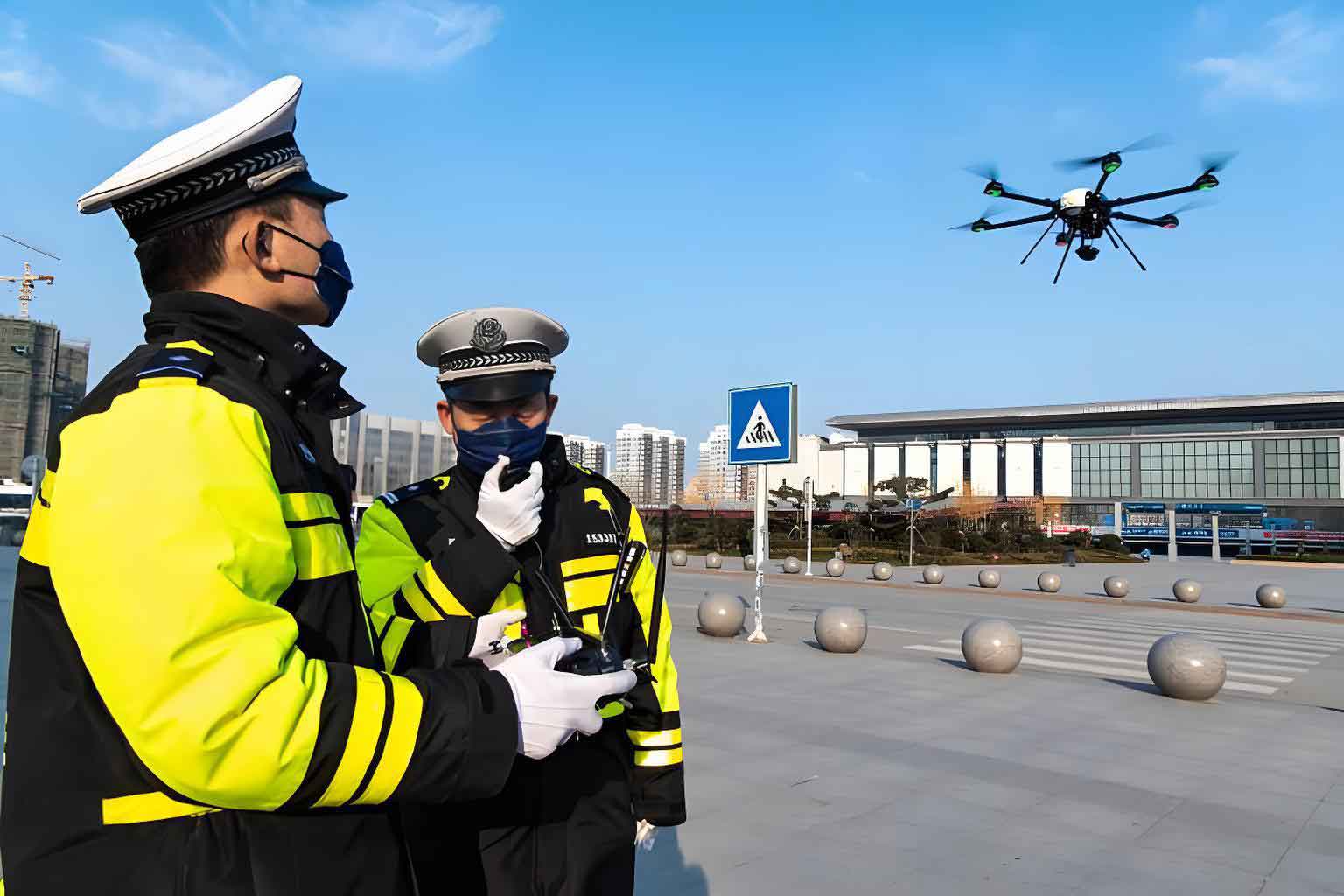
A police drone, or more formally a Police Unmanned Aerial System (UAS), refers to an aircraft operated by law enforcement agencies without a human pilot onboard. It is specifically designed or adapted to perform policing tasks, including reconnaissance, surveillance, and data acquisition. For poppy detection, the police drone functions not as a standalone device but as the core of an integrated system. A standard operational police drone system comprises four key subsystems that work in concert:
| Subsystem | Core Components | Primary Function in Poppy Eradication |
|---|---|---|
| Flight & Control | Airframe, Propulsion, Flight Controller, GPS/INS, Battery. | Provides stable, navigable flight platform to carry sensors over target areas. |
| Mission Payload | High-resolution Camera, Multispectral Sensor, Thermal Imager, Gimbal. | Captures visual and spectral data of the ground; the “eyes” of the system for identifying suspicious vegetation. |
| Ground Control Station (GCS) | Remote Controller, Tablet/Computer, Mission Planning Software. | Interface for piloting, mission planning (autonomous waypoints), and real-time data monitoring. |
| Data Link & Processing | Radio Transmitter/Receiver, Data Storage, Image Processing Software. | Transmits command/control signals and sensor data; enables initial analysis and evidence recording. |
The synergistic operation of these subsystems can be modeled as a closed-loop process for poppy detection: Mission Planning (GCS) → Autonomous Flight & Data Capture (Flight + Payload) → Real-time Data Transmission (Data Link) → Analysis & Decision Support (GCS/Processing). The efficiency of this loop defines the operational effectiveness of the police drone.
2. Operational Value and Strategic Advantages
The integration of police drone technology into our eradication toolkit has conferred several decisive advantages, fundamentally altering our strategic posture.
2.1. Establishing a Three-Dimensional “Air-Ground Integrated” Governance Pattern. Illegal cultivators increasingly seek refuge in remote, rugged, or densely forested terrain to evade detection. The police drone nullifies this tactical advantage. By elevating our surveillance perspective from a two-dimensional plane to a three-dimensional space, it overcomes topographic barriers. This enables panoramic aerial reconnaissance, transforming previously inaccessible “blind spots” into surveillable space. The result is a cohesive “air-ground integrated” pattern where the police drone identifies and pinpoints targets from the air, guiding rapid, precise ground interventions. This model also optimizes manpower, reducing reliance on large-scale “human wave” tactics. A minimal tactical unit—comprising a drone pilot and a small ground verification team—can now effectively cover vast areas.
2.2. Perfecting the “Intelligence Gathering + Evidence Fixation + Field Disposal” Workflow. Traditional blanket-search methods were not only burdensome but often ineffective. The police drone introduces intelligence-led precision. It acts as an “aerial eye,” conducting systematic, wide-area scans to gather actionable intelligence. Upon detecting anomalies, it can immediately fix evidence through geotagged imagery or video. This intelligence then informs targeted ground verification and disposal. The workflow evolves from reactive field disposal to a proactive cycle: $$Efficiency_{New} = \frac{Targeted\ Actions_{Drone}}{Total\ Area_{Covered}} \gg \frac{Random\ Searches_{Human}}{Area_{Accessed}} = Efficiency_{Old}$$. This shift significantly alleviates the operational burden on frontline officers.
2.3. Enabling a Proactive Operational Posture. Prior to police drone deployment, operations were largely passive, reliant on tip-offs and random patrols. The limited scope and high labor intensity of human searches kept us in a reactive mode. The police drone‘s wide field-of-view, terrain independence, and mobility empower us to proactively monitor entire jurisdictions. This transition from passive response to active, preventative patrol and detection is a strategic game-changer, enhancing deterrence while conserving valuable law enforcement resources.
3. Current State of Application and Prevailing Challenges
Despite rapid adoption, the application of police drones in poppy eradication remains in a developmental phase, characterized by uneven progress and several systemic challenges.
| Aspect | Current Status | Implication |
|---|---|---|
| Development Stage | Rapid growth from initial use (~2009) but overall a recent innovation. | Potential for rapid technological uptake but lack of deep institutional experience. |
| Primary Application Mode | Mostly at the “Aerial Photography + Manual Visual Identification” stage. | High dependence on pilot skill; limited automation and intelligent analysis. |
| Equipment & Adoption | Uneven. Some regions have advanced fleets; others rely solely on manual searches. | Creates disparities in enforcement capability and effectiveness across jurisdictions. |
| Management & Utilization | Often informal. “Form over function” issues, with underutilization of advanced features. | Investment fails to translate into proportional operational gains. |
3.1. Problem Analysis: Key Bottlenecks in Practice.
a. Inadequate Legal Framework and Regulatory Oversight. The operational use of police drones lacks a robust, specialized legal foundation. Existing aviation regulations are not fully tailored to law enforcement’s unique needs regarding authorization, airspace use, evidence admissibility, and privacy protection. The absence of clear, nationwide procedural standards for police drone deployment in operations like eradication creates legal ambiguities and potential risks of rights infringement.
b. Tool-Centric Application, Disconnected from Broader Systems. Often, the police drone operates as an isolated data-gathering tool. The intelligence it collects is manually analyzed and acted upon without seamless integration into the broader police information ecosystem (e.g., command centers, crime databases). This disconnect prevents real-time situational awareness for commanders, hinders coordinated response, and makes it difficult to supervise police drone operations or leverage data for predictive analytics.
c. Low Level of Intelligence and Dominance of Civilian-Grade Equipment. Many units employ modified consumer-grade drones, which are essentially flying cameras. They lack the specialized sensors, computational power, and software for automated poppy detection, area calculation, or intelligent mission planning. Pilots must visually identify poppies from a live video feed—a skill-intensive and fatiguing task. These systems may also lack the endurance, stability, and security required for demanding field operations.
d. Lack of Sophisticated Tactics, Techniques, and Procedures (TTPs). Effective use of a police drone requires more than basic piloting. We lack a mature body of TTPs for different scenarios (e.g., mountain surveys vs. urban rooftop scans), weather conditions, and evasion tactics used by cultivators. Operations often default to simple grid-pattern searches without leveraging data to prioritize high-probability zones, thus underutilizing the system’s potential.
e. Shortage of Specialized Personnel. There is a critical gap in professionally trained police drone pilots specifically skilled for narcotics detection. Many operators are enthusiasts or officers with minimal training. They may lack deep knowledge of aviation regulations, advanced flight mechanics, image interpretation, and the specific spectral signatures of poppy plants, limiting operational effectiveness and safety.
4. A Comprehensive Framework for Enhanced Effectiveness
To fully harness the potential of police drone technology, a multi-faceted enhancement strategy is required, addressing legal, institutional, human resource, and technological dimensions.
4.1. Legal Dimension: Establishing a Clear Operational Mandate.
We must advocate for and help develop a dedicated legal framework for police drone operations. This framework should:
- Clearly define the legal basis for police drone use in surveillance and evidence collection.
- Delineate authorized use-cases, airspace protocols, and privacy safeguards.
- Establish standardized procedures for mission authorization, data handling, and chain of evidence for drone-acquired data to ensure judicial admissibility.
Detailed administrative rules must cover personnel qualification, aircraft registration and maintenance, pre-flight approval processes, and safety accountability.
4.2. Institutional Dimension: Ensuring Sustainable Deployment.
a. Funding and Procurement Models. Stable funding is essential for acquisition, maintenance, training, and upgrades. Budget proposals should be needs-based. Innovative models like “Drone-as-a-Service” (DaaS) leasing or public-private partnerships can make advanced capabilities accessible to budget-constrained departments, providing both equipment and expert operators.
b. Multi-Agency Collaboration and Public Engagement. Eradication cannot succeed in a silo. We must strengthen the inter-agency taskforce model, integrating resources from forestry, agriculture, and local governments. Furthermore, police drone operations should be coupled with community outreach. The visible presence of a police drone during a survey provides a powerful opportunity for on-the-spot education about the illegality and dangers of poppy cultivation, leveraging the operation for deterrence and awareness.
4.3. Human Resource Dimension: Building Professional Capacity.
a. Academic Curriculum Development. Police academies and universities must introduce specialized courses on police drone operations for narcotics control. The curriculum should blend theory (regulations, aeronautics) with practical, scenario-based training in poppy detection, mission planning, and evidence procedures.
b. Public-Private Training Partnerships. Collaborating with police drone manufacturers and service providers can accelerate skill acquisition. These partners can offer type-specific training and share best practices from field applications across different regions.
c. Standardized Certification. Implementing a rigorous, tiered licensing and certification program for police drone pilots is non-negotiable. Certification should mandate proficiency in flight skills, legal knowledge, tactical deployment for eradication, and equipment maintenance.
4.4. Technological & Tactical Dimension: Driving Intelligence and Integration.
a. Developing and Standardizing TTPs. We must systematically document, test, and disseminate effective tactics. Regular cross-unit exercises and after-action reviews are crucial. Key tactical considerations include optimal flight altitudes for different sensors, search patterns for various terrains, and methods for confirming finds in visually complex environments.
| Phase | Key Activities & Tactics | Technological Support |
|---|---|---|
| 1. Pre-Mission Planning | Analysis of historical data to define high-risk zones (HRA). Weather assessment. Flight path optimization for battery life. | GIS software, historical crime data, weather apps, mission planning software. |
| 2. Aerial Survey Execution | Autonomous grid or zig-zag pattern over HRA. Use of multispectral bands (e.g., NIR) to highlight vegetation health anomalies. Real-time video downlink for pilot analysis. | Autopilot, multispectral/polarimetric sensors, stable data link, real-time video. |
| 3. Ground Verification & Disposal | Use of drone’s GPS coordinates for precise navigation to target. On-site identification. Evidence documentation (photos, plant count). Public education opportunity. | GPS-guided navigation apps on ground team tablets, digital evidence kits. |
b. Perfecting the Operational Workflow. A standardized, efficient workflow is vital:
Phase 1: Planning – Identify HRAs (e.g., abandoned farmlands, remote forests, urban rooftops). Schedule flights during the poppy flowering season (late April-May). Prepare equipment and personnel.
Phase 2: Aerial Survey – Execute autonomous mission. The pilot monitors feed and flags anomalies. The system automatically records geotagged imagery. The area coverage can be modeled: $$A_{covered} = v_{avg} \times t_{flight} \times w_{swath} \times \eta_{overlap}$$ where $v_{avg}$ is average ground speed, $t_{flight}$ is usable flight time, $w_{swath}$ is sensor swath width, and $\eta_{overlap}$ is the overlap efficiency factor.
Phase 3: Ground Action – Dispatch team to coordinates. Verify, document, and destroy plants. Engage with locals if applicable.
c. Building an Integrated Intelligence Platform. This is the cornerstone of next-generation effectiveness. We must break the “island of information” model. The police drone should feed data directly into a unified “Smart Eradication Platform” within the broader police data cloud. This platform would:
- Fuse drone imagery with satellite data, historical cases, and socio-geographic information.
- Analyze using AI to automatically detect poppy plots, estimate cultivated area, and generate alerts.
- Visualize findings on a dynamic map for command centers.
- Generate automatic preliminary reports and manage the digital evidence chain.
This transforms the police drone from a scout into a node in a networked, intelligent system, enabling predictive policing and resource optimization.
d. Advancing Technology: Automation and Intelligence. The future lies in smart, specialized police drones. R&D should focus on:
- AI-Powered Real-Time Detection: Onboard or edge-computing modules trained to recognize poppy flowers and plants from video streams, drastically reducing pilot workload.
- Advanced Sensors: Hyperspectral and LiDAR sensors can provide chemical and structural fingerprints of plants, allowing for highly accurate species identification even under camouflage.
- Swarm Technology: Multiple coordinated drones covering massive areas simultaneously, communicating to avoid gaps.
The operational efficiency gain from such automation can be conceptualized as: $$E_{auto} = \frac{N_{detections}}{t_{mission}} \times A_{rel} \times P_{accuracy}$$ where $N_{detections}$ is the number of AI-flagged targets, $t_{mission}$ is mission time, $A_{rel}$ is the reliability of the autonomous system, and $P_{accuracy}$ is the identification accuracy rate, aiming for $P_{accuracy} \rightarrow 1$.
| Technology Trend | Impact on Poppy Eradication |
|---|---|
| AI/Computer Vision | Automates target identification, enables large-area analysis of archived imagery, reduces false positives. |
| Multispectral/Hyperspectral Imaging | Detects poppies based on unique spectral reflectance, even among other green plants or under light cover. |
| Enhanced Data Links & 5G | Enables real-time HD video and sensor data transmission from longer ranges, improving C2. |
| Longer Endurance Platforms (Fixed-Wing, Hybrid) | Allows sustained surveillance over hundreds of square kilometers in a single flight. |
5. Conclusion
The police drone has irrevocably changed the landscape of opium poppy eradication, offering unparalleled advantages in mobility, perspective, and efficiency. However, its current application is hampered by legal ambiguities, institutional gaps, a shortage of expertise, and technological immaturity. To fully realize its potential, we must pursue a holistic strategy: building a supportive legal framework, fostering sustainable institutional models, investing aggressively in professional talent, and relentlessly driving technological integration and intelligence. The goal is to evolve from using police drones as simple aerial cameras to deploying them as intelligent nodes within a connected, data-driven “Smart Policing” ecosystem. As artificial intelligence, advanced sensors, and robust data platforms mature, the police drone will undoubtedly become an even more formidable and indispensable tool in our unwavering mission to achieve a “zero cultivation” society.