
As a researcher deeply immersed in the field of unmanned aerial systems, I have witnessed the rapid transformation of military drones from niche reconnaissance tools to cornerstone assets in modern warfare. These autonomous or remotely piloted aircraft are redefining combat paradigms, offering unparalleled flexibility, survivability, and operational reach. In this comprehensive analysis, I will explore the multifaceted nature of military drones, their expansive applications, the cutting-edge technologies driving their evolution, and strategic considerations for future development. The integration of military drones into network-centric warfare underscores their pivotal role in achieving information dominance and precision strike capabilities.
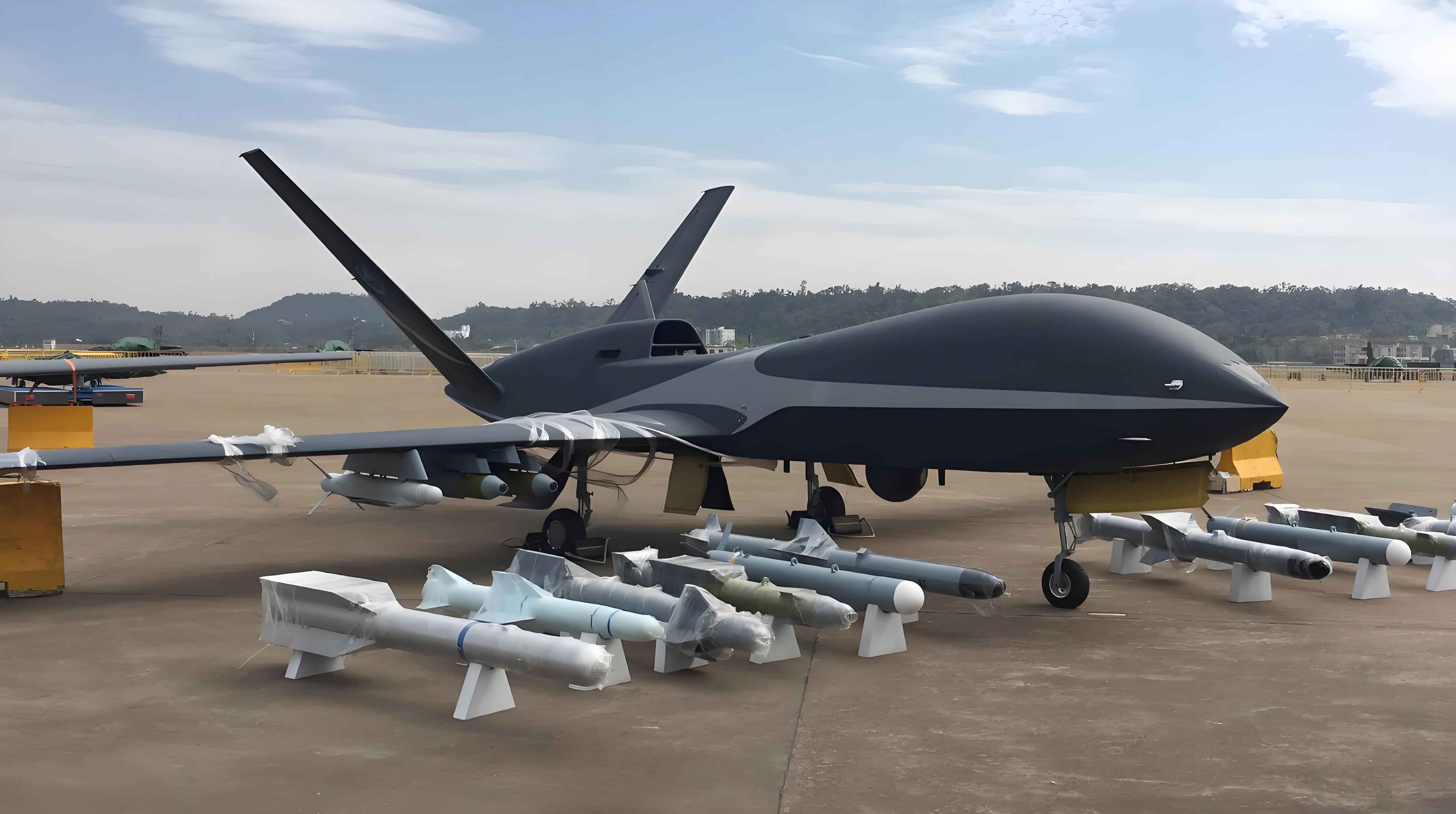
The proliferation of military drones across global defense forces highlights their significance in both tactical and strategic contexts. Unlike manned aircraft, these systems operate without direct human intervention during flight, enabling missions in high-risk environments while minimizing personnel casualties. From high-altitude long-endurance (HALE) platforms to miniature tactical units, the diversity of military drones is staggering. Their design principles often prioritize stealth, autonomy, and modularity, allowing for rapid adaptation to emerging threats. In this article, I will delve into the core characteristics that make military drones indispensable, their operational roles in contemporary battlespaces, the technological innovations propelling their advancement, and holistic strategies to harness their full potential. The term “military drone” will be frequently reiterated to emphasize its centrality in discussions of modern aerial warfare.
Core Characteristics of Military Drones
Military drones exhibit a remarkable range of physical and operational attributes, tailored to specific mission profiles. Their versatility stems from advanced engineering that transcends human physiological limits, enabling extreme performance parameters. Below, I outline the key features that define these systems.
| Characteristic | Description | Examples |
|---|---|---|
| Size Variability | Military drones can range from massive strategic platforms to micro-scale devices. This scalability allows for deployment in diverse environments, from open battlefields to urban settings. | Large: Global Hawk (wingspan ~40m); Small: PD-100 Black Hornet (length ~10cm). |
| Speed and Maneuverability | Capable of both hypersonic speeds and low-speed loitering. Unconstrained by g-force limits, they can execute aggressive maneuvers like sharp turns and rapid ascents/descents. | High-speed: X-51 Waverider; Low-speed: MQ-9 Reaper for surveillance. |
| Endurance | Flight durations vary from minutes to weeks. HALE military drones can remain airborne for over 30 days, providing persistent intelligence coverage. | Short-endurance: Switchblade loitering munition; Long-endurance: Zephyr solar-powered drone. |
| Flight and Launch/Recovery Modes | Includes fixed-wing, rotary-wing, and hybrid designs. Launch methods encompass runway takeoffs, catapults, vertical lifts, and hand throws, with recoveries via landing gears, parachutes, or nets. | Fixed-wing: RQ-4 Global Hawk; VTOL: V-BAT; Hand-launched: SkyRanger. |
The aerodynamic efficiency of a military drone can be modeled using the lift-to-drag ratio formula: $$L/D = \frac{C_L}{C_D}$$ where \(C_L\) is the lift coefficient and \(C_D\) is the drag coefficient. Optimizing this ratio is crucial for extending range and endurance, particularly for reconnaissance military drones. Additionally, the endurance \(E\) of a battery-powered military drone can be approximated as: $$E = \frac{C_b \cdot V_b}{P_{avg}}$$ where \(C_b\) is battery capacity, \(V_b\) is voltage, and \(P_{avg}\) is average power consumption. For fuel-powered systems, the Breguet range equation applies: $$R = \frac{V}{SFC} \cdot \frac{L}{D} \cdot \ln\left(\frac{W_{initial}}{W_{final}}\right)$$ with \(V\) for velocity, \(SFC\) for specific fuel consumption, and \(W\) for weights. These equations underscore the engineering trade-offs inherent in military drone design.
Military Applications of Drones
The operational utility of military drones spans the full spectrum of warfare, from intelligence gathering to direct kinetic engagement. Their ability to operate in contested airspace with reduced risk makes them ideal for roles that are too dangerous or tedious for manned platforms. I categorize their primary applications below, emphasizing how military drones enhance situational awareness and combat effectiveness.
| Application Domain | Key Functions | Representative Military Drone Types |
|---|---|---|
| Intelligence, Surveillance, and Reconnaissance (ISR) | Real-time data collection via electro-optical, infrared, and radar sensors. Enables high-resolution imagery, signals intelligence (SIGINT), and moving target indication (MTI). | HALE: RQ-4 Global Hawk; Tactical: ScanEagle; Miniature: Wasp AE. |
| Precision Strike and Combat | Armed drones capable of launching missiles, bombs, or directed-energy weapons. Facilitates “find, fix, track, target, engage, assess” (F2T2EA) cycles for time-sensitive targets. | Attack: MQ-9 Reaper; Loitering Munition: Harop; Stealth: X-47B. |
| Electronic Warfare (EW) and Information Operations | Jamming enemy communications, spoofing radar systems, and deploying decoys. Protects friendly forces by degrading adversarial command and control (C2). | EW: EC-130H Compass Call adapted drones; Decoy: ADM-160 MALD. |
| Communications Relay and Network Extension | Acts as airborne nodes for robust, low-latency data links. Extends network coverage in remote areas and ensures redundancy in case of ground infrastructure loss. | Relay: Proteus-based systems; Swarm: Perdix micro-drones. |
The effectiveness of a military drone in ISR missions can be quantified by the area coverage rate \(A_c\): $$A_c = v \cdot s \cdot \eta$$ where \(v\) is velocity, \(s\) is sensor swath width, and \(\eta\) is efficiency factor. For strike missions, the probability of kill \(P_k\) against a target depends on factors like weapon accuracy and drone survivability, often modeled as: $$P_k = 1 – (1 – P_{hit})^n \cdot e^{-\lambda t}$$ with \(P_{hit}\) as hit probability per round, \(n\) as number of engagements, \(\lambda\) as attrition rate, and \(t\) as time. These models aid in optimizing military drone deployments for maximum impact.
In electronic warfare, military drones employ jamming techniques that can be described by the jammer-to-signal ratio \(J/S\): $$\frac{J}{S} = \frac{P_j G_j R_s^2 B_s}{P_s G_s R_j^2 B_j}$$ where \(P\) denotes power, \(G\) antenna gain, \(R\) range, and \(B\) bandwidth, with subscripts \(j\) for jammer and \(s\) for signal. This equation highlights how military drones can disrupt enemy sensors effectively when positioned optimally. Furthermore, networked military drones form distributed systems where data fusion from multiple platforms enhances target localization accuracy, reducible to an error minimization problem: $$\min \sum_{i=1}^{N} (x – x_i)^2 + (y – y_i)^2$$ for coordinates \((x,y)\) estimated from \(N\) drones.
Enabling Technologies for Advanced Military Drones
The rapid advancement of military drones is fueled by breakthroughs across multiple technological domains. From propulsion to artificial intelligence, these innovations enable next-generation capabilities that push the boundaries of autonomous warfare. Below, I detail the critical technologies shaping the future of military drones.
Propulsion and Power Systems
Propulsion technology dictates the performance envelope of a military drone. Traditional internal combustion engines are being supplemented or replaced by advanced systems offering greater efficiency and stealth. For instance, hybrid-electric systems combine fuel engines with batteries for silent loitering, while solar cells enable perpetual flight for stratospheric military drones. The thrust \(T\) required for level flight can be expressed as: $$T = D = \frac{1}{2} \rho v^2 S C_D$$ where \(\rho\) is air density, \(v\) velocity, \(S\) wing area, and \(C_D\) drag coefficient. Emerging technologies like pulse detonation engines promise higher specific impulse \(I_{sp}\): $$I_{sp} = \frac{T}{\dot{m} g_0}$$ with \(\dot{m}\) as mass flow rate and \(g_0\) gravitational acceleration. The table below contrasts propulsion types for military drones.
| Propulsion Type | Advantages | Challenges | Typical Use in Military Drones |
|---|---|---|---|
| Piston Engine | Cost-effective, reliable for low-altitude operations. | Limited power-to-weight ratio, noisy. | Tactical reconnaissance drones like RQ-7 Shadow. |
| Gas Turbine | High speed and altitude capability, scalable. | High fuel consumption, infrared signature. | MQ-9 Reaper and larger attack drones. |
| Electric Motor | Silent, low thermal signature, instant torque. | Battery energy density limits endurance. | Small surveillance drones and urban operations. |
| Solar/Electric Hybrid | Extreme endurance (days to months), eco-friendly. | Dependent on weather, large surface area needed. | HALE stratospheric drones like Zephyr. |
Stealth and Low-Observability Technologies
Stealth is paramount for military drones penetrating defended airspace. It involves reducing detectability across radar, infrared, visual, and acoustic spectra. Radar cross-section (RCS) reduction employs shaping, radar-absorbent materials (RAM), and passive cancellation. The RCS \(\sigma\) for a simple shape can be approximated as: $$\sigma = \frac{4\pi A^2}{\lambda^2}$$ for a plate of area \(A\) at wavelength \(\lambda\). For complex military drone shapes, computational electromagnetics simulates scattering. Infrared stealth uses cool exhausts and heat-dissipating coatings, minimizing the radiative heat signature. Advances in metamaterials enable dynamic RCS control, allowing military drones to adapt stealth profiles mid-mission. Additionally, acoustic stealth involves quiet propellers and vibration damping, critical for low-altitude military drones avoiding aural detection.
Autonomy and Artificial Intelligence
Autonomy transforms military drones from remotely piloted vehicles to intelligent agents capable of complex decision-making. AI algorithms enable autonomous navigation, target recognition, and swarm coordination. The autonomy level can be modeled as a Markov decision process (MDP) with states \(s\), actions \(a\), and rewards \(r\): $$\max \mathbb{E} \left[ \sum_{t=0}^{\infty} \gamma^t r_t \mid s_0 \right]$$ where \(\gamma\) is a discount factor. Machine learning, particularly deep neural networks, allows military drones to classify objects from sensor data with high accuracy. For example, convolutional neural networks (CNNs) process visual inputs: $$y = f(W * x + b)$$ with weights \(W\), input \(x\), bias \(b\), and activation \(f\). Autonomous formation flying of military drones relies on consensus algorithms: $$\dot{x}_i = \sum_{j \in N_i} (x_j – x_i)$$ ensuring cohesion without central control. These technologies underpin the shift towards fully autonomous combat missions, reducing operator workload and latency.
Networking and Swarm Technologies
Network-centric operations demand that military drones seamlessly integrate with other assets. Swarm technology enables collective behaviors where simple drones achieve complex objectives through local interactions. The communication topology can be represented as a graph \(G=(V,E)\), with vertices \(V\) as drones and edges \(E\) as links. Data throughput \(C\) for a military drone network follows Shannon’s theorem: $$C = B \log_2 \left(1 + \frac{S}{N}\right)$$ for bandwidth \(B\) and signal-to-noise ratio \(S/N\). Anti-jamming techniques like frequency hopping spread spectrum (FHSS) enhance robustness. Swarm algorithms, such as particle swarm optimization (PSO), coordinate military drones for area searches: $$v_i^{t+1} = w v_i^t + c_1 r_1 (p_i – x_i^t) + c_2 r_2 (g – x_i^t)$$ where \(v\) is velocity, \(x\) position, \(p\) personal best, \(g\) global best, and \(w, c, r\) are parameters. This enables efficient coverage and resilience against attrition.
Modularity and Standardization
Modular design allows military drones to be rapidly reconfigured for different missions. Standardized interfaces facilitate plug-and-play integration of sensors, weapons, and communication payloads. This approach reduces lifecycle costs and accelerates deployment. The effectiveness of modularity can be assessed via a cost function: $$C_{total} = \sum_{i=1}^{M} (C_{base} + C_{module_i} \cdot u_i)$$ where \(C_{base}\) is base platform cost, \(C_{module}\) module cost, and \(u_i\) binary usage indicator. Standard protocols like STANAG 4586 for unmanned control ensure interoperability across NATO forces, crucial for coalition operations involving diverse military drones.
Strategic Considerations for Military Drone Development
As military drones become ubiquitous, their development must be guided by holistic strategies that balance innovation with practical constraints. Based on my analysis, I propose several key considerations to optimize the deployment and evolution of these systems.
First, integrating military drones with existing force structures is essential. They should complement rather than replace manned platforms, forming hybrid teams where drones act as loyal wingmen or forward sensors. The synergistic effect can be quantified via a combined operational effectiveness metric: $$E_{combined} = \alpha E_{drone} + \beta E_{manned} + \gamma E_{synergy}$$ with weights \(\alpha, \beta, \gamma\). Joint exercises and doctrine updates are needed to refine tactics for military drones.
Second, addressing cybersecurity and electronic warfare vulnerabilities is critical. Military drones rely on data links and software, making them susceptible to hacking and spoofing. Hardening measures include encryption, blockchain for secure communications, and AI-driven anomaly detection. The risk \(R\) can be modeled as: $$R = P_{attack} \cdot (1 – P_{defense}) \cdot Impact$$ where \(P_{attack}\) is attack probability, \(P_{defense}\) defense efficacy, and \(Impact\) operational loss. Regular penetration testing of military drone systems is imperative.
Third, fostering international collaboration and standardization accelerates technological advancement while avoiding duplication. Open architectures and shared research on AI ethics for autonomous military drones can establish norms. For instance, frameworks for swarms could be governed by treaties akin to those for nuclear arms.
Fourth, prioritizing sustainability and cost-effectiveness ensures long-term viability. The total ownership cost \(TOC\) of a military drone fleet includes development, acquisition, operation, and disposal: $$TOC = \sum_{t=0}^{T} \frac{C_t}{(1+r)^t}$$ with discount rate \(r\) over time \(T\). Modular designs and predictive maintenance using IoT sensors can reduce \(TOC\). Additionally, eco-friendly propulsion for military drones aligns with green defense initiatives.
Fifth, enhancing human-machine teaming through intuitive interfaces and training simulators. Operators of military drones need skills in data analysis and ethical decision-making. Simulation environments allow rehearsal of complex scenarios involving multiple military drones, improving readiness.
Future Trajectories and Concluding Remarks
The future of military drones is poised at the intersection of autonomy, connectivity, and miniaturization. Emerging trends include brain-computer interfaces for direct neural control, quantum navigation for GPS-denied environments, and bio-inspired designs mimicking birds or insects. Hypersonic military drones traveling at Mach 5+ will compress decision cycles, while nano-drones could perform covert surveillance inside buildings. The convergence with space assets will enable global reach, with military drones acting as atmospheric layers in a multi-domain sensor grid.
In conclusion, military drones represent a transformative force in modern defense. Their versatility across ISR, strike, EW, and communication roles makes them indispensable for 21st-century warfare. Technological strides in propulsion, stealth, AI, networking, and modularity continue to expand their capabilities. However, strategic development must balance innovation with integration, security, collaboration, cost, and human factors. As I reflect on the trajectory, it is clear that military drones will increasingly dominate aerial operations, driving new doctrines and ethical debates. Proactive planning and investment in research are crucial to harnessing their potential while mitigating risks. The era of autonomous warfare is unfolding, and military drones are at its forefront, reshaping conflicts in ways we are only beginning to comprehend.
Throughout this discussion, the term “military drone” has been emphasized to underscore its pervasive influence. From tactical units to strategic assets, these systems exemplify the fusion of technology and tactics, promising a future where unmanned platforms play central roles in ensuring security and stability. As development accelerates, continuous evaluation and adaptation will be key to leveraging military drones effectively in an ever-evolving battlespace.