
In my extensive research and analysis of modern naval warfare, I have observed a paradigm shift in aerial threats facing surface ships. Traditionally, these vessels have been designed to counter subsonic and supersonic anti-ship missiles. However, the rapid proliferation and technological advancement of military drones have introduced a new, pervasive danger. These unmanned aerial systems, often low-cost and capable of carrying precision-guided munitions, are becoming a critical threat. The existing ship-based air defense systems, such as rapid-fire guns and surface-to-air missiles, were optimized for larger, faster targets. When deployed against military drones, especially small to medium categories, these systems exhibit poor cost-effectiveness and suboptimal engagement performance. The challenge is exacerbated by swarm attacks, where numerous military drones coordinate to overwhelm defenses. Therefore, developing low-cost, high-efficiency countermeasures against military drones is not just an operational improvement but a strategic imperative for naval forces worldwide.
My investigation into current military drone capabilities reveals a diverse threat landscape. Military drones are categorized based on size, weight, altitude, and speed, which directly influence their operational use and threat level. To systematically understand this, I have compiled a classification based on widely adopted standards, emphasizing how each category poses unique challenges to surface ships.
| Category | Size Designation | Take-off Mass (kg) | Operational Altitude (m) | Typical Speed (m/s) | Primary Threat to Surface Ships |
|---|---|---|---|---|---|
| I | Micro | 0–9 | < 360 | < 50 | Close-attack with grenades; low altitude makes radar detection difficult. |
| II | Small | 9–25 | < 1,100 | < 130 | Precision strikes on sensitive equipment; potential for saturation attacks. |
| III | Medium | < 600 | < 5,500 | < 130 | Carrying guided bombs; longer endurance and range for stand-off attacks. |
| IV | Large | > 600 | < 5,500 | Unrestricted | Capable of launching anti-ship missiles; high-value but fewer in number. |
| V | Extra-Large | > 600 | > 5,500 | Unrestricted | High-altitude, long-endurance surveillance and strike; significant payload capacity. |
From my perspective, the most pressing threats are Category II and III military drones. Their relatively low cost enables mass production and deployment in swarms, challenging traditional defense economics. The engagement cost ratio, defined as the cost of intercepting a military drone versus its own cost, becomes unsustainable when using expensive missiles. A simple formula illustrates this:
$$ \text{Cost Ratio} = \frac{C_{\text{interceptor}}}{C_{\text{military drone}}} $$
For instance, if a missile costs \$500,000 and a military drone costs \$50,000, the ratio is 10. In a swarm of 20 military drones, the defensive expenditure reaches \$10 million, far exceeding the attacker’s investment. This asymmetry drives the need for innovative, low-cost solutions.
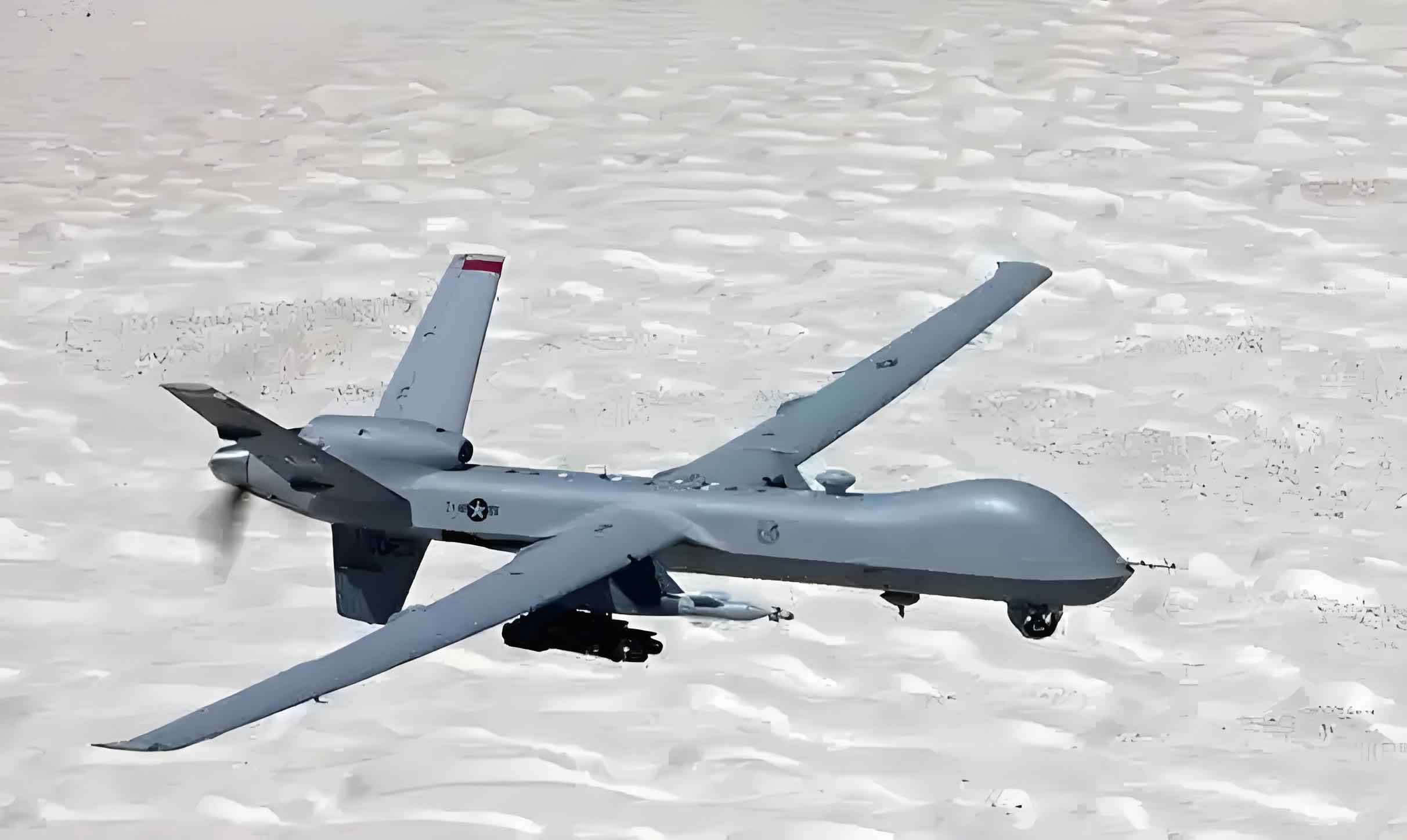
In my assessment of current counter-drone technologies, I have analyzed various systems deployed or under development. Each technology has distinct advantages and limitations in countering military drones. Below is a comparative analysis based on key performance parameters.
| Technology Type | Specific System Examples | Effective Range (km) | Key Strengths | Key Limitations | Approx. Cost per Engagement |
|---|---|---|---|---|---|
| Rapid-Fire Guns | MK-15 “Phalanx”, “Goalkeeper” | 1.5–2.0 | High rate of fire; proven point defense. | High ammunition consumption; short range; low hit probability against small military drones. | \$5,000–\$20,000 (ammunition) |
| Electronic Warfare (Jamming) | “Repellent”, “Titan” | 1.5–30 | Low cost; area denial; non-kinetic. | Susceptible to hardened military drones; may affect friendly systems. | \$100–\$1,000 (energy) |
| Laser Weapons (Directed Energy) | “Iron Beam”, “HEL TV” | 1–5 | Precision engagement; low cost per shot; rapid re-engagement. | Atmospheric attenuation (rain/fog); limited power and range. | \$1–\$10 (energy) |
| Microwave Weapons (HPM) | “Leonidas”, “THOR” | 0.5–1 | Effective against swarms; broad area effect. | Very short range; collateral risk to electronics. | \$500–\$5,000 (per burst) |
| Surface-to-Air Missiles (SAMs) | “APKWS”, “Nail” missiles | 5–10 | High accuracy; all-weather capability (radar-guided). | High unit cost; overkill for small military drones. | \$50,000–\$500,000 |
| Low-Cost Interceptor Missiles | Modified guided rockets | 3–8 | Balanced cost and performance; modular. | Weather-dependent (EO/IR guidance). | \$10,000–\$50,000 |
My analysis indicates that no single technology is a silver bullet. The optimal defense against military drones lies in a layered, integrated approach. For example, the probability of successfully neutralizing a military drone swarm depends on the synergistic use of multiple systems. I propose a simplified engagement model:
$$ P_{\text{kill}} = 1 – \prod_{i=1}^{n} (1 – p_i) $$
Where $P_{\text{kill}}$ is the overall probability of killing the threat, and $p_i$ is the kill probability of the i-th defensive layer (e.g., jamming, laser, missile). If a jamming system has $p_1 = 0.3$ (30% chance to disrupt), a laser has $p_2 = 0.6$, and a missile has $p_3 = 0.8$, the combined $P_{\text{kill}}$ becomes:
$$ P_{\text{kill}} = 1 – (1-0.3)(1-0.6)(1-0.8) = 1 – (0.7 \times 0.4 \times 0.2) = 1 – 0.056 = 0.944 $$
This demonstrates the critical value of multi-layered defense when countering resilient military drone threats.
Delving deeper into the technical challenges, I identify three core areas that require focused research and development for effective ship-based anti-military drone systems.
1. Holistic System Design for Surface Ships: In my view, the design philosophy must prioritize modularity and open architecture. Ships vary greatly in size, weight capacity, and existing combat systems. A successful anti-military drone module should be “plug-and-play,” integrating with the ship’s sensors and command structure without major modifications. This involves creating hardware interfaces that can tap into the ship’s radar, electro-optical/infrared (EO/IR) sensors, and combat management system. Software-wise, the module must function both as a standalone system and as a subordinate element, providing target data and receiving firing commands. The design goal is to minimize the ship’s load and spatial footprint while maximizing capability. A key metric is the Integration Factor $I_f$, which I define as:
$$ I_f = \frac{\sum \text{Utilized Ship Resources}}{\sum \text{Newly Installed Resources}} $$
A higher $I_f$ indicates better utilization of existing assets, leading to lower cost and faster deployment.
2. Cooperative Target Detection Technology: The low radar cross-section (RCS) and low-altitude flight profile of military drones make them difficult to detect against sea clutter. Relying on a single sensor type is insufficient. My research advocates for cooperative detection using a fusion of radar, EO/IR, and electronic support measures (ESM). Radar provides long-range detection but suffers from clutter and false alarms. EO/IR offers high-resolution tracking but is weather-limited. ESM can detect the communication or navigation signals of a military drone, providing early warning. The fusion process can be modeled using Bayesian inference. Let $D_R$, $D_E$, $D_S$ represent detection events by radar, EO/IR, and ESM respectively. The probability that a target is a genuine military drone ($T$) given sensor data is:
$$ P(T | D_R, D_E, D_S) = \frac{P(D_R, D_E, D_S | T) P(T)}{P(D_R, D_E, D_S)} $$
By fusing these heterogeneous data sources, the system’s detection probability $P_D$ and false alarm rate $P_{FA}$ are significantly improved, which is crucial for maintaining a high track quality for engaging fast-moving military drones.
3. Heterogeneous Weapon Cooperative Interception Technology: Once a military drone is detected, assigning the right weapon to engage it is a complex optimization problem, known as the Weapon-Target Assignment (WTA) problem. With a mix of lasers, jammers, guns, and missiles, the goal is to maximize the expected damage to the threat swarm while minimizing cost and resource depletion. This can be formulated as a nonlinear integer programming problem. Let $x_{ij}$ be a binary variable (1 if weapon $i$ is assigned to target $j$, 0 otherwise). Let $p_{ij}$ be the kill probability of weapon $i$ against target $j$ (a military drone of a specific category), and $c_i$ be the cost of using weapon $i$. For $m$ weapons and $n$ targets, the objective is often:
$$ \text{Maximize } Z = \sum_{j=1}^{n} \left(1 – \prod_{i=1}^{m} (1 – p_{ij})^{x_{ij}}\right) – \lambda \sum_{i=1}^{m} \sum_{j=1}^{n} c_i x_{ij} $$
Subject to: $\sum_{j=1}^{n} x_{ij} \leq 1$ for each $i$ (each weapon engages at most one target per salvo), and other constraints. The parameter $\lambda$ balances kill probability and cost. Solving this in real-time requires efficient algorithms like genetic algorithms or particle swarm optimization, which I have studied for rapid convergence in dynamic naval environments.
Based on my analysis of current gaps and technological trajectories, I predict several key trends will dominate the future development of anti-military drone systems for surface ships.
Trend 1: Synergistic and Composite Target Detection. Future systems will increasingly rely on multi-spectral, cooperative sensing networks. A single sensor suite will integrate active and passive radar, multiple bands of EO/IR, and signals intelligence (SIGINT) specifically tuned to military drone frequencies. Data fusion algorithms will advance from simple correlation to AI-driven predictive tracking, capable of identifying military drone swarm patterns and intentions. This composite detection grid will be essential for maintaining a continuous track from over-the-horizon to close-in, ensuring no military drone penetrates undetected.
Trend 2: Diversification of Interception Means (Hard-Kill and Soft-Kill). The future shipboard arsenal will seamlessly blend kinetic and non-kinetic effects. Hard-kill systems will evolve towards lower-cost interceptors, such as guided rockets with semi-active laser homing or cheap imaging infrared seekers. Simultaneously, soft-kill systems will become more sophisticated, moving beyond brute-force jamming to coherent deception. For example, GPS spoofing that gently takes control of a military drone’s navigation or data link injection that commands it to land or self-destruct. The integration logic will follow an adaptive rule set: use the cheapest effective method first. A decision matrix might be:
| Threat Priority | Military Drone Category | Engagement Sequence |
|---|---|---|
| Low | I (Micro) | Electronic Attack → Laser if within range |
| High | II/III (Small/Medium Swarm) | Area Microwave Burst → Laser for point defense → Missile for leakers |
| Critical | IV/V (Large, missile-carrying) | Standard SAMs (high probability of kill) |
Trend 3: Integration of Fire Control into a Unified Combat System. The fire control function will not reside in isolated subsystems. Instead, it will be a core service within the ship’s total combat management system. This integrated fire control (IFC) will have a global view of all threats (air, surface, underwater) and all ship weapons. It will perform real-time battle damage assessment and dynamic weapon re-assignment. For anti-military drone operations, the IFC will manage the complex timing and deconfliction of engagements, especially when dealing with a mixed raid of military drones and conventional missiles. The system’s efficiency can be measured by its Decision Cycle Time $T_{cycle}$, which must be shorter than the threat’s time-to-impact. For a military drone approaching at 100 m/s from 10 km, $T_{impact} = 100$ seconds. A modern IFC should achieve $T_{cycle} < 5$ seconds, allowing for multiple engagement loops.
Trend 4: Modularization and Containerization of Weapon Systems. Inspired by systems like the C-Dome, the future lies in standardized, containerized modules. An anti-military drone module would be a self-contained unit housing its own sensors (a compact radar/EO package), effectors (a mix of laser emitter, microwave antenna, and vertical launch cells for small missiles), and a battle management console. This module can be bolted onto the deck of virtually any ship—from a corvette to an auxiliary vessel—with minimal integration work. The technical challenge is standardizing power, cooling, and data interfaces. The benefit is immense strategic flexibility, allowing navies to rapidly upgrade fleet-wide defensive capabilities against evolving military drone threats.
Trend 5: Minimization of System and Engagement Cost. This is the overarching trend driving all others. Cost reduction will be pursued through several parallel avenues:
- Production Automation: Leveraging fully automated production lines for interceptor missiles and subsystem components to slash labor costs and improve quality consistency.
- Commercial Off-The-Shelf (COTS) Adoption: Using ruggedized industrial-grade components in guidance systems and processors, validated through rigorous screening, instead of expensive military-specified parts.
- Design for Affordability: Developing families of interceptors. A high-end variant with an active radar seeker for all-weather performance against high-value military drones, and a low-end variant with a simple laser beam rider or passive IR homing for clear-weather engagement of low-cost military drones. The unit cost $C_u$ as a function of production volume $N$ and design complexity $k$ can be modeled by a learning curve:
$$ C_u(N) = C_1 \times N^{-b} \times k $$
Where $C_1$ is the cost of the first unit, and $b$ is the learning exponent (typically 0.1-0.3). Reducing $k$ through simplified design has a multiplicative effect on cost savings.
- Advanced Manufacturing: Incorporating additive manufacturing (3D printing) for complex, low-volume parts like seeker housings or waveguide components. This reduces material waste, tooling costs, and lead time, enabling on-demand logistics support far from home ports.
In conclusion, my comprehensive study underscores that the threat posed by military drones is real, evolving, and asymmetric. Surface ships can no longer rely solely on legacy防空 systems designed for a different era. The path forward involves embracing a holistic, technology-driven approach centered on synergy—synergy in sensing, synergy in engagement means, and synergy in system integration. The future anti-military drone capability will be defined not by a single wonder-weapon, but by a resilient, adaptive, and cost-conscious network of systems working in concert. By focusing on modular design, cooperative detection algorithms, intelligent fire control integration, and relentless cost reduction, naval forces can transform the defense against military drones from a costly burden into a manageable, effective component of maritime dominance. The continuous cycle of innovation, where every advancement in military drone technology is met with a proportionate and affordable countermeasure, will determine the balance of power in future naval engagements.
To further illustrate the technical considerations, I often model the overall system effectiveness $E$ as a function of detection $D$, decision $C$, and engagement $G$ parameters, weighted by cost $W$:
$$ E = \frac{\alpha \cdot D + \beta \cdot C + \gamma \cdot G}{W} $$
Where $\alpha, \beta, \gamma$ are weighting factors for each phase. For an optimal anti-military drone system, we seek to maximize $E$ by simultaneously improving the numerator (through the trends discussed) and minimizing the denominator (through cost-focused strategies). This equation encapsulates the core challenge and mission of my ongoing research into defeating the military drone threat at sea.