
Reflecting on the past year, I observe that the global landscape for military drone technology has experienced a period of intense acceleration and diversification. The convergence of artificial intelligence, advanced materials science, and novel propulsion systems has fundamentally reshaped the capabilities and strategic value of unmanned aerial systems. From my analysis, 2024 was not merely about incremental improvements but marked by significant strides in operational concepts, particularly in manned-unmanned teaming (MUM-T) and the deployment of attritable, swarm-capable platforms. The proliferation and demonstrated utility of military drones in various conflict zones have solidified their role as a cornerstone of modern warfare, compelling nations to invest heavily in both offensive and defensive drone capabilities. This comprehensive review synthesizes the key developments across system development, field deployment, technological innovation, and emerging trends that characterized the military drone sector in 2024.
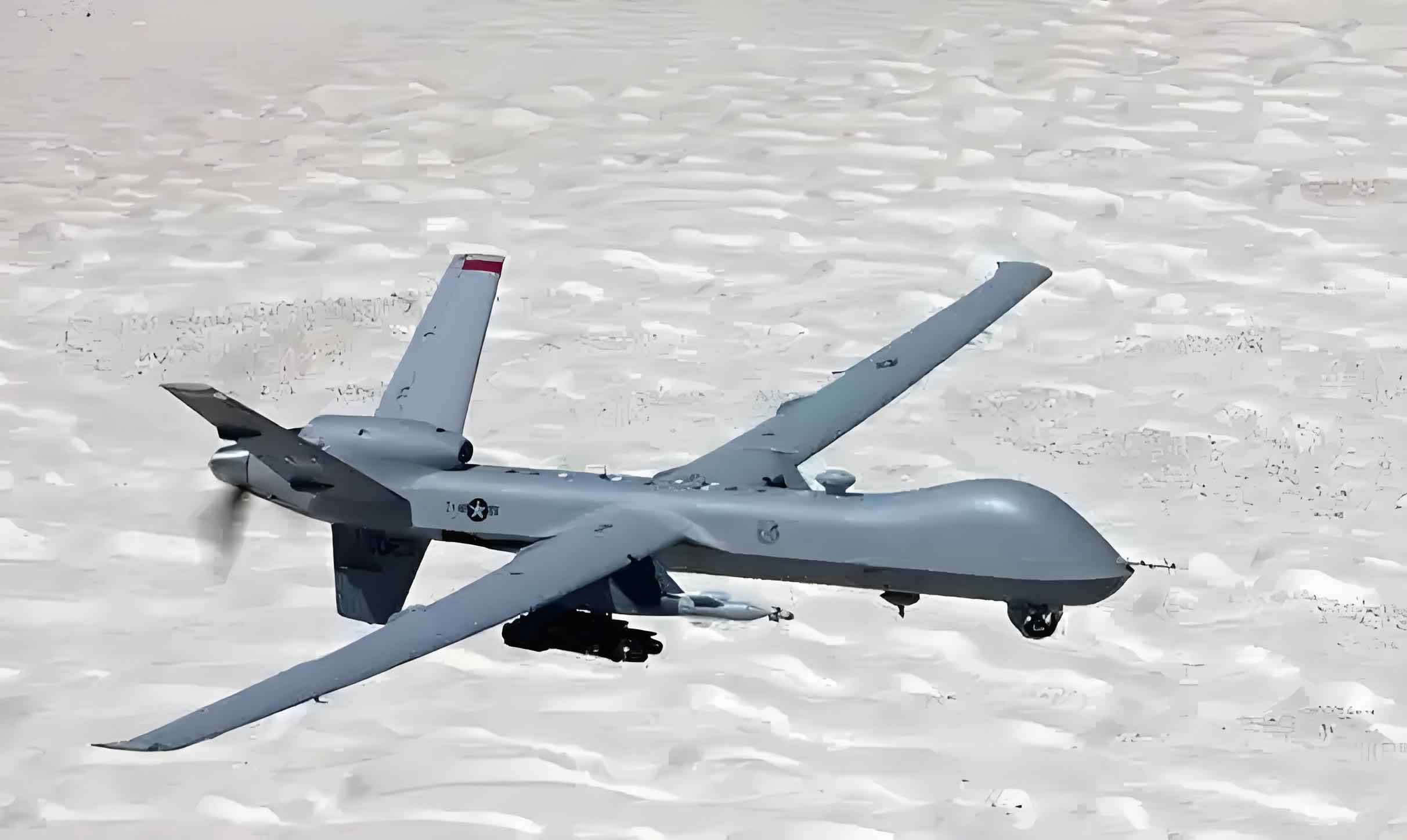
The strategic imperative driving military drone development is clear: to achieve persistent situational awareness, deliver precision effects, and augment human warfighting capabilities while mitigating risk to personnel. In 2024, this translated into a clear bifurcation in development pathways. On one end, high-value, sophisticated military drones designed for deep penetration and collaborative combat with fifth-generation fighters advanced significantly. On the other, the lessons from recent conflicts fueled an explosion in lower-cost, tactical-level military drones and loitering munitions, emphasizing mass, modularity, and rapid adaptability. This duality underscores a future battlespace where military drones of all sizes and complexities will operate in integrated layers.
1. Next-Generation Military Drone Systems Under Development
The development pipeline for new military drone platforms was highly active. Projects ranged from strategic collaborative combat aircraft to tactical vertical take-off and landing (VTOL) systems and exotic high-altitude pseudo-satellites (HAPS).
1.1 Collaborative Combat Aircraft (CCA) and Uncrewed Loyal Wingmen
The most prominent trend was the rapid maturation of the Collaborative Combat Aircraft concept, particularly in the United States. These military drones are designed to operate alongside manned fighters like the F-35, executing a variety of missions from sensing and electronic warfare to kinetic strike. 2024 saw critical competitive down-selections and first flights.
| Program/Platform | Lead Developer/Country | Key Milestone in 2024 | Notable Characteristics |
|---|---|---|---|
| USAF CCA Program | General Atomics & Anduril (USA) | Down-select to two vendors for detailed design | Aims for affordable, attritable drones produced at scale. |
| XQ-67A Off-Board Sensing Station (OBSS) | General Atomics (USA) | Successful maiden flight (Feb 2024) | First of a “gen 2” autonomous collaborative platform (ACP) series; features a V-tail and overhead intake. |
| “Fury” CCA | Anduril Industries (USA) | Selected for next CCA phase | Emphasizes modularity and AI-driven autonomy; conventional take-off and landing. |
| XQ-58A Valkyrie | Kratos (USA) | Multiple test flights with F-35s, Link-16 integration tests | Validated electronic attack capabilities and secure networked operations as a force multiplier. |
| Airbus Wingman | Airbus (Europe) | Full-scale model reveal at ILA Berlin | Stealthy design intended for reconnaissance, electronic warfare, and strike missions alongside Eurofighters. |
| Uncrewed Collaborative Platform | BAE Systems (UK) | Updated “flying wing” design unveiled | Enhanced low-observable features and all-electric actuation systems. |
The underlying formula driving CCA cost-effectiveness can be modeled as a function of capability (C), autonomy (A), and unit cost (U):
$$
\text{Operational Value} = \frac{C \times A}{U}
$$
Where a higher Operational Value is sought by maximizing capability and autonomy while minimizing unit cost—a central challenge for all CCA programs.
1.2 Long-Endurance ISR and Strike Military Drones
While progress in high-altitude long-endurance (HALE) military drones was less revolutionary, notable developments included new entrants and capability enhancements for existing platforms, focusing on greater persistence and survivability.
| Platform | Developer/Country | 2024 Development | Performance Highlights |
|---|---|---|---|
| ULTRA (Low-Cost UAV) | DZYNE Technologies / USAF (USA) | Revealed as deployed in CENTCOM; began operational flights. | ~80 hour endurance, glider-like design for extreme efficiency. |
| Hermes 650 Spark | Elbit Systems (Israel) | Official launch of upgraded variant | 24h endurance, 260kg payload, automatic take-off and landing. |
| Bayraktar TB3 | Baykar (Turkey) | Successful ski-jump tests; first take-off from LHD Anadolu. | Tailored for short-runway and amphibious assault ship operations. |
| FWD-200B | FWD (India) | Successful maiden flight | Indigenous Indian MALE UAV with strike capability. |
1.3 Tactical and Logistics Military Drones
The tactical military drone segment witnessed immense innovation, particularly in VTOL, cargo delivery, and attritable systems, often driven by the U.S. Department of Defense’s “Replicator” initiative and combat lessons from Ukraine.
| Platform | Type | Developer/Country | Notable Feature |
|---|---|---|---|
| X10D | AI-enhanced Small UAS | Skydio (USA) | Advanced obstacle avoidance and real-time 2D/3D mapping. |
| Cento | Hybrid-electric VTOL Cargo | MightyFly (USA) | Designed for ~45kg payload over 960km for agile logistics. |
| T-650 | Heavy-Lift Electric UAV | BAE Systems (UK) | 300kg payload capacity for casualty evacuation and resupply. |
| Transwing P4/P5 | VTOL/ Fixed-wing Hybrid | Overwatch / Pterodynamics (UK) | Morphing wing transitions between VTOL and efficient cruise. |
| Enterprise Test Vehicle (ETV) | Modular Testbed | Anduril et al. (USA) | Selected for Replicator 1.2; designed for rapid, low-cost testing of payloads. |
| HX-2 | AI-enabled Kamikaze Drone | Helsing (Germany) | Software-defined, swarm-capable loitering munition with 100km range. |
1.4 Special-Mission and Technology Demonstrator Military Drones
This category included platforms pushing the boundaries of propulsion, endurance, and control methodologies, serving as testbeds for future-generation military drone technologies.
- X-65 CRANE (USA): DARPA’s X-plane focused on Active Flow Control (AFC), eliminating traditional moving flight control surfaces. Full-scale aircraft manufacturing began.
- Solar-Powered HAPS: Significant flights were conducted. Skydweller’s large solar-powered military drone completed autonomous flight tests, targeting multi-month endurance. BAE’s PHASA-35 demonstrated rapid launch-and-recover cycles.
- High-Speed Testbeds: Several programs progressed, including Stratolaunch’s Talon-A achieving its first powered flight and Venus Aerospace’s supersonic drone prototype utilizing a Rotating Detonation Rocket Engine (RDRE).
- XRQ-73 (USA): A DARPA “X-prime” hybrid-electric propulsion demonstrator was unveiled, aiming to validate efficiency gains for intelligence, surveillance, and reconnaissance (ISR) military drones.
The energy equation for solar-powered high-altitude military drones highlights their design challenge:
$$
E_{\text{available}} = \eta_{\text{solar}} \cdot A_{\text{wing}} \cdot I_{\text{solar}} \cdot t_{\text{day}} – P_{\text{avionics}} \cdot t_{\text{total}} – \int (D \cdot V) , dt
$$
where $E_{\text{available}}$ is net energy for operations, $\eta_{\text{solar}}$ is panel efficiency, $A_{\text{wing}}$ is surface area, $I_{\text{solar}}$ is solar irradiance, $P_{\text{avionics}}$ is hotel load, and $D \cdot V$ is aerodynamic drag power.
2. Fielded Military Drone Systems: Production, Deployment, and Evolution
Beyond prototypes, the production, deployment, and upgrade of in-service military drone systems provided critical insights into operational priorities and tactical integration.
2.1 Major Production and Delivery Programs
Key production lines continued or ramped up, indicating sustained demand for established military drone capabilities.
- MQ-25A Stingray (USA): The U.S. Navy accepted the first production aircraft, a pivotal step in fielding a carrier-based unmanned tanker to extend fighter range.
- MQ-1C Gray Eagle 25M (USA): The significantly upgraded “25M” variant, featuring improved engines, open architecture, and resilient comms, successfully completed its maiden flight.
- Anka-3 (Turkey): The stealthy, jet-powered unmanned combat aerial vehicle (UCAV) was slated for delivery to the Turkish Air Force by year’s end.
- Indian Acquisitions: The Indian Navy received its first indigenous Drishti 10 (Hermes 900 derivative) MALE military drone, while the U.S. approved the sale of 31 MQ-9B SeaGuardian/SkyGuardian drones.
2.2 Notable Operational Deployments and Initiatives
The strategic positioning of military drone assets highlighted areas of global concern and evolving operational concepts.
- U.S. “Replicator” Initiative: This high-profile push to field attritable autonomous systems at scale moved forward. Systems like the AeroVironment Switchblade 600 were delivered under “Replicator 1.1,” and new candidates (ETV, Ghost-X) were named for “Replicator 1.2.”
- MQ-4C Triton Deployments: The U.S. Navy deployed the MQ-4C to Europe (Sigonella, Italy) for the first time and forward-stationed them in the Pacific (Japan), significantly expanding its maritime ISR footprint.
- Satellite-Controlled Operations: The U.S. Air Force and Marine Corps demonstrated the ability to launch, recover, and operate MQ-9 Reaper military drones solely via satellite link, reducing forward footprint and enhancing flexibility.
- Russian Innovations in Combat: Russian forces reportedly fielded AI-enabled FPV drones (e.g., Veter) for autonomous target engagement and demonstrated fiber-optic guided drones to counter electronic warfare (EW).
2.3 Significant Test and Demonstration Campaigns
Experimentation revealed the path toward more integrated and capable military drone warfare.
- AI vs. Human Dogfight (ACE Program): DARPA’s Air Combat Evolution (ACE) program achieved a landmark: an AI pilot flying the X-62A VISTA test aircraft engaged in visual-range dogfights against a human-piloted F-16.
- Manned-Unmanned Teaming (MUM-T) Demos: Several successful demonstrations occurred. Airbus led multinational trials of helicopter-UAV teaming. Qinetiq (UK) demonstrated a manned jet taking control of a Banshee jet drone in flight. Lockheed Martin tested F-35 controls for multiple CCAs.
- Electronic Warfare from a Military Drone: General Atomics and BAE systems demonstrated remotely controlled electronic warfare capabilities on an MQ-20 Avenger military drone, commanded via Link-16.
2.4 Key System Upgrades
Legacy military drone platforms received substantial upgrades to remain relevant.
- Gray Eagle 25M: The upgrade included a new heavy fuel engine, open systems architecture, and the integration of Multi-Domain Operation (MDO)-capable datalinks like Link 16.
- RQ-4 Global Hawk Repurposing: Plans were announced to convert retired RQ-4 airframes into airborne data collection platforms for monitoring hypersonic weapon tests.
- Payload Enhancements: Various programs integrated new sensors, such as AESA radars on the Gray Eagle 25M and advanced signals intelligence (SIGINT) pods on the MQ-9B.
3. Critical Technology Areas Driving Military Drone Advancement
The capabilities observed in 2024 were underpinned by breakthroughs in several interdependent technological domains.
3.1 Intelligent Collaboration and Autonomy
AI moved from a support tool to a core, trustable component of the military drone decision loop. The focus was on developing “collaborative behaviors” rather than simple remote control. The algorithmic challenge involves optimizing for shared situational awareness and delegated task execution. A simplified model for collaborative effectiveness ($CE$) in a manned-unmanned team can be expressed as:
$$
CE = \alpha \cdot SA_{\text{shared}} + \beta \cdot T_{\text{delegation}} – \gamma \cdot C_{\text{comm}}
$$
where $SA_{\text{shared}}$ is the quality of shared situational awareness, $T_{\text{delegation}}$ is the efficiency of task delegation and autonomous execution, $C_{\text{comm}}$ is the communication latency/overhead, and $\alpha, \beta, \gamma$ are weighting coefficients. Advances in 2024 directly targeted increasing $SA_{\text{shared}}$ and $T_{\text{delegation}}$ while minimizing reliance on $C_{\text{comm}}$.
3.2 Energy and Propulsion
Propulsion technology diversified to meet vastly different military drone mission profiles:
- Hybrid-Electric Systems: Gained traction for tactical cargo and VTOL military drones, balancing the energy density of fuel with the efficiency and simplicity of electric motors for lift. The XRQ-73 is a prime example.
- Advanced Small Turbines and Rotating Detonation Engines (RDE): Developed for high-speed, attritable military drones, offering greater thrust-to-weight ratios than traditional small turbojets.
- Solar-Electric for HAPS: Continued refinement of photovoltaic cells and energy management systems to enable month-long stratospheric persistence for military drone pseudo-satellites.
The efficiency ($\eta_{\text{hybrid}}$) of a series hybrid-electric powertrain, common in VTOL military drones, can be analyzed as:
$$
\eta_{\text{hybrid}} = \eta_{\text{gen}} \cdot \eta_{\text{rect}} \cdot \eta_{\text{motor}} \cdot \eta_{\text{prop}}
$$
where each $\eta$ represents the efficiency of the generator, rectifier/power management, motor, and propeller/fan, respectively. Gains in any subsystem directly extend range and payload.
3.3 Mission Payloads and Modularity
The trend is toward smaller, smarter, and more software-defined payloads that can be rapidly integrated onto modular military drone platforms.
- All-in-One Sensor Suites: Electro-optical/infrared (EO/IR), SIGINT, and radar functions are being fused into single, compact packages for small tactical military drones.
- Air-Launched Effects (ALE): The concept of larger military drones (like MQ-20) deploying smaller, attritable drones for penetration or EW became a tested reality.
- AI-Processed Electronic Warfare: Payloads capable of autonomously detecting, classifying, and jamming or geo-locating threats were demonstrated on platforms like the XQ-58A.
The value of a modular payload architecture can be quantified by the reduction in reconfiguration time and cost. If a military drone can carry $n$ different standard payload modules, the time to switch from mission type $i$ to $j$ approaches a constant $k$, rather than scaling with system complexity:
$$
T_{\text{reconfig}} \approx k \quad \text{vs.} \quad T_{\text{legacy}} \propto f(\text{unique integration effort})
$$
3.4 Manufacturing, Connectivity, and Integration
Enabling technologies that support the broader ecosystem saw significant progress:
- Additive Manufacturing (3D Printing): Used to produce complex drone components, engine parts, and even entire low-cost airframes rapidly, supporting the “Replicator” ethos of mass production.
- Resilient Communications: Beyond satellite links, military drones tested and used fiber-optic tethers (Russia) and advanced tactical datalinks (Link-16 on XQ-58A) to ensure control and data flow in contested environments.
- Airspace Integration: Tests in the UK and elsewhere focused on safely integrating military and commercial drones into shared airspace, a prerequisite for widespread logistics and homeland defense use.
4. Synthesis of Dominant Trends for Military Drones
Analyzing the year’s developments, several macro-trends crystallize, defining the future trajectory of military drone warfare.
4.1 The Duality of Platforms: Sophisticated “Quarterbacks” and Attritable “Players”
The future force structure is clearly evolving toward a mix of exquisite and expendable military drones. High-end CCAs and HALE platforms will act as sensing and command nodes, while large numbers of lower-cost tactical military drones and loitering munitions will form an attritable layer for saturation, suppression, and distributed effects. This is a strategic response to both peer-adversary integrated air defenses and the need for mass.
4.2 Autonomy as a Force Multiplier, Not Just Automation
The shift is from pre-programmed automation to adaptive, mission-level autonomy. Military drones in 2024 demonstrated behaviors like autonomous target prioritization, collaborative sensor cuing, and dynamic replanning. This elevates the human operator from a pilot to a mission commander, managing a team of AI-enabled assets. The formula for force multiplication ($F_m$) through autonomy scales with the number of drones ($N$) managed per operator and their independent effectiveness ($E_i$):
$$
F_m = N \cdot E_i(AI)
$$
where $E_i$ is itself a function of the quality of onboard AI.
3.3 The Blurring of Domains and Missions
The traditional segregation between ISR, strike, electronic warfare, and logistics military drones is dissolving. Platforms are increasingly multi-role. A single military drone like the XQ-58A can conduct sensing, electronic attack, and kinetic strike. Cargo military drones are being evaluated as communications nodes or sensor platforms. This versatility makes the military drone a more flexible and valuable asset but also complicates adversary targeting and classification.
4.4 Systemic Integration and the Challenge of Scale
The ultimate goal is no longer just a capable military drone, but a fully integrated “system of systems.” This involves:
1. Technical Integration: Seamless data sharing between drones, manned aircraft, ships, and ground units via resilient networks.
2. Operational Integration: Developing new tactics, techniques, and procedures (TTPs) for mixed human-AI teams.
3. Industrial Integration: Creating supply chains and manufacturing processes capable of producing thousands of attritable military drones, as envisioned by the “Replicator” program. The logistical equation becomes paramount:
$$
\text{Total Operational Capacity} = \text{Production Rate} \times \text{Service Life} – \text{Attrition Rate}
$$
For attritable systems, a high production rate is essential to sustain capacity.
5. Concluding Perspective
The year 2024 confirmed that the military drone is now central to the planning and execution of modern military operations. Developments were not isolated to any single country but represented a global acceleration of capabilities. The most significant shift has been conceptual: from viewing unmanned systems as remotely piloted tools to embracing them as intelligent, collaborative teammates that redefine the possibilities of air power. The parallel advancement of high-end collaborative combat aircraft and low-cost, swarming systems creates a multifaceted challenge for defense and deterrence. As AI, propulsion, and networking technologies continue to mature, the pace of change will only increase. The nations that successfully master not only the technology but also the operational art of integrating these diverse military drones into a cohesive, resilient, and scalable force will hold a decisive advantage in the future security landscape. The era of the autonomous, collaborative military drone fleet has unequivocally arrived.