
In recent years, the proliferation of military drones has transformed modern warfare and security landscapes. As an analyst in this field, I have observed a pressing need for effective countermeasures to mitigate the threats posed by these unmanned systems. Military drones, ranging from small tactical units to large strategic platforms, offer advantages in reconnaissance, surveillance, and strike capabilities, but their misuse can lead to significant risks. This article aims to provide a thorough overview of military drone countermeasures, covering classification, detection, interception, and challenges, with a focus on enhancing defensive strategies. Throughout this discussion, I will emphasize the importance of understanding military drone characteristics to develop robust countermeasures.
The term “military drone” refers to unmanned aircraft systems (UAS) used for defense purposes, operating without direct human intervention onboard. Different organizations define drones variably; for instance, the Federal Aviation Administration (FAA) describes them as aircraft operated without internal or onboard human control. In the military context, drones are categorized based on factors like altitude, weight, and speed, which influence their operational roles. I will delve into these classifications to highlight how military drones vary in capability and threat level.
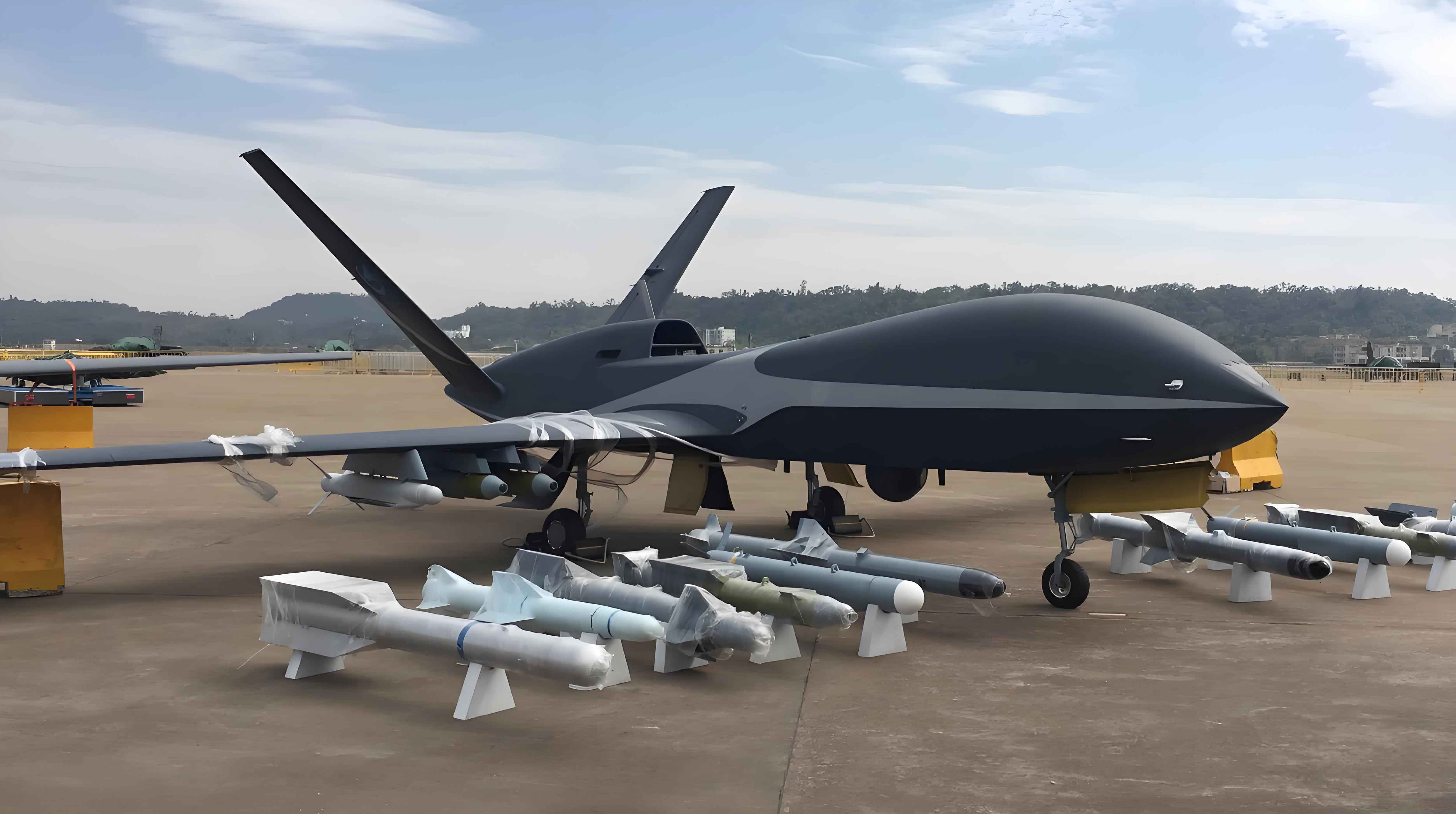
Military drones are typically divided into five categories, as outlined by defense agencies. This classification helps in tailoring countermeasures to specific drone types. Below is a table summarizing the key parameters for each category, which I have expanded to include more details on military drone applications.
| Category | Weight (kg/lbs) | Operating Altitude (m/ft) | Speed (km/h/kts) | Typical Military Drone Examples | Primary Missions |
|---|---|---|---|---|---|
| 1 | <9.07 / <20 | <365.76 AGL / <1200 AGL | <185.20 / <100 | RQ-11 “Raven”, RQ-12 “Wasp” | Short-range reconnaissance for small units |
| 2 | 9.53–24.97 / 21–55 | <1066.80 AGL / <3500 AGL | <463.00 / <250 | “Scan Eagle”, “Silver Fox” | Intelligence, surveillance for brigade-level |
| 3 | 25.40–598.74 / 56–1320 | <5486.40 MSL / <18000 MSL | <463.00 / <250 | RQ-7B “Shadow”, RQ-21 “Blackjack” | Medium-range ISR and limited strike |
| 4 | >598.74 / >1320 | <5486.40 MSL / <18000 MSL | Variable, often high | MQ-8 “Fire Scout”, MQ-1C “Gray Eagle” | Extended surveillance and weaponized roles |
| 5 | Large, e.g., >1000 kg | >5486.40 MSL / >18000 MSL | High, supersonic possible | MQ-9 “Reaper”, RQ-4 “Global Hawk” | Strategic reconnaissance and deep strike |
From this table, it is evident that military drones increase in size and capability from category 1 to 5. Small military drones, often used by tactical units, pose unique challenges due to their low altitude and slow speed, making them harder to detect. In contrast, larger military drones operate at higher altitudes with greater payloads, requiring different countermeasure approaches. I have analyzed these characteristics to emphasize that effective counter-drone systems must be adaptable to diverse military drone threats.
The features of military drones can be further detailed through a comparative analysis. For instance, launch methods vary from hand-thrown for small drones to runway takeoff for large ones, affecting how they are deployed and intercepted. Below, I present a formula to estimate the detection range for a military drone based on its radar cross-section (RCS), which is crucial for countermeasure planning. The radar range equation is given by:
$$R_{max} = \sqrt[4]{\frac{P_t G_t G_r \lambda^2 \sigma}{(4\pi)^3 k T_s B F L}}$$
where \(R_{max}\) is the maximum detection range, \(P_t\) is transmitted power, \(G_t\) and \(G_r\) are antenna gains, \(\lambda\) is wavelength, \(\sigma\) is the RCS of the military drone, \(k\) is Boltzmann’s constant, \(T_s\) is system noise temperature, \(B\) is bandwidth, \(F\) is noise figure, and \(L\) is loss factor. This equation highlights how smaller military drones with low RCS (e.g., \(\sigma < 0.01 m^2\)) reduce detection ranges, complicating countermeasures.
Moving to counter-drone processing chains, these frameworks outline the steps from detection to mitigation. As I have studied various systems, a common chain includes detection, localization, tracking, classification, and interception. Each step is critical for neutralizing a military drone threat. For example, detection involves sensing the drone’s presence, while classification distinguishes it from other objects like birds. I have summarized a generalized processing chain in the table below, incorporating military drone-specific considerations.
| Step | Definition | Key Technologies for Military Drones |
|---|---|---|
| Detection | Initial sensing of a drone via sensors | Radar, RF scanners, acoustic arrays |
| Localization | Determining the drone’s position in real-time | Triangulation, GPS spoofing detection |
| Tracking | Continuous monitoring of drone movement | Kalman filters, machine learning algorithms |
| Classification | Identifying drone type and intent | Image recognition, signal analysis |
| Interception | Neutralizing the threat through soft or hard kills | Jamming, laser weapons, net guns |
This chain underscores the complexity of countering military drones, as each step requires integration of multiple technologies. For instance, tracking a fast-moving military drone demands high update rates, which can be expressed mathematically. If a drone moves at velocity \(v\) and the sensor has a refresh rate \(f\), the positional error \(\Delta x\) can be approximated by:
$$\Delta x = \frac{v}{f}$$
Thus, for a military drone flying at 100 m/s with a sensor rate of 10 Hz, \(\Delta x = 10\) meters, indicating the need for advanced tracking to ensure accurate interception.
Now, focusing on detection technologies, these are essential for identifying military drones early. I have categorized them into active and passive methods, each with pros and cons. The table below expands on the principles and limitations, with an emphasis on military drone applications.
| Technology | Principle | Advantages for Military Drone Detection | Disadvantages | Typical Range |
|---|---|---|---|---|
| Radar | Emits RF pulses and analyzes echoes | Long-range, all-weather capability | High false alarms for small drones | Up to 10 km for small drones |
| Electro-Optical (EO) | Uses visible light cameras | High resolution, good for identification | Limited by weather and light conditions | 1-5 km depending on optics |
| Infrared (IR) | Detects heat signatures | Effective at night, passive operation | Reduced by cool drones or background clutter | 2-8 km for thermal imaging |
| RF Sensing | Monitors communication signals | Passive, can detect control links | Ineffective against autonomous military drones | 3-15 km based on signal strength |
| Acoustic | Listens to propeller or engine noise | Low cost, no emissions | Short-range, affected by ambient noise | 0.5-2 km in quiet environments |
From my analysis, no single technology is foolproof against all military drones. Therefore, sensor fusion is often employed, combining data from multiple sources. For example, integrating radar and EO can enhance classification accuracy. The probability of detecting a military drone \(P_d\) with fused sensors can be modeled as:
$$P_d = 1 – \prod_{i=1}^{n} (1 – P_{d_i})$$
where \(P_{d_i}\) is the detection probability of sensor \(i\), and \(n\) is the number of sensors. If radar has \(P_d = 0.8\) and EO has \(P_d = 0.7\), then fused \(P_d = 1 – (1-0.8)(1-0.7) = 0.94\), demonstrating the benefit of fusion for military drone threats.
Transitioning to interception technologies, these aim to neutralize military drones once detected. I divide them into electronic and kinetic methods. Electronic countermeasures disrupt drone operations, while kinetic ones physically destroy or capture the drone. Below is a comprehensive table summarizing these techniques, with formulas to quantify their effectiveness.
| Type | Technique | Principle | Effectiveness Metric | Limitations Against Military Drones |
|---|---|---|---|---|
| Electronic | RF Jamming | Overwhelms control signals with noise | Jamming-to-signal ratio \(J/S\) must exceed threshold | May affect friendly communications; drones may use anti-jam tech |
| Electronic | GPS Spoofing | Transmits false navigation signals | Spoofing success rate based on signal power | Ineffective for drones with inertial navigation |
| Electronic | Cyber Takeover | Hacks into drone’s communication protocol | Time to compromise \(T_c\) in seconds | Requires knowledge of drone’s software; may be patched |
| Kinetic | Laser Weapons | Directs high-energy beam to melt components | Energy density \(E\) required: \(E = \frac{P}{A}\), where \(P\) is power, \(A\) is spot area | Atmospheric attenuation; limited range to a few km |
| Kinetic | High-Power Microwave (HPM) | Emits microwave pulses to fry electronics | Peak power \(P_{peak}\) needed for drone susceptibility | Broad effect may damage nearby electronics |
| Kinetic | Net Guns | Fires nets to entangle drones | Capture probability based on projectile speed and spread | Short-range (under 100 m); less effective for fast military drones |
| Kinetic | Interceptor Drones | Uses other drones to collide or capture | Collision probability \(P_{coll}\) depends on relative velocity | Costly; requires own drone fleet management |
In evaluating these, I note that electronic methods are often preferred for non-destructive neutralization, but kinetic methods provide definitive stops. For instance, the energy required to disable a military drone with a laser can be calculated. If a drone’s critical component has a melting point energy \(E_m\), and the laser delivers power \(P_l\) over time \(t\), the condition for disablement is:
$$P_l \cdot t \geq E_m$$
Assuming \(E_m = 10^4\) J for a small military drone and \(P_l = 10\) kW, then \(t \geq 1\) second, but atmospheric losses may increase this time. This illustrates the practical challenges in countering military drones with directed energy.
Moreover, the integration of counter-drone systems into military operations involves platform types, such as ground-based, naval, or airborne systems. Each platform has trade-offs; for example, ground-based systems are stationary but can be powerful, while airborne systems offer mobility but limited payload. I have analyzed this through a cost-effectiveness model, where the utility \(U\) of a counter-drone system is given by:
$$U = \frac{P_{neutralize} \cdot R_{coverage}}{C_{cost} + M_{maintenance}}$$
Here, \(P_{neutralize}\) is the probability of neutralizing a military drone, \(R_{coverage}\) is the coverage area, \(C_{cost}\) is acquisition cost, and \(M_{maintenance}\) is maintenance cost. Optimizing \(U\) requires balancing these factors, especially for military budgets.
Despite advances, countering military drones faces significant challenges. From my perspective, these include evolving drone technologies, such as stealth features and swarm capabilities, which complicate detection and interception. Swarms of military drones, in particular, can overwhelm defenses through numbers. The probability of defeating a swarm of \(N\) drones with a system that has single-shot success probability \(p\) is:
$$P_{swarm} = 1 – (1 – p)^N$$
If \(p = 0.9\) and \(N = 10\), then \(P_{swarm} = 1 – (0.1)^{10} \approx 0.999\), but in reality, resource constraints reduce this. Additionally, legal and ethical issues arise, such as collateral damage from kinetic strikes or interference with civilian systems.
Another challenge is the short response window. Military drones can approach targets rapidly, leaving little time for decision-making. If a drone flies at speed \(v\) from a distance \(d\), the response time \(T_r\) is:
$$T_r = \frac{d}{v} – T_{processing}$$
where \(T_{processing}\) is the time for detection and engagement. For \(d = 5\) km and \(v = 50\) m/s, \(T_r = 100\) seconds, but \(T_{processing}\) may consume most of this, emphasizing the need for automated systems.
Furthermore, the diversity of military drone payloads—from cameras to explosives—requires tailored responses. A drone carrying weapons necessitates immediate kinetic interception, while a surveillance drone might be jammed. I have summarized key challenges in the table below, linking them to military drone characteristics.
| Challenge | Description | Impact on Military Drone Countermeasures |
|---|---|---|
| Detection Limitations | Low RCS and slow speeds of small drones reduce sensor efficacy | Increased false negatives; requires multi-sensor fusion |
| Interception Reliability | No method is 100% effective; electronic countermeasures can be circumvented | Risk of drone leakage; need for layered defenses |
| Collateral Damage | Kinetic methods may cause falling debris or signal interference | Legal liabilities and harm to civilians or infrastructure |
| Rapid Technological Change | Drones evolve with better autonomy, encryption, and swarm tech | Countermeasures become obsolete quickly; continuous R&D needed |
| Cost and Scalability | Advanced systems are expensive; covering large areas is challenging | Limited deployment; gaps in protection for military assets |
In conclusion, countering military drones is a multifaceted endeavor that demands integrated approaches. As I have outlined, understanding drone classifications, employing robust processing chains, and leveraging a mix of detection and interception technologies are crucial. The keyword “military drone” permeates this discussion, highlighting its centrality to modern defense strategies. Future directions should focus on adaptive systems that can learn from drone behaviors, perhaps using artificial intelligence to predict threats. Ultimately, as military drones continue to advance, so too must our countermeasures, ensuring security in an increasingly automated battlespace.
To quantify the overall effectiveness of a counter-drone system, one might use a metric like the overall system effectiveness \(O\), defined as:
$$O = \alpha P_d + \beta P_i – \gamma C$$
where \(P_d\) is detection probability, \(P_i\) is interception probability, \(C\) is collateral risk, and \(\alpha, \beta, \gamma\) are weighting factors based on operational priorities. For military applications, \(\beta\) might be high to ensure threat neutralization, but \(\gamma\) must be considered to minimize unintended consequences. This formula encapsulates the trade-offs in designing countermeasures against military drones.
Throughout this review, I have aimed to provide a comprehensive analysis, drawing on technical principles and practical considerations. The tables and formulas serve to summarize key points, reinforcing the complexity of countering military drones. As technology evolves, ongoing research and collaboration will be essential to stay ahead of emerging threats, safeguarding both military and civilian domains from the risks posed by malicious military drone operations.