
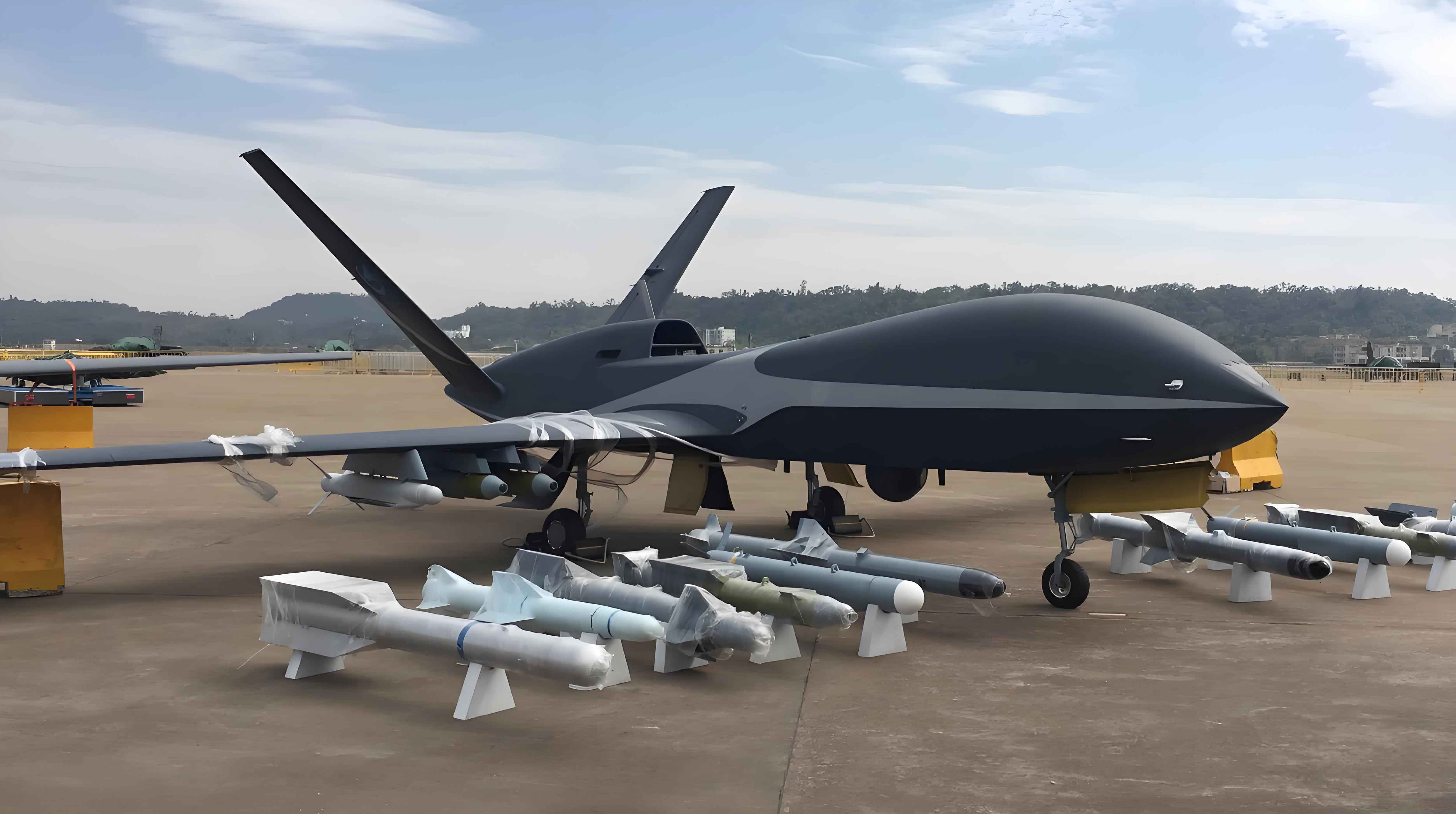
From my extensive experience in military aviation logistics, the evolution of maintenance philosophies is not merely an administrative change but a fundamental shift in how we sustain combat power. The prominence of military drone systems in recent conflicts has irrevocably altered the battlefield, demanding a parallel evolution in their support structures. The traditional, often cumbersome, multi-echelon support models are being challenged by a more streamlined, efficient, and cost-effective paradigm: the Two-Level Maintenance (2LM) system. This model, pioneered and refined through extensive practical application, represents the future of sustainment for complex, high-utilization military drone fleets. Its implementation is not just desirable but increasingly a necessity to meet the operational tempo required by modern warfare.
The core principle of 2LM is organizational and logistical simplification. It eliminates the intermediate (or depot) maintenance level traditionally situated between the operational unit and the industrial-scale overhaul facility. In this model, maintenance actions are consolidated into two distinct tiers: the Organizational (or Field) Level and the Depot (or Factory) Level. At the field level, technicians focus on the rapid diagnosis, removal, and replacement of faulty hardware to return the military drone to mission-ready status. The defective unit is then shipped directly to the depot level, where expert personnel conduct in-depth repair, overhaul, and testing. This direct pipeline bypasses intermediate repair shops, reducing repair cycle time, minimizing the forward footprint of support equipment and personnel, and centralizing complex repair expertise.
The historical journey to this model is instructive. For decades, the three-level system (Organizational, Intermediate, Depot) was the global standard. The intermediate level acted as a crucial buffer, handling repairs beyond the unit’s capability but less complex than full depot overhaul. However, this structure proved logistically heavy and expensive. The catalyst for change was a combination of operational necessity and technological maturity. Experiences in large-scale deployments highlighted crippling inefficiencies in transportation and repair flows. Concurrently, advances in built-in test (BIT), modular design, and diagnostic technologies allowed for more accurate fault isolation at the flight line, reducing the need for intermediate troubleshooting. The U.S. military’s formal shift towards 2LM in the 1990s for advanced aircraft platforms demonstrated its viability, offering compelling advantages that have since been validated in combat.
The benefits of adopting a 2LM system for a military drone fleet are multifaceted and directly impact core operational metrics. These advantages can be summarized as follows:
| Advantage Category | Specific Impact | Outcome for Military Drone Operations |
|---|---|---|
| Enhanced Deployability & Mobility | Reduces the volume and weight of support equipment, tools, and spares required in-theater. | Faster deployment, lower strategic airlift/sea-lift burden, greater operational agility for military drone squadrons. |
| Improved Operational Availability | Simplifies the maintenance process flow, shortening the mean time to repair (MTTR) for many faults. | Higher mission-capable rates, increased sortie generation, and enhanced overall fleet readiness. |
| Reduced Life-Cycle Cost | Eliminates duplicate test equipment and facilities at the intermediate level; optimizes skilled labor distribution. | Significant savings in procurement, training, and sustainment costs over the lifespan of the military drone system. |
| Optimized Resource Utilization | Concentrates deep repair expertise and specialized tooling at a few depot facilities. | Higher quality repairs, better technical data feedback, and more efficient management of scarce high-skill personnel. |
| Catalyst for Technical Innovation | Drives requirement for better onboard diagnostics, modularity, and remote support technologies. | Promotes the development and integration of more reliable and maintainable military drone systems. |
The modern instantiation of 2LM is a technology-enabled process. It moves beyond simple organizational change to integrate advanced sustainment concepts. The process flow is critically dependent on several key technological pillars that make the model not only possible but highly efficient. The field-level technician, assisted by Portable Maintenance Aids (PMA) and robust BIT, identifies a fault isolated to a Line Replaceable Module (LRM). This modular unit is swiftly exchanged from onboard inventory. The defective LRM is packaged and entered into a responsive logistics pipeline destined for the depot. At the depot, Automated Test Equipment (ATE) and sector-specific expertise are used to repair the LRM at the component level, after which it re-enters the supply system as a ready asset. This cycle’s efficiency hinges on the maturity of several intertwined technologies.
The successful implementation of a 2LM system for military drone platforms is predicated on a suite of enabling technologies. These are not standalone items but interrelated components of a holistic support ecosystem.
| Key Technology | Core Function | Contribution to 2LM for Military Drones |
|---|---|---|
| Line Replaceable Module (LRM) / Modular Open Systems Architecture (MOSA) | Provides physically and functionally independent, easily swappable hardware units. | Enables rapid field repair via replacement; simplifies supply chain; facilitates technology refresh and competition. |
| Advanced Diagnostics & Health Management (BIT, Smart BIT, AI-Driven Diagnostics) | Automates fault detection, isolation, and prediction. | Reduces field-level troubleshooting time and skill burden; enables condition-based maintenance; sends accurate repair data to depot. |
| Automated & Portable Test Equipment (ATE, PMA, VXI/PXI-based systems) | Provides verified testing capabilities at both maintenance levels. | PMA aids field verification; Depot ATE ensures deep, reliable repair validation; both reduce human error. |
| Integrated Logistics & Supply Chain (RFID, IoT, Predictive Analytics, COTS Logistics) | Manages the flow of parts, information, and repairs. | Enables “just-in-time” part delivery; provides total asset visibility; leverages commercial shipping for speed and cost savings. |
| Commercial Off-The-Shelf (COTS) / Modified COTS (MCOTS) Components | Utilizes standardized, commercially available hardware and software. | Lowers acquisition cost, improves supply availability, speeds development, and simplifies repair with common tools. |
| Remote Support & Tele-Maintenance | Connects field technicians with depot experts via secure data links. | Provides real-time expert guidance for complex field issues, blurring the line between levels and improving first-time fix rates. |
The mathematical foundation for justifying 2LM often revolves around system availability and cost. Operational Availability ($A_o$) is a key metric for any military drone fleet, defined as the probability the system is ready for mission use when needed. It can be expressed as:
$$A_o = \frac{MTBM}{MTBM + MDT}$$
where $MTBM$ is the Mean Time Between Maintenance (including both corrective and preventive actions) and $MDT$ is the Mean Down Time. The 2LM strategy aims to increase $A_o$ primarily by reducing $MDT$. $MDT$ itself is a composite of several elements: Logistics Delay Time (LDT), Administrative Delay Time (ADT), and Active Repair Time. By streamlining the supply chain (reducing LDT) and simplifying the repair process flow (reducing active repair time and ADT), 2LM directly targets these components. A related critical metric is the Fault Detection Rate ($FDR$) and Fault Isolation Rate ($FIR$) of the onboard diagnostics, crucial for efficient field-level action. We can model the probability of successfully completing a field-level repair action as dependent on these factors:
$$P_{field\_repair} = FDR \times FIR \times P_{LRM\_swap}$$
where $P_{LRM\_swap}$ is the probability of correctly performing the physical swap, which is high for well-designed LRMs. High $FDR$ and $FIR$ values, enabled by the technologies above, are essential to prevent “no fault found” returns and unnecessary depot workloads, making the 2LM model stable.
The suitability of the 2LM model for military drone systems is particularly high, often more so than for traditional manned aircraft. Several inherent characteristics of drone systems align perfectly with the 2LM philosophy. First, the operational paradigm of military drones often involves persistent, long-endurance missions or rapid deployment to austere locations. A lean, highly mobile support tail is a force multiplier. Second, modern military drones are inherently complex, integrating advanced avionics, sensors, and communication suites. Their design increasingly favors modularity and open standards to facilitate payload swaps and technology updates, which directly enables the LRM concept. Third, the culture surrounding military drone sustainment has, from early on, often relied on contractor or original equipment manufacturer (OEM) support at the depot level, mimicking the 2LM structure. Formalizing this into a disciplined 2LM system captures efficiencies. Fourth, the absence of a human pilot simplifies some maintenance aspects (no life support systems) but places even greater emphasis on the absolute reliability of flight control and data link systems—a focus well-served by depot-level deep sustainment.
However, a pragmatic view is essential. Not every component on a military drone is a candidate for 2LM from day one. A detailed Level of Repair Analysis (LORA) must be conducted. LORA is a systematic process to decide whether an item should be repaired, discarded, or a combination thereof, and at which maintenance level. The decision logic often uses cost and operational effectiveness models. A simplified decision threshold for repair-at-depot vs. discard-at-field can be modeled by comparing the cost of a spare LRM unit ($C_{spare}$) against the cost of a depot repair ($C_{depot\_repair}$), factoring in the expected number of repairs ($N$) over the item’s life and the criticality of supply chain weight/volume. An item is a strong candidate for 2LM (repair at depot) if:
$$N \times C_{depot\_repair} + C_{logistics} < C_{spare} \times (1 + \alpha)$$
where $C_{logistics}$ represents the total cost of shipping the item to and from the depot over its life, and $\alpha$ is a factor accounting for the operational penalty of carrying extra spares (weight, space, cost of capital). For highly reliable, low-cost modules, a “remove-and-replace” with no repair (consume the spare) might be the optimal 2LM decision.
The actual process flow within a 2LM system for a military drone is a closed-loop cycle of maintenance, logistics, and supply. The following table delineates the primary responsibilities and activities at each level.
| Maintenance Level | Primary Responsibilities | Typical Activities for a Military Drone |
|---|---|---|
| Organizational / Field Level (Operating Unit/Squadron) | Return the drone to a mission-capable status in minimal time. Manage limited local spares. |
|
| Depot / Factory Level (Centralized Support Facility or OEM) | Provide deep repair, overhaul, modification, and rebuild of components and full systems. Manage the core supply of LRMs. |
|
The connective tissue between these two levels is a high-reliability, responsive logistics and information network. The movement of the physical LRM must be tracked, and the digital “health certificate” and fault data from the field must accompany it to aid depot diagnostics. This information loop is vital for continuous improvement of both the military drone product and the support system itself.
In conclusion, the transition to a Two-Level Maintenance system is not merely a trend but a logical and necessary evolution for sustaining modern military drone fleets. The model’s strengths—enhanced agility, reduced lifecycle cost, and improved availability—directly address the core challenges of 21st-century aerospace logistics. The feasibility of this model is now firmly underpinned by mature technologies in modular design, advanced diagnostics, and information-driven logistics. For a military drone program manager, adopting a 2LM philosophy from the initial design stages is a strategic imperative. It forces critical, beneficial disciplines in design for supportability, modularity, and diagnostics. While a hybrid approach may be necessary during transition periods or for specific legacy subsystems, the end-state goal for any advanced, high-tempo military drone system should be a fully realized, technologically integrated Two-Level Maintenance system. This is the pathway to ensuring that these unmanned assets deliver their formidable operational potential without being hamstrung by an unsustainable, legacy support burden.