
The contemporary battlespace has been irrevocably altered by the pervasive presence and decisive utility of unmanned aerial systems. Military drones have transitioned from niche intelligence assets to central pillars of modern warfare, demonstrating unparalleled effectiveness in roles spanning fire correction, battlefield reconnaissance and surveillance, and even direct, precision strikes. Their impact on operational outcomes is now a defining factor in conflict. This strategic shift necessitates not only the continued development and fielding of advanced military drone platforms in significant numbers but, more critically, the cultivation of a large, highly skilled cadre of operators capable of harnessing their full potential. The capacity for rapid, systematic, and high-quality training of these operators has thus become a crucial component of military power. An operator of a military drone is defined as the ground personnel responsible for controlling the unmanned aerial vehicle platform, its data links, and onboard mission equipment via remote control devices or ground control stations to execute flight maneuvers and accomplish assigned tactical tasks. This treatise delves into the research and proposal of a structured training paradigm for military drone operators, focusing on scalability, systematization, and standardization.
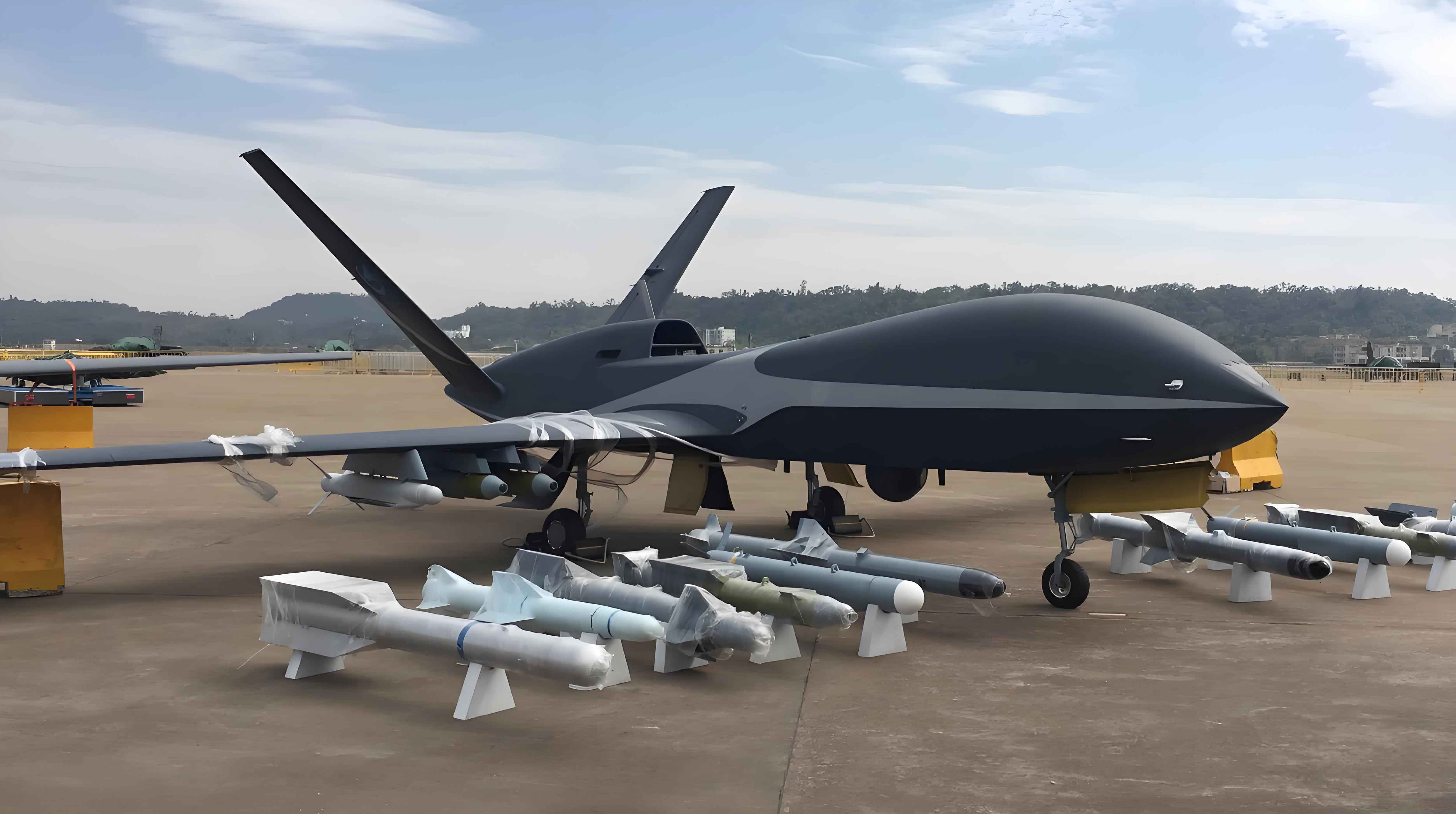
The evolution of military drone operator training, particularly within advanced forces, offers instructive models. Following the Kosovo War, a concerted effort was made to establish robust training pipelines. The complexity of modern military drones, equipped with sophisticated sensors and systems, mandates that their controllers possess high levels of proficiency to ensure both mission success and operational safety. Training approaches have historically varied across services, adapting to different platforms, missions, and manpower philosophies. Some services initially drew exclusively from pools of experienced manned aircraft pilots, adhering to traditional aviation cultures. However, the sheer demand for operators, coupled with cost considerations, has driven a broader recruitment base, now encompassing individuals with prior flight experience, fresh graduates from relevant academic programs, and even personnel from other military occupational specialties with no prior aviation background. Training curricula are typically phased, progressing from foundational academic knowledge and simulator-based instruction to hands-on operation of the actual military drone systems. The duration and specific content of these phases are meticulously tailored to the type of military drone and the operator’s role—be it piloting the aircraft, managing its communication links, or operating its mission payloads such as electro-optical/infrared sensors or signals intelligence suites.
The training of personnel to operate military drones presents distinct characteristics and demands that set it apart from civilian counterpart training. These unique requirements form the foundational rationale for a specialized training mode.
Firstly, the mission spectrum for military drones is exceptionally diverse and operationally critical. These systems are integral to multi-domain operations, functioning in roles that include early warning, command and control, reconnaissance, communications relay, target designation, electronic warfare, kinetic strikes, battle damage assessment, logistics resupply, and medical evacuation. This functional breadth necessitates a training regime that moves beyond generic flight instruction to include deep, mission-specific tactical training. Operators must understand not only how to fly the military drone but how to employ it effectively within complex joint and combined arms environments to achieve specific tactical and strategic objectives.
Secondly, military drones vary enormously in size, complexity, and capability, leading to significant variations in training requirements. They can be categorized, for instance, by take-off weight:
- Micro military drones (e.g., < 10 kg): Hand-launched, often operated with simple controllers.
- Small military drones: Used for tactical surveillance at company or battalion level.
- Medium-altitude, long-endurance (MALE) military drones: For wider area surveillance and strike.
- High-altitude, long-endurance (HALE) military drones: For strategic-level, persistent ISR.
The control interfaces, flight dynamics, support requirements, and operational procedures differ drastically across these categories. Consequently, training cannot be one-size-fits-all; it must be tiered and aligned with the specific platform type. The cognitive and psychomotor skills required to operate a hand-held micro military drone are fundamentally different from those needed to manage the sensor suite of a strategic-level military drone from a ground control station. A tiered training model ensures that resources are appropriately allocated, and skill development is optimized for the assigned platform.
Thirdly, the pace of technological development and tactical innovation in military drone warfare is relentless. New platforms, counter-drone systems, and evolving tactics create a dynamic training landscape. The demand for qualified operators is growing exponentially, as evidenced by large-scale training initiatives in recent conflicts. Therefore, the training mode must be agile, scalable, and forward-looking, capable of rapidly integrating new technologies and tactics to keep the operator cadre proficient and relevant.
The overarching training mode for military drone operators must be structured around several core principles: classification, grading, phasing, and specialization, all underpinned by standardization and systematization.
1. Classification of Operators and Training Streams
The primary classification distinguishes between two fundamental operator roles, often working together as a crew:
| Operator Class | Primary Responsibility | Core Training Focus |
|---|---|---|
| Flight Operator (Pilot-in-Command) | Controls the air vehicle’s flight path, including take-off, landing, and navigational maneuvers via control sticks, keyboards, or touch interfaces. | Aerodynamics, flight controls, navigation, emergency procedures, airspace management. |
| Mission Operator | Subdivided into: 1. Payload Operator: Controls mission-specific equipment (e.g., sensors, jammers). 2. Link Operator: Manages the data link between drone and ground station. |
Sensor theory/operation, mission planning software, data analysis, communication protocols, electronic warfare fundamentals. |
This initial classification creates distinct but parallel training pipelines, ensuring deep specialization.
2. Grading and Phased Training for Flight Operators
Training for flight operators is graded according to the size and complexity of the military drone they will operate. The progression is not linear; it is a tiered system with entry points dependent on prior experience.
2.1 Micro & Small Military Drone Flight Operators
For micro and many small military drones, the control paradigm is similar to advanced radio-controlled models. Training is intensive but relatively short, focusing on practical handling skills, basic regulations, and immediate tactical applications. A two-phase model is often effective for small military drones used in tactical units:
| Phase | Content | Outcome |
|---|---|---|
| Phase I: Foundational Certification | Basic Aviation Theory → Supervised Flight Practice → Written & Practical Exam. | Qualification to operate equivalent civilian/commercial small drones. |
| Phase II: Military Tactical Qualification | Tactical Employment Doctrine → Advanced Field Exercises → Tactical Evaluation. | Certification to operate the specific small military drone in tactical scenarios. |
2.2 Medium & Large Military Drone Flight Operators
Operating larger, more complex military drones like MALE or HALE systems requires a more extensive and formalized training path. The model bifurcates based on the trainee’s prior experience.
Path A: For personnel already certified on smaller military drones.
The training follows a streamlined conversion course: Platform-Specific Theory → Advanced Simulator & Live-Flight Training → Final Certification Evaluation.
Path B: For novice personnel with no prior drone experience.
This path incorporates a foundational block: Aviation Fundamentals Course → Platform-Specific Theory → Advanced Simulator & Live-Flight Training → Final Certification Evaluation.
The foundational course covers principles of flight, aerodynamics, meteorology, and basic airmanship, often using simple aircraft or high-fidelity simulators to build spatial awareness and stick-and-rudder skills. The core training duration for a complex military drone pilot can be modeled as a function of prior experience (E) and platform complexity (C):
$$ T_{total} = T_{base} + \alpha C – \beta E $$
Where:
– $T_{total}$ = Total training time required.
– $T_{base}$ = Base training time for a novice on a standard platform.
– $C$ = A complexity factor for the specific military drone (e.g., based on subsystems, flight envelope).
– $E$ = An experience credit factor (e.g., hours on other drones or manned aircraft).
– $\alpha, \beta$ are model coefficients determined by training system analysis.
3. Specialized and Phased Training for Mission Operators
Mission operators undergo specialized, phase-based training focused on their specific technical domain.
3.1 Payload Operator Training
Training is deeply specialized by sensor or effector type. The standard path is: Specialized Technical Theory (e.g., EO/IR, SAR, SIGINT) → Simulator-Based Mission Training → Live-Flight Operation Certification.
The effectiveness of a payload operator can be conceptually related to their training metrics. For a sensor operator, the probability of successful target identification ($P_{ID}$) might be modeled as:
$$ P_{ID} = 1 – e^{-\lambda (S_t + \gamma T_{sim})} $$
Where:
– $S_t$ = Theoretical instruction hours on sensor characteristics.
– $T_{sim}$ = Simulator training hours on target recognition.
– $\lambda, \gamma$ = Learning efficacy coefficients for theory and simulation, respectively.
3.2 Data Link Operator Training
These operators ensure the critical command and data link remains robust and secure. Their training path is: Communications & Network Theory → Link Establishment & Management Drills → Live Operational Certification.
Their key performance metric is link availability ($A_{link}$), which training aims to maximize by reducing human-error-induced outages. Training effectiveness can be assessed by the reduction in mean time to restore a degraded link (MTTRL) after training intervention $T$:
$$ \text{MTTRL}(T) = \text{MTTRL}_0 \cdot e^{-k T} $$
Where $\text{MTTRL}_0$ is the baseline mean time and $k$ is a training effectiveness constant.
4. Pillars of Standardized and Systematized Training
To achieve scale, quality, and consistency, the proposed training mode must rest on a foundation of rigorous standardization and system-wide support.
| Pillar | Components | Implementation |
|---|---|---|
| 1. Institutional Framework | Regulations, Career Management Policies, Certification Standards. | Establish clear doctrine on selection, career progression, recurring proficiency checks, and qualification standards for each class/grade of military drone operator. |
| 2. Curriculum & Instructional Material | Training Manuals, Standardized Lesson Plans, Tactical Publications, E-Learning Modules. | Develop a comprehensive, modular library of materials updated continuously to reflect new platforms, tactics, and lessons learned from operations. |
| 3. Instructor Corps | Subject Matter Experts, Experienced Operators, Tacticians. | Create a dedicated, professional cadre of instructors who are experts in both the technical systems and the art of instruction. Blend military professionals with civilian technical experts. |
| 4. Training Infrastructure | Flight Simulators (Part-Task & Full-Mission), Live-Flight Training Ranges, Maintenance Trainers, Classrooms. | Invest in high-fidelity, scalable simulation suites that can replicate diverse environments and threats. Secure dedicated airspace for live-fly training. The infrastructure cost ($I$) can be viewed as an investment amortized over the number of operators trained (N) and the training cycle duration (D): $$ I = \sum (C_{sim} + C_{range} + C_{support}) / (N \cdot D) $$ This highlights the economic efficiency of a centralized, systematic approach. |
| 5. Training Management System | Learning Management System (LMS), Performance Tracking Databases, Resource Scheduling Tools. | Implement a digital ecosystem to track trainee progress, manage training assets, schedule instruction, and analyze overall program effectiveness using data analytics. |
In conclusion, as the military drone continues to cement its role as a decisive instrument of modern warfare, the human element behind the console becomes the critical leverage point. The scale and quality of the operator corps will be a primary determinant of success in future conflicts. The proposed training mode—characterized by clear classification of roles, graded and phased skill progression for different military drone platforms, deep specialization for mission operators, and built upon a solid foundation of standardized, systematized support—provides a robust framework. It is designed to be scalable to meet mass personnel demands, adaptable to technological change, and effective in producing operators capable of unleashing the full tactical and strategic potential of military drone systems. This holistic approach to cultivating human capital is not merely a support function but a central, war-winning imperative in the age of unmanned warfare.