
In the evolving landscape of modern warfare, the role of unmanned aerial vehicles, particularly military drones, has become increasingly pivotal. These systems are deployed for a wide array of missions including tactical and strategic reconnaissance, target acquisition, damage assessment, electronic warfare, and communications jamming. However, the maintenance and support of military drone fleets present significant challenges, especially as these assets are often relatively new to operational units and their support theories and technologies are still developing. In this context, I will explore the application of Systecon ILS software—a sophisticated suite of tools for logistics support and maintenance simulation—in enhancing the maintenance support for military drone equipment. This software, developed over nearly four decades by SYSTECON of Sweden, has been adopted by numerous defense organizations and aerospace giants, demonstrating substantial cost savings in maintenance and spare parts. Here, I will delve into its functionalities, propose a framework for its use in military drone maintenance, and discuss the conditions for successful implementation, all while emphasizing the critical importance of optimizing support for these advanced assets.
The Systecon ILS software suite comprises several independent yet complementary tools: Opus10 for logistics support and spare parts optimization, SIMLOX for system operation and maintenance support simulation, MaDCAT for maintenance data classification and analysis, and CATLOC for life-cycle cost analysis. For maintenance support applications, particularly for military drones, the primary tools of interest are Opus10 and SIMLOX. These software products are designed to model complex systems, optimize resource allocation, and simulate operational scenarios to improve availability and reduce costs. Their compatibility with standard Windows operating systems and low hardware requirements make them accessible for various users, from manufacturers to field units. In the following sections, I will detail the capabilities of each tool and illustrate how they can be harnessed to address the unique maintenance challenges of military drone fleets.
Detailed Overview of Systecon ILS Software Components
Opus10 is a specialized software for system logistics support and spare parts optimization. It can be applied at any stage of an equipment’s life cycle, from design to disposal. The core of Opus10 lies in building a detailed breakdown structure of the equipment system to model maintenance and logistics activities. This hierarchical model includes components such as Line Replaceable Units (LRUs), Shop Replaceable Units (SRUs), repairable units, non-repairable units, and parts, with no inherent limit on the number of hierarchy levels. The software allows users to define a support organization model composed of sites like workstations (repair only), depots (repair and storage), stores (storage only), autonomous mission stations, and operational sites. Based on these models, Opus10 performs trade-off analyses to optimize parameters such as spare parts inventory levels, repair location decisions, and critical component identification. The output includes cost-effectiveness curves, support organization diagrams, and key performance indicators, all aimed at minimizing life-cycle support costs. For military drones, which often have high-value components and complex supply chains, this optimization is crucial for maintaining operational readiness while controlling expenses.
To illustrate the optimization process, consider a spare parts inventory model for a military drone system. Let \( S_i \) represent the stock level of spare part \( i \), \( \lambda_i \) its failure rate, and \( T_i \) its lead time. The expected backorders \( EBO(S_i) \) can be calculated using the Poisson distribution:
$$ EBO(S_i) = \sum_{k=S_i+1}^{\infty} (k – S_i) \frac{(\lambda_i T_i)^k e^{-\lambda_i T_i}}{k!} $$
The overall system availability \( A \) can be expressed as a function of backorders for critical components:
$$ A = \prod_{i=1}^{n} \left(1 – \frac{EBO(S_i)}{N_i}\right) $$
where \( N_i \) is the number of instances of part \( i \) in the system. Opus10 uses such formulations to iteratively adjust \( S_i \) values, subject to budget constraints, to maximize \( A \) or meet a target availability at minimal cost. This mathematical approach ensures data-driven decision-making for military drone support.
SIMLOX, on the other hand, is a discrete-event simulation tool focused on mission sustainability and operational readiness analysis at the fleet level. It models the entire ecosystem of equipment operation, failures, repairs, and support interactions using queueing theory. The model framework encompasses both the supported equipment (e.g., military drones) and the support system. For equipment modeling, SIMLOX requires a decomposition structure based on maintenance relationships, descriptions of basic operational units, mission profiles, and combat damage scenarios. Support system modeling includes organizational structures, repair processes, resource constraints (e.g., personnel, tools), and inventory policies. SIMLOX can import optimized stock levels from Opus10 and simulate various scenarios to evaluate different support strategies. Key outputs include mission success rates, equipment status over time, spare parts availability, and resource utilization metrics. For military drones, which may operate in diverse and demanding environments, this simulation capability is invaluable for testing and refining maintenance plans before implementation.
A typical simulation in SIMLOX for a military drone fleet might involve defining mission cycles, failure distributions, and repair workflows. For instance, if a drone’s propulsion system has a mean time between failures (MTBF) of \( \mu \) hours, and repair time follows a lognormal distribution with parameters \( \mu_R \) and \( \sigma_R \), SIMLOX can simulate the impact on sortie generation rates. The queueing model for a repair depot can be represented as an M/G/c system, where arrivals follow a Poisson process with rate \( \lambda \), service times have a general distribution, and \( c \) is the number of parallel repair channels. The steady-state probability \( P_n \) of \( n \) drones in the system can be approximated, and the average waiting time \( W_q \) calculated to assess bottlenecks. Such analyses help optimize the number of repair technicians or the allocation of test equipment for military drone maintenance.
| Feature | Opus10 | SIMLOX |
|---|---|---|
| Primary Purpose | Spare parts optimization and logistics support modeling | Mission-level simulation and readiness analysis |
| Key Inputs | System hierarchy, failure rates, lead times, cost data | Mission profiles, repair processes, resource constraints, organizational structure |
| Mathematical Basis | Inventory theory, reliability models, cost-benefit analysis | Discrete-event simulation, queueing theory, stochastic processes |
| Output Metrics | Optimal stock levels, cost-effectiveness curves, availability estimates | Mission availability, resource utilization, time-based performance graphs |
| Typical Use Case for Military Drones | Determining initial sparing for new drone models or optimizing warehouse inventories | Evaluating different maintenance schemes for drone squadrons or planning for surge operations |
| Integration | Can export data to SIMLOX for validation | Can import optimized stock policies from Opus10 |
To ground this discussion in a visual context, consider the following depiction of a modern military drone system, which underscores the complexity that maintenance software must address:
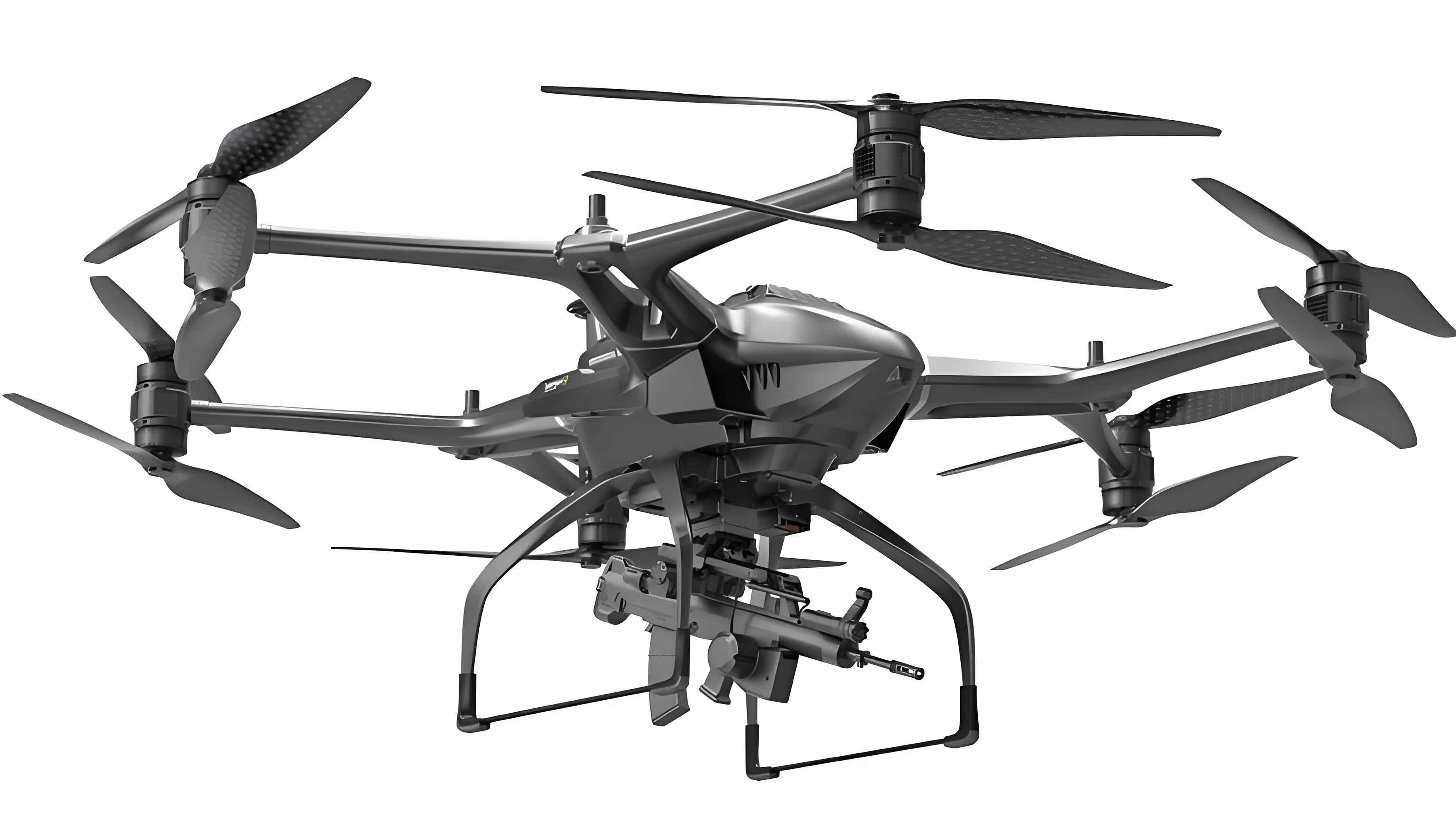
This image represents the advanced technology inherent in military drone platforms, featuring composite materials, sophisticated avionics, and precision payloads—all of which require meticulous support planning. The integration of such assets into a coherent maintenance regime is where Systecon ILS software proves its worth.
Proposed Framework for Military Drone Maintenance Support Using Systecon ILS
Building on the software’s capabilities, I propose a comprehensive framework for applying Systecon ILS tools to military drone maintenance support. This framework addresses several critical areas: personnel allocation, spare parts provisioning, maintenance procedure development, and continuous improvement through feedback loops. The goal is to create a more efficient, cost-effective, and responsive support system tailored to the unique demands of military drone operations.
First, using SIMLOX, maintenance managers can optimize the staffing of repair positions for military drones. By simulating various scenarios with different numbers of technicians, tool sets, and work shifts, the software can identify the configuration that maximizes repair throughput while minimizing idle time and costs. For example, if a military drone unit has a fleet of \( N \) drones each flying an average of \( h \) hours per month, with a known failure rate distribution per major subsystem, SIMLOX can model the repair demand and determine the optimal number of personnel \( P^* \) required to achieve a target turnaround time \( T_{target} \). This can be formulated as an optimization problem:
$$ \min_{P} C(P) = c_p P + c_d D(P) $$
subject to \( W(P) \leq T_{target} \), where \( C(P) \) is the total cost, \( c_p \) is the cost per technician, \( c_d \) is the cost of downtime per drone per day, \( D(P) \) is the expected downtime, and \( W(P) \) is the average wait time for repairs. Solving this via simulation helps avoid overstaffing or understaffing, ensuring that military drone units remain mission-ready.
Second, manufacturers of military drones can leverage Opus10 during the design and fielding phases to compute optimal initial spare parts packages. By analyzing the drone’s bill of materials, reliability predictions, and supply chain data, Opus10 can identify high-cost, long-lead-time, and high-demand components. The software then calculates the recommended stock levels for various echelons of support (e.g., organizational, intermediate, depot). These optimized spares kits can be delivered with the drones when they are deployed, reducing the initial logistics burden on units and preventing operational gaps due to parts shortages. For a new military drone model, let \( B \) be the budget for initial spares. Opus10 solves:
$$ \max_{\{S_i\}} A(\{S_i\}) = \prod_{i \in \text{critical}} \left(1 – \frac{EBO(S_i)}{N_i}\right) $$
subject to \( \sum_{i} c_i S_i \leq B \), where \( c_i \) is the unit cost of part \( i \). This ensures that the spares investment yields the highest possible availability for the military drone fleet from day one.
Third, SIMLOX can be used to develop and validate detailed maintenance schemes for common and critical failures of military drones. Manufacturers can create simulation models based on failure mode and effects analysis (FMEA) data and test various repair strategies—such as different sequences of tasks, use of specialized test equipment, or alternate supply routes—to determine the most effective procedures. These procedures, along with preventive maintenance schedules, pre- and post-flight inspection checklists, and battle damage repair guides, can be compiled into a digital database. This database, updated regularly with feedback from field units, becomes a living technical manual for military drone maintainers. For instance, if a particular sensor on a military drone has a high infant mortality rate, SIMLOX can simulate the impact of different burn-in or testing protocols during depot repair, helping to refine the process and reduce downstream failures.
Fourth, to foster a proactive support culture, manufacturers can conduct training programs on Systecon ILS software for military drone maintenance personnel in the armed forces. This empowers units to perform their own what-if analyses for unusual failures or changing operational tempos, reducing reliance on external support and shortening repair cycle times. For example, if a unit plans to increase its flight hours by 20%, maintainers can use Opus10 to adjust spare parts forecasts and use SIMLOX to assess whether current repair capacity can handle the increased workload. This self-sufficiency is crucial for deployed units operating in remote locations.
| Metric | Scenario A: Baseline | Scenario B: Increased Spares | Scenario C: Added Repair Shift |
|---|---|---|---|
| Mission Capable Rate (%) | 78.5 | 85.2 | 82.1 |
| Average Repair Turnaround Time (days) | 5.2 | 3.8 | 4.1 |
| Spare Parts Availability (%) | 88.7 | 95.4 | 89.3 |
| Technician Utilization (%) | 72.3 | 68.5 | 65.9 |
| Total Support Cost (relative units) | 1.00 | 1.18 | 1.09 |
This table demonstrates how SIMLOX can compare different support strategies for a military drone squadron, quantifying trade-offs between readiness, time, and cost. Such analyses are essential for informed decision-making in resource-constrained environments.
Conditions for Effective Application in Military Drone Context
The successful implementation of Systecon ILS software in military drone maintenance support hinges on several prerequisites. First, the personnel involved—whether at the manufacturer or the using unit—must possess a solid foundation in maintenance, repair, and overhaul (MRO) principles specific to aviation and, ideally, unmanned systems. The software is a tool that requires expert input to produce valid models; garbage in, garbage out. For instance, accurately estimating the failure rate \( \lambda \) for a military drone’s flight control computer requires historical data or reliable predictions from design analyses. Without this expertise, the optimization results may be misleading.
Second, there must be a seamless and timely information exchange between the military drone operating units and the manufacturer (or higher-level support agencies). Field data on failures, repair times, parts consumption, and operational profiles are vital for refining the software’s models. Conversely, updates to maintenance procedures or spares recommendations generated by the software need to be disseminated quickly to the troops. This bidirectional flow can be facilitated by integrated logistics information systems (ILS) that connect with the Systecon software via APIs or standard data formats. For example, if a new common failure mode emerges for a military drone’s landing gear, field reports should trigger a re-simulation in SIMLOX to update the recommended repair kit contents and procedures, which are then pushed to all affected units.
Third, organizational buy-in and process adaptation are critical. Adopting these software tools may require changes in how maintenance planning is done, from empirical or rule-of-thumb methods to data-driven optimization. Training and change management are necessary to overcome resistance and ensure that outputs are understood and trusted. For military drone squadrons, this might involve creating a dedicated support analysis cell that uses Systecon ILS software to generate monthly readiness reports and spares purchase recommendations.
Mathematically, the condition for beneficial application can be expressed as a return on investment (ROI) equation. Let \( C_{\text{SW}} \) be the cost of software licenses and training, \( C_{\text{Impl}} \) be the implementation cost, and \( S_{\text{Annual}} \) be the annual savings from reduced downtime, lower spares inventory, and improved efficiency. Then, the application is justified if the net present value (NPV) over \( T \) years is positive:
$$ \text{NPV} = \sum_{t=1}^{T} \frac{S_{\text{Annual}}}{(1+r)^t} – (C_{\text{SW}} + C_{\text{Impl}}) > 0 $$
where \( r \) is the discount rate. For military drones, where mission readiness is paramount, the value of \( S_{\text{Annual}} \) often includes intangible benefits like increased sortie generation, which can be monetized based on operational priorities.
Advanced Modeling Considerations for Military Drones
Military drones often have unique characteristics that must be incorporated into Systecon ILS models. These include high attrition rates in combat environments, the use of modular payloads that change between missions, and dependence on ground control stations and data links. SIMLOX can model combat damage as a stochastic process with a probability \( p_{\text{damage}} \) per sortie in a threat zone, which triggers different repair workflows—possibly involving battle damage assessment and repair (BDAR) teams. The support structure for a military drone system is not limited to the aerial vehicles themselves; it encompasses the entire ecosystem, including launch and recovery equipment, maintenance trailers, and software support. Opus10 can handle multi-indenture models where a failed LRU on a drone may contain SRUs that are repaired at a different location, with transportation times and costs factored in.
Furthermore, the concept of condition-based maintenance (CBM) is increasingly relevant for military drones. Sensors and health monitoring systems can provide real-time data on component wear, which can be fed into SIMLOX simulations to predict failures and schedule proactive maintenance. This shifts the maintenance paradigm from fixed intervals to dynamic scheduling, potentially improving availability further. For instance, if a military drone’s engine shows a gradual degradation in performance via telemetry, SIMLOX can simulate the optimal time to replace it based on remaining useful life predictions, spare part availability, and upcoming mission schedules.
To capture such dynamics, let \( X(t) \) be a condition indicator for a critical component (e.g., vibration level) that evolves over time. When \( X(t) \) crosses a threshold \( L \), a maintenance action is triggered. The time to cross this threshold, \( T_f \), can be modeled as a random variable with distribution \( F(t) \). SIMLOX can incorporate such condition-based triggers alongside traditional time-based or usage-based maintenance, creating a hybrid simulation that more accurately represents modern military drone operations. The overall system availability under CBM can be expressed as:
$$ A_{\text{CBM}} = \frac{\text{MTTF}}{\text{MTTF} + \text{MTTR} + \text{MTPM}} $$
where MTTF is mean time to failure (now condition-dependent), MTTR is mean time to repair, and MTPM is mean time for preventive maintenance (which may be reduced due to better scheduling).
Conclusion and Future Directions
In conclusion, the Systecon ILS software suite, particularly Opus10 and SIMLOX, offers powerful methodologies for transforming the maintenance support of military drone fleets. By enabling precise optimization of spare parts inventories, dynamic simulation of maintenance operations, and data-driven development of repair procedures, these tools can significantly enhance the readiness and cost-effectiveness of military drone units. The proposed framework—encompassing optimized personnel allocation, manufacturer-furnished spares kits, digital maintenance databases, and trained user communities—provides a roadmap for implementation. However, success depends on skilled personnel, robust data exchange mechanisms, and organizational adaptation.
Looking ahead, as military drones become more autonomous, swarming, and integrated with other force elements, the maintenance support challenges will grow in complexity. Future iterations of support software may need to incorporate artificial intelligence for predictive analytics, digital twin technology for real-time synchronization with physical assets, and cloud-based collaboration platforms for multi-national drone operations. The principles embedded in Systecon ILS—of modeling, optimization, and simulation—will remain foundational. Continued research and investment in such tools are essential to ensure that military drone capabilities are not hindered by logistical shortcomings, thereby allowing these assets to fully realize their potential in defense and security operations.
To reiterate, the focus on military drone maintenance is not merely a technical exercise; it is a strategic imperative. In an era where unmanned systems are at the forefront of military innovation, ensuring their sustained operational availability through advanced support solutions like Systecon ILS is key to maintaining a tactical edge. I encourage logistics planners, maintenance managers, and industry partners to explore these software capabilities and adapt them to the evolving needs of military drone fleets worldwide.