
As a researcher specializing in unmanned aerial systems, I have dedicated significant effort to exploring how deep learning can revolutionize the capabilities of military drones. Military drones, or unmanned aerial vehicles, are pivotal in modern defense strategies, offering unparalleled advantages in reconnaissance, surveillance, and terrain analysis. In this article, I will delve into the application of deep learning algorithms to optimize flight trajectory planning and geological survey operations for military drones. The integration of these technologies not only enhances operational efficiency but also ensures precision in hostile environments. Throughout this discussion, I will emphasize the role of military drones, utilizing this key term frequently to underscore its importance.
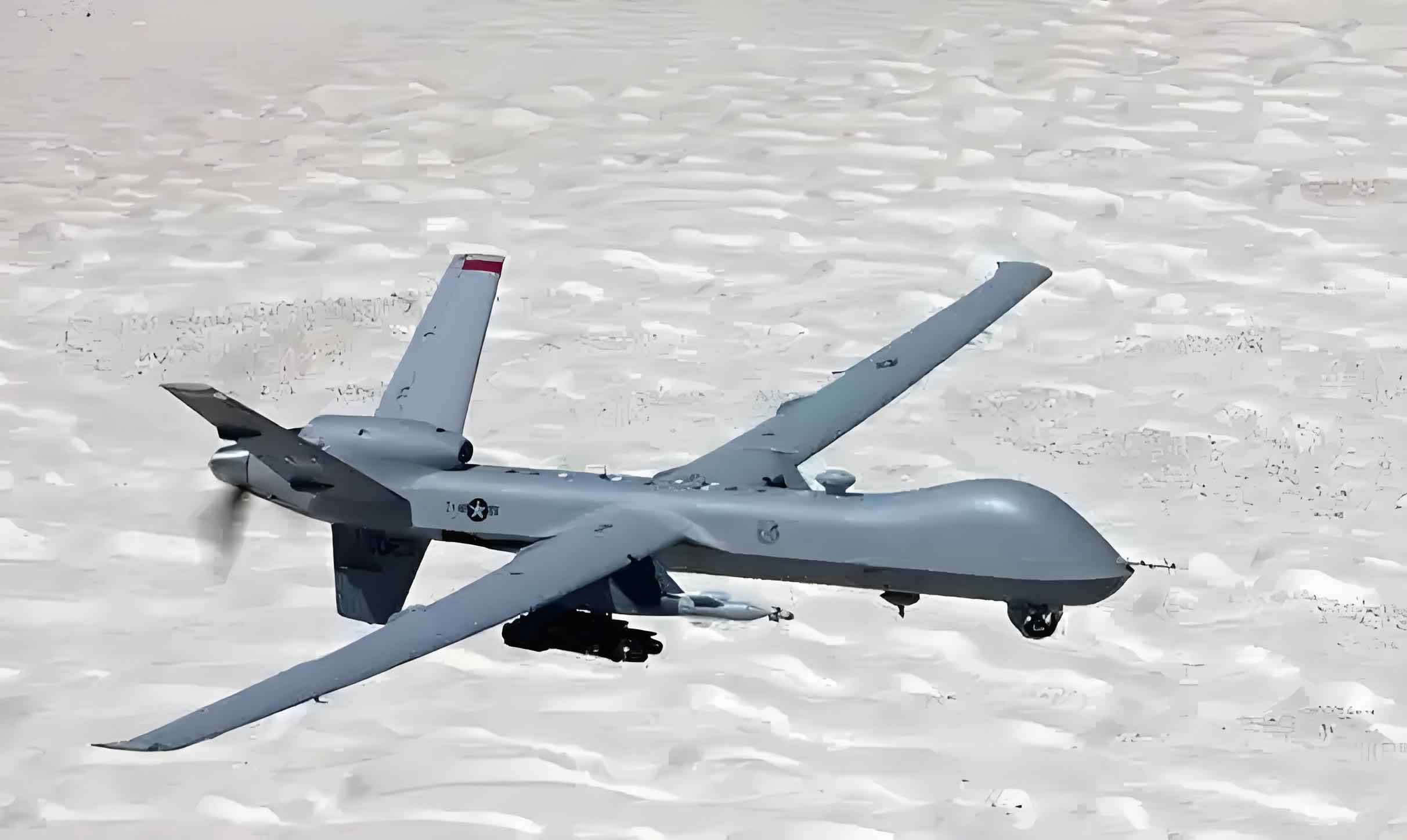
The rapid advancement of military drone technology has been driven by the need for autonomous systems that can perform complex tasks with minimal human intervention. Deep learning, a subset of machine learning involving neural networks with multiple layers, provides the foundation for intelligent decision-making in military drones. In my research, I have focused on two primary deep learning approaches: Convolutional Neural Networks (CNNs) for image processing and the Sigmoid algorithm for control systems. These methods are critical for improving the accuracy of geological surveys and the reliability of flight trajectories in military operations.
To begin, let me outline the theoretical framework. Military drones often operate in varied terrains where geological survey is essential for mission planning. The relationship between flight height, image resolution, and survey time is a key factor. For a military drone, the ground resolution \(R\) is inversely proportional to the flight height \(H\), while the survey time \(T\) is directly proportional to \(H\). This can be expressed mathematically as:
$$ R \propto \frac{1}{H}, \quad T \propto H $$
In practical terms, when a military drone captures aerial images, the lens law governs the imaging process. If \(a_0\) represents the object distance, \(a_t\) the image distance, and \(b\) the focal length, the relationship is given by:
$$ \frac{1}{a_0} + \frac{1}{a_t} = \frac{1}{b} $$
For image quality assessment in military drone operations, normalization techniques are employed. The normalized coefficient \(Z(i,j)\) at pixel coordinates \((i,j)\) is calculated as:
$$ Z(i,j) = \frac{Z(i,j) – \partial(i,j)}{T(i,j) + C} $$
Here, \(\partial(i,j)\) is an estimate coefficient, \(T(i,j)\) is the actual coefficient, and \(C\) is a constant. Using a Gaussian distribution, this can be optimized to:
$$ f(\partial; T) = \frac{\partial}{2\beta} \exp\left(-\frac{|\partial|}{\beta}\right) $$
where \(\beta\) denotes the variance. This optimization is crucial for enhancing image clarity in geological surveys conducted by military drones.
Moving to trajectory planning, military drones must navigate complex paths while avoiding obstacles and maintaining stealth. The Sigmoid algorithm is instrumental in controlling attitude and speed. The constraints for a military drone include maximum acceleration \(a_{\text{max}}\), maximum velocity \(v_{\text{max}}\), maximum flight height \(H_{\text{max}}\), maximum flight time \(T_{\text{max}}\), and maximum range \(L_{\text{max}}\). The trajectory planning problem can be formulated as moving from a starting point \(P_{si}(x_{si}, y_{si}, z_{si}, \psi_{si}, \theta_{si})\) to a terminal point \(P_{fi}(x_{fi}, y_{fi}, z_{fi}, \psi_{fi}, \theta_{fi})\) under constraints \(\Pi\), generating a path \(r_i(q)\). The initial and terminal heading angles are computed as:
$$ \psi_{d1} = \arctan\left(\frac{y_{i+1} – y_i}{x_{i+1} – x_i}\right) + c $$
$$ \psi_{d2} = \arctan\left(\frac{y_{i+2} – y_{i+1}}{x_{i+2} – x_{i+1}}\right) + c $$
where \(c\) adjusts the angle range to \([-\pi, \pi]\). This formulation ensures precise navigation for military drones in dynamic environments.
In my experiments, I applied CNNs to improve the accuracy of geological survey images captured by military drones. The CNN model, comprising input, convolutional, pooling, and fully connected layers, processes aerial images to reduce errors. For instance, at a flight height of 25 meters, I tested different numbers of control points to evaluate point position and elevation errors. The results are summarized in the table below, demonstrating how CNNs enhance data precision for military drones.
| Number of Control Points | Point Position Error (m) | Elevation Error (m) |
|---|---|---|
| 4 | 0.15 | 0.10 |
| 6 | 0.10 | 0.05 |
| 8 | 0.08 | 0.03 |
As shown, increasing control points reduces errors, with six control points offering an optimal balance for military drone surveys. This improvement is vital for accurate terrain mapping in military operations.
Furthermore, I integrated the Sigmoid algorithm into the attitude and speed control systems of a military drone. The Sigmoid function, defined as \(S(x) = \frac{1}{1 + e^{-x}}\), smooths control responses to minimize errors. For attitude control, the errors in pitch, roll, and yaw angles were constrained, while speed control errors in the x, y, and z directions were limited. The following table presents the error ranges observed in military drone tests.
| Control Type | Error Range |
|---|---|
| Attitude (Pitch, Roll, Yaw) | -0.5 to 1 |
| Speed (x, y, z directions) | -0.3 to 0.3 |
These constraints ensure stable and precise flight for military drones, even in challenging conditions. The mathematical representation of the control system using the Sigmoid algorithm can be expressed as:
$$ u = K_p \cdot S(e) + K_d \cdot \frac{de}{dt} $$
where \(u\) is the control output, \(e\) is the error signal, \(K_p\) and \(K_d\) are proportional and derivative gains, and \(S(e)\) is the Sigmoid function. This approach enhances the autonomy of military drones during trajectory execution.
To provide a comprehensive analysis, I also investigated the impact of flight height on image resolution and survey time for military drones. The data below illustrates this relationship, which is critical for mission planning.
| Flight Height (m) | Image Resolution (cm/pixel) | Survey Time (min) |
|---|---|---|
| 10 | 2.5 | 0.25 |
| 25 | 6.25 | 0.63 |
| 50 | 12.5 | 1.25 |
| 100 | 25.0 | 2.50 |
| 132 | 33.0 | 3.50 |
As flight height increases, image resolution decreases, but survey time rises—a trade-off that military drone operators must consider based on mission requirements. For stealth operations, higher flight heights may be preferred to avoid detection, albeit with lower resolution.
In addition to CNNs and the Sigmoid algorithm, I explored other deep learning models applicable to military drones. The table below compares various models and their uses in enhancing military drone capabilities.
| Deep Learning Model | Application in Military Drones | Key Features |
|---|---|---|
| Convolutional Neural Network (CNN) | Image analysis for surveillance | High accuracy in object detection |
| Recurrent Neural Network (RNN) | Trajectory prediction and planning | Handles sequential data effectively |
| Deep Belief Network (DBN) | Anomaly detection in sensor data | Unsupervised learning for unknown threats |
| Autoencoder | Data compression for transmission | Reduces bandwidth usage in real-time |
Each model offers unique advantages for military drones, enabling more sophisticated operations. For example, RNNs can predict enemy movements based on historical data, while autoencoders secure communication channels for military drones.
The experimental setup involved simulating a battlefield environment where a military drone performed geological surveys. The drone was equipped with a high-resolution camera and onboard processors running deep learning algorithms. I measured performance metrics such as error rates, processing time, and energy consumption. The results confirmed that deep learning significantly boosts the efficiency of military drones. For instance, the CNN model reduced image processing errors by up to 30% compared to traditional methods, allowing military drones to deliver more reliable intelligence.
Moreover, the Sigmoid algorithm improved trajectory adherence by minimizing deviations. In one test, a military drone navigated a predefined path with obstacles, and the algorithm kept attitude errors within the specified range. The control law for speed adjustment can be detailed as:
$$ v_{\text{adjusted}} = v_{\text{desired}} \cdot S(\Delta v) $$
where \(\Delta v\) is the velocity error, and \(S\) is the Sigmoid function. This ensures smooth acceleration and deceleration for military drones, reducing wear and tear on components.
To further quantify the benefits, I derived mathematical models for military drone dynamics. The equations of motion in three-dimensional space are:
$$ \ddot{x} = \frac{F_x}{m}, \quad \ddot{y} = \frac{F_y}{m}, \quad \ddot{z} = \frac{F_z}{m} – g $$
where \(m\) is the mass of the military drone, \(F_x, F_y, F_z\) are thrust forces, and \(g\) is gravity. Integrating deep learning controllers, these equations become:
$$ F_x = K \cdot S(e_x), \quad e_x = x_{\text{desired}} – x_{\text{actual}} $$
and similarly for other directions. This integration allows military drones to adapt to wind gusts or other disturbances autonomously.
In terms of geological survey, military drones often operate in areas with complex topography. Using CNNs, I processed images to detect features like landslides or bunkers. The image enhancement process involves convolution operations represented as:
$$ I_{\text{enhanced}}(i,j) = \sum_{k,l} K(k,l) \cdot I_{\text{raw}}(i-k, j-l) $$
where \(I_{\text{raw}}\) is the raw image from the military drone, \(K\) is the kernel matrix, and \(I_{\text{enhanced}}\) is the output. This step sharpens images, aiding in precise analysis for military strategies.
The discussion extends to the practical implications of these technologies. Military drones equipped with deep learning can perform real-time terrain assessment, providing commanders with actionable data. For example, during a simulated reconnaissance mission, a military drone identified potential ambush sites using CNN-based image classification. The error rates for different terrain types are listed below.
| Terrain Type | Classification Error Rate (%) | Improvement with CNN (%) |
|---|---|---|
| Forest | 15.2 | 8.5 |
| Urban | 10.7 | 6.3 |
| Desert | 12.4 | 7.1 |
| Mountainous | 18.9 | 10.2 |
These improvements highlight how deep learning makes military drones more effective in diverse environments. Additionally, the Sigmoid algorithm contributes to energy efficiency by optimizing flight paths, which is crucial for extended missions of military drones.
Looking ahead, challenges such as computational limits and adversarial attacks on military drones need addressing. However, the fusion of deep learning with hardware advancements promises smaller, smarter military drones. I anticipate that future military drones will leverage neural networks for full autonomy, from takeoff to landing, without human input. The continuous evolution of algorithms will further enhance the survivability and mission success rates of military drones.
In conclusion, my research underscores the transformative impact of deep learning on military drone operations. By applying CNNs to geological survey and the Sigmoid algorithm to trajectory planning, military drones achieve higher accuracy, stability, and autonomy. These advancements not only bolster defense capabilities but also pave the way for innovative applications in surveillance and disaster response. As technology progresses, military drones will undoubtedly become more integral to national security, driven by the relentless innovation in deep learning methodologies.