
In the evolving landscape of modern warfare, military drones have emerged as pivotal assets, leveraging advancements in information technology to become high-performance信息化 weaponry. Their significance in future conflicts is paramount, driving a global surge in research, development, and procurement. However, the pursuit of such sophisticated military drone technology is inherently constrained by defense budgets. Effective lifecycle cost management, particularly during the development phase, is crucial to ensure projects remain within economically viable limits. Accurate prediction of military drone development costs is therefore a critical task in the early stages, necessitating robust and precise modeling techniques. While various methods exist, including traditional regression and neural networks like Backpropagation (BP), these approaches often face challenges such as local minima and slow convergence. In this article, we explore the application of Radial Basis Function (RBF) neural networks, particularly those employing a nearest neighbor clustering algorithm, for predicting the development costs of military drones. We demonstrate that this method offers superior accuracy and efficiency compared to BP networks and multiple linear regression, providing a valuable tool for cost analysts and project managers in the defense sector.
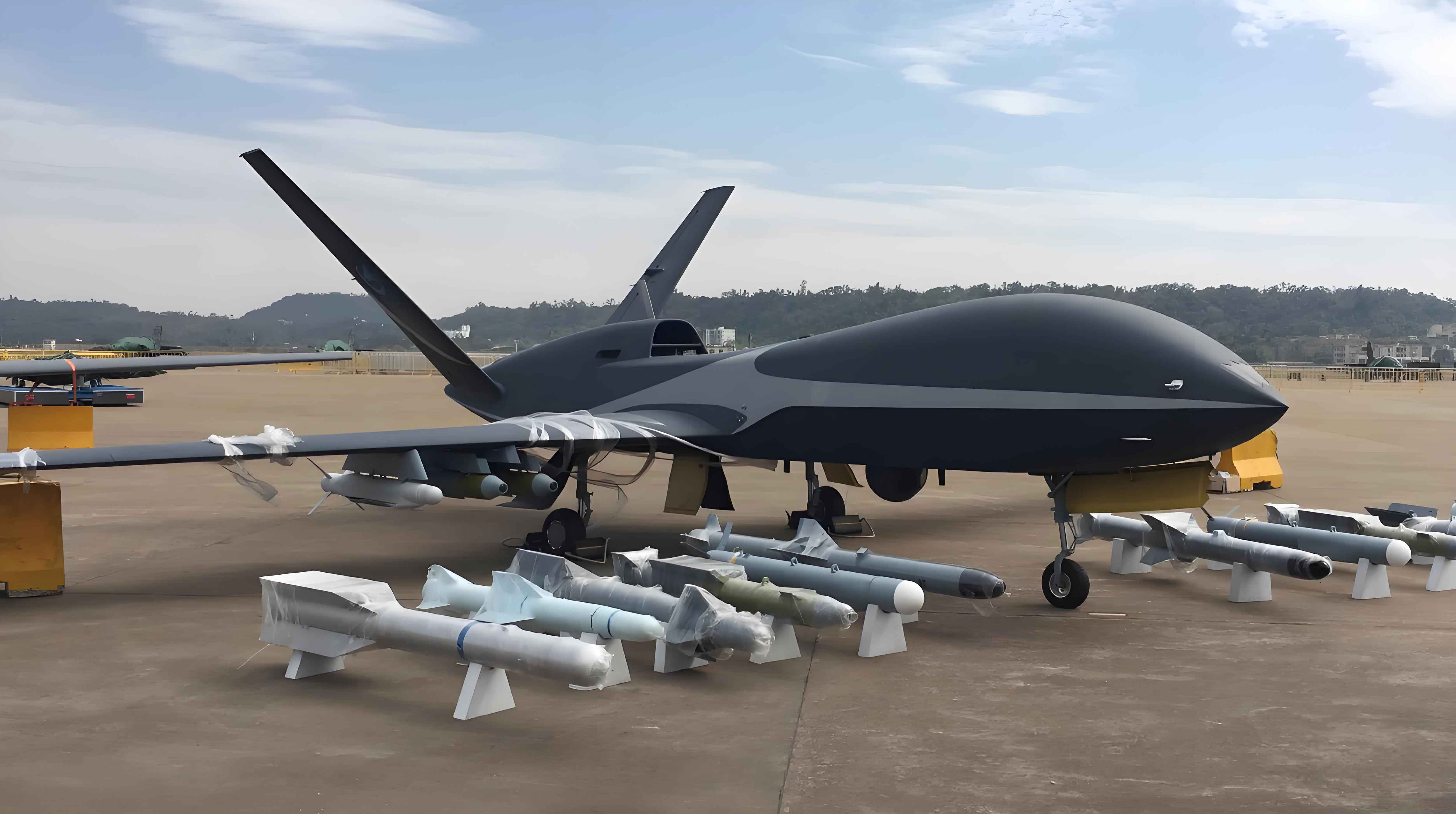
The increasing reliance on military drones across various operational domains underscores the need for reliable cost forecasting. These unmanned systems integrate complex technologies, from advanced materials to cutting-edge avionics, making their development costs influenced by a multitude of interconnected factors. Traditional cost estimation methods, such as parametric models or analogies, often struggle with the nonlinear relationships and incomplete information characteristic of cutting-edge military drone projects. Neural networks present a promising alternative due to their ability to learn complex patterns from data. Among these, RBF networks possess several advantageous properties, including rapid training convergence and strong local approximation capabilities, making them particularly suited for this application. We will delve into the structure and learning algorithm of RBF networks before applying them to a concrete military drone cost prediction case.
RBF Neural Network Structure and Algorithm
The RBF neural network is a three-layer feedforward architecture comprising an input layer, a hidden layer with radial basis activation functions, and a linear output layer. Its design is inspired by the localized receptive fields observed in biological neural systems, allowing it to effectively model nonlinear relationships.
RBF Neural Network Structure
The network functions as follows: The input layer nodes simply distribute the input vector \(\mathbf{x}\) to all neurons in the hidden layer. Each hidden layer neuron, indexed by \(i\), computes its activation using a radial basis function, typically a Gaussian function. The output of the \(i\)-th hidden neuron for an input \(\mathbf{x}\) is given by:
$$ \phi_i(\mathbf{x}) = \exp\left(-\frac{\|\mathbf{x} – \mathbf{c}_i\|^2}{2\sigma_i^2}\right) $$
Here, \(\mathbf{c}_i\) is the center vector for the \(i\)-th neuron, \(\sigma_i\) is the width parameter (or spread) controlling the receptive field size, and \(\|\cdot\|\) denotes the Euclidean norm, representing the distance between the input and the center. This structure endows the network with a localized response; a neuron produces significant output only when the input is near its center \(\mathbf{c}_i\). The final network output \(y(\mathbf{x})\) is a linear combination of these hidden neuron activations:
$$ y(\mathbf{x}) = \sum_{i=1}^{M} w_i \phi_i(\mathbf{x}) $$
where \(w_i\) are the output layer weights connecting the \(i\)-th hidden neuron to the output, and \(M\) is the total number of hidden neurons (RBF centers). The challenge in constructing an effective RBF network lies in determining the optimal number of centers \(M\), their locations \(\mathbf{c}_i\), the widths \(\sigma_i\), and the output weights \(w_i\).
Nearest Neighbor Clustering Algorithm
To address this challenge adaptively, we employ an online learning method known as the nearest neighbor clustering algorithm. This algorithm dynamically determines the number and positions of RBF centers during training without requiring prior specification of \(M\). It is efficient and yields a network structure optimized for the given data.
The algorithm proceeds as follows, with \(r\) denoting a predefined radius (width) parameter:
- Initialization: Begin with the first data pair \((\mathbf{x}_1, y_1)\). Establish the first cluster center: \(\mathbf{c}_1 = \mathbf{x}_1\). Initialize the sum vector \(\mathbf{S}(1) = y_1\) and the counter \(B(1) = 1\). The output weight for this single cluster is \(w_1 = \mathbf{S}(1) / B(1) = y_1\).
- Iterative Processing: For each subsequent data pair \((\mathbf{x}_k, y_k)\), \(k=2,3,\ldots,N\):
- Calculate the Euclidean distance from \(\mathbf{x}_k\) to all existing cluster centers \(\mathbf{c}_j\), \(j=1,\ldots,m\) (where \(m\) is the current number of clusters).
- Identify the nearest cluster center, say \(\mathbf{c}_{j^*}\), where \(j^* = \arg\min_j \|\mathbf{x}_k – \mathbf{c}_j\|\).
- If the distance \(\|\mathbf{x}_k – \mathbf{c}_{j^*}\| > r\), then \(\mathbf{x}_k\) is considered a new cluster center. Create a new cluster: \(m = m + 1\), \(\mathbf{c}_m = \mathbf{x}_k\), \(\mathbf{S}(m) = y_k\), \(B(m) = 1\). The weight is \(w_m = \mathbf{S}(m) / B(m)\).
- If \(\|\mathbf{x}_k – \mathbf{c}_{j^*}\| \le r\), then \(\mathbf{x}_k\) belongs to the \(j^*\)-th cluster. Update its statistics: \(\mathbf{S}(j^*) = \mathbf{S}(j^*) + y_k\), \(B(j^*) = B(j^*) + 1\). Recompute the weight for this cluster: \(w_{j^*} = \mathbf{S}(j^*) / B(j^*)\). The statistics for all other clusters remain unchanged.
After processing all data, the network’s output for any input \(\mathbf{x}\) is computed using a normalized weighted sum, which often improves performance:
$$ y(\mathbf{x}) = \frac{\sum_{j=1}^{m} w_j \exp\left(-\frac{\|\mathbf{x} – \mathbf{c}_j\|^2}{r^2}\right)}{\sum_{j=1}^{m} \exp\left(-\frac{\|\mathbf{x} – \mathbf{c}_j\|^2}{r^2}\right)} $$
Here, for simplicity, we often use a common width \(r\) for all clusters, related to \(\sigma_i\) by \(\sigma_i = r / \sqrt{2}\). The radius \(r\) is a critical hyperparameter; a smaller \(r\) leads to more clusters and a more complex model, while a larger \(r\) results in fewer clusters and smoother approximations. It can be tuned via cross-validation. This algorithm’s efficiency stems from its single-pass nature and its ability to simultaneously adapt both the structure (number of centers) and parameters (weights) of the RBF network.
RBF Neural Network Prediction for Military Drone Development Costs
We now apply the described RBF neural network framework to construct a predictive model for military drone development costs. The goal is to estimate the development cost based on key performance parameters of the military drone.
Determination of Explanatory Variables
Selecting appropriate explanatory variables is crucial for model accuracy. Military drone development costs are influenced by numerous technical specifications. Based on prior research and engineering judgment, we identify six primary performance parameters that encapsulate the major cost drivers for a military drone. These parameters, which define the input vector \(\mathbf{x}\), are:
| Symbol | Variable Description | Unit |
|---|---|---|
| \(L\) | Length | meter (m) |
| \(MTOW\) | Maximum Take-Off Weight | kilogram (kg) |
| \(V_c\) | Cruise Speed | meter per second (m/s) |
| \(H\) | Operational Altitude | meter (m) |
| \(E\) | Endurance | hour (h) |
| \(P\) | Payload Capacity | kilogram (kg) |
The target output variable \(C\) is the development cost in millions of US dollars, normalized to a common fiscal year base to ensure comparability. These parameters collectively represent the scale, performance, and complexity of the military drone, which are directly correlated with research, design, testing, and integration expenses.
Acquisition of Learning Samples
To train our model, we compile a dataset comprising several historically developed military drones. The selection includes advanced platforms known for their technological sophistication. The data, sourced from公开 available specifications and cost reports, is presented in the table below. We use seven military drones as learning samples and reserve one modern military drone as a test sample to evaluate predictive performance.
| Drone Model (Code) | \(L\) (m) | \(MTOW\) (kg) | \(V_c\) (m/s) | \(H\) (m) | \(E\) (h) | \(P\) (kg) | \(C\) (Million USD) |
|---|---|---|---|---|---|---|---|
| Global Hawk (A) | 13.4 | 11622 | 170 | 18000 | 32 | 1360 | 750.4 |
| Predator B/MQ-9 (B) | 11.0 | 4760 | 103 | 15000 | 27 | 1700 | 41.1 |
| German “Luna” (C) | 2.3 | 35 | 65 | 500 | 0.5 | 3.5 | 3.9 |
| RQ-7 Shadow (D) | 3.4 | 170 | 60 | 4600 | 6 | 25.4 | 4.2 |
| RQ-4A/B (E) | 14.5 | 14628 | 175 | 19812 | 38 | 907 | 124.6 |
| RQ-1A/B (F) | 8.2 | 1020 | 83 | 7600 | 40 | 204 | 28.3 |
| RQ-2 Pioneer (G) | 4.3 | 205 | 46 | 4570 | 5 | 45 | 18.5 |
| MQ-1 Predator (Test) | 8.2 | 1020 | 65 | 7620 | 24 | 204 | 20.9 |
Note: The test sample, the MQ-1 Predator military drone, is withheld from training to assess generalization. The cost \(C\) for all samples has been adjusted to a constant reference year.
Learning with RBF Network
Prior to training, we preprocess the data. The input variables have different units and scales (e.g., length in meters, weight in kilograms), which can impede network convergence. We apply min-max normalization to scale each input feature to the range [0, 1]. For a variable \(z\), its normalized value \(z’\) is:
$$ z’ = \frac{z – z_{\min}}{z_{\max} – z_{\min}} $$
where \(z_{\min}\) and \(z_{\max}\) are the minimum and maximum values of that variable across the training set. The output cost is also normalized similarly for training stability.
We implement the nearest neighbor clustering RBF algorithm. The key parameter is the radius \(r\). Through experimentation, we set \(r = 0.25\) (in the normalized feature space) as it provides a good balance between model complexity and generalization. The training error is measured as the Mean Squared Error (MSE). The RBF network converges rapidly, achieving the target MSE of 0.0001 within a single epoch (effectively one pass through the data, as per the clustering algorithm). This fast convergence is a hallmark of the RBF approach.
For comparison, we also train a standard BP neural network with one hidden layer (using hyperbolic tangent activation) on the same normalized training data. The BP network requires iterative gradient descent. We configure it with 6 input neurons, 4 hidden neurons (determined via trial), and 1 output neuron, using the Levenberg-Marquardt algorithm for training. The BP network takes significantly more iterations to converge to a similar error level, highlighting the efficiency advantage of the RBF network for this military drone cost prediction task.
Comparison with BP Network and Multiple Linear Regression
To comprehensively evaluate the RBF model, we compare its prediction for the test military drone (MQ-1 Predator) against predictions from the trained BP network and a classical multiple linear regression (MLR) model. The MLR model assumes a linear relationship: \(C = \beta_0 + \beta_1 L + \beta_2 MTOW + \beta_3 V_c + \beta_4 H + \beta_5 E + \beta_6 P\). The coefficients \(\beta_i\) are estimated using the least squares method on the training data.
The prediction results and corresponding absolute percentage errors are summarized below:
| Method | Predicted Cost for MQ-1 (Million USD) | Actual Cost (Million USD) | Absolute Percentage Error (%) |
|---|---|---|---|
| RBF Neural Network | 19.63 | 20.9 | 6.07 |
| BP Neural Network | 18.76 | 10.24 | |
| Multiple Linear Regression | 16.07 | 23.11 |
The RBF network achieves the lowest prediction error among the three methods. The BP network performs reasonably but with a higher error, while the linear regression model shows the largest deviation. This underscores the nonlinear nature of the relationship between military drone performance parameters and development costs, which the RBF network captures effectively. The local approximation property of the RBF network allows it to model complex interactions that linear methods miss, while its efficient training algorithm avoids the pitfalls of BP network optimization.
Furthermore, the robustness of the RBF model can be explored through sensitivity analysis. By perturbing input parameters within plausible ranges for a new military drone concept, we can generate a distribution of predicted costs, aiding in risk assessment. The model’s structure also provides some interpretability: the RBF centers can be viewed as representative “prototype” military drones from the training set, and the weights indicate their influence on the cost prediction for a new design.
Conclusion
Accurate prediction of development costs is a fundamental challenge in managing military drone projects. The integration of advanced technologies in these unmanned systems creates complex, nonlinear cost relationships that defy simple analytical models. In this work, we have presented a predictive framework based on Radial Basis Function neural networks with a nearest neighbor clustering learning algorithm. This approach offers significant advantages: it automatically determines an optimal network structure, converges rapidly during training, and provides high approximation accuracy for nonlinear functions.
Our application to a dataset of existing military drones demonstrates that the RBF network model outperforms both traditional multiple linear regression and the more common BP neural network in predicting the development cost of a held-out test military drone. The RBF network’s lower prediction error validates its suitability for this domain. The method’s efficiency makes it particularly attractive for scenarios where rapid cost estimation is required during the conceptual or preliminary design phases of a new military drone program.
Future work could explore several enhancements. Incorporating additional cost-influencing factors, such as the degree of autonomy, sensor suite complexity, or software development effort, could improve model fidelity. Ensemble methods combining RBF networks with other techniques might yield even more robust predictions. Furthermore, adapting the model for different classes of military drones (e.g., small tactical vs. large HALE systems) could provide class-specific cost estimators. Ultimately, the adoption of advanced machine learning tools like RBF networks is essential for achieving cost-effective development and sustaining the technological edge offered by modern military drones in an increasingly budget-conscious environment.