
As an observer and analyst of modern aerospace technology, I have witnessed the rapid transformation of military drones from simple reconnaissance tools to multi-role platforms central to network-centric warfare. The true force multiplier of any military drone lies not in its airframe, but in the sophisticated suite of mission equipment it carries. This payload determines whether the drone is a silent watcher, a target designator, a communications node, or an electronic warfare specter. In this comprehensive analysis, I will delve into the current state and future trajectories of these critical systems that define the operational envelope of contemporary and future military drones. The integration of advanced sensors and effectors is what allows a military drone to fulfill roles in ISR (Intelligence, Surveillance, and Reconnaissance), target acquisition, battle damage assessment, and beyond. The progress in miniaturization, power efficiency, and data processing has been nothing short of revolutionary, enabling capabilities once reserved for large, manned platforms to be deployed on tactical and strategic unmanned systems.
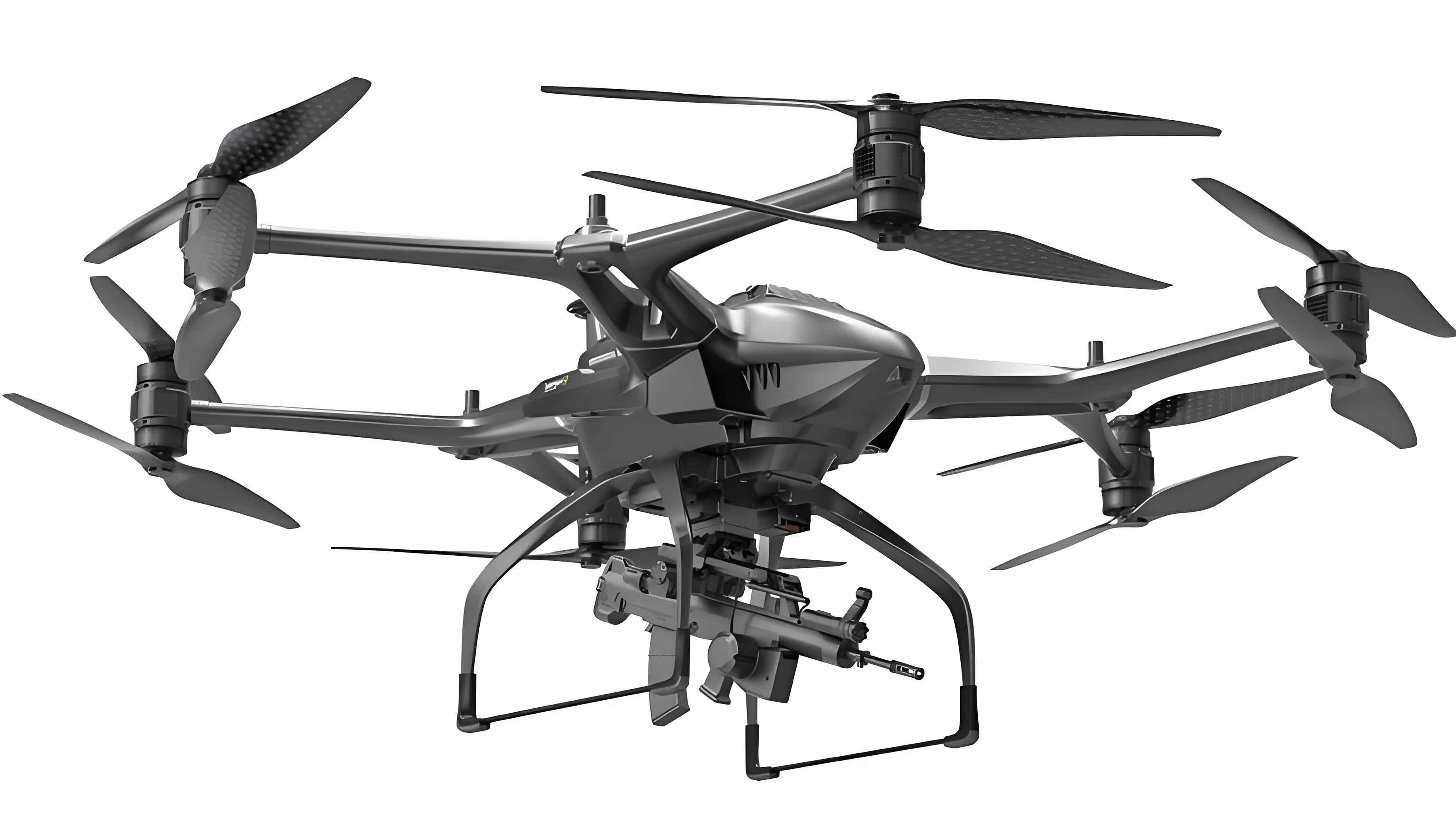
My focus here is to systematically unpack the core payload categories. I will explore electro-optical/infrared (EO/IR) systems, radar technologies tailored for unmanned platforms, electronic warfare suites, and communications relay packages. Throughout this discussion, the term ‘military drone’ will be central, as it is the versatile host for this technological evolution. The development path for a military drone’s payload is guided by the relentless pursuit of lighter weight, lower power consumption, higher resolution, and greater autonomy. Let us begin with the most prevalent category: the eyes of the military drone.
Electro-Optical and Infrared (EO/IR) Surveillance Payloads
The primary “eyes” of a military drone, especially for tactical operations, are its EO/IR sensors. These systems provide real-time, high-fidelity imagery essential for situational awareness. From my analysis, the trend is unequivocally towards multi-spectral, stabilized systems that offer persistent surveillance across the day-night cycle. A modern military drone typically employs a combination of the following sensors, often housed within a common stabilized gimbal to maintain line-of-sight regardless of platform movement.
First, high-resolution CCD or CMOS television cameras are the workhorses for daytime operations. Their evolution is marked by an increase in pixel count, dynamic range, and the integration of automatic target tracking algorithms. The key metric here is the Ground Sample Distance (GSD), which determines the smallest object identifiable in an image. GSD can be approximated by the formula:
$$ GSD = \frac{H \times p}{f} $$
where \( H \) is the flight altitude, \( p \) is the pixel pitch of the sensor, and \( f \) is the focal length of the lens. For a military drone operating at 5,000 meters, achieving a GSD of less than 15 cm requires exquisite optics and large-format sensors.
Second, Forward Looking Infrared (FLIR) systems enable night and low-visibility operations. Modern FLIRs for military drones use focal plane arrays (FPAs) of vanadium oxide (VOx) or amorphous silicon, operating in the mid-wave (MWIR, 3-5 μm) or long-wave (LWIR, 8-12 μm) infrared bands. The sensitivity of such a system is often described by the Noise Equivalent Temperature Difference (NETD), a measure of the smallest temperature difference it can discern. The trend is towards smaller, lighter cores. For instance, third-generation FLIRs with continuous zoom lenses and multi-field-of-view capabilities now weigh under 5 kg, making them ideal for medium-altitude military drone platforms.
Third, infrared line scanners (IRLS) or more modern pushbroom infrared imagers provide wide-area surveillance. They build an image line by line as the military drone moves forward. Their coverage rate is a critical parameter. The latest systems use cooled or uncooled microbolometer arrays in a linear configuration, significantly reducing size, weight, and power (SWaP) compared to older mechanically scanned systems.
Fourth, laser rangefinders and target designators are force multipliers. Integrated with the EO/IR ball, they provide precise geo-location of targets through laser designation (semi-active laser homing) or via range-bearing-elevation calculations. The laser’s divergence angle \( \theta \) and pulse energy determine its effectiveness. The maximum operational range \( R_{max} \) for a rangefinder under ideal conditions can be modeled as:
$$ R_{max} = \sqrt[4]{\frac{P_t \cdot \tau_{atm} \cdot A_r \cdot \rho}{\pi \cdot P_{min} \cdot \theta^2}} $$
where \( P_t \) is transmitted power, \( \tau_{atm} \) is atmospheric transmission, \( A_r \) is receiver aperture area, \( \rho \) is target reflectance, and \( P_{min} \) is minimum detectable power. Modern units for military drones are eye-safe and offer ranges exceeding 20 km.
The integration of these sensors into a single multi-spectral targeting system (MTS) is the dominant trend. A single gimbal on a military drone might contain a visible HD camera, a MWIR camera, a LWIR camera, a laser rangefinder/designator, and a laser illuminator. This fusion provides unparalleled situational understanding. The following table summarizes the characteristics of typical EO/IR payloads found on various classes of military drones.
| Payload Type | Typical Mass (kg) | Power (W) | Key Performance Parameter | Primary Military Drone Class |
|---|---|---|---|---|
| Daylight TV Camera (HD) | 1.5 – 3.0 | 15 – 30 | GSD < 5 cm @ 1 km | Mini, Tactical |
| MWIR FLIR (640×512) | 3.0 – 6.0 | 40 – 80 | NETD < 30 mK | Tactical, MALE |
| LWIR Microbolometer (1920×1080) | 1.0 – 2.5 | 10 – 25 | NETD < 50 mK | Mini, Tactical |
| Laser Designator/Rangefinder | 2.0 – 4.0 | 20 – 50 | Range: 10-25 km, Designation Code: NATO Std. | Tactical, MALE |
| Multi-Spectral Targeting System (MTS-B type) | 45 – 100 | 300 – 600 | Includes all above + laser spot tracker | MALE, HALE |
The advancement in EO/IR for military drones is fundamentally driven by Moore’s Law applied to sensor chips and advanced manufacturing for optics. The next frontier is hyper-spectral and multi-spectral imaging from a military drone, enabling material identification (e.g., distinguishing camouflage from natural foliage) from standoff distances.
Radar Systems for Unmanned Platforms
While EO/IR sensors are superb, they are hindered by weather and darkness. Radar provides the all-weather, day-night penetration capability that makes a military drone truly persistent. The adaptation of radar technology for unmanned platforms involves severe SWaP constraints, leading to innovative architectures. I categorize drone-borne radars into three main types: Moving Target Indicator (MTI)/Ground Moving Target Indicator (GMTI) radars, Synthetic Aperture Radars (SAR), and emerging Lidar systems.
MTI/GMTI radars are crucial for detecting vehicles and dismounted personnel. They use pulse-Doppler processing to filter out stationary clutter and highlight moving objects. The minimum detectable velocity (MDV) is a key figure of merit. A modern lightweight GMTI radar for a tactical military drone might operate in Ku-band (16-18 GHz) and use a lightweight parabolic or phased array antenna. The probability of detection \( P_d \) depends on the signal-to-clutter ratio (SCR), which for a moving target is given by:
$$ SCR = \frac{\sigma_t \cdot G^2 \cdot \lambda^2 \cdot \tau \cdot PRI}{(4\pi)^3 \cdot R^4 \cdot \sigma^0 \cdot A_c \cdot L} $$
where \( \sigma_t \) is target radar cross-section, \( G \) is antenna gain, \( \lambda \) is wavelength, \( \tau \) is pulse width, \( PRI \) is pulse repetition interval, \( R \) is range, \( \sigma^0 \) is clutter backscatter coefficient, \( A_c \) is clutter area, and \( L \) is system loss. Miniaturization has led to systems under 15 kg that can track dozens of targets simultaneously from ranges of 20-30 km, a critical capability for any surveillance-focused military drone.
Synthetic Aperture Radar (SAR) is arguably the most transformative radar technology for high-altitude long-endurance (HALE) and medium-altitude long-endurance (MALE) military drones. SAR creates high-resolution two-dimensional imagery by synthesizing a large antenna aperture from the motion of the platform. The achievable azimuth resolution \( \delta_a \) is independent of range and given by:
$$ \delta_a = \frac{D}{2} $$
where \( D \) is the length of the physical antenna. In practice, with advanced processing, resolutions better than 0.3 meters are routine from a military drone like the Global Hawk. Modern drone SAR systems often operate in spotlight mode (dwelling on a target area) or strip-map mode (continuous imaging along the flight path). They frequently incorporate GMTI modes, creating combined SAR/GMTI systems. The table below contrasts SAR systems for different military drone tiers.
| Military Drone Class | Representative SAR | Band | Mass (kg) | Resolution (Spotlight) | Key Feature |
|---|---|---|---|---|---|
| HALE (e.g., Global Hawk) | AN/ZPY-2 | X-band | 200-250 | 0.3 m | Wide Area Maritime Surveillance, In-flight processing |
| MALE (e.g., Predator/Reaper) | Lynx / AN/APY-8 | Ku-band | 30-60 | 0.1 – 0.3 m | SAR/GMTI, Lightweight design |
| Tactical (e.g., ScanEagle derivative) | MiniSAR (e.g., MS-177) | X or Ku-band | 10-20 | 1.0 m | Extreme SWaP optimization, Pod-mounted |
Laser Radar (Lidar) is an emerging payload for specific military drone applications like high-resolution 3D mapping, obstacle avoidance for autonomous flight, and target identification. Lidar uses laser pulses to measure time-of-flight, creating precise point clouds. The range equation for a direct-detection lidar is:
$$ P_r = \frac{P_t \cdot \rho \cdot A_r \cdot \eta_{atm} \cdot \eta_{sys}}{\pi \cdot R^2 \cdot \theta_t^2} $$
where \( P_r \) is received power, \( \rho \) is target reflectivity, \( A_r \) is receiver area, \( \eta_{atm} \) and \( \eta_{sys} \) are atmospheric and system efficiencies, and \( \theta_t \) is laser transmitter beam divergence. Small, scanning lidars under 5 kg are now available, offering centimeter-level accuracy for mapping, a valuable tool for a military drone performing pre-assault reconnaissance.
The fusion of radar and EO/IR data on a single military drone platform is a powerful trend. For example, a SAR can cue an EO/IR sensor to zoom in on a detected moving target, providing positive identification. This multi-intelligence (MULTI-INT) fusion dramatically increases the decision-making speed for commanders utilizing data from a military drone.
Electronic Warfare and Signals Intelligence Payloads
The electromagnetic spectrum is a contested battleground, and the military drone is an ideal platform for electronic warfare (EW) and signals intelligence (SIGINT). Its persistence, relative low cost, and ability to operate in high-risk areas make it perfect for roles such as electronic support (ES), electronic attack (EA), and communications intelligence (COMINT).
Electronic Support (ES) or Signal Intelligence (SIGINT) payloads are designed to detect, intercept, identify, and locate sources of electromagnetic radiation. A typical military drone SIGINT package includes a wide-band receiver, direction-finding (DF) antennas, and sophisticated signal processors. The key performance metrics are probability of intercept (POI), frequency coverage, sensitivity, and DF accuracy. Modern systems use software-defined radio (SDR) technology, allowing a single hardware suite on a military drone to be reprogrammed for different missions. The geolocation accuracy of an emitter using time-difference-of-arrival (TDOA) or frequency-difference-of-arrival (FDOA) techniques from multiple drones or a single moving drone can be modeled. For a single moving military drone using Doppler-based FDOA, the location error ellipse depends on the geometry and the measurement accuracy of the frequency shift \( \Delta f \):
$$ \Delta f = -\frac{f_0}{c} \mathbf{v} \cdot \mathbf{u} $$
where \( f_0 \) is emitter frequency, \( c \) is speed of light, \( \mathbf{v} \) is the drone’s velocity vector, and \( \mathbf{u} \) is the unit vector from drone to emitter. By collecting multiple measurements along its flight path, the military drone can accurately triangulate the emitter’s position.
Electronic Attack (EA) payloads allow a military drone to conduct jamming. These can be communications jammers or radar jammers. A communications jammer broadcasts noise or deceptive signals to disrupt enemy command and control. The effective radiated power (ERP) required to jam a communication link follows the simple one-way equation:
$$ \frac{P_j G_j}{4\pi R_j^2} \cdot \frac{G_r \lambda^2}{4\pi} \geq \frac{P_t G_t}{4\pi R_t^2} \cdot \frac{G_r \lambda^2}{4\pi} \cdot \frac{1}{(S/J)_{min}} $$
Simplifying, the jamming-to-signal ratio at the receiver must exceed a minimum threshold \( (S/J)_{min} \). For a military drone flying close to the receiver (\( R_j \) small), even a low-power jammer can be effective. Miniaturized jammers are now deployable on Group 2 and 3 tactical drones.
Another potent EA role for a military drone is as a decoy or as a platform for expendable jammers. Drones can launch small, parachute-retarded jammers (e.g., the US Navy’s NULKA) or disperse chaff and flare clouds to protect naval or ground forces. The following table outlines common EW payload types for military drones.
| EW Payload Type | Primary Function | Typical SWaP | Integration Level | Example Military Drone Use Case |
|---|---|---|---|---|
| COMINT/SIGINT Suite | Intercept comms/radar signals, direction finding | 10-50 kg, 200-1000 W | Pod or internal bay on MALE/HALE | Persistent surveillance of enemy communications networks. |
| Communications Jammer | Disrupt VHF/UHF tactical comms | 5-15 kg, 100-500 W | Pod on Tactical/MALE drone | Supporting ground troops by denying enemy C2. |
| Radar Jammer (Noise/Deceptive) | Degrade air defense radar tracking | 20-100 kg, 500-2000 W | Internal on dedicated EA drone (e.g., Growler-like) | Stand-in jamming for strike packages. |
| Expendable Active Decoy | Emit deceptive radar signatures | Launcher + expendables (~20 kg total) | Pod-mounted | Protecting high-value assets from radar-guided missiles. |
The future of EW on military drones points towards cognitive EW systems. These systems use artificial intelligence to automatically characterize novel signals, develop optimal jamming waveforms in real-time, and learn from the electromagnetic environment. A network of cooperating military drones performing distributed EW is a formidable concept being actively researched.
Communications Relay and Network Nodal Payloads
In modern dispersed operations, maintaining robust, long-range, and high-bandwidth communications is a monumental challenge. The military drone, particularly the HALE and solar-powered pseudo-satellite types, offers a revolutionary solution as an airborne communications node. This transforms the military drone from a sensor platform into a vital component of the tactical internet.
A communications relay payload on a military drone typically consists of multiple radios operating on different bands (e.g., SINCGARS, HAVE QUICK, Link 16, Tactical Common Data Link (TCDL), and commercial SATCOM bands), along with networking routers and switches. The drone acts as a router in the sky, connecting units that are beyond line-of-sight (BLOS) of each other due to terrain or distance. The fundamental advantage is the extension of the radio horizon. The line-of-sight distance \( d \) to the horizon from an altitude \( h \) is approximately:
$$ d \approx 3.57 \times \sqrt{h} $$
where \( d \) is in kilometers and \( h \) is in meters. A military drone at 20,000 meters altitude has a radio horizon of about 500 km, connecting widely dispersed forces.
The key technical challenge is managing the size and power of the antennas, especially for directional links like TCDL which require precise pointing. Modern systems use electronically steered array (ESA) or mechanically steered parabolic antennas with auto-tracking. The data rate \( R \) achievable on a given link is governed by the Shannon-Hartley theorem:
$$ R = B \cdot \log_2 \left(1 + \frac{S}{N}\right) $$
where \( B \) is bandwidth and \( S/N \) is signal-to-noise ratio. A high-flying military drone with a powerful transmitter and high-gain antenna can establish extremely high-data-rate links, streaming multiple full-motion video feeds from other drones or ground units back to headquarters.
Beyond simple relay, advanced military drones are being developed as “flying cell towers” for tactical cellular networks (e.g., 4G LTE, 5G). These systems can provide secure voice, video, and data services to soldiers’ handheld devices over a large area of operations, a capability unmatched by terrestrial infrastructure in austere environments. The flexibility to reposition this aerial node on demand is a game-changer. Compared to satellites, a military drone-based node offers lower latency, higher effective data rates for the covered area, and is not subject to orbital slot constraints or potential adversary anti-satellite threats. Compared to manned aircraft, the military drone can loiter for days, eliminating crew fatigue and risk.
Future Trajectories and Concluding Synthesis
Looking ahead, the evolution of military drone payloads is inextricably linked to several overarching technological and doctrinal trends. As an analyst, I project the following directions will define the next generation of capabilities for the military drone.
First, Multi-Function, Integrated Sensor Suites. The distinction between EO/IR, radar, and SIGINT will blur. We will see active electronically scanned array (AESA) radars that can simultaneously perform high-resolution SAR imaging, GMTI tracking, and electronic support functions. These systems will be integrated with EO/IR cores in a single low-profile aperture, reducing drag and signature on the military drone.
Second, Autonomous Sensor Management and Data Fusion. Onboard artificial intelligence will not just process data, but will manage the sensors themselves. An AI payload manager on a military drone could automatically task its SAR to scan a wide area, upon detecting movement, cue the EO/IR ball for identification, and if a threat is confirmed, allocate a laser designator—all with minimal human intervention. This moves the operator from a “in-the-loop” sensor operator to a “on-the-loop” mission commander.
Third, Direct Kinetic and Non-Kinetic Effects. The line between sensor and shooter is vanishing. Payloads are evolving to include direct energy weapons (lasers for counter-drone or ground attack), electronic warfare effectors as discussed, and launch tubes for smaller lethal munitions or swarming drones. The development of unmanned combat aerial vehicles (UCAVs) like the loyal wingman concepts hinges on integrating sophisticated sensors with weapons bays. The payload of such a military drone is a fully integrated combat system.
Fourth, Swarming and Collaborative Payloads. The future military drone force will operate in swarms. This requires payloads that enable collaborative sensing and effecting. For example, one drone in a swarm might carry a high-power illuminator (radar or laser), while others carry passive receivers, creating a bistatic or multistatic network that is harder to detect and jam. The collective intelligence of the swarm, enabled by inter-drone data links, will be a payload in itself.
Fifth, Resilience and Survivability Features. As adversaries develop advanced air defenses, payloads for military drones will include more sophisticated electronic protection (EP) measures, laser warning receivers, and even countermeasure dispensers. Stealth considerations will drive conformal sensors and low-probability-of-intercept/low-probability-of-detection (LPI/LPD) radar and datalink designs.
In conclusion, the payload is the soul of the military drone. From the simple television cameras of early remotely piloted vehicles to the multi-spectral, multi-function systems of today’s HALE platforms, the progress has been transformative. The modern military drone is a sensor-rich node in a vast network, capable of seeing through darkness and weather, listening to the electromagnetic spectrum, jamming adversaries, and connecting the joint force. The trends point towards even greater integration, autonomy, and lethality. As these payloads continue to shrink in SWaP while growing in capability, they will migrate onto smaller and more numerous platforms, democratizing high-end ISR and effects for tactical units. The ultimate expression of this evolution may be intelligent sensor clouds of collaborating military drones, providing an omniscient presence over the battlefield—a testament to the pivotal role of payload innovation in airpower’s unmanned future.