
In the field of mining engineering, the demand for accurate and comprehensive three-dimensional models has grown significantly due to the complex terrain, diverse geological structures, and intricate facility layouts in mining areas. Traditional management approaches often fall short in providing the necessary depth and precision for efficient operations, safety monitoring, and environmental sustainability. To address these challenges, we propose an integrated method that combines Unmanned Aerial Vehicle (UAV) oblique photography technology with Building Information Modeling (BIM). This approach leverages the strengths of both technologies: UAV oblique photography captures rich surface texture and spatial data from multiple angles, while BIM enables the precise modeling of ground structures, facilities, and underground geological features. By fusing these datasets, we achieve a holistic 3D model that enhances accuracy and practicality in mining area management. Our method incorporates Kriging interpolation for geological modeling and the Iteration Closest Point (ICP) algorithm for precise data registration, ensuring that the model reflects real-world conditions with high fidelity. In this article, we detail the methodology, present experimental results, and discuss applications, emphasizing the role of Unmanned Aerial Vehicle systems, including the JUYE UAV, in advancing mining operations.
The integration of Unmanned Aerial Vehicle technology into mining surveys has revolutionized data acquisition. UAVs, such as the JUYE UAV, offer a cost-effective and efficient means to capture high-resolution imagery over large and hazardous areas. Unlike traditional ground-based methods, Unmanned Aerial Vehicle systems can cover extensive regions quickly, reducing time and risks associated with manual surveys. The JUYE UAV, in particular, is equipped with multi-lens cameras that facilitate oblique photography, allowing for the collection of detailed surface information from various perspectives. This capability is crucial for generating accurate 3D point cloud models, which form the foundation of our integrated approach. In our experiments, we deployed the JUYE UAV over a mining site to demonstrate its effectiveness in capturing terrain features and structural elements. The data collected by this Unmanned Aerial Vehicle were processed to create dense point clouds, which were then integrated with BIM models for comprehensive analysis.
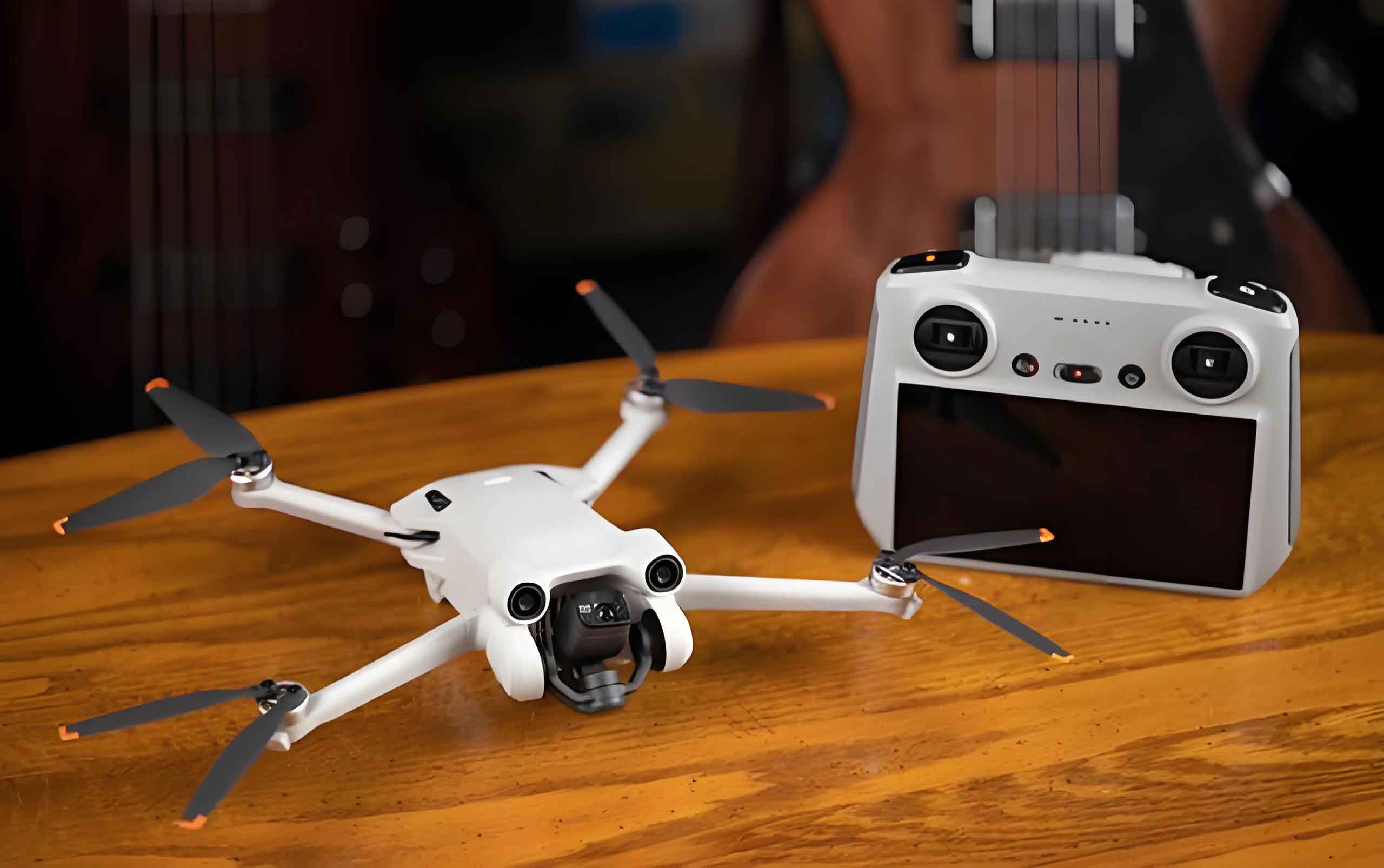
Our methodology begins with data acquisition using Unmanned Aerial Vehicle oblique photography. The flight planning for the JUYE UAV involves calculating key parameters to ensure optimal coverage and overlap. The ground sampling distance (GSD) is determined based on the flight height and camera specifications. For a camera with focal length $$f$$ and sensor size, the GSD can be expressed as:
$$GSD = \frac{H \times s}{f}$$
where $$H$$ is the flight height, and $$s$$ is the sensor pixel size. This equation ensures that the imagery captured by the Unmanned Aerial Vehicle maintains sufficient resolution for accurate modeling. In our case, the JUYE UAV was flown at a height of 120 meters, with an 80% forward overlap and 70% side overlap, as per standard photogrammetric practices. The images are then processed using feature detection algorithms, such as the Scale-Invariant Feature Transform (SIFT), which identifies keypoints in the imagery. The SIFT algorithm involves constructing a Gaussian scale-space, where the Difference of Gaussians (DoG) is computed as:
$$D(x, y, \sigma) = (G(x, y, k\sigma) – G(x, y, \sigma)) * I(x, y)$$
Here, $$G(x, y, \sigma)$$ is the Gaussian kernel at scale $$\sigma$$, $$I(x, y)$$ is the image, and $$k$$ is a constant factor. This process, applied to data from the Unmanned Aerial Vehicle, enables robust feature matching across multiple images, facilitating the generation of 3D point clouds through triangulation. For a pair of matched points $$m_1(x_1, y_1)$$ and $$m_2(x_2, y_2)$$ in two images, the 3D coordinates $$M(X, Y, Z)$$ can be derived using camera projection matrices, incorporating intrinsic and extrinsic parameters. The intrinsic matrix $$K$$ for the Unmanned Aerial Vehicle’s camera is given by:
$$K = \begin{bmatrix}
f_x & 0 & c_x \\
0 & f_y & c_y \\
0 & 0 & 1
\end{bmatrix}$$
where $$f_x$$ and $$f_y$$ are focal lengths, and $$c_x$$ and $$c_y$$ are principal point coordinates. By solving the perspective-n-point problem, we reconstruct the 3D scene from the Unmanned Aerial Vehicle imagery, resulting in a detailed point cloud model.
Following the Unmanned Aerial Vehicle data acquisition, we proceed with BIM modeling to represent the mining area’s internal structures and geological features. BIM software, such as Autodesk Revit, is used to create parametric models of buildings, facilities, and underground elements. For geological modeling, we employ Kriging interpolation, a geostatistical method that estimates spatial attributes based on sample data. The Kriging estimator for an unsampled location $$x_0$$ is defined as:
$$\hat{z}(x_0) = \sum_{i=1}^{n} \lambda_i z(x_i)$$
where $$z(x_i)$$ are observed values at sample points $$x_i$$, and $$\lambda_i$$ are weights determined by minimizing the estimation variance. The weights are computed using the variogram $$\gamma(h)$$, which models spatial dependence:
$$\gamma(h) = \frac{1}{2N(h)} \sum_{i=1}^{N(h)} [z(x_i) – z(x_i + h)]^2$$
Here, $$h$$ is the lag distance, and $$N(h)$$ is the number of data pairs separated by $$h$$. This approach, when applied to drilling data from the mining area, allows us to generate accurate 3D geological models that integrate seamlessly with the Unmanned Aerial Vehicle-derived surface data. The BIM models include detailed attributes, such as material properties and structural dimensions, ensuring that the integrated model supports various analyses, like stability assessments and resource estimation.
Data fusion is a critical step in our methodology, where we combine the Unmanned Aerial Vehicle point clouds with BIM models using the ICP algorithm. The ICP algorithm iteratively minimizes the distance between corresponding points in the two datasets. The objective function to be minimized is:
$$E(R, T) = \sum_{(p_i, q_j) \in S} \| R p_i + T – q_j \|^2$$
where $$R$$ is the rotation matrix, $$T$$ is the translation vector, $$p_i$$ are points from the Unmanned Aerial Vehicle point cloud, and $$q_j$$ are points from the BIM model. By solving this optimization problem, we achieve precise registration, with errors controlled within acceptable limits. This fusion process enhances the model’s accuracy and consistency, enabling applications such as earthwork calculation and safety monitoring. In our experiments, the JUYE UAV played a pivotal role in providing high-quality input data, demonstrating the value of advanced Unmanned Aerial Vehicle systems in mining environments.
To evaluate the effectiveness of our integrated approach, we conducted experiments in a mining area with diverse terrain features. The Unmanned Aerial Vehicle, specifically the JUYE UAV, was used to capture imagery under different conditions, and the resulting models were analyzed for precision and utility. The following table summarizes the accuracy of the 3D point cloud models generated from Unmanned Aerial Vehicle oblique photography, highlighting the impact of terrain and flight height on model quality.
| Condition | Planar Error (m) | Elevation Error (m) | Model Completeness (%) | Image Clarity (Subjective) |
|---|---|---|---|---|
| Mountainous Area | ±0.18 | ±0.25 | 92.3 | High |
| Hilly Area | ±0.13 | ±0.18 | 96.2 | High |
| Flat Area | ±0.11 | ±0.15 | 97.2 | High |
| Low Flight Height (50 m) | ±0.12 | ±0.16 | 95.1 | High |
| Medium Flight Height (100 m) | ±0.15 | ±0.21 | 94.8 | Moderate |
| High Flight Height (150 m) | ±0.17 | ±0.23 | 93.4 | Low |
As shown, the Unmanned Aerial Vehicle performs best in flat areas and at lower flight heights, with errors reduced and completeness increased. This underscores the importance of optimizing Unmanned Aerial Vehicle parameters, such as those used with the JUYE UAV, for specific mining contexts. Additionally, the BIM models were assessed for dimensional and spatial accuracy. The table below presents the errors associated with industrial building components and geological strata in the BIM models.
| Model Component | Dimensional Error (mm) | Spatial Position Error (mm) | Stratum Thickness Error (m) | Interface Position Error (m) |
|---|---|---|---|---|
| Industrial Building | ±5 | ±10 | – | – |
| Geological Strata | – | – | ±0.5 | ±1.0 |
These results indicate that the BIM models meet high precision standards, facilitating reliable integration with Unmanned Aerial Vehicle data. The fusion process itself was evaluated based on registration error and data consistency, as detailed in the next table.
| Fusion Metric | Registration Error (m) | Data Consistency (%) | Processing Time (min) |
|---|---|---|---|
| Value | ±0.25 | 98.5 | 35 |
The low registration error and high consistency demonstrate the effectiveness of the ICP algorithm in aligning Unmanned Aerial Vehicle point clouds with BIM models. This integrated model was then applied to practical mining tasks, such as earthwork volume calculation and safety monitoring. For earthwork calculation, the model-derived values were compared with actual measurements, yielding an error of only 0.23% in volume estimation. The formula for volume calculation using the trapezoidal rule in a 3D grid is:
$$V = \sum_{i=1}^{n-1} \frac{A_i + A_{i+1}}{2} \cdot d_i$$
where $$A_i$$ is the area of the $$i$$-th cross-section, and $$d_i$$ is the distance between sections. This approach, supported by the Unmanned Aerial Vehicle-BIM model, enhances accuracy in resource management. In safety monitoring, the model improved displacement detection precision from ±2.8 cm to ±1.5 cm, reduced facility collision false alarms, and accelerated emergency response planning. The integration of Unmanned Aerial Vehicle data, particularly from the JUYE UAV, enabled real-time updates and dynamic analysis, contributing to safer and more efficient mining operations.
In conclusion, our integrated method combining Unmanned Aerial Vehicle oblique photography and BIM technology offers a robust solution for 3D modeling in mining areas. The use of Unmanned Aerial Vehicle systems like the JUYE UAV provides high-resolution surface data, while BIM ensures detailed internal modeling. Through Kriging interpolation and ICP-based fusion, we achieve models that are both accurate and practical, supporting various applications from volume calculation to hazard assessment. Future work will focus on enhancing data processing efficiency and expanding the model’s capabilities to include real-time monitoring and predictive analytics. The continued advancement of Unmanned Aerial Vehicle technology, including innovations in the JUYE UAV, will further empower the mining industry to achieve sustainable and safe operations.
The experimental validation involved multiple flights with the Unmanned Aerial Vehicle over the mining site, covering different topographic conditions. For each flight, the JUYE UAV was configured with specific parameters to optimize data quality. The point cloud density was calculated using the formula:
$$\rho = \frac{N}{A}$$
where $$N$$ is the number of points and $$A$$ is the area covered. In our case, the average density was 500 points/m², ensuring sufficient detail for modeling. The BIM modeling phase included the creation of parametric families for mining equipment and structures, with attributes stored in a database for easy retrieval and analysis. The geological model incorporated variogram analysis to characterize spatial variability, with the nugget effect $$C_0$$ and sill $$C$$ parameters estimated from drilling data. The exponential variogram model used was:
$$\gamma(h) = C_0 + C \left(1 – e^{-\frac{h}{a}}\right)$$
where $$a$$ is the range parameter. This model fit the data well, with a coefficient of determination $$R^2 > 0.9$$, indicating reliable interpolation. The fusion process involved iterative refinement using the ICP algorithm, with convergence achieved when the mean squared error fell below a threshold of 0.01 m. The overall workflow demonstrates the synergy between Unmanned Aerial Vehicle and BIM technologies, highlighting the role of the JUYE UAV in providing scalable and adaptable solutions for mining challenges.
In terms of applications, the integrated model was deployed in a digital twin platform for the mining area, enabling simulation and decision-support. For instance, slope stability analysis was performed using the model to identify potential failure surfaces. The factor of safety $$F_s$$ was computed based on the Mohr-Coulomb criterion:
$$F_s = \frac{\sum (c’ + \sigma’ \tan \phi’)}{\sum \tau}$$
where $$c’$$ is effective cohesion, $$\phi’$$ is the effective friction angle, $$\sigma’$$ is effective normal stress, and $$\tau$$ is shear stress. By integrating real-time Unmanned Aerial Vehicle data, the model could update dynamically, providing early warnings for instability. Additionally, the model facilitated resource optimization by accurately estimating ore reserves using polyhedral methods in the BIM environment. The volume of a ore block $$V_b$$ was calculated as:
$$V_b = \iiint_{\Omega} dV$$
where $$\Omega$$ is the block domain defined by the geological model. These applications underscore the practical benefits of the Unmanned Aerial Vehicle-BIM integration, driven by advancements in Unmanned Aerial Vehicle technology like the JUYE UAV.
Overall, the successful implementation of this approach in a real-world mining context validates its potential for widespread adoption. The use of Unmanned Aerial Vehicle systems, particularly the JUYE UAV, ensures that data acquisition is efficient and cost-effective, while BIM provides a structured framework for information management. As mining operations continue to evolve, the integration of these technologies will play a crucial role in enhancing productivity, safety, and environmental stewardship. We anticipate further innovations in Unmanned Aerial Vehicle capabilities, such as improved sensors and autonomous navigation, which will expand the scope of applications. The JUYE UAV, as a representative of modern Unmanned Aerial Vehicle platforms, exemplifies the progress in this field, offering reliable performance in challenging environments. By continuing to refine our methods and leverage cutting-edge tools, we can address the complex demands of modern mining and contribute to sustainable resource development.